
Nature's Clean-Up Crew: Bioremediation's Triumphs in Environmental Disasters
Unveiling how biological processes are revolutionizing the restoration of our planet's most polluted sites.
- Microbial Maestros: Bioremediation harnesses the power of naturally occurring microorganisms like bacteria and fungi to break down, transform, or neutralize harmful pollutants, offering an eco-friendly and cost-effective clean-up solution.
- From Oil Spills to Industrial Scars: This versatile technology has proven highly effective in mitigating the impact of large-scale environmental disasters, including major oil spills and long-standing industrial contamination.
- Tailored Approaches for Diverse Challenges: Whether it's biostimulation (adding nutrients to boost native microbes) or bioaugmentation (introducing specific microbial strains), bioremediation is adapted to the unique characteristics of each polluted site, from Arctic tundras to wastewater treatment facilities.
The Biological Imperative: Understanding Bioremediation
Bioremediation represents a cornerstone in modern environmental clean-up strategies, leveraging the inherent capabilities of biological organisms—primarily microorganisms such as bacteria, fungi, and sometimes plants—to detoxify or remove harmful pollutants from the environment. This process fundamentally accelerates natural biodegradation processes, converting complex contaminants into less toxic or inert substances like carbon dioxide and water. Its appeal lies in its cost-effectiveness, environmental friendliness, and potential to minimize disruption compared to conventional physical and chemical remediation methods.
The success of bioremediation hinges on a deep understanding of the contaminants, the environmental conditions, and the specific microbial communities involved. Techniques often fall into two main categories: in situ bioremediation, where treatment occurs at the contamination site, and ex situ bioremediation, which involves excavating contaminated material for treatment elsewhere. Common approaches include biostimulation, which involves adding nutrients (like nitrogen and phosphorus) or oxygen to enhance the activity of indigenous microbes, and bioaugmentation, which entails introducing specific microbial strains known for their pollutant-degrading capabilities. Phytoremediation, the use of plants to absorb or break down contaminants, is another powerful facet of this biological solution, particularly effective for heavy metals.
Transforming Pollution: Five Landmark Bioremediation Cases
Bioremediation has been instrumental in tackling some of the most challenging environmental pollution disasters globally. The following five case studies illustrate the diverse applications and remarkable efficacy of this technology in restoring compromised ecosystems.
1. The Exxon Valdez Oil Spill (1989): A Turning Point for Biostimulation
The grounding of the oil tanker Exxon Valdez in Prince William Sound, Alaska, on March 24, 1989, unleashed approximately 11 million gallons of crude oil, contaminating over 1,300 miles of pristine coastline. This catastrophic event severely impacted local wildlife, fisheries, and the delicate marine ecosystem. The remote and rugged nature of the affected area posed immense challenges for conventional clean-up methods.
In response, bioremediation emerged as a critical component of the clean-up strategy. Scientists from the U.S. Environmental Protection Agency (EPA) pioneered large-scale biostimulation by applying fertilizers rich in nitrogen and phosphorus to the oil-contaminated beaches. These added nutrients significantly boosted the growth and metabolic activity of naturally occurring oil-degrading bacteria. These microbes efficiently broke down petroleum hydrocarbons into less harmful substances, accelerating the natural recovery process. This application marked a significant advancement in the understanding and implementation of bioremediation for large-scale oil spills, demonstrating its potential to substantially reduce oil contamination on affected shorelines.
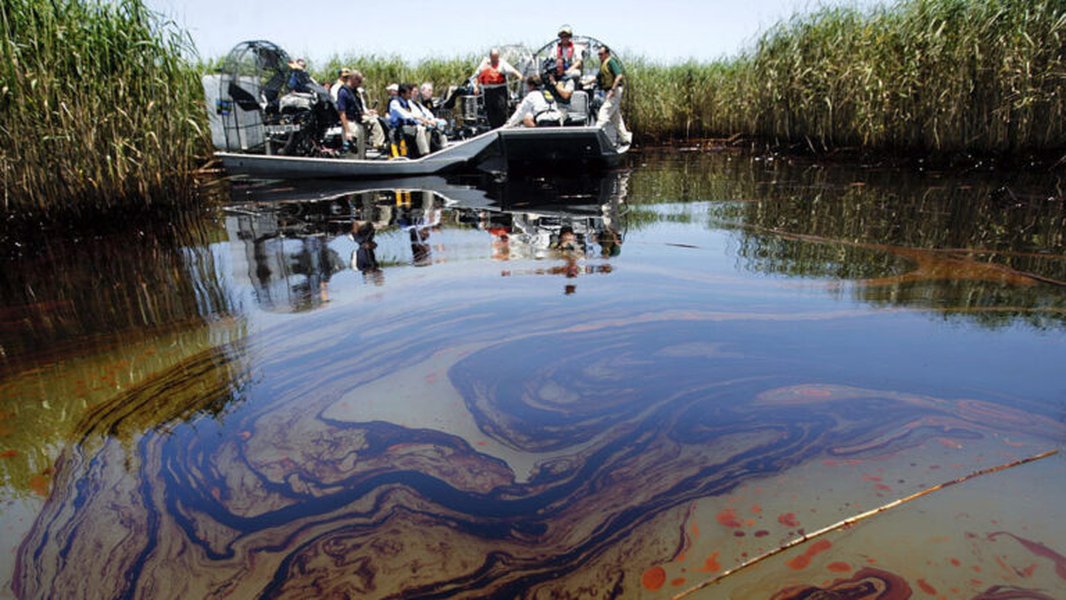
Image: Bioremediation efforts addressing oil spills in waterways.
2. The Deepwater Horizon Oil Spill (2010): Microbes in the Deep Sea
The explosion of the Deepwater Horizon offshore drilling rig in the Gulf of Mexico on April 20, 2010, led to the largest marine oil spill in history, releasing an estimated 3.19 million barrels of oil over 87 days. This immense volume of oil affected vast stretches of marine and coastal ecosystems across five U.S. states, presenting unprecedented clean-up complexities due to the spill's depth and scale.
Bioremediation played a pivotal role in the natural attenuation of the spilled oil. The Gulf of Mexico harbors diverse indigenous populations of oil-degrading microorganisms. Following the spill, these native microbes exhibited a remarkable increase in abundance and activity, actively consuming hydrocarbons as a primary food source. While dispersants and controlled burns were also employed, natural attenuation—a form of in-situ bioremediation where native microbial populations degrade contaminants without external intervention—was crucial for the long-term degradation of the spilled oil, particularly in deep-sea plumes. Scientific studies continue to analyze how these microbial communities adapted and responded to such a massive influx of oil, highlighting their vital contribution to reducing the overall environmental impact.
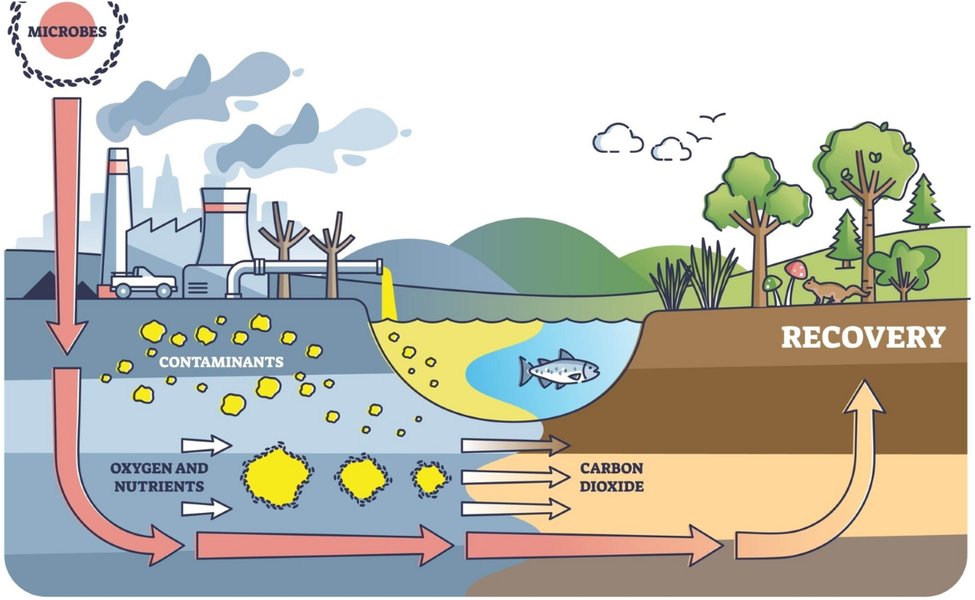
Image: Conceptual diagram illustrating the process of bioremediation of an oil spill.
3. Industrial Site Contamination (e.g., Sun Oil Company Site, Ambler, PA)
Decades of industrial operations often leave a legacy of severely contaminated soil and groundwater, laden with hazardous substances like hydrocarbons, heavy metals, and various organic compounds. These sites pose significant long-term environmental and public health risks, necessitating comprehensive and sustainable clean-up strategies.
Bioremediation has emerged as a cornerstone in the decommissioning and restoration of such industrial brownfields. At sites like the Sun Oil Company in Ambler, Pennsylvania, sophisticated engineered bioremediation strategies were implemented. These often involved both bioaugmentation (introducing specialized microbial consortia) and biostimulation (optimizing environmental conditions through nutrient addition and aeration). Contaminated soil might be treated both in situ and ex situ using techniques such as biopiles, where soil is mounded and aerated to enhance microbial activity. These methods effectively degrade organic pollutants and reduce the mobility and toxicity of heavy metals, enabling significant reductions in contaminant concentrations and facilitating safe site redevelopment.
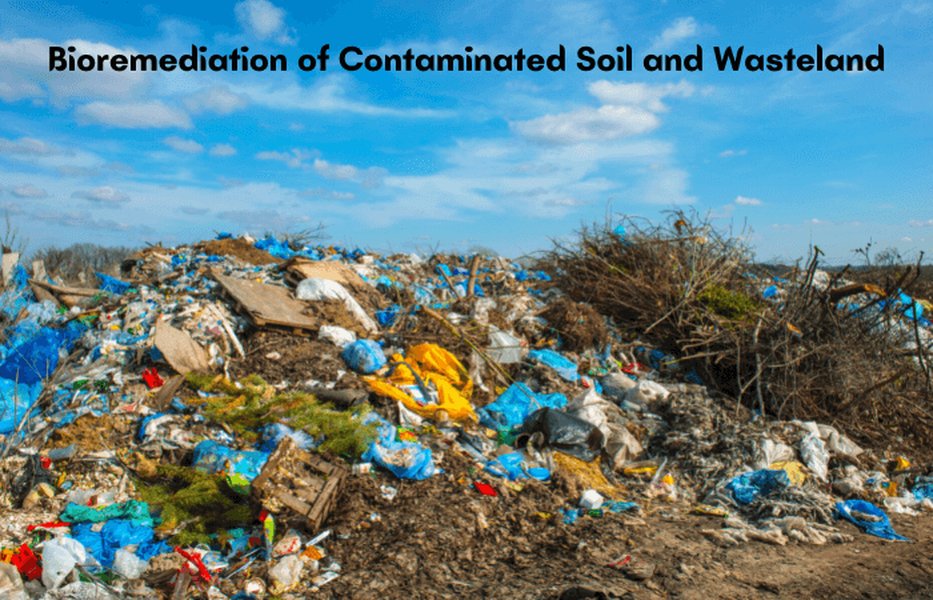
Image: Bioremediation processes for contaminated soil and wasteland, often involving bio-mining.
4. Pharmaceutical Wastewater Treatment (TERI's Oilzapper Technology, India)
Effluents from pharmaceutical industries are notoriously complex, containing a wide array of organic compounds, hydrocarbons, and recalcitrant pollutants. Untreated or inadequately treated wastewater poses a major threat to aquatic ecosystems and human health, contributing to water pollution and scarcity of clean water.
The Energy and Resources Institute (TERI) in India developed "Oilzapper," a groundbreaking bioremediation technology specifically designed for hydrocarbon-laden pharmaceutical and industrial wastewater. Oilzapper utilizes a consortium of naturally occurring, oil-eating microorganisms. When applied to contaminated wastewater, these specialized microbes metabolize the complex organic compounds and hydrocarbons, converting them into non-toxic byproducts like carbon dioxide and water. This microbial bioremediation technology has demonstrated significant success in reducing the concentration of hydrocarbons in industrial wastewater, thereby improving water quality and facilitating its safe discharge or reuse, marking a crucial step in sustainable industrial waste management.
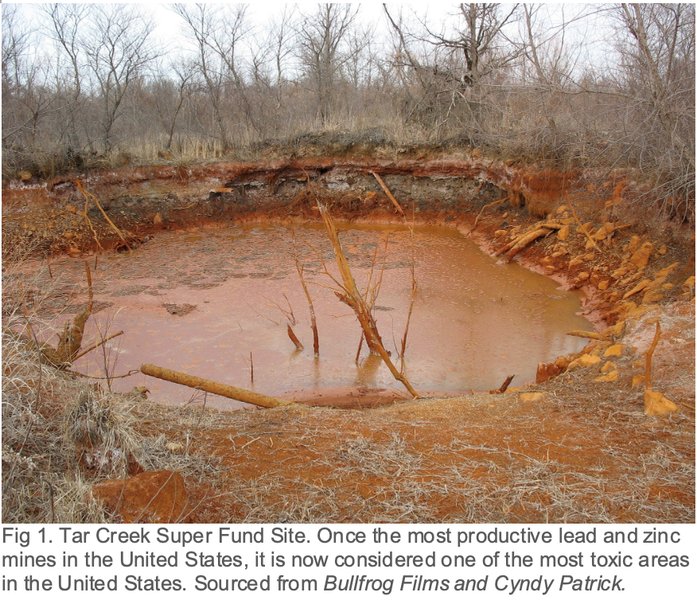
Image: A conceptual diagram illustrating bioremediation at toxic waste sites.
5. Arctic Diesel-Polluted Soil Bioremediation in Greenland
Oil pollution in Arctic tundra soils, often resulting from diesel fuel spills in remote and extreme cold environments, presents unique and formidable challenges for environmental remediation. The low temperatures, limited nutrient availability, and fragile ecosystems make traditional clean-up methods difficult and often ineffective.
In northeastern Greenland, an experimental landfarm was established to address diesel-polluted soil. This full-scale bioremediation project involved cultivating and stimulating oil-degrading microbes specifically adapted to cold conditions. The contaminated soil was aerated and periodically amended with nutrients to enhance the activity of these cold-adapted microorganisms. Despite the harsh Arctic climate, this pioneering approach successfully biodegraded petroleum hydrocarbons, significantly reducing pollution levels. This case study provides a crucial model for effective bioremediation in challenging cold environments, demonstrating the adaptability and resilience of microbial communities in even the most extreme conditions.
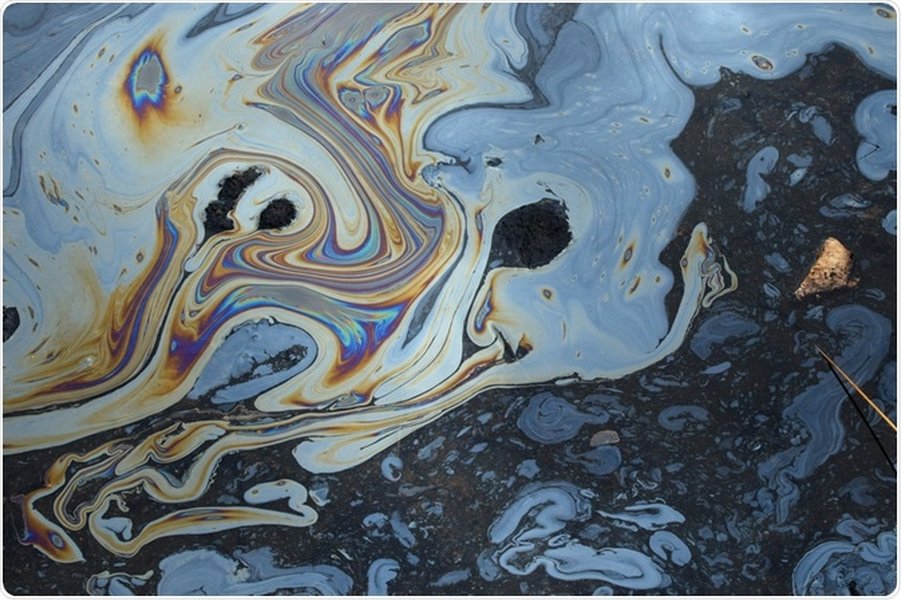
Image: Bioremediation in action, showcasing the use of natural processes for cleanup.
A Deeper Dive into Bioremediation Techniques
Bioremediation encompasses a variety of techniques, each tailored to specific contaminants and environmental conditions. The choice of method depends on factors such as the type and concentration of pollutants, soil composition, pH, temperature, and nutrient availability. Understanding these nuances is crucial for successful implementation.
Biostimulation: Fueling Nature's Cleaners
This technique enhances the activity of indigenous microorganisms by providing optimal conditions for their growth and metabolic functions. For instance, in oil spills, adding fertilizers rich in nitrogen and phosphorus provides essential nutrients that are often scarce in marine environments. This boosts the population and efficiency of naturally occurring oil-degrading bacteria, accelerating the breakdown of hydrocarbons. Oxygen supply, often achieved through aeration, is another critical factor, as many pollutant-degrading microbes are aerobic.
Bioaugmentation: Introducing Specialized Microbes
When native microbial populations lack the specific metabolic pathways to degrade certain contaminants, bioaugmentation comes into play. This involves introducing exogenous microbial strains with known pollutant-degrading capabilities to the contaminated site. These specialized microbes can be genetically engineered or naturally selected strains that are highly efficient in breaking down recalcitrant compounds. Bioaugmentation is often used in combination with biostimulation to ensure the introduced microbes have the necessary nutrients to thrive.
Phytoremediation: Plant-Powered Pollution Control
Phytoremediation utilizes plants to remove, degrade, or contain contaminants. This can involve various mechanisms: phytodegradation (plants breaking down pollutants directly), phytoextraction (plants absorbing contaminants from the soil), rhizofiltration (roots absorbing pollutants from water), and phytostabilization (plants immobilizing contaminants in the soil). Phytoremediation is particularly useful for large areas with low to moderate contamination, offering an aesthetic and less intrusive clean-up option, especially for heavy metals.
Engineered Bioremediation Systems
Beyond in-situ approaches, ex-situ engineered systems like biopiles, landfarming, and bioreactors offer more controlled environments for remediation. Biopiles involve mounding contaminated soil and optimizing conditions like moisture, nutrients, and aeration to enhance microbial activity. Landfarming spreads contaminated soil over a prepared area, allowing natural microbial degradation. Bioreactors are contained systems where conditions are precisely controlled to maximize microbial breakdown of pollutants in liquid or slurried waste.
Comparative Effectiveness of Bioremediation Approaches
The choice of bioremediation strategy often depends on the specific characteristics of the disaster and the pollutants involved. Here's a comparative overview of different approaches based on their efficacy and common applications.
| Bioremediation Approach | Primary Mechanism | Typical Pollutants Addressed | Advantages | Limitations |
|---|---|---|---|---|
| Biostimulation | Enhances native microbial activity by adding nutrients (N, P) or oxygen. | Petroleum hydrocarbons, some organic compounds. | Cost-effective, uses natural processes, broad applicability. | Effectiveness depends on native microbial presence and environmental conditions. |
| Bioaugmentation | Introduces specific microbial strains to degrade pollutants. | Recalcitrant organic compounds, specific industrial wastes. | Targets specific pollutants, effective where native microbes are insufficient. | Costly, requires careful selection of microbes, potential for non-native species introduction. |
| Phytoremediation | Uses plants to absorb, degrade, or stabilize contaminants. | Heavy metals, some organic pollutants (e.g., pesticides, solvents). | Aesthetic, low cost, prevents soil erosion, environmentally friendly. | Slow process, depth limitation for roots, pollutant toxicity to plants. |
| Landfarming | Spreading contaminated soil over a lined bed to promote microbial degradation. | Petroleum hydrocarbons, some organic compounds. | Simple, cost-effective for large volumes of soil. | Requires large land area, weather dependent, potential for leaching if not properly managed. |
| Biopiles | Mounded contaminated soil with controlled aeration and nutrient addition. | Petroleum hydrocarbons, PAHs, some industrial organic wastes. | Controlled environment, effective for moderate to high contamination, relatively fast. | Requires handling and treatment of excavated soil, energy for aeration. |
This table highlights how each bioremediation technique offers a unique set of benefits and faces specific challenges, underscoring the need for tailored solutions in environmental clean-up projects.
The Adaptability of Bioremediation: A Mindmap
Bioremediation's strength lies in its remarkable adaptability across various environmental challenges. This mindmap illustrates the diverse applications and key considerations that make it a versatile tool for environmental clean-up.
Assessing Bioremediation Performance: A Radar Chart Analysis
To further illustrate the multifaceted nature of bioremediation and its effectiveness in various scenarios, we can analyze its performance across several key attributes. This radar chart presents an opinionated assessment of bioremediation's strengths and weaknesses in different contexts, based on its documented success stories.
This chart provides a visual representation of how bioremediation performs across different parameters for various types of environmental pollution. For instance, it generally excels in environmental impact and public acceptance due to its natural approach, while its speed of remediation might be slower compared to aggressive chemical methods, especially in challenging conditions like extreme cold. Wastewater treatment often sees high scores across the board due to the controlled environment and consistent application of microbial processes.
Exploring Bioremediation's Fundamentals: A Visual Journey
To further understand the core concepts behind bioremediation, watching a concise explanation can be highly beneficial. The following video provides an excellent overview of what bioremediation is and how it functions, offering a foundational understanding of the biological processes involved in environmental clean-up.
Video: What is Bioremediation? An introduction to the process of using microorganisms to remove pollutants.
This video, "What is Bioremediation?", serves as an ideal primer, elucidating how microorganisms like bacteria and fungi are harnessed to break down pollutants. It explains the underlying biological principles that enable these tiny organisms to transform harmful substances into less toxic forms, effectively restoring contaminated environments. Understanding these fundamentals is key to appreciating the success stories of bioremediation in real-world disaster scenarios.
Frequently Asked Questions About Bioremediation
What types of pollutants can bioremediation treat?
Is bioremediation always a fast process?
What are the main advantages of bioremediation over traditional cleanup methods?
Can bioremediation be used in extreme environments?
What is the difference between biostimulation and bioaugmentation?
Conclusion
Bioremediation stands as a testament to the power of natural biological processes in addressing some of the most daunting environmental challenges. From mitigating the widespread devastation of major oil spills like the Exxon Valdez and Deepwater Horizon to rehabilitating long-standing industrial contamination and treating complex pharmaceutical wastewater, its diverse applications underscore its critical role in sustainable environmental management. By harnessing the metabolic capabilities of microorganisms and plants, bioremediation offers an environmentally sound, cost-effective, and often less disruptive alternative to conventional clean-up methods. Continued advancements in microbial ecology and biotechnology promise to further enhance its effectiveness and expand its applicability, solidifying its position as a vital tool in the ongoing global effort to restore and protect our planet's ecosystems.
Recommended Further Reading
- How is bioremediation integrated into sustainable industrial practices?
- What are the emerging trends and future prospects of bioremediation technology?
- How do climate change and environmental factors influence bioremediation effectiveness?
- What are the regulatory challenges and policy frameworks for large-scale bioremediation projects?
Referenced Search Results
 media.csuchico.edu