
Bitcoin Cycle Top Price: Predictions and Analysis
A comprehensive analysis of Bitcoin's most likely cycle top
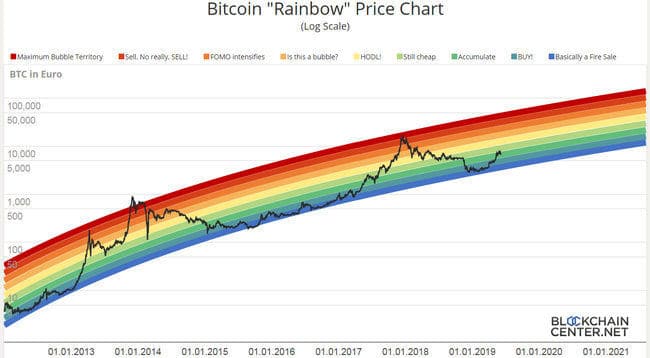
Highlights
- Price Range: Analysts widely predict a cycle top price between $200,000 and $310,000.
- Timing: Most models suggest that the cycle top is likely to occur in late 2025, with major dates clustered around September to November.
- Key Indicators: The Pi Cycle Top Indicator, moving average crossovers, and historical halving effects are fundamental in informing these predictions.
Overview
The prediction of Bitcoin’s cycle top price is a subject of intense debate and analysis among experts, economists, and cryptocurrency enthusiasts. The complexity of these forecasts lies in the interplay of multiple factors including historical market cycles, moving average patterns, and macroeconomic trends. In this comprehensive analysis, we provide an in-depth look at the prevalent models and methods that are used to predict Bitcoin's next significant cycle top, both in terms of price and the expected date. Our synthesis presents a consistent narrative that focuses on a price range between $200,000 and $310,000, with the cycle top likely occurring in the late months of 2025.
Detailed Analysis
Understanding Cycle Tops
Bitcoin, like many other assets, tends to operate in cycles characterized by periods of rapid price increases followed by consolidations or corrections. These cycles are often influenced by a combination of market sentiment, external economic factors, and intrinsic attributes of Bitcoin such as its limited supply. Analysts study past cycles to predict future peaks, and one of the most prominent frameworks used in this analysis includes the Pi Cycle Top Indicator along with other moving average tools.
The Role of the Pi Cycle Top Indicator
The Pi Cycle Top Indicator is a methodological approach that uses two key metrics: the 111-day moving average (111DMA) and a multiple of the 350-day moving average (350DMA x 2). The historical reliability of this indicator lies in its ability to signal when Bitcoin may be entering an unsustainable growth phase. When the short-term moving average (111DMA) approaches the value of the longer-term moving average multiplied by two, it often signifies that the market is overheating, prefiguring an imminent price correction or cycle top.
Historical Data and Price Patterns
Historical observations indicate that Bitcoin’s bull runs are typically followed by sharp corrections once the market reaches a critical threshold. In previous cycles, the price of Bitcoin has surged well above the critical moving average thresholds before eventually settling into a correction phase. Analysts have applied similar frameworks to forecast a future cycle top where critical crossovers are expected to occur around key dates in 2025. For example, some models suggest crossovers may take place as early as mid-2025 (June or September), while others project a later crossover around November.
The Influence of Bitcoin's Halving
A significant component in understanding Bitcoin’s price movements is its halving events. Halving events, which occur approximately every four years, reduce the rate at which new bitcoins are created, effectively lowering the supply influx into the market. Historical trends indicate that these events tend to precipitate a bull market, as reduced supply coupled with rising demand drives prices higher. The next halving, anticipated around April 2024, is expected to exert upward pressure on prices, setting the stage for a market rally that could culminate in a cycle top in late 2025.
Price Range Predictions
Synthesized predictions from various credible analyses point to a cycle top price range between $200,000 and $310,000. Within this range, several important price forecasts have emerged:
| Analyst/Indicator | Predicted Cycle Top Price | Noted Timing |
|---|---|---|
| Mathematical Moving Average Models | $200,000 to $310,000 | Late 2025 (predominantly around October 19, 2025) |
| Alternate Mathematical Projections | $256,000 to $310,000 | Between August 24, 2025 and shifted timeframes depending on market patterns |
| Expert Analysis | $130,000 to $170,000 (lower bound predictions) | November 2025 (with ±21 days variation) |
This table highlights the diversity of opinions while underscoring the overlap in predictions, especially the convergence around a spectrum that centers on $200,000 to $310,000. It is important to note that while some experts provide lower valuations based on short-term market conditions, the bulk of the analysis tends to support the higher range as being more consistent with historical cycles.
Timing of the Cycle Top
The specific timing of Bitcoin's cycle top is influenced by several overlapping factors. In synthesizing the models and historical trends, the consensus points toward a late 2025 peak. Analysts cluster potential peak dates around a few key periods:
Key Dates and Their Significance
The range of predicted dates in late 2025 reflects the complexity of market behaviors and the inherent volatility of Bitcoin. Some models indicate significant moving average crossovers—used as a harbinger for cycle tops—as early as mid-2025 (around June or September). Other models favor a later date, near the end of 2025, notably around October 19th or November 28th. The slight variations in these dates are typically due to differences in how analysts interpret the rate of price increases and the lag effects of the halving events.
Integrating External Market Factors
While technical indicators remain central to cycle top predictions, external market influences such as regulatory developments, macroeconomic trends, and the behavior of institutional investors can shift the timing of the peak. For instance, increased integration of Bitcoin into mainstream financial markets, the launch of Bitcoin ETFs, and evolving regulatory landscapes may accelerate or delay the expected crossover of critical moving averages. Nevertheless, the analysis indicates that even with these external variables, the overall market dynamics strongly favor a cycle top in late 2025.
Mathematical and Technical Models
A significant portion of the predictive framework relies on mathematical models that use technical indicators. Among the most noteworthy is the crossover methodology involving the 111DMA and the 350DMA (multiplied by 2). This technique has been validated in previous cycles and continues to be a cornerstone of cycle top predictions.
Moving Average Crossovers
Moving averages are a statistical tool used in technical analysis to smooth out price data by creating a constantly updated average price. The convergence of a short-term moving average with a threshold based on a longer-term moving average (specifically, twice the 350-day moving average) historically correlates closely with market tops. This approach not only captures short-term momentum but also accounts for larger-scale market trends.
Given the current trajectory and market sentiment, the mathematical projections lean towards identifying critical crossovers as early as September 2025, with another potential crossover hinting at a delayed top in November 2025. When these crossovers align with rising prices driven by bullish investor sentiment and halving-induced scarcity, the probability of reaching a cycle top within these dates increases.
Price Multipliers and Return Analysis
Other technical models extrapolate from historical returns, applying multiplier effects to the moving averages. For example, if Bitcoin’s price historically increases by approximately 40% above its moving averages, then applying such a multiplier to the 350DMA can yield estimates that support a cycle top in the range of $256,000 to $339,000. While these exponent-based calculations provide a theoretical upper bound, practical considerations including market liquidity and investor sentiment tend to moderate these highs to the $200,000 to $310,000 range.
Contributing Market Dynamics
Several market dynamics further inform these estimates. An important factor is the behavior of long-term holders. Many institutional and retail investors hold Bitcoin as a hedge against economic uncertainties, and as these holders reach their profit-taking thresholds, the market naturally corrects. This behavior, combined with the structural constraints on the supply of Bitcoin, reinforces the notion that while prices may rise significantly, a cycle top is inevitable once certain resistance levels are breached.
Additionally, the evolving landscape of Bitcoin adoption, characterized by the increasing integration of the cryptocurrency into global financial markets, adds another layer of complexity. With the advent of more comprehensive regulatory frameworks and the launch of Bitcoin-linked financial instruments, market sentiment may become even more amplified, making the identification of a precise cycle top both challenging and critical. In this environment, technical indicators like the Pi Cycle Top play a crucial role as they offer objective signals that can help decipher when underlying market exuberance reaches unsustainable levels.
Synthesized Conclusion
In conclusion, a comprehensive synthesis of technical analyses, mathematical models, and market behavior strongly suggests that the next cycle top for Bitcoin is most likely to occur in late 2025, with a predicted price range between $200,000 and $310,000. The convergence of several key indicators, such as the Pi Cycle Top Indicator and moving average crossovers, along with historical cyclicality influenced by the halving event, reinforces this forecast. While there are variations in predicted dates—with some forecasts indicating potential topping around September or June 2025 and others pointing to dates as late as November 2025—the overall trend remains clear: Bitcoin’s cycle top is approaching within this timeframe.
It is essential to note that cryptocurrency markets are highly volatile, and while these predictive models provide valuable insights, they are subject to external factors such as regulatory changes and macroeconomic shifts. Investors should therefore exercise caution and consider these predictions as part of a broader analytical framework that includes both technical and fundamental analyses.
Conclusion and Final Thoughts
The prediction of Bitcoin's cycle top remains an evolving challenge. However, by integrating traditional moving average methodologies, understanding halving-induced market dynamics, and accounting for external market forces, the analysis concludes that Bitcoin is likely to achieve its next cycle peak between $200,000 and $310,000 in late 2025. This projection draws on consistent historical trends and robust technical indicators that have reliably signaled past cycle highs.
As the next halving in April 2024 continues to influence market sentiment, and as moving average crossovers signal potential turning points, investors should remain vigilant. While these predictions carry inherent uncertainties due to the volatile nature of cryptocurrency markets, they offer a compelling roadmap based on historical patterns and rigorous technical examination.
References
-
New Pi Cycle Top Prediction Chart Identifies Bitcoin Price Market Peaks with Precision - Nasdaq
- Pi Cycle Top Prediction - Bitcoin Magazine Pro
- Bitcoin Price Prediction - CryptoNews
- Bitcoin Price Prediction - Coinpedia
- Expert Predicts Date for Next Bitcoin Cycle High - NewsBTC
Recommended Queries for Further Exploration
Last updated February 27, 2025