
The Formation of Black Holes: Unveiling the Mysteries of the Cosmos
Exploring the Origins and Evolution of the Universe's Most Enigmatic Objects
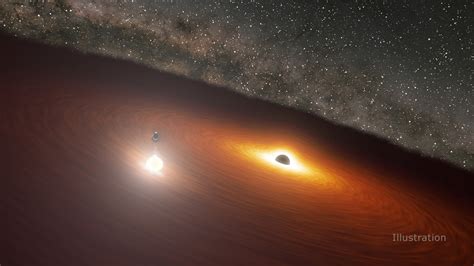
Key Takeaways
- Diverse Formation Pathways: Black holes originate from various processes, including the death of massive stars, the merging of smaller black holes, and conditions present in the early universe.
- Types of Black Holes: They are categorized into stellar, intermediate-mass, supermassive, and primordial black holes, each with distinct formation mechanisms and characteristics.
- Role in Cosmic Evolution: Black holes significantly influence the structure and evolution of galaxies, playing a crucial role in the dynamics of the cosmos.
Introduction to Black Holes
Black holes are among the most intriguing and mysterious phenomena in the universe. Defined by their intense gravitational pull from which nothing, not even light, can escape, black holes challenge our understanding of physics and the fundamental laws governing the cosmos. This comprehensive exploration delves into the various mechanisms through which black holes form, their classifications, and their profound impact on the structure and evolution of the universe.
Mechanisms of Black Hole Formation
1. Stellar Black Holes
Stellar black holes are the most common type of black holes and form from the gravitational collapse of massive stars. The process follows several critical stages:
a. Stellar Evolution and Nuclear Fusion
Massive stars, typically those with masses exceeding 10 times that of the Sun, sustain themselves through nuclear fusion. In their cores, hydrogen atoms fuse to form helium, releasing energy that counteracts gravitational collapse. As the star ages, it undergoes successive stages of fusion, producing heavier elements like carbon, oxygen, and eventually iron.
b. Core Collapse and Supernova Explosion
Once a massive star exhausts its nuclear fuel, the outward pressure from fusion ceases, and gravity takes over. The star's core collapses under its own weight, leading to an immense increase in density and temperature. This collapse typically results in a supernova explosion, a catastrophic event that ejects the star's outer layers into space.
c. Formation of the Black Hole
If the remaining core after the supernova possesses sufficient mass—usually more than about 3 solar masses—it continues to collapse beyond the neutron star stage, forming a black hole. The gravitational force becomes so intense that it warps spacetime, creating a singularity surrounded by an event horizon, the point of no return.
2. Supermassive Black Holes
Supermassive black holes (SMBHs) reside at the centers of nearly all galaxies, including our Milky Way. Their formation mechanisms are more complex and less understood compared to stellar black holes. Several theories propose how SMBHs attain their colossal masses:
a. Direct Collapse of Gas Clouds
In the early universe, massive clouds of gas could collapse directly into black holes without fragmenting into stars. This direct collapse bypasses the star formation stage and can result in black holes with masses ranging from thousands to millions of solar masses.
b. Merging of Smaller Black Holes
SMBHs may grow by merging with smaller black holes and accreting mass from their surroundings. Through successive mergers and accretion events, these black holes can amass billions of solar masses over cosmic time scales.
c. Accretion of Matter
Continuous accumulation of matter from the galaxy's interstellar medium, stars, and other black holes contributes to the growth of SMBHs. The accretion process releases significant energy in the form of electromagnetic radiation, often observable as quasars or active galactic nuclei (AGN).
3. Intermediate-Mass Black Holes
Intermediate-mass black holes (IMBHs) bridge the gap between stellar and supermassive black holes, possessing masses between 100 to 100,000 solar masses. Their formation is still a subject of ongoing research, with proposed mechanisms including:
a. Mergers of Stellar-Mass Black Holes
The collision and merging of multiple stellar-mass black holes in dense stellar environments, such as globular clusters, can result in the formation of an intermediate-mass black hole.
b. Collapse of Dense Star Clusters
In extremely dense star clusters, gravitational interactions can lead to the runaway collision of massive stars, ultimately collapsing into an IMBH.
4. Primordial Black Holes
Primordial black holes are hypothetical entities thought to have formed shortly after the Big Bang due to high-density fluctuations in the early universe. Unlike other black holes, they are not formed from stellar processes. Characteristics and formation scenarios include:
a. High-Density Fluctuations
In the moments following the Big Bang, regions with extreme density fluctuations could have undergone gravitational collapse to form black holes of various sizes, ranging from subatomic to several solar masses.
b. Role in Dark Matter
Primordial black holes are candidates for dark matter, constituting non-luminous mass that affects the gravitational dynamics of galaxies and cosmic structures.
5. Other Formation Pathways
Beyond the primary mechanisms discussed, emerging theories and observations suggest additional pathways for black hole formation:
a. Tidal Disruption Events
When a star ventures too close to an existing black hole, tidal forces can rip it apart, with the remnants contributing to the black hole's mass.
b. Accretion of Dark Matter
Black holes might accumulate mass through the accretion of dark matter particles, although the exact nature of this process remains speculative.
Key Characteristics of Black Holes
Regardless of their formation mechanism, black holes share several fundamental properties that define their nature and behavior:
1. Event Horizon
The event horizon is the boundary surrounding a black hole beyond which nothing can escape its gravitational pull. It marks the point at which the escape velocity equals the speed of light. The size of the event horizon is proportional to the black hole's mass and is described by the Schwarzschild radius:
$$ r_s = \frac{2GM}{c^2} $$
Where:
-
rₛ is the Schwarzschild radius.
-
G is the gravitational constant.
-
M is the mass of the black hole.
-
c is the speed of light.
2. Singularity
At the heart of a black hole lies the singularity, a point of infinite density where spacetime curvature becomes infinite, and known physical laws cease to operate predictably. The singularity represents the ultimate gravitational collapse, where all the mass of the black hole is thought to be concentrated.
3. Accretion Disk
Many black holes are surrounded by an accretion disk, a rotating disk of gas, dust, and other material that spirals inward under the influence of gravity. As matter in the accretion disk accelerates and heats up due to friction and gravitational forces, it emits radiation, particularly in the X-ray spectrum. This emission is a primary method through which astronomers detect and study black holes.
4. Gravitational Lensing
Black holes can bend the path of light passing nearby due to their intense gravitational fields, a phenomenon known as gravitational lensing. This effect allows astronomers to observe the distortion and magnification of background objects, providing indirect evidence of black holes and insights into their properties.
5. Hawking Radiation
Theoretical physicist Stephen Hawking proposed that black holes can emit radiation due to quantum effects near the event horizon, a process now known as Hawking radiation. Although this radiation has not yet been observed, it implies that black holes can lose mass and potentially evaporate over astronomical timescales.
Influence of Black Holes on Galactic Evolution
Black holes, particularly supermassive black holes, play a pivotal role in shaping the formation and evolution of galaxies. Their interactions with surrounding matter and the energy they emit can influence star formation rates, galaxy morphology, and the distribution of matter within galaxies.
1. Feedback Mechanisms
Black holes can regulate galaxy growth through feedback mechanisms, where energy and momentum released from the vicinity of the black hole affect the interstellar medium. This feedback can suppress or promote star formation by heating gas or driving outflows that remove gas from the galaxy.
2. Correlation with Bulge Mass
Observations indicate a tight correlation between the mass of supermassive black holes and the properties of the galactic bulge, such as velocity dispersion (the M-sigma relation). This suggests a co-evolution of black holes and their host galaxies, potentially driven by mutual interactions and shared growth histories.
3. Quasars and Active Galactic Nuclei
Quasars and active galactic nuclei (AGN) are powered by supermassive black holes accreting large amounts of matter. These luminous phenomena can outshine their host galaxies and have significant impacts on their environments, influencing star formation and the distribution of gas and dust.
4. Galactic Mergers
When galaxies collide and merge, their central black holes can form binary systems and eventually coalesce into a single, more massive black hole. These mergers are sources of gravitational waves and contribute to the growth of supermassive black holes.
Observational Evidence and Detection Methods
Detecting and studying black holes relies on indirect methods, as their very nature prevents direct observation. Several techniques have been developed to infer the presence and properties of black holes:
1. X-Ray Emissions from Accretion Disks
As matter spirals into a black hole's accretion disk, it heats up and emits X-rays. Observing these X-ray emissions allows astronomers to identify and study black holes, particularly those in binary systems or active galactic nuclei.
2. Stellar Motion Tracking
By monitoring the motion of stars near the galactic center, astronomers can infer the presence of a supermassive black hole. For example, the rapid orbits of stars around Sagittarius A* provide compelling evidence for the Milky Way's central black hole.
3. Gravitational Lensing
As previously mentioned, the bending of light around black holes can be observed as gravitational lensing, allowing for the detection of black holes based on the distortion of background light sources.
4. Gravitational Wave Detection
The merger of black holes produces ripples in spacetime known as gravitational waves. Facilities like LIGO and Virgo have successfully detected these waves, providing direct evidence of black hole mergers and offering insights into their properties.
5. Event Horizon Telescope (EHT) Imaging
In 2019, the Event Horizon Telescope collaboration produced the first image of a black hole's event horizon in the galaxy M87. This groundbreaking achievement involved a global network of radio telescopes working in unison to capture detailed images of the shadow surrounding the black hole.
Challenges and Future Directions in Black Hole Research
Despite significant advancements, many aspects of black hole formation and behavior remain enigmatic. Ongoing research and future technological developments aim to address these challenges:
1. Understanding Supermassive Black Hole Formation
The exact processes that lead to the formation of supermassive black holes, especially in the early universe, are still not fully understood. Future observations combining gravitational wave data with electromagnetic signals may shed light on their growth mechanisms.
2. Detecting Primordial Black Holes
Identifying primordial black holes would have profound implications for our understanding of the early universe and dark matter. Efforts focus on searching for their gravitational lensing effects, contributions to gravitational wave signals, and potential Hawking radiation signatures.
3. Resolving the Singularity Problem
The nature of singularities challenges the reconciliation of general relativity with quantum mechanics. Developing a theory of quantum gravity is essential for understanding the true nature of black hole cores.
4. Enhancing Imaging Techniques
Improving the resolution and sensitivity of telescopes like the Event Horizon Telescope will enable more detailed observations of black hole environments, contributing to our understanding of their immediate surroundings and behavior.
5. Exploring Hawking Radiation
Detecting Hawking radiation remains a significant challenge due to its extremely faint nature for astrophysical black holes. Laboratory analogs and advanced observational techniques may provide indirect evidence of this theoretical phenomenon.
Conclusion
Black holes represent some of the most extreme and fascinating phenomena in the universe. Their formation through diverse pathways—from the death of massive stars to the enigmatic conditions of the early cosmos—highlights the complexity of cosmic evolution. Understanding black holes not only unravels the mysteries surrounding these enigmatic objects but also provides profound insights into the fundamental laws of physics and the dynamic processes shaping galaxies. As observational technologies advance and theoretical models evolve, the study of black holes continues to be at the forefront of astronomical research, offering glimpses into the universe's most profound secrets.
References
Last updated January 20, 2025