
The Formation of Black Holes: A Comprehensive Exploration
Unveiling the Mysteries Behind the Universe's Most Enigmatic Objects
Key Takeaways
- Stellar Evolution: Black holes commonly form from the gravitational collapse of massive stars after they exhaust their nuclear fuel.
- Diverse Formation Pathways: Beyond stellar collapse, black holes can form through mergers, direct gas cloud collapse, and possibly primordial conditions from the early universe.
- Variety of Black Holes: Black holes range in size from stellar to supermassive, each with unique formation mechanisms and characteristics.
Introduction to Black Holes
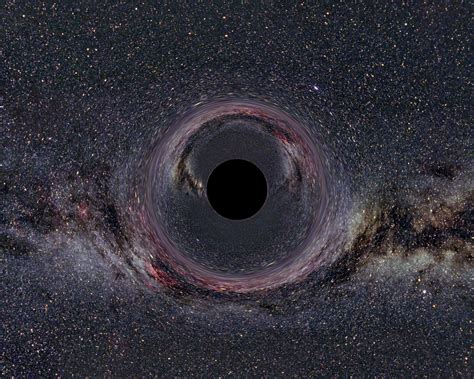
Black holes are among the most fascinating and mysterious objects in the cosmos. Their existence challenges our understanding of physics, particularly in the realms of general relativity and quantum mechanics. A black hole is a region in space where the gravitational pull is so intense that nothing, not even light, can escape from it. This mind-bending phenomenon arises from the warping of spacetime by massive objects.
The study of black holes not only provides insights into the extreme conditions of the universe but also serves as a testing ground for theories of gravity and the fundamental laws of nature. Understanding how black holes form is crucial for comprehending their role in the cosmic landscape and their influence on galaxy formation and evolution.
Mechanisms of Black Hole Formation
1. Stellar Black Holes
Stellar black holes are the most well-understood and common type of black holes. They form from the remnants of massive stars that have ended their life cycles.
a. The Life Cycle of Massive Stars
Massive stars, typically those with masses exceeding 20 times that of the Sun, undergo a life cycle that culminates in a spectacular end known as a supernova. During their lifetimes, these stars fuse hydrogen into helium in their cores, releasing energy that counteracts the force of gravity. When the hydrogen fuel depletes, the star begins to fuse heavier elements, leading to successive stages of core contraction and shell burning.
b. Core Collapse
As the star exhausts its nuclear fuel, the outward pressure from fusion reactions diminishes. Without this pressure, gravity takes over, causing the core to collapse under its own weight. If the remaining core mass exceeds the Tolman–Oppenheimer–Volkoff limit (approximately 2.5 to 3 solar masses), it cannot sustain itself against gravitational collapse, leading to the formation of a black hole.
c. Formation of the Event Horizon
The continued collapse results in the formation of an event horizon, the boundary around the black hole beyond which nothing can escape. The region inside the event horizon culminates in a singularity, a point of infinite density where the known laws of physics break down.
2. Supermassive Black Holes
Supermassive black holes reside at the centers of most galaxies, including our own Milky Way. Their masses range from millions to billions of times that of the Sun, and their formation processes are subjects of active research and debate.
a. Formation Theories
The exact mechanisms leading to the formation of supermassive black holes are not yet fully understood, but several prevailing theories exist:
- Mergers of Smaller Black Holes: Through successive mergers of stellar-mass black holes, a supermassive black hole can gradually accumulate mass.
- Direct Collapse of Gas Clouds: In the early universe, massive gas clouds may have collapsed directly into black holes without fragmenting into stars, bypassing the typical stellar evolution pathway.
- Accretion of Surrounding Matter: Continuous accretion of gas, dust, and other matter from the galactic environment can contribute to the growth of a supermassive black hole.
b. Role in Galaxy Formation
Supermassive black holes play a crucial role in the formation and evolution of galaxies. Their gravitational influence shapes the dynamics of stars and gas within the galactic core, and their energy output can regulate star formation through feedback processes.
3. Intermediate-Mass Black Holes
Intermediate-mass black holes bridge the gap between stellar-mass and supermassive black holes, with masses ranging from a few hundred to a few thousand solar masses. Their formation mechanisms are less clear and remain a topic of ongoing research.
a. Potential Formation Paths
-
Mergers in Dense Star Clusters: In regions with high stellar densities, such as globular clusters, frequent interactions and mergers of stars and stellar remnants can lead to the formation of intermediate-mass black holes.
-
Primordial Black Holes: Some hypotheses suggest that primordial density fluctuations from the early universe could lead to the formation of black holes with intermediate masses.
b. Observational Evidence
While evidence for intermediate-mass black holes is growing, they remain elusive compared to their stellar and supermassive counterparts. Recent gravitational wave detections have provided promising candidates, but definitive confirmation is still pending.
4. Primordial Black Holes
Primordial black holes are theoretical black holes that may have formed in the dense, high-energy conditions of the early universe, shortly after the Big Bang.
a. Formation Mechanism
Small-scale density fluctuations in the early universe could have led to regions collapsing directly into black holes without the intermediary of star formation. These black holes could have a wide range of masses, potentially much smaller than stellar-mass black holes.
b. Significance and Dark Matter
If primordial black holes exist, they could contribute to the dark matter content of the universe. However, their existence remains speculative, as direct observational evidence is lacking.
Characteristics of Black Holes
Event Horizon
The event horizon is the defining boundary of a black hole. It marks the point at which the escape velocity equals the speed of light. Beyond this boundary, the gravitational pull is so strong that nothing can escape, not even electromagnetic radiation such as light.
Singularity
At the very center of a black hole lies the singularity, a point where the curvature of spacetime becomes infinite and gravitational forces crush matter to an infinitely small point. The singularity represents a breakdown of our current understanding of physics.
Accretion Disk
Surrounding many black holes is an accretion disk, a rotating disk of gas, dust, and other matter spiraling into the black hole. As material in the accretion disk accelerates and becomes compressed, it heats up and emits electromagnetic radiation, often making the vicinity of black holes detectable despite their inherent darkness.
Growth and Evolution of Black Holes
Accretion of Matter
Black holes grow by accreting surrounding matter. This process involves the transfer of mass from the accretion disk into the black hole, leading to an increase in its mass and, correspondingly, the size of its event horizon.
Mergers with Other Black Holes
Black holes can merge with other black holes, resulting in a single, more massive black hole. Such mergers are powerful sources of gravitational waves, ripples in spacetime that propagate outward from the point of collision.
Capturing Nearby Stars and Gas
Black holes can capture stars and gas that venture too close to their gravitational pull. These interactions not only contribute to the black hole's growth but can also lead to spectacular astrophysical phenomena, such as tidal disruption events, where stars are torn apart by gravitational forces.
Observational Evidence and Detection
Detecting black holes directly is impossible due to their nature. However, their presence can be inferred through various observational methods:
Gravitational Lensing
Black holes can bend the path of light from background stars due to their immense gravity, a phenomenon known as gravitational lensing. Observing these lensing effects can indicate the presence of a black hole.
X-ray Emissions from Accretion Disks
The accretion disks around black holes emit high-energy X-rays as matter heats up while spiraling inward. Observatories like the Chandra X-ray Observatory detect these emissions, providing evidence for black holes.
Gravitational Waves
The merger of black holes generates gravitational waves, which are ripples in spacetime detected by observatories such as LIGO and Virgo. These detections have opened a new avenue for studying black holes and their properties.
Stellar Motions
Observing the motions of stars near the centers of galaxies can reveal the presence of supermassive black holes. The rapid orbits of these stars imply the existence of a massive, compact object exerting strong gravitational influence.
Theoretical Implications and Future Research
Black holes continue to challenge and expand our understanding of physics. They serve as natural laboratories for testing theories of gravity, quantum mechanics, and the interactions between them.
Information Paradox
The information paradox arises from the question of what happens to the information about the state of matter that falls into a black hole. According to quantum mechanics, information cannot be destroyed, but black hole evaporation via Hawking radiation suggests it might be lost, leading to a fundamental conflict between general relativity and quantum theory.
Quantum Gravity
Understanding black holes is pivotal in the quest for a theory of quantum gravity, which aims to reconcile the principles of quantum mechanics with general relativity. Insights gained from studying black holes could pave the way for breakthroughs in this fundamental area of physics.
Event Horizon Telescope
The Event Horizon Telescope (EHT) project has provided unprecedented images of black holes, notably the first image of the supermassive black hole in the galaxy M87. Future observations and technological advancements promise to further unravel the complexities of black hole environments.
Impact on Astrophysics and Cosmology
Galactic Evolution
Black holes, particularly supermassive ones, play a significant role in the formation and evolution of galaxies. Their energy output can regulate star formation rates, influence galactic dynamics, and contribute to the distribution of matter within galaxies.
Dark Matter and Dark Energy
While black holes themselves are not considered dark matter, primordial black holes have been proposed as potential dark matter candidates. Additionally, studying black holes can provide indirect insights into the nature of dark energy, the mysterious force driving the accelerated expansion of the universe.
Testing General Relativity
Black holes serve as natural experiments for testing Einstein's theory of general relativity under extreme conditions. Observations of black hole behavior and properties continue to confirm and refine our understanding of gravitational physics.
Conclusion
Black holes are extraordinary objects that encapsulate some of the most extreme conditions in the universe. Their formation, spanning from the death of massive stars to the enigmatic processes behind supermassive giants, remains a cornerstone topic in astrophysics. As observational technologies advance and theoretical frameworks evolve, our comprehension of black holes deepens, shedding light on the fundamental workings of the cosmos. The ongoing study of black holes not only unravels the mysteries surrounding these enigmatic entities but also propels our understanding of the universe to new horizons.
References
Last updated January 19, 2025