
BlackLine vs. OneStream: Unveiling the Ideal Platform for Your Financial Operations
A deep dive into which solution excels across key accounting and finance use cases, from reconciliation to intercompany transactions.
Choosing the right financial software is pivotal for streamlining operations and ensuring accuracy. When comparing BlackLine and OneStream, understanding their core strengths in relation to specific use cases like account reconciliation, journal entries, workflow automation, intercompany processing, transaction matching, task management, and intercompany creation is crucial. Both are powerful platforms, but their optimal applications differ based on organizational priorities and the specific financial processes in question.
Key Highlights: BlackLine vs. OneStream
- Specialization vs. Unification: BlackLine excels in specialized financial close automation, particularly for detailed accounting tasks, while OneStream offers a unified Corporate Performance Management (CPM) platform integrating broader financial processes.
- Core Strengths Defined: For granular tasks like account reconciliation and transaction matching, BlackLine often leads. For comprehensive intercompany processes (including creation) and unified financial planning, OneStream typically provides a more holistic solution.
- Consider Your Needs: The "better" application hinges on your organization's primary need—be it best-of-breed automation for specific accounting functions or a single, integrated platform for end-to-end financial management and reporting.
Platform Overview: Distinct Philosophies
Before diving into specific use cases, it's important to understand the foundational differences between BlackLine and OneStream.
BlackLine: The Financial Close Automation Specialist
BlackLine is predominantly recognized as a cloud-based solution laser-focused on automating and streamlining finance and accounting operations. Its core mission is to enhance the financial close process by automating manual tasks, improving accuracy, and ensuring compliance. BlackLine's modules are designed to tackle specific pain points within accounting departments, making it a popular choice for organizations seeking deep functionality in areas like reconciliation and journal entry management.
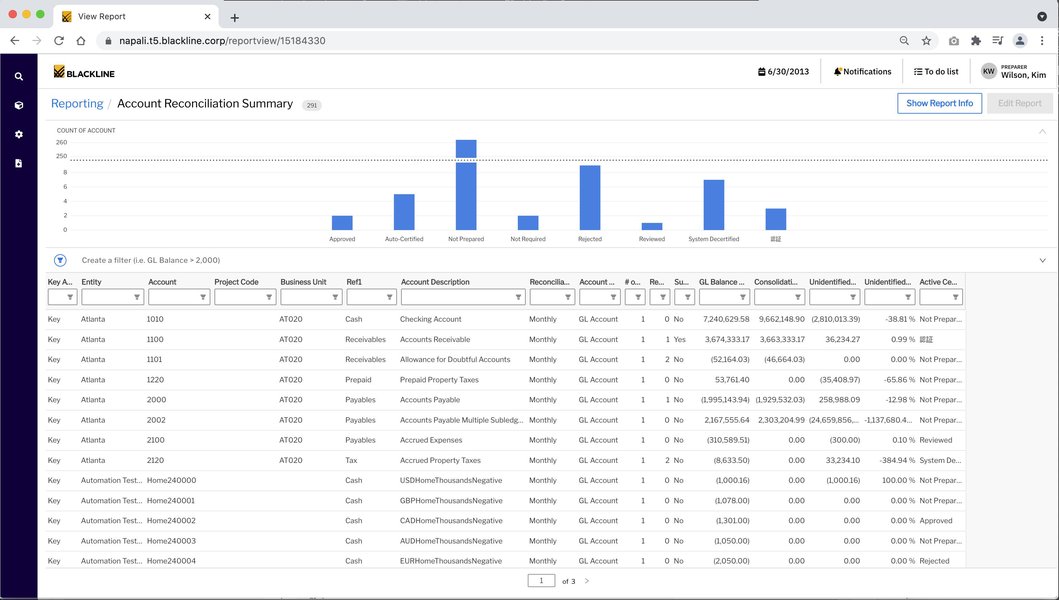
BlackLine focuses on automating financial close processes.
OneStream: The Unified Corporate Performance Management (CPM) Platform
OneStream presents itself as a comprehensive CPM platform designed to unify various financial processes beyond just the close. It aims to replace multiple legacy systems by offering capabilities for financial consolidation, planning, budgeting, reporting, and analytics, all within a single interface. OneStream's strength lies in its ability to integrate financial and operational data, providing a holistic view of business performance. Its Extensible Dimensionality® allows for flexibility and detailed analysis across complex global organizations.
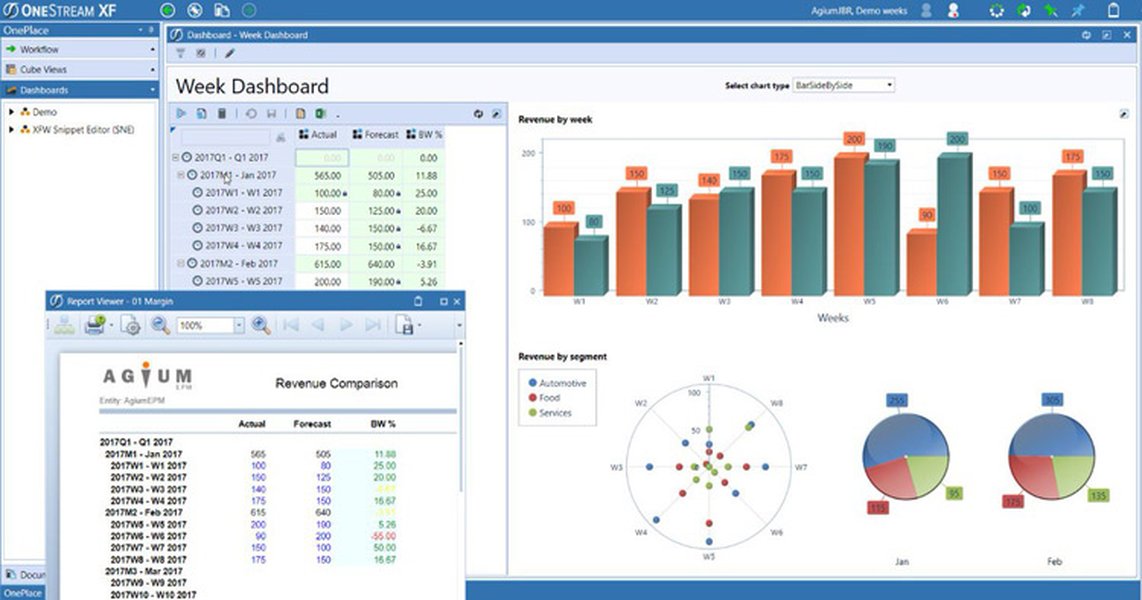
OneStream XF provides a unified Corporate Performance Management platform.
Comparative Analysis of Key Use Cases
Let's explore how BlackLine and OneStream stack up against your specified financial and accounting use cases.
1. Account Reconciliation
Streamlining Verification and Accuracy
BlackLine: This is a core stronghold for BlackLine. It is widely recognized for its advanced, automated account reconciliation capabilities. The platform excels at automating balance sheet reconciliations, transaction matching, and exception management. Users often praise its AI-driven matching capabilities, robust audit trails, and features designed to reduce manual errors and streamline financial close cycles significantly. BlackLine is often considered a market leader specifically for financial reconciliation solutions.
OneStream: OneStream also offers robust account reconciliation functionalities as an integral part of its unified EPM platform. It allows reconciliations to be tied directly to financial reporting and journal entries, supporting customized workflow automations and providing granular visibility. While capable, its reconciliation features are part of a broader suite rather than a standalone specialty.
Verdict: For organizations prioritizing a dedicated, highly specialized, and mature solution for account reconciliation with advanced automation, BlackLine generally holds the edge.
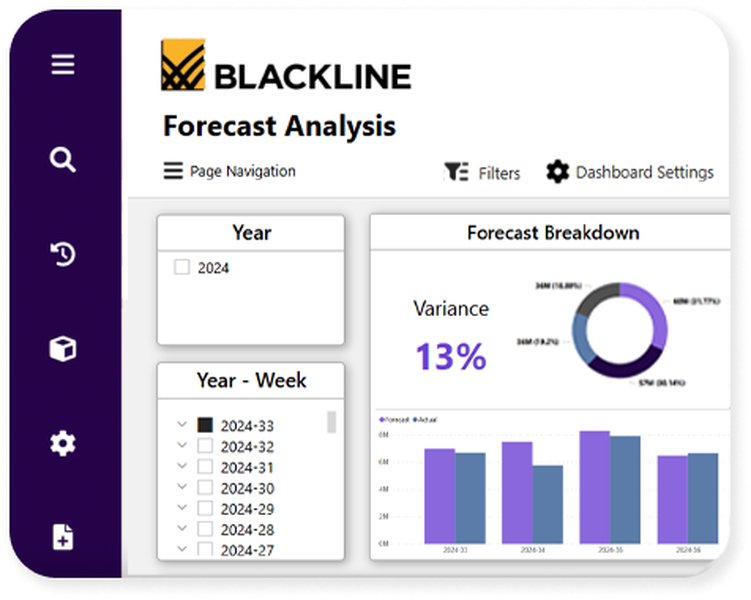
BlackLine leverages AI for advanced account reconciliation capabilities.
2. Journals
Managing and Automating Journal Entries
BlackLine: Provides a dedicated journal entry management system with features for automated journal creation (often stemming from reconciliations), review, approval workflows, and robust audit capabilities. Its focus is on ensuring control, compliance, and efficiency in journal processing.
OneStream: Offers comprehensive journal entry management within its EPM platform. Users can create, validate, and post journals with built-in workflow automation and controls that integrate seamlessly with its consolidation and financial reporting modules. The integration with the broader financial picture is a key aspect here.
Verdict: Both platforms offer strong journal management. BlackLine is excellent for specialized journal entry automation and control. OneStream excels if tight integration of journals with the overall financial close, consolidation, and reporting process within a single platform is paramount. This can be considered a tie, depending on specific integration needs.
3. Workflow
Automating and Orchestrating Financial Processes
BlackLine: Excels at workflow automation specifically tailored to the financial close, including reconciliation approvals, journal entry routing, and task management. Its platform offers configurable workflows designed to enhance collaboration, enforce internal controls, and provide visibility and accountability throughout the close process.
OneStream: Features a flexible, enterprise-grade workflow engine that supports a wide array of financial processes beyond just the close, such as planning, budgeting, and reporting. Workflows can be extensively customized and are deeply integrated within its unified platform, capable of supporting multiple departments and complex organizational structures.
Verdict: For finance-close specific workflow automation, BlackLine offers refined capabilities. For broader, enterprise-wide financial workflow management that extends beyond accounting into other CPM areas, OneStream provides more extensive and flexible options.
4. Intercompany
Managing Transactions Between Entities
BlackLine: Provides solutions for intercompany matching and reconciliation, focusing on automating the identification and resolution of discrepancies between entities. It supports intercompany transaction matching, dispute resolution workflows, and helps automate parts of the elimination and reconciliation process.
OneStream: Offers robust intercompany transaction management embedded within its consolidation and financial close platform. This includes capabilities for intercompany transaction creation, matching, and automated eliminations. OneStream's unified data model and end-to-end processing—from transaction initiation to final reporting—are particularly beneficial for large, complex organizations with significant intercompany activity.
Verdict: For end-to-end intercompany transaction processing, including creation, matching, and elimination, especially in complex global organizations, OneStream is often favored. BlackLine is powerful for intercompany reconciliation and matching specifically.
5. Transaction Matching
Automating the Comparison of Transactional Data
BlackLine: This is another core strength of BlackLine. It offers advanced transaction matching capabilities, often leveraging AI and rules-based engines to achieve high accuracy and automation levels. It is designed to handle complex matching scenarios, manage exceptions efficiently, and support various reconciliation types across multiple data sources (e.g., bank statements, ERP systems, sub-ledgers).
OneStream: Also supports automated transaction matching as part of its broader financial close automation and account reconciliation features. Its AI and machine learning capabilities can streamline matching processes, but it's generally viewed as less of a standalone, specialized focus compared to BlackLine.
Verdict: For organizations with a heavy emphasis on complex, high-volume transaction matching requiring sophisticated automation, BlackLine is typically the more specialized and powerful solution.
6. Task Management
Organizing and Tracking Financial Close Activities
BlackLine: Includes dedicated task management modules specifically designed for financial close processes. These tools enable teams to assign, track, monitor, and report on all close-related tasks, complete with deadlines, notifications, and dependencies. This drives accountability and efficiency across accounting teams.
OneStream: Supports task management as part of its unified platform, embedding task controls, status tracking, and notifications within its workflows for account reconciliations, journals, intercompany processes, and other financial close activities. It's integrated but not always highlighted as a distinct, standalone module in the same way as BlackLine's.
Verdict: Both provide solid task management. BlackLine is often preferred for its dedicated, finance-close specific task management features. OneStream offers task management that is deeply interconnected with its wider platform capabilities.
7. Intercompany Create
Initiating and Recording Intercompany Transactions
BlackLine: While strong in intercompany reconciliation and matching, BlackLine's capabilities for the actual *creation* or posting of intercompany transactions are less comprehensive. It primarily focuses on validating and reconciling existing intercompany transactions rather than being a system of record for initiating them.
OneStream: Explicitly supports intercompany transaction creation as an integral feature within its consolidation solution. This allows users to efficiently create, manage, and post intercompany transactions directly within the system, which then flow seamlessly into the matching, elimination, and reporting processes. This provides a more holistic intercompany management capability from start to finish.
Verdict: For the specific use case of "intercompany create," OneStream generally offers more robust and integrated functionality, enabling a complete lifecycle management of intercompany transactions within its platform.
Feature Strength Radar Chart
The following radar chart provides a visual representation of how BlackLine and OneStream compare across the discussed use cases, based on synthesized insights. The ratings are on a scale where a higher number indicates stronger perceived capability or specialization in that area (min scale 5, max scale 10).
This chart illustrates that BlackLine often shows higher specialization in areas like Account Reconciliation, Transaction Matching, and dedicated Task Management. OneStream tends to score higher in overall Intercompany capabilities (especially creation) and comprehensive Workflow due to its unified platform approach.
Mindmap: Core Focus Areas
This mindmap visualizes the central philosophies and primary strengths of BlackLine and OneStream, helping to contextualize their approaches to financial automation and management.
Financial Close &
Accounting Automation"] id1_2["Key Strengths:"] id1_2_1["Account Reconciliation"] id1_2_2["Transaction Matching"] id1_2_3["Task Management (Close-Specific)"] id1_2_4["Journal Entry Automation"] id1_2_5["Compliance & Controls"] id2["OneStream"] id2_1["Core Focus:
Unified Corporate
Performance Management (CPM)"] id2_2["Key Strengths:"] id2_2_1["Financial Consolidation & Reporting"] id2_2_2["Planning, Budgeting & Forecasting"] id2_2_3["Intercompany (End-to-End)"] id2_2_4["Platform Extensibility & Scalability"] id2_2_5["Data Quality & Analytics"]
The mindmap highlights BlackLine's specialization in automating specific accounting tasks within the financial close, whereas OneStream's focus is on providing a broad, unified platform for overall corporate performance management, encompassing a wider range of financial processes.
Summary Table: At-a-Glance Comparison
The table below provides a quick summary of which platform generally aligns better with each specified use case, based on the detailed analysis.
| Use Case | BlackLine Strength | OneStream Strength | Generally Better Fit / Key Differentiator |
|---|---|---|---|
| Account Reconciliation | Highly specialized, advanced automation, AI-driven matching | Integrated within EPM, ties to reporting/journals | BlackLine (for deep, standalone reconciliation automation) |
| Journals | Dedicated journal management, robust controls | Integrated with close, consolidation, and reporting | Tie / Depends (BlackLine for focused automation, OneStream for unified process) |
| Workflow | Finance-close centric, refined for accounting tasks | Enterprise-wide, flexible, supports broader CPM processes | OneStream (for broader, more versatile workflow across finance functions) |
| Intercompany (Overall) | Strong in matching and reconciliation | Full lifecycle: creation, matching, elimination, consolidation | OneStream (for comprehensive, end-to-end intercompany management) |
| Transaction Matching | Advanced AI and rules-based engines, core strength | Good automated matching, part of broader close automation | BlackLine (for focused, high-volume, complex matching) |
| Task Management | Dedicated modules for financial close task automation | Task management integrated across the unified platform | BlackLine (for specialized, finance-close specific task management) |
| Intercompany Create | Limited direct creation, focuses on reconciliation of existing | Strong intercompany transaction creation and posting capabilities | OneStream (for holistic intercompany process including transaction initiation) |
Frequently Asked Questions (FAQ)
Which platform is better if my primary goal is to automate account reconciliations?
If your main objective is to automate account reconciliations with a high degree of specialization and advanced features, BlackLine is generally considered the stronger choice. It is specifically designed for this purpose and has a mature, feature-rich module for account reconciliation, including robust transaction matching and exception handling.
My company needs a solution for comprehensive financial planning and consolidation, in addition to close tasks. Which is more suitable?
For organizations seeking a unified platform that handles financial planning, budgeting, forecasting, consolidation, and reporting alongside financial close tasks (including reconciliations and journals), OneStream is typically more suitable. Its strength lies in its ability to integrate these broader Corporate Performance Management (CPM) functions into a single system.
What about managing complex intercompany transactions, including their creation?
OneStream generally provides more comprehensive capabilities for managing the entire lifecycle of intercompany transactions, including their creation, matching, elimination, and reporting. This is particularly true for large, global organizations with complex intercompany webs. BlackLine is strong on the reconciliation and matching aspects of intercompany transactions but less so on the initial creation within its platform.
Are there differences in implementation complexity and learning curve?
Generally, BlackLine, being more specialized, might have a more straightforward implementation for its core modules. OneStream, due to its breadth as a unified CPM platform, can sometimes have a steeper learning curve and more complex implementation, especially if leveraging its full range of capabilities. However, this can vary greatly depending on the scope of the deployment and specific organizational needs.
Recommended Further Exploration
To deepen your understanding, consider exploring these related queries:
- How do BlackLine and OneStream integrate with major ERP systems like SAP, Oracle, and NetSuite?
- What are the typical user satisfaction levels and peer reviews for BlackLine versus OneStream specifically within large enterprises?
- What is the total cost of ownership (TCO) for BlackLine compared to OneStream, considering implementation, subscription, and maintenance?
- How do BlackLine and OneStream address scalability and future-proofing for growing financial operations?
References
This response synthesized information from various sources, including the following relevant URLs:
Last updated May 8, 2025