
Riding Beyond Sight: Exploring Motorcycle Possibilities for the Visually Impaired
Unveiling the extraordinary ways blind and visually impaired individuals experience the thrill of motorcycling, from controlled environments to innovative real-world adaptations.
Key Insights into Blind Motorcycle Riding
- Monocular Vision and Riding: While depth perception can be a concern for those with monocular vision, many individuals successfully adapt and ride motorcycles safely, often utilizing enhanced mirror setups and defensive riding techniques.
- Assisted Riding Experiences: Organizations like RIDE2SHARE and VIPER provide incredible opportunities for blind and visually impaired individuals to experience motorcycling as passengers, fostering a sense of freedom and community.
- Pioneering Blind Riders: Remarkable individuals like Ben Felten, the world's fastest blind motorcycle racer, and Cathy Birchall, the first blind person to circumnavigate the globe on a motorcycle, demonstrate the extreme possibilities and human spirit.
The concept of a blind person riding a motorcycle on their own, whether in a controlled environment or the real world, presents a fascinating intersection of human ambition, technological adaptation, and community support. While conventional understanding might suggest this is impossible due to the critical role of sight in riding, a closer look reveals incredible feats of determination, innovative solutions, and dedicated programs that empower visually impaired individuals to experience the thrill of two wheels.
The Nuances of Vision Impairment and Motorcycle Riding
Understanding the spectrum of visual impairment is crucial when discussing motorcycle riding. "Blindness" can range from total absence of light perception to legal blindness, which allows for some residual vision, often with significant field or acuity limitations. The challenges and possibilities for riding vary greatly depending on the degree and nature of the visual impairment.
Monocular Vision: Adapting to a Different Perspective
For individuals with monocular vision (sight in only one eye), riding a motorcycle presents specific challenges, primarily related to depth perception and peripheral vision. Depth perception, which relies on stereopsis (the slight difference in images perceived by each eye), is naturally impaired. This can make judging distances to other vehicles, road hazards, and turns more difficult.
Overcoming Depth Perception Challenges
Despite these challenges, many riders with monocular vision successfully navigate the roads. They often compensate by:
- Enhanced Situational Awareness: Developing a heightened sense of their surroundings through increased head movement, constant scanning, and reliance on other senses like hearing.
- Strategic Lane Positioning: Utilizing lane positioning to maximize visibility and create a larger buffer zone around themselves. For instance, riding in the left portion of a lane can increase visibility to drivers in adjacent lanes.
- Mirror Adjustments and Additions: Employing wider field-of-vision helmets and considering additional blind spot mirrors to mitigate the reduced peripheral vision.
- Defensive Riding Techniques: Adopting a highly defensive riding style, anticipating potential hazards, and maintaining greater following distances.
One Reddit user, blind in one eye for 16 years, stated they had been riding motorcycles and bicycles for 45 years without significant impairment, highlighting the brain's ability to adapt. Another emphasized the importance of defensive driving and awareness. While the risks are inherently increased, personal determination and learned adaptations play a significant role.
Experiencing the Ride: Passenger Programs and Innovations
For individuals with significant visual impairment or total blindness, directly operating a motorcycle on public roads is generally not feasible due to safety concerns. However, this does not mean they are excluded from the exhilarating experience of motorcycling. Dedicated programs and innovative solutions allow them to feel the wind, the speed, and the freedom of two wheels.
RIDE2SHARE: A Journey of Shared Sensation
RIDE2SHARE is a remarkable project that offers free motorcycle rides to the blind and visually impaired. Initiated in Lithuania in 2017 by Aldona Juozaityte-Pieva, the program pairs experienced motorcycle owner/operators ("pilots") with visually impaired passengers ("tailgunners"). These events provide an opportunity for participants to experience the sensations of motorcycling firsthand, a dream that might otherwise be unattainable.
The feedback from both riders and passengers has been overwhelmingly positive, highlighting the profound emotional impact of sharing this experience. Participants often describe the feeling of the wind, the acceleration, and the unique connection with the road, proving that abilities are meaningless when people share incredible experiences.
The radar chart above illustrates various aspects of motorcycle riding experiences for visually impaired individuals. It compares the perceived level of independence, safety, thrill, social engagement, and physical demand across different scenarios. As you can see, direct solo riding for the totally blind is not represented due to inherent safety limitations on public roads. Instead, the focus is on adaptive and assisted methods, where safety is paramount, and the thrill is experienced through different avenues. Assisted riding programs (like RIDE2SHARE) excel in social engagement and thrill, while solo riding with monocular vision scores higher on independence, with safety being a primary consideration requiring significant adaptation and awareness.
The data points are opinionated analyses, emphasizing that even with visual impairment, there are multiple pathways to enjoying motorcycling, each with its unique balance of benefits and considerations. The scale of the chart ensures data points are always visible and not at the origin, providing a clear visual representation of relative strengths.
The VIPER Program: Veterans Experiencing the Road
Similar to RIDE2SHARE, the VIPER (Visually Impaired Patriots Experiencing the Road) program focuses on engaging with blind and visually impaired veterans. This initiative provides a day of motorcycle riding, socializing, and creating lasting memories. The program highlights the liberating feeling of being on a motorcycle, allowing veterans to reconnect with a sense of freedom and adventure.
Pioneering Blind Riders and World Records
While solo riding for totally blind individuals on public roads remains an extreme rarity and often involves unique, highly controlled circumstances, a few remarkable individuals have pushed the boundaries of what's considered possible.
Ben Felten: The World's Fastest Blind Motorcycle Racer
Ben Felten from Australia is a testament to extraordinary determination, holding the title of the world's fastest blind motorcycle racer. Despite losing his sight, Felten pursued his lifelong dream of racing motorbikes. His achievements are a profound inspiration, demonstrating that with immense courage, specialized support, and controlled environments, seemingly impossible feats can be realized.
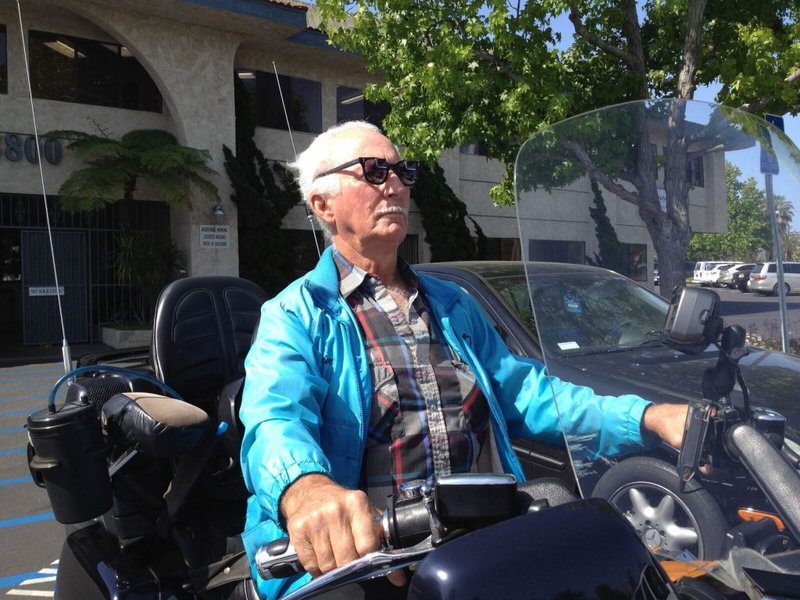
A visually impaired individual experiencing a motorcycle, likely in a controlled setting.
The image above depicts a visually impaired individual interacting with a motorcycle, underscoring the various ways people with blindness or low vision engage with the motorcycling world, often through supervised experiences or adaptive modifications.
Ben Felten's achievements often involve a sighted guide or specific technological aids within a closed course, demonstrating that even extreme speed can be achieved through careful planning and support. His story highlights the potential for breaking barriers in highly controlled and specialized settings.
This YouTube video, "Ben Felten: A blind man riding at 266km/h," is highly relevant as it showcases one of the most remarkable examples of a blind individual engaging with motorcycling at an extreme level. Ben Felten's story is a powerful illustration of overcoming adversity and achieving a dream that many would consider impossible. The video provides visual evidence of his incredible speed and control, albeit in a highly controlled environment, and deepens the understanding of how such feats are accomplished through dedication, specialized training, and support systems.
Cathy Birchall: Circumnavigating the Globe
Cathy Birchall holds the distinction of being the first blind person to travel around the world on a motorcycle. While the details of her journey imply she was a passenger (pillion), her accomplishment nonetheless signifies a monumental achievement in shared adventure and perseverance. It exemplifies how the dream of motorcycling can be realized through collaboration and a willingness to embrace unique forms of participation.
Beyond Motorcycles: Adapted Cycling for the Visually Impaired
While solo motorcycling for the totally blind is rare and typically restricted to controlled environments, the realm of cycling offers more accessible adaptations. Tandem bicycles, where a sighted "captain" steers and controls the bike while a visually impaired "stoker" pedals, are a popular and effective way for blind individuals to enjoy cycling. Organizations like the U.S. Blind Tandem Cycling Connection facilitate these experiences, allowing visually impaired individuals to ride great distances and experience the outdoors.
Furthermore, innovative solutions like the Fun2Go tricycle, where the driver takes 100% control, are suitable for blind people to enjoy excursions and stay active. Even recumbent bikes, like the 3G Cardio Elite RB, are highly recommended by members of the blind community for indoor fitness.
Challenges and Safety Considerations
The primary concern with blind or severely visually impaired individuals riding motorcycles independently in the real world is safety, both for the rider and other road users. Critical aspects of motorcycling, such as identifying hazards, reacting to unexpected situations, and maintaining awareness of other vehicles, heavily rely on visual input.
| Aspect of Riding | Impact of Visual Impairment | Potential Adaptations/Strategies |
|---|---|---|
| Depth Perception | Difficulty judging distances, speed of other vehicles, and road contours. | Head movement, increased scanning, larger following distances, enhanced mirrors. |
| Peripheral Vision | Reduced awareness of objects/vehicles at the sides, increased blind spots. | Full-face helmets with wider fields of vision, blind spot mirrors, frequent head checks. |
| Hazard Detection | Delayed or missed identification of potholes, debris, sudden obstacles. | Reliance on other senses (hearing for traffic), advance knowledge of routes, lower speeds, co-rider assistance. |
| Lane Positioning | Challenges in maintaining optimal lane position, especially in traffic. | Conscious effort to ride in visible parts of the lane, training with instructors on positioning. |
| Signaling & Communication | Difficulty observing signals from other vehicles; reliance on visual cues from rider. | Increased use of auditory cues, defensive riding to anticipate others' movements. |
| Navigation | Inability to read road signs, GPS displays, or visualize routes. | Riding with a sighted guide/passenger, pre-planned routes, reliance on verbal instructions. |
This table highlights the significant challenges faced by visually impaired riders and the various strategies, both personal and technological, that can help mitigate these risks. It reinforces that while adaptation is possible, the extent of independence is often correlated with the degree of residual vision and the environment.
Controlled Environments and Specialized Training
In highly controlled environments, such as race tracks or closed courses, it is possible for blind individuals to operate motorcycles with substantial assistance. This typically involves:
- Verbal Instruction: A sighted guide communicating directions, speed adjustments, and obstacle warnings to the rider through a headset.
- Pre-scanned Routes: The course being thoroughly checked for hazards and known by the support team.
- Safety Protocols: Strict safety measures, including clear pathways, emergency stopping procedures, and medical personnel on standby.
Such scenarios prioritize the experience and achievement of the individual while minimizing external risks, as demonstrated by Ben Felten's record-breaking rides.
The Human Spirit: Determination and Adaptation
The stories of visually impaired individuals engaging with motorcycles are powerful examples of human resilience and the desire for freedom and adventure. Whether it's a person with monocular vision adapting their riding style for daily commutes, or a completely blind individual setting speed records on a closed track, these narratives highlight the incredible capacity for adaptation.
They also underscore the importance of supportive communities and specialized programs that enable such experiences. The goal is not always full, independent riding on public roads for every visually impaired person, but rather to facilitate meaningful engagement with a passion that many able-bodied individuals enjoy.
Frequently Asked Questions
Can a person with monocular vision legally ride a motorcycle?
Are there special motorcycles designed for blind riders?
What is echolocation and how does it relate to blind cycling?
How do assisted motorcycle rides for the blind work?
Conclusion
While the prospect of a blind person riding a motorcycle independently on public roads is fraught with safety challenges and generally not advised or legally permissible for individuals with complete blindness, the human spirit of adventure finds remarkable ways to overcome such limitations. For those with monocular vision, adaptation and heightened defensive riding techniques allow many to safely enjoy motorcycling. More profoundly, initiatives like RIDE2SHARE and VIPER provide invaluable opportunities for the visually impaired to experience the thrill of being on a motorcycle as passengers, fostering community and a profound sense of freedom. The extraordinary feats of pioneers like Ben Felten in controlled racing environments further demonstrate that with dedication, specialized support, and innovative approaches, the dream of motorcycling can indeed extend beyond the boundaries of sight.
Recommended Further Exploration
- Explore adaptive motorcycle technologies for visually impaired riders.
- Discover organizations that support disabled motorcyclists.
- Read more about inspiring stories of extreme athletes who are visually impaired.
- Learn about advanced motorcycle safety techniques for riders with reduced vision.