
Analyzing Blockchain Security: Power Versus Protocol Innovation
Evaluating Bitcoin’s massive computing power against DigiByte's MultiShield
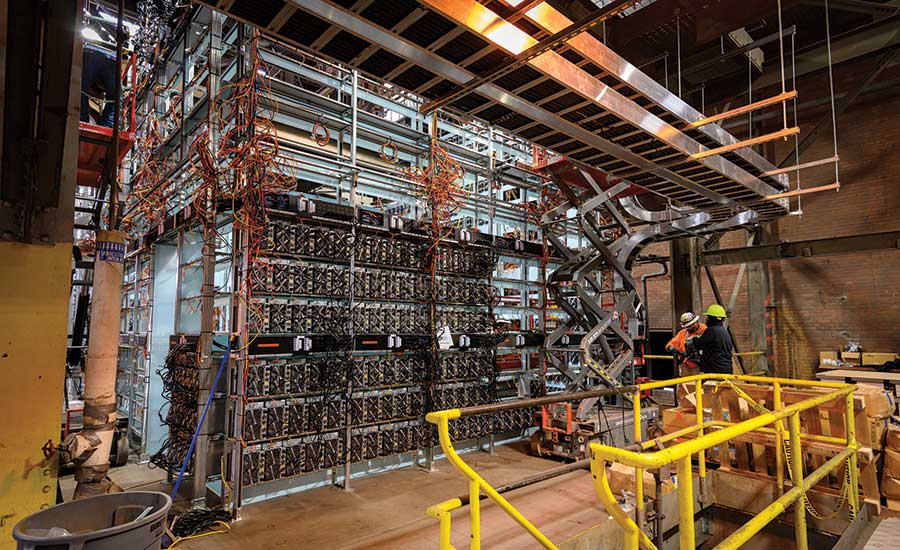
Key Highlights
- Digital Shield Concept: Jason Lowery’s theory asserts that Bitcoin’s enormous hash rate serves as a deterrent against attacks through high energy costs.
- MultiShield Innovation: DigiByte counterbalances lower computational power with a diversified and dynamic multi-algorithm system enhanced by MultiShield.
- Security Evaluation: The debate questions if raw computing power necessarily translates to superior protection or if security can be equally achieved through innovative network protocols.
Introduction to Blockchain Security Concepts
In the evolving domain of blockchain technology, security stands as the cornerstone of its functionality and public trust. Among several security strategies, a compelling discourse revolves around comparing Bitcoin's energy-intensive proof-of-work (PoW) with DigiByte's innovative MultiShield system.
In his influential work, Softwar: A Novel Theory on Power Projection and the National Strategic Significance of Bitcoin, U.S. Space Force Major Jason Lowery argues that Bitcoin’s vast computing power—recorded at 650 exahashes per second (EH/s) in 2025—acts as a digital shield. This massive computational output, expensive to reproduce and maintain, deters potential attackers by imposing an exorbitant cost of attack (Ca) relative to the benefit-cost ratio (BCRa). However, the discourse intensifies when juxtaposing Bitcoin’s strategy with that of DigiByte, a blockchain that, despite its much lower computing power (500 terahashes per second or TH/s), claims comparable, if not superior, security using a multi-algorithm approach.
Understanding Bitcoin’s Approach: The Power of Proof-of-Work
Cost of Attack and Benefit-Cost Ratio
Bitcoin’s security is deeply rooted in its proof-of-work mechanism. This system requires miners to expend significant computational resources, translating into high energy costs. According to Lowery’s argument, this immense computing power makes any potential attack astronomically expensive. The two pivotal concepts he presents are:
- Cost of Attack (Ca): This factor represents the total energy expenditure and operational expense required to launch a successful attack against the network.
- Benefit-Cost Ratio of Attack (BCRa): This ratio compares the expected benefits of conducting an attack against the high costs, effectively acting as a deterrent.
With Bitcoin achieving a hash rate of 650 EH/s, the network not only validates transactions but also secures itself by making any interference economically irrational. The high computational barrier means only an entity with vast resources could potentially compromise it.
Digital Shielding Through Massive Hash Rates
Bitcoin’s expansive network is often visualized as a digital shield. The vast number of computations required to solve cryptographic puzzles in Bitcoin’s PoW mechanism ensures a robust security perimeter. Each hash serves as a small brick in a formidable wall, collectively deterring and discouraging potential attackers due to the prohibitive costs associated with perturbing such a system.
DigiByte’s Alternative Strategy: MultiShield and Multi-Algorithm Mining
The Multi-Algorithm Approach
Unlike Bitcoin, which relies on a single algorithm for mining and security, DigiByte employs a diversified strategy incorporating five distinct cryptographic algorithms. This approach, known as multi-algorithm mining, includes SHA-256, Scrypt, Qubit, Skein, and Groestl. The use of multiple algorithms decentralizes the mining process: if an attacker were to target one algorithm, the remaining four would continue to secure the network, reducing the risk of a coordinated attack.
The architectural diversification not only discourages centralization but also encourages broader participation from different mining communities, each contributing to network security in varied ways.
Introducing MultiShield
MultiShield is a dynamic, real-time difficulty adjustment system inherent to DigiByte’s protocol. It continuously monitors the network’s hash rate and makes automatic adjustments to maintain balanced security across all five algorithms. As crypto markets evolve and mining efforts fluctuate, MultiShield acts as an agile guardian, ensuring that each algorithm remains competitive even if the overall network hash rate is significantly lower than that of Bitcoin.
One of the most notable claims made by DigiByte advocates is the “octuple factor” in security—suggesting that DigiByte’s diversified system can provide an eight-fold increase in security efficacy relative to its raw computational power. Additionally, the MultiShield system is designed to detect and counter potential attacks swiftly, with claims of neutralizing threats within as little as 12 minutes.
Comparative Analysis: Bitcoin vs. DigiByte
Direct Comparison of Security Models
To understand whether DigiByte’s model challenges Lowery’s assertion that “more power equals more protection,” it is instructive to analyze key aspects of both networks. The following table summarizes their core security mechanisms:
| Aspect | Bitcoin | DigiByte |
|---|---|---|
| Computational Power | 650 exahashes per second (EH/s) | 500 terahashes per second (TH/s) |
| Security Mechanism | Single algorithm PoW | Multi-algorithm approach (5 algorithms) |
| Cost of Attack (Ca) | Exceptionally high due to immense energy use | Distributed among algorithms, reducing the vulnerability of any single algorithm |
| Dynamic Adjustment | Standard difficulty adjustments | MultiShield enables rapid, real-time adjustments |
| Attack Mitigation | Robust due to high cumulative power | Claims to stop attacks in as little as 12 minutes |
| Network Decentralization | Centralized by high computational requirements | Enhanced through multi-algorithm and diversified mining |
While Bitcoin’s brute computational power provides a straightforward method of defense by ensuring that attacking the network is financially and technically prohibitive, DigiByte’s innovation with MultiShield and multi-algorithm mining demonstrates that robust security does not necessarily require such high energy consumption. Instead, it emphasizes network design and adaptive protocols to maintain security.
Implications and Strategic Considerations
Lowery’s theory is grounded in the idea of deterrence through sheer computational might. The argument posits that a network with an exceedingly high hash rate inherently discourages potential attackers due to the astronomical costs and complexities involved. This perspective is particularly appealing from a national security standpoint, where the cost-benefit analysis favors protecting critical infrastructure.
Conversely, DigiByte’s security model challenges the notion that amplification through power is the singular route to protection. By deploying a multi-algorithm strategy and a rapid-response system like MultiShield, DigiByte asserts that security can be achieved through flexibility and diversification. The ability to dynamically adjust difficulty across varied mining algorithms provides a layer of resilience by adapting in real time to emerging threats, thus balancing lower computational power with intelligent protocol design.
This dichotomy raises important questions for blockchain security:
- Is the high cost of energy and computational oversaturation sustainable in the long term?
- Can diversified security mechanisms like DigiByte’s provide adequate protection for future applications, even in the face of evolving attack strategies?
- How do scalability, decentralization, and energy efficiency weigh into the overall decision when designing a secure blockchain system?
The answers to these questions may influence how the future of blockchain technology is structured, particularly as the market seeks to balance environmental concerns with the need for robust, national-level security.
Evaluating the Debate: Does More Power Equal More Protection?
Analyzing Security Through Diverse Perspectives
At the heart of this debate lies the question: Can DigiByte’s approach, with its lower computational power but highly adaptive security protocols, actually challenge the long-held belief that more power equates to more protection? While Bitcoin’s model is undeniably effective through its extensive use of raw computing power, DigiByte’s diversified and flexible approach shows that the architecture and design of a blockchain can significantly influence its security.
In low-level technical analysis, Bitcoin achieves security through a high-cost barrier—it simply makes attacks economically unattractive. On the other hand, DigiByte adapts to varying mining conditions and dynamically redistributes security capabilities using MultiShield, ensuring that any potential vulnerabilities can be swiftly corrected. This method not only mitigates risks by spreading them across multiple algorithms but also introduces a reactive element that continuously protects the system.
Therefore, while the core idea that “more power equals more protection” holds true from an economic deterrence perspective, DigiByte’s model illustrates that sophisticated network designs can provide comparable security benefits. This is particularly relevant in an era where energy consumption and environmental impact are critical considerations.
Further Insights and Future Implications
Towards a More Nuanced Security Framework
The evolution of blockchain security is increasingly moving beyond a single measure of success—raw hash power—and towards more nuanced frameworks. The comparative study of Bitcoin and DigiByte underscores the potential in employing multiple layers of defense:
- Network Diversification: By utilizing a multi-algorithm approach, networks can mitigate the risks associated with any one algorithm falling victim to targeted attacks.
- Dynamic Response Systems: Real-time adjustments such as those provided by MultiShield offer a proactive means of addressing security anomalies immediately.
- Energy Efficiency: Lower energy consumption with intelligent design may prove to be a sustainable model for the future of blockchain security, especially as environmental concerns grow.
As blockchain technology continues to mature, these insights serve as a call for innovation in secure network design. Future developments may see a hybrid approach that combines the economic deterrence of high computational power with the flexibility and responsiveness of multi-algorithm strategies. This will not only bolster security but also contribute to a more sustainable model for deploying blockchain technologies in critical national applications.
References
- DigiByte Official Website - DigiByte
- DigiByte Mining Algorithm - CoinSwitch
- What is DigiByte? - Gate.io
- Softwar Thesis by Jason Lowery - MIT DSpace
- Softwar Author Jason Lowery and National Security - CryptoSlate
Recommended Queries for Further Exploration

Last updated March 18, 2025