
Understanding Struts in BMW X3: The Backbone of Your Suspension System
Discover how these vital components enhance your driving experience, handling, and safety
Key Insights About BMW X3 Struts
- Dual-purpose component that both absorbs road shock and provides structural support to your vehicle
- Critical for handling and stability, especially during cornering, braking, and driving on uneven surfaces
- Integrates shock absorption and support in a MacPherson design that's fundamental to your BMW X3's performance
What Exactly Is a Strut in a BMW X3?
A strut in a BMW X3 is a sophisticated component of the vehicle's suspension system that serves multiple critical functions. Unlike basic shock absorbers, struts are integrated structural components that combine shock absorption capabilities with vital structural support for the vehicle's chassis. In BMW X3 models, struts typically follow the MacPherson design, which combines a coil spring with a shock absorber into a single assembly that mounts directly to the vehicle's chassis.
These components are strategically positioned between the chassis and the wheels, absorbing impacts from road irregularities while maintaining proper wheel alignment and vehicle stability. The design of BMW X3 struts reflects the vehicle's balance between luxury comfort and dynamic handling capabilities, making them essential to the BMW driving experience.
The radar chart above illustrates how different types of struts affect various performance aspects of your BMW X3. Factory OEM struts provide balanced performance, while sport variants enhance handling at some cost to comfort. Aftermarket options offer more specialized performance characteristics depending on your driving preferences.
Core Functions of BMW X3 Struts
Shock Absorption: Smoothing Your Ride
The primary function of struts in your BMW X3 is to absorb and dampen the energy from road imperfections. As you drive over bumps, potholes, or uneven surfaces, the struts compress and expand in a controlled manner, converting kinetic energy into heat energy. This dampening action prevents excessive bouncing and ensures the tires maintain optimal contact with the road surface, enhancing both comfort and safety.
Structural Support: Maintaining Vehicle Integrity
Unlike simple shock absorbers, struts in the BMW X3 are load-bearing components that support the vehicle's weight. This dual functionality makes them critical structural elements that integrate with the steering and suspension systems. The struts help maintain proper wheel alignment, contribute to steering precision, and provide the necessary rigidity to handle both routine driving maneuvers and more demanding cornering situations.
Handling Enhancement: The BMW Driving Experience
BMW X3 struts play a pivotal role in delivering the brand's renowned driving dynamics. They control body roll during cornering, manage weight transfer during acceleration and braking, and help maintain the vehicle's stability across various driving conditions. This contributes significantly to the confidence-inspiring handling characteristics that BMW vehicles are known for.
Strut Performance During Different Driving Scenarios
| Driving Scenario | Strut Function | Benefit to Driver |
|---|---|---|
| Highway Cruising | Absorbs minor road imperfections | Smooth, comfortable ride for long distances |
| Cornering | Controls body roll and weight transfer | Improved stability and predictable handling |
| Rough Road Surfaces | Dampens major impacts and vibrations | Enhanced comfort and protection of vehicle components |
| Braking | Prevents excessive nose-diving | More controlled stopping and balanced weight distribution |
| Off-road Terrain | Manages varied surface impacts | Better traction and wheel contact with the ground |
Anatomy of a BMW X3 Strut Assembly
Understanding the components that make up a strut assembly helps appreciate its complexity and importance in your BMW X3's suspension system:
Major Components of a Strut Assembly
Strut Cartridge
The core shock-absorbing unit containing a piston, rod, and hydraulic fluid or gas that provides the dampening action. In the BMW X3, these are carefully calibrated to balance performance and comfort.
Coil Spring
Mounted around the strut body, the coil spring supports the vehicle's weight and absorbs larger impacts. BMW X3 springs have specific rates designed for the vehicle's weight and performance characteristics.
Upper Strut Mount
Connects the strut assembly to the vehicle's chassis while isolating vibration and noise. In the BMW X3, these often incorporate a bearing to facilitate smooth steering movement.
Spring Seat and Isolator
Provides proper positioning for the coil spring and adds additional noise and vibration isolation between the spring and the strut body.
The mindmap above illustrates how struts integrate within the broader suspension system of your BMW X3. This interconnected system works together to deliver the balance of comfort, handling, and stability that BMW vehicles are known for.
Types of Struts in BMW X3 Models
BMW X3 vehicles may be equipped with different types of struts depending on the model year, trim level, and optional packages:
Standard MacPherson Struts
The most common configuration in the BMW X3 lineup, offering a balanced approach to comfort and handling that suits most drivers' needs. These struts feature carefully tuned damping characteristics to deliver the expected BMW driving experience.
M Sport/Performance Struts
Found in sport-oriented trims or as part of the M Sport package, these struts offer firmer damping characteristics for improved handling and reduced body roll, though with some trade-off in ride comfort. These are ideal for drivers who prioritize dynamic performance.
Adaptive Damping Struts
Available on higher-end trims or as an option, these electronically controlled struts can adjust their damping characteristics in real-time based on driving conditions, driver preferences, and selected drive modes. This provides the best of both worlds—comfort when cruising and firmness when pushing the vehicle's capabilities.
BMW X3 Strut Visual Reference
Below are images showing actual strut components for the BMW X3. These visual references help illustrate the complex engineering behind these essential suspension components:
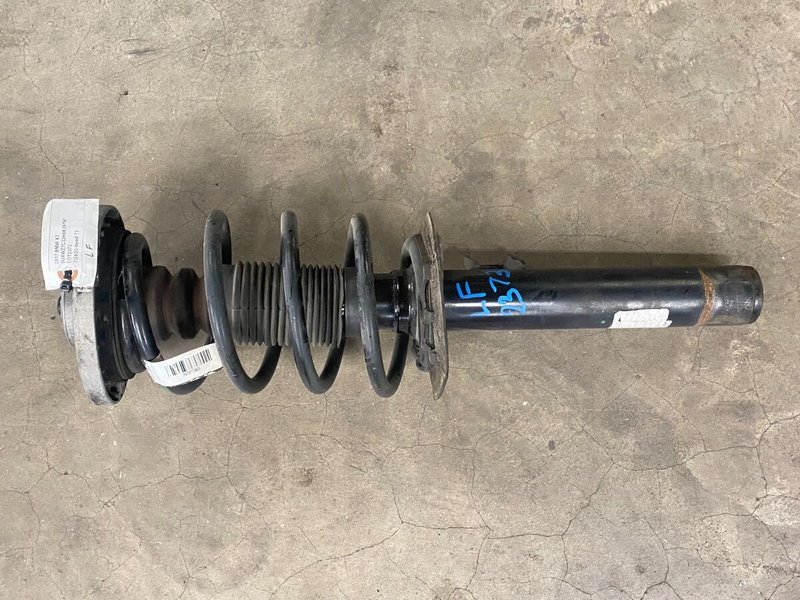
Complete front strut assembly for 2011-2017 BMW X3, showing the integrated spring and shock absorber design.
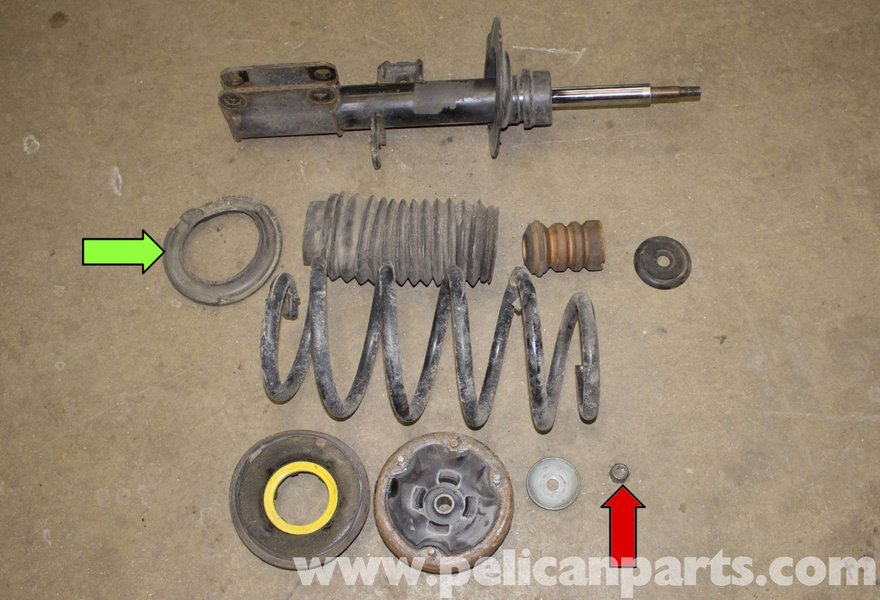
Detailed view of a BMW X3 strut during installation, showcasing the mounting points and structural design.
How to Identify Worn Struts in Your BMW X3
Struts typically last 50,000 to 100,000 miles, but this can vary based on driving conditions and habits. Being able to recognize the signs of strut wear is crucial for maintaining your BMW X3's performance and safety:
Common Symptoms of Worn Struts
Performance Indicators
- Excessive Bouncing: If your X3 continues to bounce after hitting a bump, your struts may be worn.
- Body Roll: Increased leaning during cornering suggests diminished strut performance.
- Nose Diving: Pronounced forward dipping during braking indicates worn front struts.
- Uneven Tire Wear: Failing struts can cause irregular tire wear patterns due to improper wheel contact with the road.
Comfort and Noise Factors
- Harsh Ride Quality: A rougher than normal ride over small bumps and road imperfections.
- Knocking Sounds: Audible clunking or knocking noises when driving over bumps or during steering.
- Steering Instability: Reduced responsiveness or vague feeling in the steering wheel.
BMW X3 Strut Replacement: What to Know
When it's time to replace the struts on your BMW X3, there are several important considerations to keep in mind:
Replacement Options
You can choose between OEM (Original Equipment Manufacturer) struts that match the factory specifications, or aftermarket options that may offer enhanced performance or cost savings. Many BMW X3 owners opt for complete strut assemblies (pre-assembled strut, spring, and mount) for easier installation.
Professional vs. DIY Replacement
While strut replacement is possible as a DIY project for those with mechanical experience, it requires specialized tools like spring compressors and careful handling of pressurized components. Professional installation ensures proper alignment and safety.
This detailed video guide demonstrates the process of replacing front struts on a 2003-2010 BMW X3 (E83 chassis). The video highlights the importance of using proper tools and techniques to safely remove the old strut assembly and install the new one. It also emphasizes checking alignment after replacement to ensure optimal vehicle performance and tire wear.
Frequently Asked Questions
References
- BMW X3 Front Strut Replacement - Pelican Parts
- What Are Shock Absorbers and Struts On A BMW? - Santa Fe BMW
- BMW Strut Part Information - BMW Direct Parts
- Technical Guide: BMW X3 Front Strut Replacement - Pelican Parts
- BMW X3 Strut Assembly Replacement Cost Estimates - YourMechanic
- BMW X3 Shocks and Struts - Advantage BMW Parts
- 2006-2010 BMW X3 EZ Strut Full Strut Assembly - Strutmasters
Recommended Topics
Last updated April 5, 2025