
Undergarments and Perceptions in the Baby Boomer Era
Exploring the Roles and Views on Slips, Petticoats, and Waist Slips
Key Insights
- Common Use of Undergarments: Baby boomer women frequently wore waist slips, half-slips, and petticoats under skirts and dresses for both practical and stylistic reasons.
- Functionality and Fashion: These undergarments helped maintain dress silhouettes, offered warmth, and prevented chafing or skin irritation.
- Perception of Visibility: Accidental glimpses of undergarments could be interpreted as subtly alluring, though intended primarily for modesty and function.
Overview of Baby Boomer Women’s Undergarment Practices
Women of the baby boomer generation, generally born between 1946 and 1964, customarily used various undergarments beneath their skirts and dresses. These included full slips, half-slips (also known as waist slips), and petticoats. The primary purpose was not solely aesthetic but rather functional, ensuring that skirts and dresses draped correctly, providing warmth in cooler climates, and acting as a barrier against friction on the skin.
Types of Undergarments
Full Slips
Full slips were typically worn from the shoulders down, providing a seamless foundation for the outer garments. They were designed to even out the silhouette, ensuring that the skirt would hang evenly and suppress any undesired clinginess or transparency issues.
Half-Slips (Waist Slips)
Half-slips, or waist slips, were worn at the midsection and provided a similar effect as full slips but with less material. They were most effective in controlling the draping of the skirt and were specifically tailored to avoid the bulkiness of a full slip while still maintaining modesty and form.
Petticoats
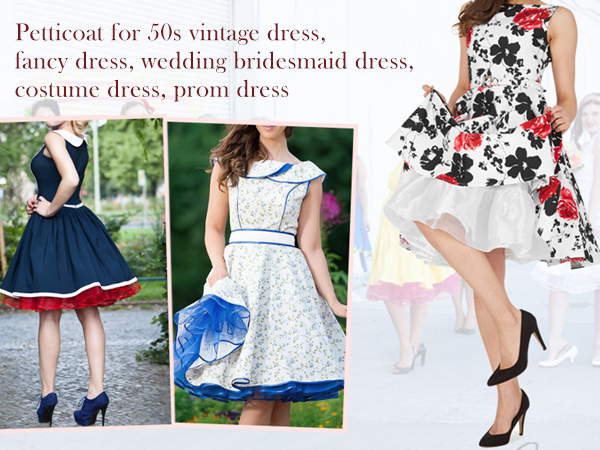
Petticoats added volume and structure, particularly in skirts that required a fuller appearance. Unlike slips that lie close to the body, petticoats were usually worn as a separate layer that added both warmth and a distinct silhouette. The layering of petticoats could create the fashionable "ballerina" look and was especially popular during the 1950s.
Social and Cultural Perceptions
The visibility of these undergarments was generally not intended; they were designed to remain hidden under the outer garments. Nonetheless, on occasion, the edge of a waistslip or petticoat might inadvertently peek out from beneath a skirt or dress.
Cultural Attitudes toward Visibility
During the peak of the baby boomer years, societal norms stressed modesty. The prevailing expectation was that undergarments should remain concealed. Any accidental exposure typically would have been seen as a design flaw or an unwitting lapse in proper attire rather than an overt statement of seduction. Many women took careful measures to ensure that no undergarment details became visible.
Perceptions Among Men
Observing the occasional accidental glimpse of a waistslip or petticoat often evoked mixed responses among men in the baby boomer generation. While these undergarments served primarily practical roles, their accidental visibility could be interpreted in different ways:
Subtle Allure and Tease
In certain instances, a barely noticeable glimpse of a lacy trim or the edge of an undergarment was seen as a subtle hint of allure. Some men found this aspect of an otherwise modest ensemble to have a tease-like, seductive quality. The perception of seduction was, however, a subjective matter – influenced by individual tastes and the cultural context, where modesty and restrained flirtation maintained a delicate balance.
General Attitudes and Practicality
Despite the occasional inadvertent exposure that could hint at flirtation or sensuality, most social norms of that era underscored the importance of concealment. For many men, recognizing a waist slip or petticoat was less about overt seduction and more about acknowledging the elegant layering that maintained the integrity of the overall outfit.
Comparative Analysis of Perspectives
In synthesizing various viewpoints on the subject, a consensus emerges regarding both the functional use of these undergarments and the nuanced perceptions of their visibility:
| Aspect | Functionality | Perception of Visibility |
|---|---|---|
| Undergarment Use |
|
|
| Fashion Evolution |
|
|
Contextual Shifts and Modern Comparisons
While baby boomer fashion embraced the utility of undergarments like slips and petticoats, subsequent decades saw shifts in both style and societal rôle of women’s attire. The transition during the 1960s and 1970s brought more casual and liberated styles, reducing the regular need for such layers. Modern fashion sometimes intentionally highlights undergarments as elements of a deliberate aesthetic that contrasts with traditional modesty expectations.
Evolving Undergarment Trends
In contemporary fashion, undergarments have evolved from merely functional items to fashion statements in their own right. For instance:
- Fashion designers experiment with visible lingerie under outer garments as part of a layered look.
- There is an intentional appeal in mixing classic undergarment forms with modern cuts, creating a fusion of nostalgia and avant-garde style.
- Modern consumers often choose visibility as a means to express individuality and confidence, a trend that contrasts sharply with the more reserved aesthetic of the baby boomer era.
Broader Social and Cultural Influences
Gender Norms and Social Expectations
The baby boomer era was marked by a clearly defined set of gender norms. Women’s fashion was closely intertwined with societal expectations of modesty and femininity, and the concealment of undergarments was part of an overall decorum. Men of the generation, too, were influenced by these standards; while some could appreciate the subtle charm of an exposed waist or petticoat edge, such instances were generally seen through a lens of reserved appreciation rather than overtized eroticism.
The Impact of Cultural Shifts Over Time
As culture evolved, especially with major social changes during the later decades of the 20th century, perceptions of what is considered seductive or revealing underwent significant change. In the baby boomer era, the aesthetics of layered clothing were largely about maintaining a refined silhouette and ensuring proper garment function. Factors such as accidental visibility often carried a delicate balance—part accidental charm, part inadvertent display—in stark contrast to later trends where visibility was a fashion statement.
Additional Perspectives on Accidental Visibility
Sensual Undertones versus Practical Design
It is important to note that the majority of undergarment usage in the baby boomer generation was guided by practical design rather than an explicit intent to be seductive. Any hints of sensuality were largely circumstantial. A fleeting glimpse of a waist slip or the delicate trim of a petticoat was more of an unintentional by-product of the garment's design rather than a deliberate fashion choice. While some men might have found such instances to be subtly intriguing, the overall cultural dialogue remained one of practicality mixed with restrained allure.
Individual Variations and Subjectivity
As with any cultural practice, individual tastes and experiences varied widely. While many adhered strictly to the norms of concealment, there were scenarios where personal style, fabric behavior, or accidental movement led to the slight visibility of these undergarments. Men's responses to these occurrences were equally varied; some appreciated the accidental peek as an understated nod to the inherent beauty of the design, while most maintained a conventional attitude influenced by the era’s strict guidelines on modesty.
References
- Girdles and Slips - Reddit
- Why don't women wear slips any more? - Quora
- 3 Beautiful Reasons to Wear a Slip - Modern Retro Woman
- Slip (clothing) - Wikipedia
- History of the Slip - High Latitude Style
Recommended Topics for Further Exploration
 malepatternboldness.blogspot.com

Last updated March 12, 2025