
Unlocking the Mind: Does Brain Size Truly Define Human Intelligence?
Exploring the intricate relationship between brain volume and cognitive abilities in humans.
For centuries, the question of what makes one person more intelligent than another has fascinated scientists and laypeople alike. A common assumption has been that a larger brain equates to greater intellectual capacity. However, modern neuroscience reveals a far more complex picture. This exploration delves into whether a smaller brain size in humans definitively indicates less intelligence, drawing upon extensive research and contemporary understanding.
Key Insights: Brain Size and Intelligence
- Modest Correlation: While studies show a positive correlation between brain size and intelligence scores (typically between 0.2 and 0.4), this means brain volume accounts for only a small percentage (roughly 6% to 16%) of the variation in intelligence among individuals.
- Structure Over Size: The brain's architecture, including neural connectivity, gray and white matter density, and the efficiency of specific brain networks, are considered far more crucial determinants of cognitive abilities than overall size.
- Not Definitive: A smaller brain size does not reliably indicate lower intelligence. Many individuals with average or smaller-than-average brains exhibit high levels of intelligence, highlighting the multifaceted nature of cognitive function.
The Correlation Coefficient: A Closer Look
Understanding the Numbers Behind Brain Size and IQ
Scientific investigations into the link between brain size and intelligence have a long history, evolving significantly with technological advancements. Early studies often relied on external head measurements as proxies for brain size, yielding correlations with IQ in the range of 0.10 to 0.30. However, the advent of Magnetic Resonance Imaging (MRI) has allowed for more precise measurements of brain volume.
Meta-analyses of numerous studies, some involving thousands of participants, consistently find a weak to moderate positive correlation. For instance, a significant meta-analysis reported a population correlation of approximately 0.24. Another comprehensive review found correlations generally ranging from 0.3 to 0.4. This statistical relationship indicates that, on average, individuals with larger brain volumes tend to score slightly higher on intelligence tests. However, it's crucial to understand that correlation does not imply causation. Brain size alone is one of many factors and explains only a minor portion of the differences in intelligence observed among people.
Interestingly, some research suggests these correlations might vary across demographics. For example, the relationship may be slightly more pronounced in adult females compared to males, and in adults compared to children. One study focusing on healthy adult females reported a correlation of 0.395 between MRI-measured brain volume and IQ.

A diagram showing the major components of the human brain. Understanding brain anatomy is key to exploring intelligence.
Beyond Volume: The True Hallmarks of a Sharp Mind
Why Brain Structure and Connectivity Outweigh Sheer Size
While brain volume plays a role, the consensus in neuroscience is that the sophistication of brain structure and the efficiency of its connections are far more critical for intelligence. It's not just about how big the brain is, but how well it's wired and how efficiently its different parts communicate and process information.
Neural Architecture: The Brain's Intricate Wiring
Intelligence is heavily dependent on the complexity and efficiency of neural networks. This includes:
- Grey Matter Density: Grey matter, rich in neuronal cell bodies, is where information processing occurs. Higher density in specific cortical areas, particularly the frontal, parietal, and temporal lobes, has been linked to higher cognitive performance.
- White Matter Integrity: White matter consists of nerve fibers (axons) that connect different brain regions. The integrity and organization of these pathways ensure rapid and efficient communication across the brain. Axonal conduction velocity is a key factor.
- Synaptic Organization: The number and efficiency of synapses (connections between neurons) are fundamental to learning, memory, and overall cognitive function.
- Brain Region Specialization and Integration: Intelligence involves the coordinated activity of various specialized brain regions. The ability of these regions to integrate information seamlessly is crucial.
A classic example often cited is Albert Einstein, whose brain was reportedly of average size. However, analyses of his preserved brain suggested unique structural features, such as an unusually high number of glial cells (which support neurons) and distinct characteristics in the parietal lobes, an area associated with mathematical and spatial reasoning.
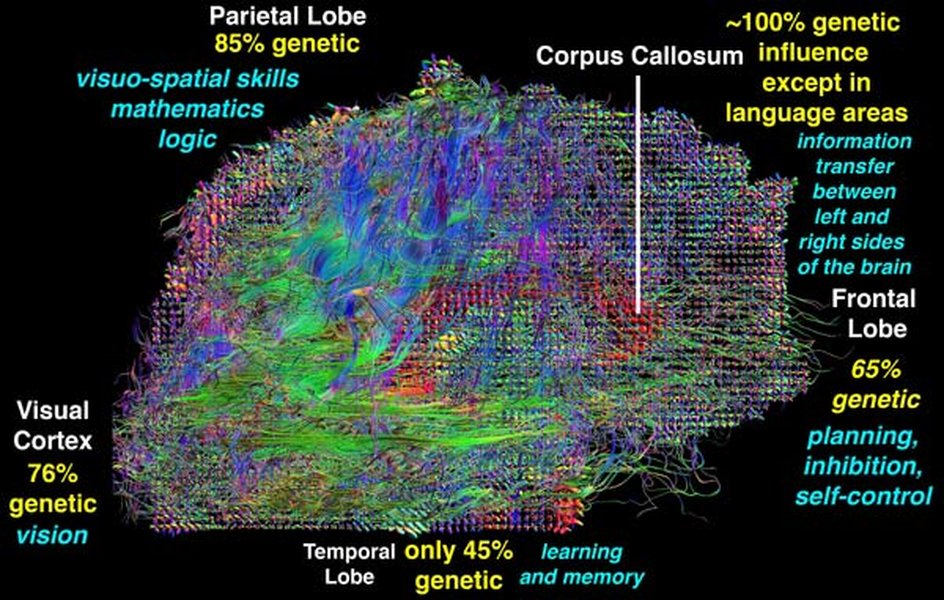
Modern imaging techniques, like MRI, allow scientists to study brain structure and activity in detail, revealing insights beyond mere volume.
The Role of Specific Brain Networks
Rather than overall brain volume, research increasingly points to the importance of specific brain networks, such as the fronto-parietal network, in underpinning higher cognitive functions. The efficiency and connectivity within these networks are believed to be more predictive of intelligence than global brain size.
Factors Complicating the Brain Size-Intelligence Equation
The relationship between brain size and intelligence isn't straightforward because many other variables come into play. Brain size itself varies naturally due to factors like sex, age, body size, and genetic makeup. For instance, men generally have larger brains than women on average, yet there are no significant differences in average IQ scores between sexes that can be attributed to this size difference alone. This suggests that other compensatory mechanisms or structural differences are at play.
Furthermore, within-family studies, including those involving twins, have yielded interesting results. Some research indicates that the correlation between brain size and intelligence is weaker or even non-significant when analyzed within families. This suggests that shared genetic and environmental factors might confound the broader population-level association, and that brain size might not be a direct causal factor for intelligence differences among siblings, for example.
Comparative Factors in Intelligence
The following chart provides a conceptual representation of the relative importance of various factors thought to contribute to human intelligence. This is an illustrative model based on current scientific understanding, where factors like neural connectivity and brain structure are generally considered more impactful than overall brain size alone.
This radar chart visually suggests that while brain size is a factor, other elements such as the intricate network of neural connections and the characteristics of grey and white matter play more substantial roles in determining an individual's cognitive capabilities. Genetic predispositions and environmental influences, including education and nutrition, also significantly shape intelligence.
Visualizing the Key Concepts
A Mindmap of Brain Size and Intelligence
To better understand the multifaceted relationship discussed, the following mindmap outlines the core ideas and their interconnections. It highlights that intelligence is a complex trait influenced by more than just the physical size of the brain.
This mindmap illustrates that while brain size has a measurable, albeit modest, link to intelligence, the critical factors lie in the brain's internal workings—its connectivity, structural integrity, and the influence of genetics and environment. The key takeaway is that a smaller brain does not automatically mean less intelligence.
Truth or Myth? Brain Size and Smarts
Exploring the Common Misconception
The video below discusses the common question of whether a bigger brain makes a person smarter, offering a concise overview that aligns with the scientific consensus that size isn't everything when it comes to intelligence.
This video addresses the persistent myth linking brain size directly to intelligence.
As the video and numerous studies confirm, intelligence arises from a complex interplay of various factors. While an extremely small brain due to developmental issues can be associated with cognitive impairments, within the normal range of human brain sizes, volume alone is a poor predictor of an individual's intellectual capacity.
Summary of Brain Size and Intelligence Correlations
What Different Study Types Reveal
The following table summarizes typical findings from various types of research investigating the correlation between brain size and intelligence. It highlights the consistency of a modest positive correlation, while also noting important nuances and limitations.
| Study Type | Typical Correlation (r-value) with IQ | Key Findings and Nuances |
|---|---|---|
| Meta-Analyses (combining multiple studies) | Approximately 0.24 to 0.40 | Confirms a positive but modest association. Highlights variations by age, sex, and the quality of intelligence measurement. Accounts for a small percentage of IQ variance (6-16%). |
| MRI-Based Volumetric Studies | Approximately 0.30 to 0.40 | Provide more accurate brain volume measurements than older methods. Consistently show a modest correlation. |
| Studies Focusing on Females | Can be up to ~0.395 in specific samples | Some evidence suggests the correlation might be slightly stronger in females compared to males, though this is not universally conclusive. |
| Within-Family and Twin Studies | Often weaker or non-significant | Suggests that genetic and shared environmental factors may confound the brain size-IQ relationship observed in the general population. Questions direct causality. |
| Early Studies (using head circumference) | Approximately 0.10 to 0.30 | Less accurate estimations of brain size, generally yielding lower correlations. |
This table underscores that while a statistical link exists, it is far from deterministic. Intelligence is profoundly influenced by how the brain is structured and functions, rather than just its overall dimensions.
Frequently Asked Questions (FAQ)
Is there any truth to the idea that bigger brains mean higher intelligence? +
Yes, there is a grain of truth, but it's often overstated. Scientific studies consistently show a positive correlation between brain volume and scores on intelligence tests. This correlation is typically in the range of 0.2 to 0.4, which is considered weak to moderate. It means that, on average, people with larger brains tend to score slightly higher on IQ tests, but brain size only accounts for a small fraction (about 6% to 16%) of the total variation in intelligence among individuals. So, while there's a statistical link, it's far from a one-to-one relationship, and many other factors are more important.
If overall brain size isn't the main factor, what is more important for human intelligence? +
Neuroscience indicates that brain structure and function are much more critical for intelligence than sheer size. Key aspects include:
- Neural Connectivity: The efficiency and complexity of connections between neurons and different brain regions.
- Grey Matter Density: The concentration of neuronal cell bodies, especially in cortical areas like the frontal and parietal lobes, which are crucial for higher cognitive functions.
- White Matter Integrity: The quality of the nerve fibers (axons) that transmit signals across the brain, ensuring fast and reliable communication.
- Specific Brain Networks: The coordinated activity within and between specialized brain networks (e.g., the fronto-parietal network) is vital for tasks requiring intelligence.
- Neural Efficiency: How effectively the brain uses energy and processes information.
In essence, it's more about how well the brain is "wired" and how efficiently it operates, rather than just how large it is.
Does the brain size-intelligence link differ between men and women? +
Men, on average, have larger brain volumes than women, even when accounting for body size. However, this difference in brain size does not translate into a significant difference in general intelligence scores between men and women. Some studies suggest the correlation between brain size and IQ might be slightly stronger in females (one study found r=0.395 for females). This indicates that other factors, possibly related to brain organization or efficiency, compensate for size differences. For example, women may have, on average, thicker cortical grey matter or different patterns of connectivity that contribute to comparable intellectual performance despite smaller average brain volume.
Can a person with a notably small brain still be highly intelligent? +
Absolutely. Since brain size accounts for only a small portion of the variance in intelligence, individuals with smaller-than-average brains can, and often do, exhibit high levels of intelligence. The case of Albert Einstein, who had an average-sized brain, is a famous example. High intelligence is more dependent on factors like efficient neural processing, strong connectivity between critical brain regions, and optimal brain chemistry, rather than just overall volume. Therefore, a smaller brain does not preclude high intellectual capacity.
Recommended Further Exploration
- How does neural connectivity impact human intelligence?
- What are the roles of grey matter and white matter in cognitive function?
- Are there genetic factors that influence brain structure and intelligence more than brain size?
- How do environmental factors like education and nutrition affect brain development and intelligence?
References
Last updated May 11, 2025