
Unveiling the Mind's Eye: How Your Brain Captures and Curates Visual Memories
Discover the intricate neural dance that transforms fleeting sights into lasting impressions and the selective process behind what gets remembered.
Key Insights into Visual Memory
- Dynamic Encoding: Visual information isn't just passively recorded; it's actively processed and transformed into neural codes by specialized brain regions, starting from the retina and culminating in higher visual cortices.
- Selective Storage: Your brain employs sophisticated filtering mechanisms, prioritizing images based on emotional significance, novelty, contextual relevance (like "cognitive boundaries"), and attentional focus. Not every sight makes the cut for long-term storage.
- Distributed Network: Visual memories aren't stored in a single "photo album" spot. Instead, they are distributed across various brain structures, with the hippocampus playing a key role in consolidation and the visual cortex in storing specific image details.
The Journey of an Image: From Perception to Neural Imprint
When you see an image, it embarks on a remarkable journey through your brain. This process is far more complex than a camera snapping a photo; it involves intricate processing, encoding, and storage mechanisms distributed across various neural landscapes. Understanding this journey reveals the brain's sophisticated approach to managing the deluge of visual information we encounter daily.
Initial Processing: The First Glimpse
Sensing and Early Cortical Analysis
Visual stimuli first enter through the retina, where light is converted into electrical signals. These signals travel via the optic nerve to the primary visual cortex (V1), located in the occipital lobe at the back of your brain. V1 is responsible for decoding fundamental visual features such as edges, orientations, and motion. From V1, information flows along two main pathways:
- The ventral pathway (often called the "what" pathway) extends to the temporal lobe and is crucial for object recognition – identifying shapes, colors, and ultimately what the image is.
- The dorsal pathway (the "where" or "how" pathway) projects to the parietal lobe, processing spatial information like location, movement, and guiding interaction with objects.
This initial processing transforms raw sensory input into a format the brain can interpret, a process known as encoding. Neural signals represent the image, but this is just the beginning.
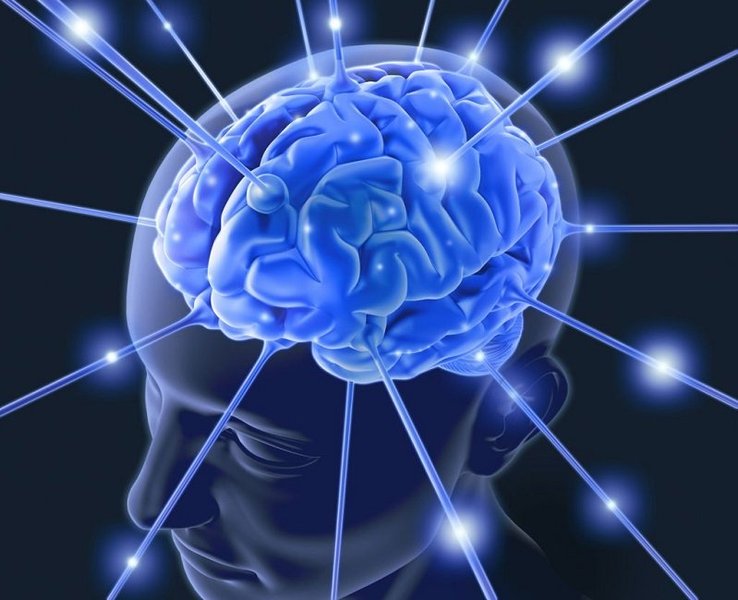
The human brain, a complex network responsible for processing and storing visual information.
Specialized Neurons and Feature Coding
As visual information moves to higher-order visual areas, such as the inferotemporal cortex, specialized neurons come into play. Some of these, sometimes referred to as "object neurons," respond selectively to specific objects or complex features, like faces. Recent research highlights that neurons in the human amygdala and hippocampus utilize a "region-based feature code." This means they respond to visual stimuli that fall into particular regions within a feature space (e.g., certain facial characteristics), bridging the gap between raw visual features and meaningful categorical representations, which is vital for memory formation.
Consolidation: Securing Images in Long-Term Memory
Not all processed images are stored permanently. The brain has mechanisms for temporarily holding information and then, if deemed important, consolidating it into long-term memory.
The Role of Short-Term and Working Memory
Initially, visual images may reside in short-term or working memory systems. These systems, largely involving the prefrontal cortex and posterior parietal cortex, allow you to hold and manipulate visual information consciously for brief periods. Think of it as a mental scratchpad where you can actively work with an image.
The Hippocampus: The Memory Consolidator and Sequencer
For an image to transition to long-term memory, it must undergo consolidation, a process heavily reliant on the hippocampus and surrounding medial temporal lobe structures. The hippocampus is not believed to be the ultimate storage site for individual images themselves; rather, it acts as a critical hub for organizing and integrating visual information. It binds different aspects of an experience (sights, sounds, context) into a cohesive episodic memory. For instance, it helps link an image with when and where it was seen.
Crucially, the hippocampus is involved in how sequences of images are stored. While the visual cortex might store individual "snapshots," the hippocampus guides the cortex in recognizing and retaining images if they form part of a meaningful sequence. This allows us to remember stories or series of events, not just isolated pictures.
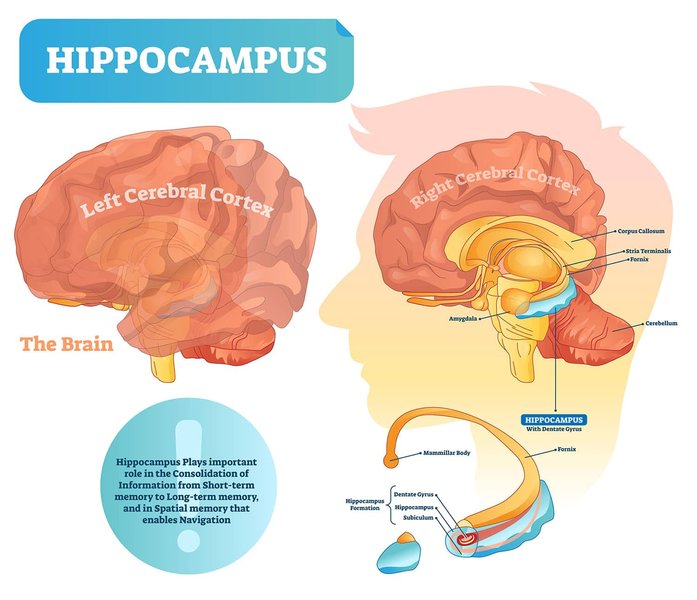
The hippocampus (highlighted) plays a pivotal role in memory formation and consolidation.
The Physical Substrate: Synaptic Plasticity
At the most fundamental level, memories, including visual ones, are believed to be stored through physical changes in the brain. This occurs via synaptic plasticity – modifications in the strength and structure of connections (synapses) between neurons. When an image is encoded and consolidated, specific neural pathways are activated. Repeated activation can strengthen these connections (a process called long-term potentiation) or even lead to the formation of new synapses. These altered synaptic weights and neural circuits form the physical trace, or "engram," of the memory. Visual information is also stored using a "retinotopic code," where the spatial layout of the visual field is preserved in the brain's visual areas, acting as a common language between perception and memory regions.
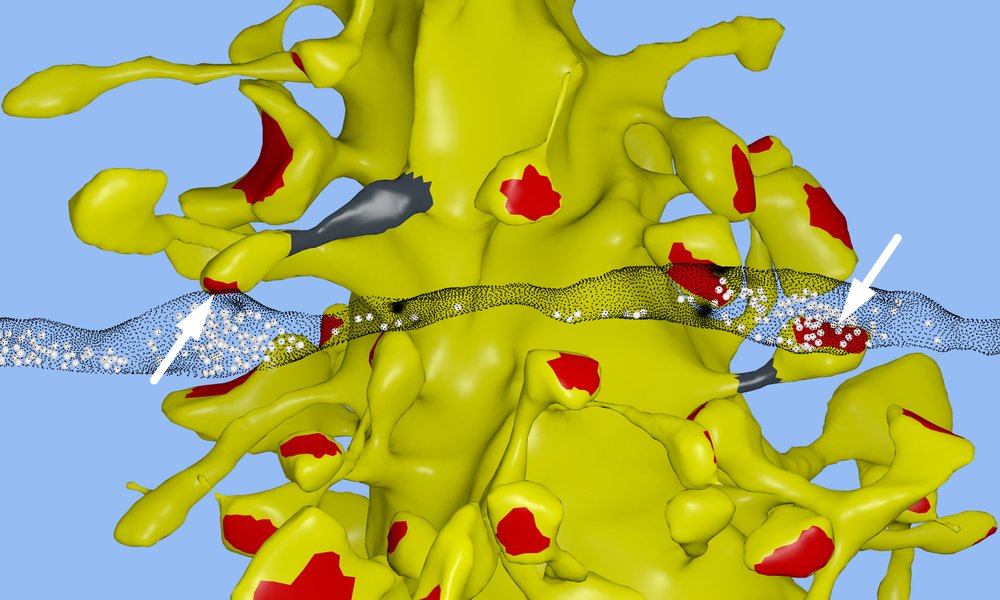
Synapses, the connections between neurons, are modified to store memories, demonstrating the brain's remarkable plasticity.
Sustained Activity in Visual Areas
Research indicates that the visual cortex itself is involved in storing and remembering individual images. When an image is perceived, there's an initial strong burst of neural activity, followed by a sustained, lower level of activity that can persist as long as the image is viewed or held in mind. This sustained pattern is thought to represent the image's trace and can be reactivated during recall. Interestingly, the brain can retain information about perceived visual stimuli at this low level even for images that are not consciously noted.
The Brain's Gatekeeper: Deciding Which Images to Store
The brain doesn't, and cannot, store every single visual input it receives. It employs sophisticated mechanisms to filter and select which images are important enough for long-term retention. This selection process is influenced by several factors.
Factors Influencing Image Prioritization
The radar chart above illustrates several key factors that influence the brain's decision to store an image. High emotional salience, for instance, often leads to stronger memory encoding. Novel or unique images, those that capture our attention, or images encountered at significant contextual boundaries are also more likely to be prioritized for long-term storage.
Attention and Relevance
Your brain prioritizes what you pay attention to. Attention mechanisms, orchestrated by regions like the frontal and parietal lobes, filter incoming visual data. Images deemed relevant to current goals, novel, or otherwise significant receive enhanced neural processing and are more likely to be encoded for storage.
Emotional Significance
Emotionally charged images tend to be better remembered. The amygdala, a brain region crucial for processing emotions, works in concert with the hippocampus. It "tags" emotionally salient experiences, including images, thereby modulating hippocampal activity and enhancing their consolidation into long-term memory. A shocking, joyful, or fearful image is often seared into memory more vividly than a neutral one.
Cognitive Boundaries and Event Segmentation
The brain appears to organize experiences into "events" or "memory files." Transitions, known as "cognitive boundaries," play a key role. These can be "soft boundaries" (e.g., a camera cut within the same scene of a movie) or "hard boundaries" (e.g., a complete scene change to a different event). Images occurring immediately after such boundaries are more likely to be remembered, as these boundaries signal the brain to start a new memory segment. Specialized "boundary cells" and "event cells," particularly in and around the hippocampus, are thought to mediate this process, helping to structure memories chronologically.
Novelty, Complexity, and "Memory Tagging"
New or unusual images often capture our attention and are prioritized for storage. Some research suggests that images that are harder to verbally describe or categorize might also receive preferential treatment for memory encoding, possibly because the brain invests more resources in processing them. The brain may use internal "tagging" mechanisms to mark memories based on novelty, emotional intensity, or relevance to goals, signaling which ones should be stabilized for the long term, often during sleep.
Frequency and Repetition
Repeated exposure to an image can strengthen its memory trace. Rehearsal and reconsolidation (the process of recalling and then re-storing a memory) can increase the likelihood of long-term retention.
Visualizing the Memory Pathway
The journey of an image into memory involves several interconnected stages. The mindmap below provides a simplified overview of this complex process, from initial sensory input to potential long-term storage.
Basic Features (Edges, Orientation)"] id2b["Higher Visual Cortices
Ventral Pathway ('What')
Dorsal Pathway ('Where/How')"] id2c["Object/Feature Recognition
Specialized Neurons"] id3["Encoding & Short-Term Memory"] id3a["Transformation into Neural Signals"] id3b["Working Memory
(Prefrontal Cortex, Parietal Cortex)"] id4["Selection Filters & Prioritization"] id4a["Attention & Relevance"] id4b["Emotional Significance (Amygdala)"] id4c["Novelty & Complexity"] id4d["Cognitive Boundaries (Event Segmentation)"] id5["Consolidation (Hippocampus-Mediated)"] id5a["Integration of Information"] id5b["Linking to Context & Sequences"] id5c["Transfer to Long-Term Storage Sites"] id6["Long-Term Storage"] id6a["Distributed Neural Networks
(e.g., Visual Cortex for specific details)"] id6b["Synaptic Plasticity
(Changes in Neural Connections)"] id6c["Retinotopic Coding Maintenance"] id7["Recall & Mental Imagery"] id7a["Reactivation of Stored Patterns"] id7b["Top-Down Recurrent Pathways"]
This mindmap illustrates the flow from encountering a visual stimulus to its potential encoding and storage. Key decision points, such as emotional tagging and relevance assessment, determine whether an image is consolidated for long-term memory or fades away.
Brain Regions and Their Roles in Visual Memory
Several distinct brain regions collaborate to process, store, and retrieve visual memories. The table below summarizes the primary functions of some key areas involved in this intricate system.
| Brain Region | Primary Role in Visual Memory | Associated Functions |
|---|---|---|
| Occipital Lobe (Visual Cortex) | Initial processing of visual information (V1); storage of individual image details; retinotopic mapping. | Feature detection (edges, color, motion), object recognition (higher areas like inferotemporal cortex). |
| Temporal Lobe (incl. Hippocampus & Amygdala) | Hippocampus: Consolidation of new memories, spatial navigation, sequencing of events/images, linking context to memories. Amygdala: Processing emotions, tagging memories with emotional significance, enhancing memory for emotional events. | Object recognition, language comprehension, formation of explicit long-term memories. |
| Parietal Lobe | Processing spatial information (dorsal "where/how" pathway), attention, integrating sensory information, role in working memory. | Spatial awareness, navigation, attention allocation, sensorimotor integration. |
| Prefrontal Cortex | Working memory (holding images temporarily), executive functions, decision-making (e.g., what to pay attention to), retrieval strategies. | Planning, problem-solving, higher-level cognitive control, directing attention. |
| Cerebellum | Primarily procedural memory, but also contributes to some aspects of implicit visual memory and timing. | Motor control, coordination, balance, some cognitive functions. |
This table highlights that visual memory is not the product of a single brain area but rather emerges from the coordinated activity of a widespread network. Each region contributes unique capabilities to the overall process of seeing, remembering, and recalling images.
Further Insights: How Memories Are Created and Stored
To gain a broader understanding of the general mechanisms behind memory formation, including visual memories, the following video provides an accessible explanation of brain anatomy and memory processes. It delves into how different parts of the brain contribute to making and storing memories, complementing the specific details discussed about image storage.
"How Are Memories Created & Stored? Brain Anatomy Explained" offers a visual overview of memory mechanisms in the brain.
This video touches upon the roles of various brain structures and the dynamic nature of memory, reinforcing the idea that storing visual information is part of a larger, incredibly complex system of how our brains record and interact with the world.
Frequently Asked Questions (FAQ)
What is the very first step when the brain processes an image for memory?
The first step is sensory processing and encoding. Light from the image enters your eyes and is converted into electrical signals by the retina. These signals are then sent to the primary visual cortex in the occipital lobe, where basic features like lines, edges, and colors are processed. This raw visual data is then transformed (encoded) into a neural representation that the brain can work with and potentially store.
Does the brain store every single image it encounters?
No, the brain does not store every image. It employs a highly selective process. Factors like the image's emotional significance, its novelty, the amount of attention paid to it, and whether it occurs at a "cognitive boundary" (marking the start or end of an event) influence whether it's prioritized for long-term storage. This filtering is essential to prevent the brain from being overwhelmed with trivial information.
What is the specific role of the hippocampus in storing images?
The hippocampus is crucial for consolidating new memories, including visual ones, and transforming them from short-term to long-term storage. It's particularly important for episodic memories (memories of events), linking images to their context (time, place, emotions). It also plays a key role in storing and recognizing sequences of images, helping the visual cortex retain images that have a sequential relationship. However, the hippocampus itself is generally not considered the final storage site for the individual images; rather, it directs their storage in other cortical areas.
How do emotions affect which images are stored in memory?
Emotions significantly enhance image storage. The amygdala, a brain region involved in processing emotions, interacts closely with the hippocampus. When an image evokes a strong emotional response (positive or negative), the amygdala "tags" this experience, signaling the hippocampus to strengthen the consolidation of that memory. This is why emotionally charged events and images are often remembered more vividly and for longer periods.
Are visual memories stored in one specific "photo album" part of the brain?
No, visual memories are not stored in a single, isolated location. Instead, they are distributed across various brain structures. Different aspects of a visual memory (e.g., the shape, color, motion, emotional context, spatial location) might be processed and stored in different, interconnected brain regions. The visual cortex holds details of the image itself, while the hippocampus is involved in its consolidation and linking it to context, and the amygdala processes its emotional component. Memory retrieval involves reactivating this distributed network.
Recommended Further Exploration
If you're intrigued by how the brain handles visual information and memory, you might find these related queries insightful:
- How does the brain differentiate between real images and imagined visual scenes?
- What is the role of sleep in consolidating visual memories?
- Can visual memory be improved with specific techniques or training?
- How does aging affect the brain's ability to store and retrieve visual memories?
References
The information presented is based on a synthesis of findings from neuroscientific research. For further reading, consider these sources:
Last updated May 7, 2025