
Unveiling Buddhist Perspectives: Masturbation, Mindfulness, and the Path to Liberation
Exploring the nuanced views within Buddhism on self-pleasuring, from lay practitioners to monastic vows.
Key Insights at a Glance
- No Explicit Prohibition for Lay Buddhists: Generally, masturbation is not forbidden for lay followers in core Buddhist teachings. The emphasis is on practicing mindfulness, understanding one's intentions, and avoiding excessive attachment or craving that could hinder spiritual progress.
- Strict Abstinence for Monastics: For ordained monks and nuns who have taken vows of celibacy, masturbation is considered a serious offense against the monastic code (Vinaya). Their path involves complete renunciation of sexual activities to subdue passions.
- Intention and Mental State are Crucial: Buddhism tends to evaluate actions, including masturbation, based on the underlying intentions, the mental state accompanying the act, and its overall impact on one's journey towards ending suffering, rather than deeming the act inherently good or bad in isolation.
Foundational Buddhist Principles and Sexuality
Buddhism approaches human experiences, including sexuality, through the lens of understanding suffering (dukkha), its causes (primarily craving and attachment), its cessation, and the path to its cessation (the Noble Eightfold Path). Sensual pleasures, categorized as kama, are seen as potential sources of attachment that bind individuals to the cycle of rebirth (samsara). The core ethical guidelines for lay practitioners are the Five Precepts, while monastics follow the more extensive Vinaya rules.
Masturbation for Lay Practitioners: A Matter of Context and Mindfulness
For lay Buddhists, the teachings offer a more nuanced perspective on masturbation, differing significantly from the stringent rules applied to monastics.
The Third Precept and "Sexual Misconduct"
The Buddha did not explicitly address masturbation for laypeople in his discourses. The third of the Five Precepts advises lay followers to "refrain from committing sexual misconduct." This is generally interpreted as actions that cause harm to oneself or others, such as adultery, sexual exploitation, rape, or engaging in sexual acts with those who are underage or under the protection of others. Masturbation, being a solitary act, is typically not classified as sexual misconduct under this precept by most Buddhist traditions, provided it doesn't involve harmful obsessive thoughts or exploitative content (like certain types of pornography).
The Paramount Role of Mindfulness and Intention
Understanding Motivations
Buddhism places strong emphasis on the intention behind an action. The ethical quality of masturbation, for a layperson, depends heavily on the motivations and mental states associated with it. Is it an act driven by uncontrollable lust, a means of temporary escape leading to further craving, or a relatively harmless release of sexual energy without significant mental clinging? Mindful awareness helps in discerning these underlying factors.
Cultivating Non-Attachment
A central tenet of Buddhism is the reduction of attachment (upadana) to sensual pleasures, as these are seen as a root cause of suffering. If masturbation leads to strong attachment, obsession, or reinforces patterns of craving, it can become a hindrance to spiritual development. The goal is not necessarily complete suppression for laypeople but rather a balanced approach where such activities do not dominate the mind or lead to unwholesome states.
Addressing Potential for Addiction and Obsession
While masturbation itself might be seen as neutral for lay practitioners, Buddhism would view addiction or compulsive behavior related to it (or to pornography often associated with it) as unwholesome. Such states foster attachment, can be detrimental to one's mental well-being, distract from mindful practice, and may lead to neglect of other responsibilities or healthier forms of connection.
Karmic Considerations for Lay Buddhists
Generally, masturbation by laypeople is not considered to generate heavy negative karma, especially if done mindfully and without harmful intent or consequences for others. However, if the act is rooted in intense lust, leads to agitation, or reinforces obsessive patterns, it can contribute to unwholesome mental states, which in turn have karmic implications and can hinder progress on the spiritual path. The focus is on purifying the mind from defilements like greed, hatred, and delusion.
Masturbation for Monastics: A Clear Prohibition
The perspective on masturbation changes dramatically for those who have chosen the monastic life—monks (bhikkhus) and nuns (bhikkhunis).
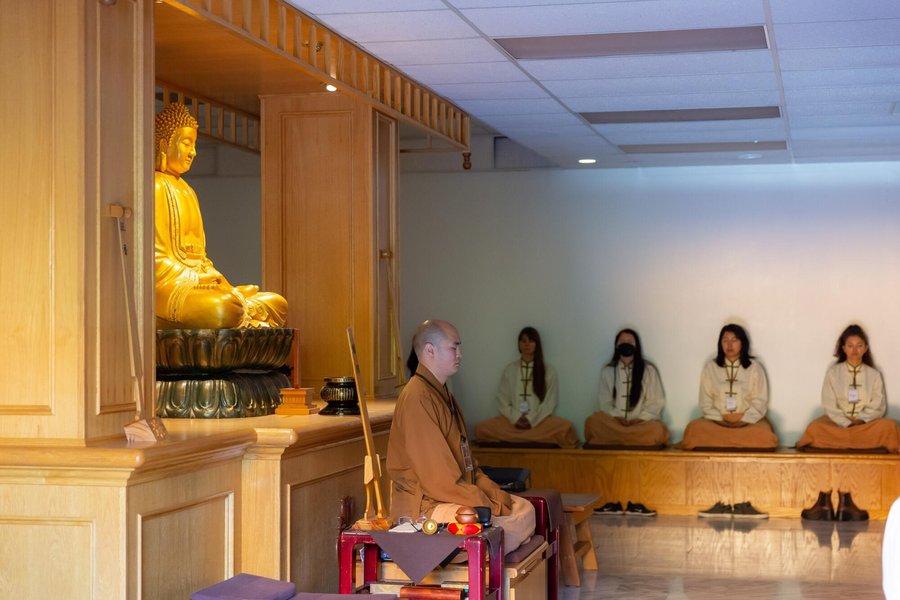
Buddhist monks engaged in meditation, a core practice for cultivating mindfulness and detachment.
The Vinaya: Monastic Code and Celibacy
The Vinaya Pitaka, the collection of disciplinary rules for the monastic community, explicitly prohibits any form of sexual activity, including masturbation. For a monk or nun, intentionally bringing oneself to orgasm (sukkavissaṭṭhi in Pali) is a serious offense (often a Sanghadisesa offense for monks, requiring formal procedures within the monastic community for reconciliation). This rule is part of the broader commitment to celibacy (brahmacariya), which is foundational to monastic life.
Renunciation of Sensual Pleasures for Spiritual Liberation
Monastic life is dedicated to the renunciation of worldly pleasures and attachments to accelerate progress towards enlightenment (Nirvana). Sexual desire is considered one of the strongest forms of sensual craving. Therefore, abstaining from all sexual acts, including masturbation, is essential for monks and nuns to cultivate detachment, purify the mind, and focus entirely on their spiritual training and the path to liberation from suffering.
Visualizing the Buddhist Approach to Masturbation
To better understand the multifaceted Buddhist view, this mindmap illustrates the key concepts and distinctions related to masturbation within Buddhist philosophy and practice.
This diagram shows how the Buddhist stance on masturbation branches from core principles into specific guidelines for lay followers versus monastics, highlighting the importance of mental factors and ultimate spiritual goals.
Comparative Summary: Lay vs. Monastic Views
The following table summarizes the key distinctions in Buddhist perspectives on masturbation for lay practitioners and ordained monastics:
| Aspect | Lay Practitioners | Monastics (Monks & Nuns) |
|---|---|---|
| Primary Guidance | Five Precepts, general ethical teachings, Dharma talks | Vinaya Pitaka (Monastic Code of Discipline) |
| Stance on Masturbation | Generally not explicitly prohibited; often viewed as neutral or permissible within limits. | Strictly prohibited; considered a serious offense violating vows of celibacy. |
| Key Ethical Concern | Avoiding excessive attachment, obsession, craving (kama-tanha), and harm to self/others. | Upholding absolute celibacy, complete renunciation of sensual desires to subdue passions. |
| Interpretation of "Sexual Misconduct" (Third Precept) | Masturbation is typically not categorized as sexual misconduct unless it involves exploitation or severe obsession. | Irrelevant in this context, as all sexual activity is renounced. Masturbation is a direct violation of specific monastic rules. |
| Focus of Practice | Mindfulness, moderation, understanding intention, reducing clinging. | Complete abstinence, rigorous discipline, cultivation of detachment from all sensual pleasures. |
| Karmic Impact | Minimal negative karma if done mindfully and without strong craving; can be negative if it fosters obsession or unwholesome mental states. | Significant negative karmic consequences related to breaking vows, hindering spiritual progress, and potentially requiring confessional procedures. |
| Goal Regarding Sexuality | To manage sexual energy wisely, without letting it lead to suffering or unethical behavior. | To transcend sexual desire entirely as part of the path to liberation. |
Relative Importance of Factors in Buddhist Views on Masturbation
The following chart illustrates the perceived importance of various factors when considering masturbation from a Buddhist perspective, comparing emphasis for lay practitioners, monastics, and the general underlying teachings. The scale runs from 1 (Less Emphasized) to 10 (Highly Emphasized).
This chart visually represents that while mindfulness and non-attachment are universally important, the stringency of rules (Monastic Discipline) and degree of permissiveness vary greatly. The focus on intention remains high across the board.
This video offers a discussion on Buddhist perspectives regarding masturbation, exploring its nuances within the tradition.
The video "Is it OK to Masturbate? _ Buddhism" delves into the often-taboo subject from a Buddhist viewpoint. It aims to unpack the teachings and how they might apply to self-pleasuring, considering the rich tapestry of Buddhist thought. Such discussions often touch upon the importance of mindfulness, the nature of desire, and how actions are evaluated within Buddhist ethics, aligning with the broader themes discussed here, particularly for lay individuals seeking to understand how this personal act fits within their spiritual practice.
Varying Interpretations and Modern Perspectives
It's important to acknowledge that Buddhism is not monolithic. Different schools and teachers may offer slightly varied interpretations or emphasis.
Different Buddhist Schools (Theravada, Mahayana, Vajrayana)
While the core distinction between lay and monastic rules regarding celibacy is largely consistent, specific interpretations or pastoral advice can vary. For instance, some Mahayana teachers, like the Dalai Lama, have at times referred to masturbation as a form of sexual misconduct (as it is self-gratification that can reinforce craving), while also acknowledging in other contexts that it might be harmless if not obsessive, indicating a pragmatic approach sensitive to context. Tantric Buddhism (Vajrayana) uniquely works with energies, including sexual energy, in advanced practices, but this is highly specific, ritualized, and distinct from ordinary masturbation.
The Harm of Guilt
A common thread in many contemporary Buddhist discussions is that excessive guilt or self-disgust about masturbation can often be more psychologically damaging and a greater hindrance to spiritual progress than the act itself, especially if the act is performed with a degree of awareness and moderation. Buddhism encourages self-compassion and understanding, rather than harsh self-judgment.
Frequently Asked Questions (FAQ)
Is masturbation considered a sin in Buddhism?
Buddhism generally doesn't use the concept of "sin" in the same way as Abrahamic religions. Instead, it talks about actions being "skillful" (kusala) or "unskillful" (akusala) based on whether they lead towards or away from enlightenment and the cessation of suffering. For laypeople, masturbation is not typically categorized as an unskillful act in itself, unless it's driven by intense craving, leads to obsession, or causes harm to oneself or others indirectly. For monastics, it is a breach of their vows.
Does masturbation generate negative karma according to Buddhism?
The karmic impact depends on intention (cetana) and the mental state accompanying the act. If masturbation is performed with strong lust, attachment, or if it reinforces addictive patterns, it can create unwholesome mental imprints and thus negative karma. However, if it's a relatively mindful act without strong clinging or negative repercussions, its karmic weight is generally considered minimal for lay practitioners. For monastics, it does carry negative karmic consequences as it violates their vows.
What did the Buddha say about masturbation?
The Buddha did not explicitly address masturbation for laypeople in the surviving canonical texts. His teachings for lay followers focused on broader ethical principles like avoiding sexual misconduct that harms others. For monks and nuns, however, the Vinaya (monastic code attributed to the Buddha) clearly prohibits masturbation as part of their celibacy vows.
How does Buddhism view sexual desire in general?
Sexual desire (kamaraga) is considered a powerful form of sensual craving (kama-tanha), which is one of the primary causes of suffering (dukkha). The ultimate goal in Buddhism is to overcome all cravings, including sexual desire, to achieve liberation. However, the approach varies: monastics aim for complete eradication, while laypeople are guided to manage it wisely, reduce its dominance, and ensure it doesn't lead to unethical actions or increased suffering.
What is more harmful in Buddhism: the act of masturbation or the guilt associated with it?
Many Buddhist teachers suggest that prolonged guilt, shame, or self-disgust related to masturbation can be more detrimental to one's mental well-being and spiritual practice than the act itself, particularly if the act is not obsessive or harmful to others. Buddhism emphasizes cultivating a non-judgmental awareness and compassion towards oneself. Persistent guilt can be a form of aversion, another mental defilement.
Recommended Further Exploration
- How do Buddhist teachings on non-attachment apply to modern relationships and sexuality?
- What are the Five Precepts in Buddhism and how do they guide the daily life of lay practitioners?
- What is the role of mindfulness in overcoming craving and addiction from a Buddhist perspective?
- How does the concept of karma and intention influence ethical decision-making in Buddhism?
References
Last updated May 16, 2025