
Buffalo in the 1960s: A Decade of Profound Transformation
Unpacking the intricate shifts that reshaped Buffalo's social, economic, demographic, and political fabric during a pivotal era.
Key Insights into Buffalo's 1960s Transformation
- Deindustrialization and Economic Decline: The 1960s witnessed a sharp decline in Buffalo's traditional industrial sectors, such as manufacturing, shipbuilding, and rail, largely due to the St. Lawrence Seaway's opening and shifts in transportation, leading to significant job losses and a weakening tax base.
- Racial Tensions and Segregation: Socially, the city experienced heightened racial tensions, civil rights activism, and persistent segregation, exacerbated by discriminatory housing policies like redlining and urban renewal projects that often displaced minority communities.
- Population Loss and Suburbanization: Demographically, Buffalo endured substantial population decline due to "white flight" to the suburbs, drastically altering its ethnic composition and concentrating African American populations in inner-city neighborhoods.
The 1960s represented a watershed decade for Buffalo, New York, fundamentally altering its trajectory across all major facets of urban life. Once a bustling industrial powerhouse and a critical transportation hub, the city began a significant decline that would reshape its identity for decades to come. This period was characterized by a complex interplay of national trends—such as civil rights movements, deindustrialization, and suburbanization—and unique local dynamics, all contributing to profound social, economic, demographic, and political shifts.
The Shifting Social Landscape: Tensions and Transformation
Buffalo's social fabric underwent considerable strain and transformation during the 1960s. The city became a microcosm of the broader national civil rights movement, experiencing heightened racial tensions and significant social unrest. The demographic shifts of previous decades, particularly the continued migration of African Americans from the rural South, led to increasing pressure on existing social structures.
Rising Racial Tensions and Grassroots Activism
As African American populations expanded beyond historically designated "Black Belt" neighborhoods into previously white working-class areas, social strain and racial conflicts became more pronounced. Despite legal challenges, discriminatory practices like restrictive covenants and redlining persisted, reinforcing residential segregation. These systemic barriers limited opportunities and contributed to a deeply divided social landscape, making Buffalo one of the most racially segregated metropolitan regions in the nation.
In response to these inequities, grassroots movements and community organizations began to emerge. Federal urban programs, such as the Model Cities Program, though sometimes criticized by local officials, inadvertently empowered African American citizens by facilitating their participation in policy decisions and community development. This marked a crucial shift, allowing disadvantaged communities to influence local affairs for the first time. Initiatives like the Langston Hughes Center for the Visual and Performing Arts and the Employment Information Center arose from this era, aiming to improve access to education, employment, and capital for underserved neighborhoods.
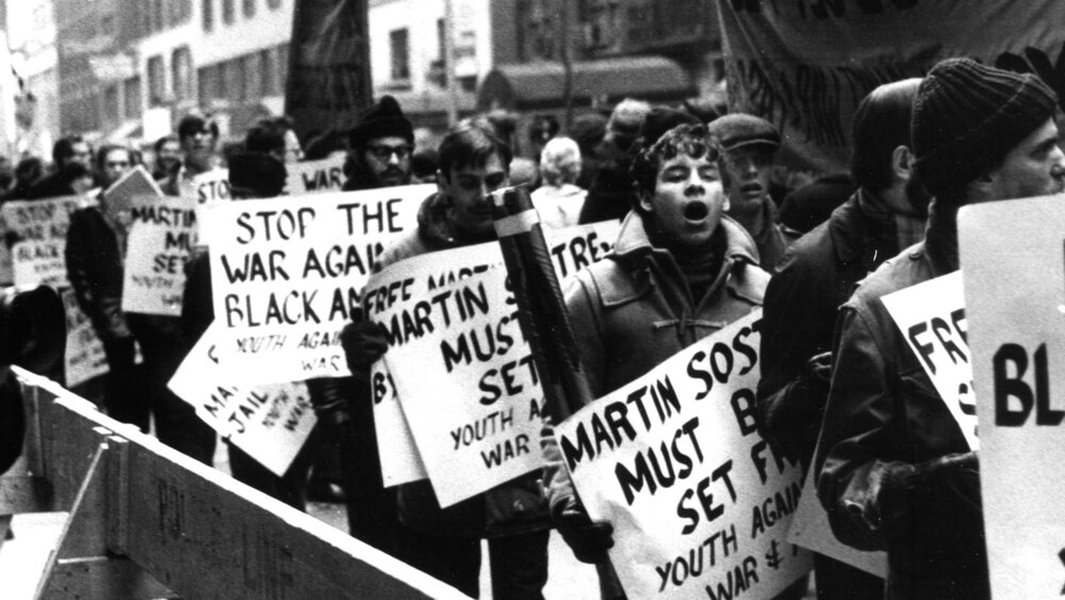
Civil Rights Protest in Buffalo, New York, during the 1960s, reflecting the era's heightened social activism.
Urban Renewal and Community Disruption
Urban renewal initiatives, intended to modernize the city, often had unforeseen negative social consequences. Large-scale projects, such as the construction of the Scajaquada Expressway (NY 198) and the demolition of historic buildings for downtown parking, disrupted established communities. These projects frequently displaced African American residents, relocating them to predominantly Black housing complexes or specific districts, further entrenching segregation and contributing to social upheaval.
The city also grappled with increasing crime rates and a perceived decline in public safety. The government struggled to provide adequate safety and quality schools, leading to social discontent. Civil rights and anti-war protests, including those at the University at Buffalo, highlighted the widespread social and political discourse, further pressuring city leadership to address growing issues.
Economic Reversal: From Industrial Hub to Decline
The 1960s marked a sharp downturn for Buffalo's economy, as the city transitioned from a thriving industrial center to one grappling with deindustrialization and fiscal crises. Several factors contributed to this economic reversal, eroding Buffalo's historical advantages and impacting its long-term financial health.
Impact of the St. Lawrence Seaway and Deindustrialization
A major blow to Buffalo's economy came with the opening of the St. Lawrence Seaway in 1959. This new waterway diverted shipping traffic away from Buffalo's port and the Erie Canal, diminishing the city's strategic advantage as a key port and barge canal terminus. Consequently, industries reliant on waterborne commerce, such as shipbuilding (present in Buffalo since 1812), began to wind down, leading to significant job losses.
Moreover, Buffalo, once the nation's second-largest rail center, experienced a decline in freight and passenger traffic throughout the 1960s and 1970s. The rise of air travel and the New York State Thruway drew passengers away from railways, further weakening the city's transportation infrastructure. This shift, combined with the loss of traditional manufacturing jobs and high labor costs, signaled the onset of deindustrialization. The city's industrial power, which had begun its decline at the start of the decade, became increasingly difficult for leaders to ignore.
Urban Renewal and Fiscal Challenges
Economic policies of the 1960s often prioritized large downtown urban renewal projects and law enforcement over investments in social services, education, tourism, and cultural preservation. While these projects aimed to modernize the city, they frequently failed to stimulate a healthy private sector or strong economic engines. Instead, they contributed to economic instability, burdened the tax base, and sometimes led to the destruction of historic industrial sites without adequate replacement.
Buffalo faced mounting fiscal crises, characterized by high property taxes and difficulties in attracting new businesses and residents. The city struggled to recruit essential public servants, such as police officers, due to low wages and increased street dangers, further compounding its economic woes. The lack of effective economic diversification efforts in the early stages of this decline meant Buffalo was ill-equipped to absorb the impact of its diminishing industrial base.
Demographic Shifts: Population Decline and Changing Composition
The 1960s were a period of significant demographic upheaval for Buffalo, marked by substantial population loss and a dramatic reshaping of its ethnic and racial composition.
The Exodus of "White Flight"
Buffalo's population peaked around 1950 and began a steep decline in the 1960s that would continue for decades. A major contributing factor was "white flight," where tens of thousands of white residents moved from the city to surrounding suburbs. Between 1950 and 1960 alone, over 80,000 white Buffalonians, nearly 20% of the population, left the city, a trend that accelerated in the 1960s, driven by factors such as the desire for better housing, schools, and a perception of increased urban unrest.
This out-migration resulted in a significant decrease in the city's overall population. Census data reveals that Buffalo's population declined from 532,759 in 1960 to 462,768 in 1970, representing a drop of approximately 13.2% within a single decade. This exodus left the city with a diminished tax base and a concentrated, increasingly disadvantaged urban core.
Racial Concentration and Cultural Transformation
While the overall population declined, the proportion of African Americans within the city increased, primarily concentrated in segregated East Side neighborhoods due to ongoing patterns of migration and discriminatory housing practices like redlining. This led to a less diverse urban core, even as the metropolitan area as a whole became more racially distinct.
Traditional immigrant communities also experienced shifts. Jewish populations, who had initially settled on the Lower East Side and later Masten Park, largely moved to North Buffalo and suburban areas between the 1940s and 1960s. Similarly, Italian American communities began to disperse from the "Old West Side" to North Buffalo, while the West Side became increasingly home to the city's Hispanic community, predominantly of Puerto Rican descent. These movements altered the cultural fabric of many traditional ethnic enclaves within the city, leading to the diminishment of distinct cultural practices and traditions that had once defined Buffalo's neighborhoods.
A mindmap illustrating the interconnected social, economic, demographic, and political changes that shaped Buffalo in the 1960s.
Political Challenges: Ineffective Governance and Activism
Politically, the 1960s in Buffalo were characterized by a struggle to adapt to the city's mounting problems, often marked by ineffective governance and a growing disconnect between community needs and political priorities.
Fiscal Challenges and Policy Misdirection
The city government faced recurring fiscal crises, making it difficult to maintain essential services and attract new talent. High local property taxes, among the highest in the nation, burdened residents and businesses without yielding significant improvements. Political decisions often favored large downtown projects and infrastructure development—such as the construction of expressways and parking lots—over crucial investments in education, social services, and cultural sites. This prioritization reflected a particular political philosophy that, in retrospect, may have exacerbated some of the city's social and economic woes.
The long-term effects of the St. Lawrence Seaway's opening and market deregulation in later decades underscored the challenges that political leaders faced in adapting to profound economic shifts. Despite decades of population loss and declining economic indicators, the city struggled to develop and implement effective strategies for economic revitalization or social cohesion.
Grassroots Pressure and Shifting Influence
The decade also saw the beginnings of African American involvement in Buffalo's policymaking, largely stimulated by federal urban programs like Model Cities, which encouraged citizen participation. This represented a fundamental shift from previous decades, when African Americans had minimal influence on city policies. However, local business and political leadership often resisted these social welfare-oriented programs, highlighting the tension between grassroots community goals and established power structures.
Buffalo became a focal point for civil rights and anti-war activism, with the University at Buffalo hosting prominent civil rights leaders. These protests placed additional pressure on city leadership, signaling a growing political awareness and a demand for change within the community. Despite increased activism, critics noted that local leadership struggled to respond effectively to these societal shifts, contributing to a sense of political shortcomings and a failure to deliver essential services like public safety and quality education.
A radar chart comparing Buffalo's socio-economic and political outlook at the beginning of the 1960s versus the stark reality at the decade's end, illustrating the decline in key indicators.
This radar chart visually represents the perceived shifts in Buffalo's core characteristics during the 1960s. The "Early 1960s Outlook" line indicates a relatively stronger standing in areas like economic prosperity and effective governance, albeit with existing challenges in racial equity. The "Late 1960s Reality" line, however, illustrates a significant deterioration across nearly all dimensions, particularly in economic prosperity, social cohesion, demographic growth, and racial equity. Infrastructure modernization, though pursued, did not translate into overall civic improvement, as shown by its relative decline. This chart emphasizes the multi-faceted nature of Buffalo's decline, underscoring how interconnected factors contributed to its transformation.
Summary of Key Changes in the 1960s
The table below provides a concise overview of the profound changes experienced by Buffalo, New York, across its social, economic, demographic, and political spheres during the 1960s.
| Category | Key Changes in the 1960s | Underlying Factors / Impact |
|---|---|---|
| Social | Increased racial tensions and civil unrest, growing community activism, urban renewal displacement, decline in public services, persistence of segregation. | African American migration, redlining, restrictive covenants, Model Cities Program, Scajaquada Expressway construction, inability of local government to provide adequate services. |
| Economic | Decline of industrial base (manufacturing, shipbuilding, rail), diminished port activity, fiscal crises, limited private sector growth, high tax burden. | Opening of St. Lawrence Seaway (1959), shift to air travel and highways, loss of traditional manufacturing jobs, urban renewal projects prioritizing infrastructure over economic diversification. |
| Demographic | Significant population loss ("white flight"), changing ethnic composition, increased concentration of African Americans in inner-city neighborhoods, dispersal of traditional immigrant communities. | Suburbanization trends, desire for better housing/schools, ongoing Great Migration, discriminatory housing policies, cultural shifts in neighborhood identities. |
| Political | Ineffective local governance, fiscal mismanagement, policy focus on large-scale projects over community needs, emergence of African American involvement in policymaking, increased political activism and protests. | Failure to address crime and educational shortcomings, high property taxes, resistance to social welfare programs, civil rights and anti-war movements. |
A Visual Journey Through Buffalo's Past
To further understand the visual context of Buffalo during this pivotal decade, consider watching this compelling video. It offers a glimpse into the daily life and urban landscape of Buffalo in the 1960s, providing a tangible connection to the period of transformation described above.
This video, "Buffalo in the 1960's," is a collection of photos capturing the city's atmosphere, architecture, and daily life during this transformative decade, offering a visual complement to the discussed social, economic, and political changes.
The video above provides a photographic tour of Buffalo in the 1960s. These images capture the essence of a city undergoing significant change: bustling streets giving way to urban renewal projects, the presence of diverse communities, and the architectural remnants of an industrial past. Viewing these scenes helps contextualize the profound shifts in population, industry, and social dynamics that defined Buffalo's journey during this period, allowing for a deeper appreciation of the historical narrative.
Frequently Asked Questions
What was "white flight" in Buffalo during the 1960s?
How did the St. Lawrence Seaway impact Buffalo's economy in the 1960s?
What role did urban renewal play in Buffalo's 1960s changes?
Were there civil rights protests in Buffalo during the 1960s?
Conclusion
The 1960s stand as a defining decade for Buffalo, New York, marking a profound pivot from its industrial zenith to a period of multifaceted decline and transformation. The convergence of economic deindustrialization, fueled by shifts in transportation and global trade, with mounting social tensions, driven by racial inequities and urban renewal policies, reshaped the city's landscape. Simultaneously, significant demographic shifts, particularly "white flight" and the changing ethnic composition of its neighborhoods, fundamentally altered Buffalo's population dynamics. Underlying these changes was a political environment that often struggled to effectively address the escalating challenges, leading to fiscal crises and a perceived disconnect from community needs. Ultimately, the 1960s set Buffalo on a prolonged path of redefinition, from which it would spend decades attempting to recover and reinvent itself.
Recommended Further Queries
- How did the St. Lawrence Seaway impact Great Lakes cities beyond Buffalo?
- What were the long-term effects of urban renewal projects in American cities?
- How did deindustrialization affect other Rust Belt cities in the mid-20th century?
- What strategies have Buffalo adopted for revitalization since the 1960s?
Referenced Search Results
 thehistoryofbuffalony.wordpress.com