
Forging the Future of AI: Building Edge-Ready Frontier Models with Unconventional Brilliance
A strategic guide to developing high-performance, efficient AI for edge devices using innovative methods, common tools, and a vision for market success.
Key Insights: Your Path to Innovation
- Embrace Unconventional Paths: Explore beyond traditional LLM training with methods like diffusion models or no-backpropagation techniques to unlock new efficiencies and capabilities for edge deployment.
- Prioritize Edge Efficiency from Day One: Integrate optimization strategies such as quantization, pruning, and model distillation throughout the development lifecycle, not just as an afterthought.
- Leverage the Ecosystem: Utilize widely available frameworks like PyTorch and TensorFlow, libraries like Hugging Face Transformers, and specialized toolkits for edge AI to accelerate development and deployment.
Understanding the AI Landscape for Edge Deployment
Creating a "frontier" Large Language Model (LLM) or a similarly advanced generative AI model that operates efficiently on edge devices requires a nuanced understanding of current technologies and emerging paradigms. This journey involves navigating the strengths and limitations of established methods while embracing innovative approaches.
Traditional LLMs: Power and Pitfalls
Traditional LLMs, predominantly based on the Transformer architecture, have demonstrated remarkable capabilities in understanding and generating human-like text. Their training, however, relies heavily on backpropagation, a computationally intensive process requiring vast datasets and significant processing power. While powerful, their sheer size and computational demands make direct deployment on resource-constrained edge devices (like smartphones, IoT devices, or personal computers without high-end GPUs) a major challenge. Inference can also be slow and energy-consuming, limiting real-world applicability in many edge scenarios.
Diffusion Models: A New Wave in Generative AI
Diffusion models, initially gaining fame for their stunning image generation capabilities, are increasingly being explored for other modalities, including text. These models work by iteratively adding noise to data and then learning to reverse the process, effectively "denoising" random noise into coherent outputs. This paradigm offers a different approach to generation that can, with optimization, be made more efficient. Research into "one-step" or "few-step" diffusion processes (like AMD's Nitro Diffusion) and specific optimizations for edge hardware shows promise for bringing their generative power to less powerful devices. Their application to language modeling is an active and exciting research frontier.
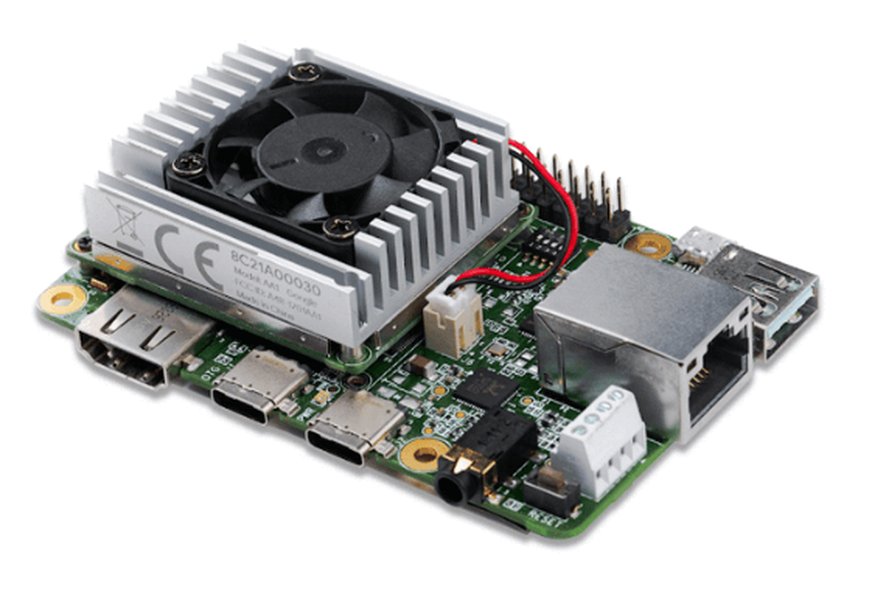
Edge AI enables processing data locally on devices, reducing latency and bandwidth needs.
No-Backpropagation Training: Reimagining Learning
Backpropagation, while effective, is a significant bottleneck in terms of memory and computational cost, especially for large models. Unconventional approaches that bypass or significantly modify backpropagation are emerging. These include:
- Gradient-Free Optimization: Methods like evolutionary algorithms or certain reinforcement learning techniques that optimize model parameters without direct gradient computation.
- Layer-wise or Local Learning: Techniques like "NoProp" explore ways for layers or parts of a network to learn more independently, reducing the need for end-to-end backpropagation.
- Zeroth-Order Optimization: Approaches like DPZero (Differentially Private Zeroth-Order Optimization) for fine-tuning, which estimate gradients without explicit calculation, offering memory efficiency and privacy benefits.
Strategic Blueprint: Crafting Your Edge-Optimized Frontier Model
Developing an LLM or similar generative AI that is both "frontier" in capability and "edge-ready" in efficiency requires a strategic, multi-phase approach. This blueprint outlines key considerations from initial design to training and deployment.
Phase 1: Foundational Choices - Paradigm and Architecture
Selecting Your Model Paradigm
Your choice of model paradigm is fundamental and will influence subsequent development steps. Consider these options:
- Optimized Diffusion Models: Leverage recent advancements in making diffusion models efficient for edge devices. This might involve using pre-trained diffusion models and applying specific optimization techniques, or exploring architectures like AMD Nitro Diffusion designed for faster inference.
- No-Backpropagation or Forward-Free Methods: For a truly unconventional and potentially highly efficient approach, experiment with training methods that reduce or eliminate reliance on backpropagation. This is a research-intensive path but could yield significant breakthroughs in resource efficiency.
- Hybrid Approaches: Combine elements. For instance, use a Transformer backbone but explore unconventional training for certain components, or use a diffusion model for a specific generative task within a larger system. You could also start with pre-trained, compressed LLMs and fine-tune them using efficient methods.
Core Architecture: Transformers and Beyond
The Transformer architecture remains the cornerstone of most state-of-the-art LLMs due to its effectiveness in handling sequential data via self-attention mechanisms. However, to enhance efficiency for edge deployment, consider architectural innovations:
- Mixture of Experts (MoE): MoE layers can significantly reduce computational cost during inference. Instead of engaging the entire model for every input, MoE models route inputs to a subset of "expert" sub-networks. This sparsity allows for larger models that are computationally cheaper to run.
- Attention Variants: Explore more efficient attention mechanisms (e.g., sparse attention, linear attention) that reduce the quadratic complexity of standard self-attention.
- Custom Architectures: Depending on your chosen paradigm (e.g., diffusion), the core architecture might deviate significantly from standard Transformers, incorporating elements specific to that approach.
Phase 2: Development - Data, Tools, and Training
Data: The Fuel for Your AI
High-quality, diverse, and voluminous data is crucial. For LLMs, this typically involves large text corpora.
- Data Collection & Preprocessing: Gather or curate datasets relevant to your model's intended capabilities. Preprocessing steps include cleaning, normalization, and tokenization. Techniques like Byte Pair Encoding (BPE) are standard for efficient tokenization.
- Synthetic Data: For specific tasks or to augment existing datasets, consider generating synthetic data, perhaps using other generative models.
Essential Toolkit: Frameworks and Libraries
Leverage commonly available and robust tools to streamline development:
- Core Frameworks: PyTorch and TensorFlow are the leading deep learning frameworks, offering flexibility and extensive community support. Keras, often used with TensorFlow, provides a higher-level API.
- Hugging Face Ecosystem: The Hugging Face Transformers library is invaluable, providing access to thousands of pre-trained models, tokenizers, and tools for training and fine-tuning.
- Diffusion-Specific Toolkits: If pursuing a diffusion model approach, look for open-source repositories and toolkits specifically designed for diffusion models (e.g., those implementing efficient versions like AMD Nitro Diffusion or general diffusion frameworks).
Innovative Training and Fine-Tuning Strategies
Training large models is resource-intensive. Employ strategies to manage this:
- Transfer Learning: Start with pre-trained models (e.g., from Hugging Face) and fine-tune them on your specific task or dataset. This significantly reduces the data and computation needed compared to training from scratch.
- Efficient Fine-Tuning Techniques: Methods like Low-Rank Adaptation (LoRA) or Adapters allow for fine-tuning large models by training only a small number of additional parameters, drastically reducing memory and computational overhead.
- Unconventional Training: If exploring no-backpropagation, implement algorithms like NoProp or use zeroth-order optimization techniques like DPZero. This may involve more custom coding and experimentation.
- Resource Management: Utilize cloud computing resources (AWS, Google Cloud, Azure) for initial large-scale training or computationally demanding experiments. For development and smaller-scale experiments, a local machine with a good GPU can suffice. Techniques like gradient checkpointing can also help reduce memory usage during training.
The journey from an idea to a deployable edge AI model is complex. The following mindmap visualizes the key stages and considerations in this endeavor, providing a high-level overview of the strategic path:
This mindmap outlines the interconnected stages, from conceptualizing your innovative model to ultimately bringing it to market and establishing your expertise.
Mastering Efficiency: Optimization for Edge AI Devices
Once your model is trained or fine-tuned, making it performant on edge AI devices is a critical step. This involves a suite of optimization techniques and leveraging specialized tools.
Core Optimization Techniques
- Quantization: This is one of the most effective techniques. It involves reducing the precision of the model's weights and activations (e.g., from 32-bit floating point to 8-bit or even 4-bit integers). This significantly reduces model size and can speed up inference, especially on hardware with specialized support for lower-precision computations. Libraries like Intel Neural Compressor or features within TensorFlow Lite facilitate post-training quantization and quantization-aware training.
- Pruning: This technique removes redundant or less important parameters (weights) or even entire structural components (like channels or attention heads) from the model. Pruning can lead to smaller and faster models, though it may require some fine-tuning to recover any lost accuracy.
- Knowledge Distillation: Here, a smaller "student" model is trained to mimic the behavior of a larger, more complex "teacher" model. The student model learns to replicate the teacher's outputs or internal representations, thereby inheriting its capabilities but in a more compact form suitable for edge deployment.
- Architectural Modifications: Sometimes, the model architecture itself can be modified for efficiency. This includes using more efficient layers, reducing model depth or width, or incorporating techniques like Mixture of Experts (MoE) as discussed earlier.
Leveraging Edge-Specific Frameworks and Hardware
Dedicated frameworks and an awareness of target hardware capabilities are essential:
- Edge AI Frameworks:
- TensorFlow Lite (TFLite): Optimizes TensorFlow models for deployment on mobile, embedded, and IoT devices. It includes converters and interpreters for various hardware.
- ONNX Runtime: Open Neural Network Exchange (ONNX) provides an open format for ML models. ONNX Runtime can accelerate inference across a wide range of hardware and operating systems.
- NVIDIA TensorRT: A high-performance deep learning inference optimizer and runtime for NVIDIA GPUs, including those found in edge devices.
- Google AI Edge / MediaPipe: Frameworks facilitating on-device ML solutions, often with pre-built components and pipelines for common tasks.
- Core ML (Apple): For deploying models on iOS, macOS, watchOS, and tvOS devices.
- Hardware Accelerators: Modern edge devices often include specialized hardware for AI tasks:
- NPUs (Neural Processing Units): Custom ASICs designed to accelerate neural network computations efficiently (e.g., Arm Ethos NPUs).
- Mobile GPUs: GPUs in smartphones and other mobile devices are increasingly capable of handling ML workloads.
- FPGAs (Field-Programmable Gate Arrays): Can be programmed to create custom hardware accelerators for specific models, offering a balance of performance and flexibility.
- Specialized Edge SoCs (System-on-Chips): Many SoCs now integrate dedicated AI accelerators.
Profiling and benchmarking your model on the actual target edge device hardware is crucial to identify bottlenecks and validate the effectiveness of your optimizations.
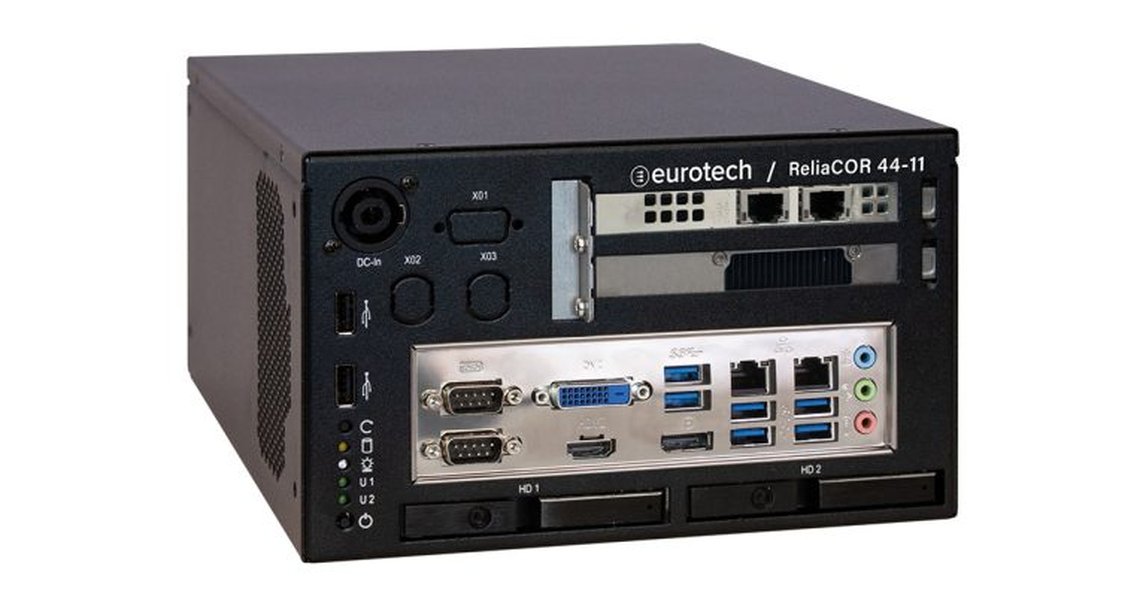
Specialized hardware is often used for robust Edge AI applications.
The following table summarizes key tools and techniques relevant to developing and optimizing LLMs for edge deployment:
| Category | Tool/Technique | Description | Primary Use Case |
|---|---|---|---|
| Core Frameworks | PyTorch | Open-source machine learning library known for its flexibility and dynamic computation graphs. | Model development, training, research. |
| Core Frameworks | TensorFlow (with Keras) | Comprehensive open-source platform for machine learning, with robust production deployment capabilities. | Model development, training, deployment. |
| Model Hubs & Libraries | Hugging Face Transformers | Provides thousands of pre-trained models, tokenizers, and utilities for NLP tasks. | Accessing pre-trained models, fine-tuning, NLP tasks. |
| Optimization | Quantization (e.g., 4-bit, 8-bit) | Reduces model size and latency by converting weights and/or activations to lower-precision data types. | Edge deployment, reducing memory footprint, accelerating inference. |
| Optimization | Pruning | Removes less important weights or structures from a neural network to reduce model size and computation. | Edge deployment, model compression. |
| Optimization | Knowledge Distillation | Training a smaller "student" model to mimic a larger "teacher" model. | Creating compact, efficient models. |
| Efficient Fine-Tuning | LoRA (Low-Rank Adaptation) | Adapts large pre-trained models by training only a small set of low-rank matrices. | Resource-efficient fine-tuning of large LLMs. |
| Edge Deployment | TensorFlow Lite (TFLite) | Tools to convert and run TensorFlow models on mobile, embedded, and IoT devices. | On-device inference for Android, iOS, and embedded Linux. |
| Edge Deployment | ONNX Runtime | High-performance inference engine for models in the ONNX (Open Neural Network Exchange) format. | Cross-platform model deployment and hardware acceleration. |
| Unconventional Paradigms | Diffusion Model Toolkits | Libraries and frameworks for building and training diffusion models (e.g., for text-to-image, or potentially text generation). | Generative tasks, exploring alternatives to autoregressive LLMs. |
| Unconventional Paradigms | No-Backpropagation Concepts (e.g., NoProp, DPZero) | Research-stage methods for training neural networks without traditional backpropagation. | Reducing training memory, exploring novel learning algorithms. |
This table provides a snapshot of the diverse ecosystem available to support your endeavor in creating cutting-edge, efficient AI models.
Comparing Approaches: A Visual Analysis
Choosing the right approach for your edge AI model involves balancing various factors. The following radar chart offers a comparative visualization of Traditional LLMs, Edge-Optimized Diffusion Models, and experimental No-Backpropagation LLMs across several key dimensions. These are subjective assessments based on current trends and research, intended to guide strategic thinking rather than represent definitive metrics.
Interpretation Guide: Values range from 1 (Low) to 10 (High). For 'Training Complexity' and 'Resource Intensity', lower is generally better from a resource perspective, though high complexity might also correlate with high innovation. 'Market Readiness' reflects current maturity and ease of commercialization.
This chart highlights the trade-offs: Traditional LLMs are mature but resource-heavy for edge. Edge-optimized diffusion models offer a promising balance. No-backpropagation methods are highly innovative and potentially very efficient but are less mature and carry higher research risk.
Diving Deeper: Understanding LLM Foundations
Even when pursuing unconventional approaches, a strong understanding of how Large Language Models are fundamentally built is invaluable. The following video provides an in-depth, code-centric explanation of building a GPT-like model from scratch. This foundational knowledge can illuminate why certain optimizations are effective and how unconventional methods might offer advantages or present new challenges. Watching this can provide context on the complexities of model architecture, data processing, training loops, and attention mechanisms that are often abstracted away by high-level libraries but are crucial for deep innovation.
This detailed walkthrough covers aspects from basic tokenization and embedding layers to the intricacies of self-attention and the full transformer block, culminating in pretraining and fine-tuning discussions. Understanding these core components is essential for anyone looking to innovate in the LLM space, whether by adapting existing architectures for edge efficiency or by developing entirely new paradigms.
Code Glimpse: Implementing a Mixture of Experts (MoE) Layer
As mentioned, Mixture of Experts (MoE) is a promising architectural pattern for building efficient yet powerful models. Here's a simplified conceptual example in PyTorch demonstrating the basic structure of an MoE layer. This is not a complete, optimized implementation but illustrates the core idea of routing inputs to different "expert" networks.
# Import necessary PyTorch modules
import torch
import torch.nn as nn
import torch.nn.functional as F

class Expert(nn.Module):
    # Each Expert is a small neural network (here, a simple fully connected layer)
    def __init__(self, input_dim=512, output_dim=512):
        super(Expert, self).__init__()
        self.fc = nn.Linear(input_dim, output_dim)

    def forward(self, x):
        return self.fc(x)

class MoELayer(nn.Module):
    # The MoE layer contains multiple experts and a gating network
    def __init__(self, num_experts, input_dim=512, expert_output_dim=512):
        super(MoELayer, self).__init__()
        self.num_experts = num_experts
        # Create a list of expert modules
        self.experts = nn.ModuleList([Expert(input_dim, expert_output_dim) for _ in range(num_experts)])
        # The gate network decides which expert(s) to route the input to
        # It outputs a weight for each expert
        self.gate = nn.Linear(input_dim, num_experts)

    def forward(self, x):
        # x is the input tensor, e.g., (batch_size, sequence_length, input_dim)
        # For simplicity, let's assume input is (batch_size, input_dim) or needs reshaping if 3D
        # If x has a sequence length, the gate might operate on each token embedding.
        # Here, we assume gate operates on the entire input feature vector for simplicity.

        # Compute routing weights from the gate network
        # Softmax ensures the weights sum to 1 (or close to 1 for top-k gating)
        gate_logits = self.gate(x)
        weights = F.softmax(gate_logits, dim=-1) # Shape: (batch_size, num_experts)

        # Process input through each expert and combine their outputs weighted by the gate
        # This is a simplified "soft" MoE where all experts contribute.
        # More advanced MoEs use "hard" top-k gating for sparsity.

        expert_outputs = []
        for i in range(self.num_experts):
            # Pass input x to each expert
            expert_out = self.experts[i](x) # Shape: (batch_size, expert_output_dim)
            # Multiply expert output by its corresponding gate weight
            # weights[:, i:i+1] ensures broadcasting if expert_output_dim > 1
            weighted_expert_out = expert_out * weights[:, i].unsqueeze(-1)
            expert_outputs.append(weighted_expert_out)

        # Sum the weighted outputs from all experts
        # Stack along a new dimension and sum over it
        final_output = torch.stack(expert_outputs, dim=0).sum(dim=0) # Shape: (batch_size, expert_output_dim)

        return final_output

# Example usage:
# input_dim = 512 # Dimension of input features
# num_experts = 4 # Number of expert networks
# moe_layer = MoELayer(num_experts=num_experts, input_dim=input_dim, expert_output_dim=input_dim)

# Create some dummy input data
# batch_size = 10
# input_data = torch.randn(batch_size, input_dim)

# Pass data through the MoE layer
# output = moe_layer(input_data)
# print("Output shape:", output.shape) # Expected: (batch_size, input_dim)
This code provides a foundational understanding. Real-world MoE implementations in large models like those from Google or Mistral AI involve more sophisticated gating mechanisms (e.g., top-k sparse gating), load balancing across experts, and careful integration within the larger Transformer architecture.
From Lab to Market: Commercialization and Reputation
Creating an innovative, edge-efficient AI model is a significant technical achievement. Translating this into market success and a strong personal reputation requires strategic effort.
Crafting Your Niche: USP and Market Strategy
- Define Your Unique Selling Proposition (USP): What makes your model stand out? Is it its unparalleled efficiency on specific edge hardware? Its unique capabilities derived from an unconventional approach? Its ability to perform a specific task better or faster on-device than any competitor? Clearly articulate this value.
- Identify Target Markets: Which industries or applications will benefit most from your edge AI model? Consider areas like on-device personal assistants, smart retail, industrial IoT, healthcare monitoring, or privacy-preserving applications.
- Develop a Go-to-Market Strategy:
- SDKs/APIs: Package your model into user-friendly Software Development Kits (SDKs) or Application Programming Interfaces (APIs) that developers can easily integrate into their own applications.
- Standalone Applications: Develop showcase applications that demonstrate the power and utility of your model.
- Consulting/Custom Solutions: Offer services to adapt or customize your model for specific client needs.
- Licensing: Explore different licensing models (e.g., per-device, subscription, royalty-based) appropriate for your target market.
- Ethical Considerations: Proactively address ethical implications, data privacy (especially crucial for edge AI), and potential biases in your model. Transparent and ethical practices build trust and enhance marketability.
Building Authority: Sharing Knowledge and Engaging the Community
- Open Source Contributions: Consider open-sourcing parts of your work (e.g., an efficient model variant, tools you developed). This builds visibility, fosters community trust, and can lead to valuable feedback and collaborations.
- Publish Your Findings: Write blog posts, technical articles, or academic papers detailing your unconventional approaches, optimization techniques, and benchmark results. Present your work at AI conferences, workshops, or industry meetups.
- Create Demonstrations and Tutorials: Develop compelling demos that showcase your model's capabilities on actual edge devices. Create tutorials that help others understand and potentially use your technology.
- Engage with the Community: Participate in online forums (e.g., GitHub, Reddit, specialized AI communities), answer questions, and share your expertise. This helps establish you as a thought leader.
- Build a Portfolio: Document your projects, innovations, and successes. A strong portfolio is crucial for attracting clients, collaborators, or employment opportunities.
By combining technical excellence with savvy marketing and active community engagement, you can not only commercialize your innovative edge AI model but also cultivate a high-end personal reputation as an expert in this rapidly evolving field.
Frequently Asked Questions (FAQ)
What are the biggest challenges in deploying LLMs on edge devices?
The primary challenges include:
- Model Size: LLMs are typically very large, exceeding the memory capacity of most edge devices.
- Computational Cost: Inference requires significant processing power, which edge devices often lack, leading to high latency and power consumption.
- Memory Bandwidth: Accessing model weights from memory can be a bottleneck.
- Power Consumption: Continuous inference can quickly drain batteries on mobile devices.
- Hardware Heterogeneity: Optimizing for diverse edge hardware (CPUs, GPUs, NPUs from different vendors) is complex.
How "frontier" can a model realistically be if built with limited resources?
Achieving "frontier" status comparable to models from large, well-funded labs (like GPT-4 or Gemini Ultra) is extremely challenging with limited resources, especially if "frontier" implies general-purpose, massive scale. However, you can achieve "frontier" status in a niche or specialized area by:
- Focusing on a specific task or domain where your model can outperform more general models.
- Innovating in model architecture or training techniques (like unconventional methods) to achieve superior efficiency or unique capabilities.
- Leveraging pre-trained models and applying novel fine-tuning or optimization strategies.
- Excelling in edge performance for a particular application, making your model "frontier" in terms of on-device utility.
Are diffusion models truly viable for complex language tasks on edge devices yet?
Diffusion models have shown remarkable success in image and, increasingly, audio/video generation. Their application to complex language tasks is an active area of research and development. While some promising results are emerging for text generation, they are generally not yet as mature or broadly adopted for diverse language understanding and generation tasks as Transformer-based autoregressive LLMs.
For edge deployment, the computational intensity of iterative denoising in diffusion models presents challenges. However, significant research is focused on:
- Reducing the number of diffusion steps (e.g., one-step or few-step models like AMD Nitro Diffusion).
- Model quantization and pruning specifically for diffusion architectures.
- Hardware-specific optimizations.
What's the most crucial first step for someone starting this journey?
The most crucial first step is to clearly define the specific problem you want to solve and the unique value your edge AI model will provide.
- Specificity: Avoid overly broad goals like "build the best LLM." Instead, focus on a niche application or a specific performance characteristic (e.g., "a highly accurate sentiment analyzer for customer feedback that runs in real-time on a Raspberry Pi" or "a creative text generation tool for artists that operates offline on a tablet").
- Feasibility: Realistically assess your available resources (time, skills, data, compute).
- Research: Thoroughly research existing solutions and identify gaps or opportunities for innovation, especially concerning unconventional approaches or edge efficiency.
How important is open-sourcing for building a reputation in this field?
Open-sourcing can be extremely important and beneficial for building a reputation in AI, particularly for individuals or smaller teams. Here's why:
- Visibility and Recognition: Sharing your code, models, or tools on platforms like GitHub allows the wider community to see, use, and evaluate your work, leading to recognition.
- Community Building and Collaboration: Open-source projects attract contributors, users, and feedback, fostering a community around your work and potentially leading to collaborations.
- Demonstrating Expertise: It's a tangible way to showcase your skills and innovative approaches, acting as a live portfolio.
- Building Trust: Transparency through open source can build trust with potential users, clients, or employers.
- Driving Adoption: Making your tools accessible can lead to wider adoption, further enhancing your reputation as the creator of a valuable resource.
Recommended Further Exploration
To delve deeper into creating advanced AI models for edge devices, consider exploring these related queries:
- What are the latest breakthroughs in quantizing large language models for mobile deployment?
- How can Mixture of Experts (MoE) architectures be effectively trained and deployed on resource-constrained hardware?
- Compare the energy efficiency of different AI model architectures for continuous inference on battery-powered edge devices.
- What are practical strategies for curating and augmenting datasets for fine-tuning specialized LLMs for edge applications?
References
The insights in this response were synthesized from information including concepts discussed in the following resources:
Last updated May 7, 2025