
Beyond Headlines: Building a News Aggregator That Intelligently Completes Your Knowledge
Discover how to create a personalized news feed designed not just for interest, but for understanding.
Imagine a news feed that doesn't just show you what's popular or what you've liked before, but actively seeks out the missing pieces in your understanding of complex topics. Building such a "knowledge-completing" news aggregator is a sophisticated endeavor, blending cutting-edge techniques in personalization, natural language processing (NLP), and recommendation systems. It moves beyond simple interest-based curation to actively identify and fill gaps in a user's knowledge base.
Key Highlights for Building a Gap-Aware Aggregator
- User Knowledge Modeling: Utilize AI and NLP to create detailed profiles representing what a user knows and is interested in, based on reading history and interactions.
- Intelligent Gap Detection: Employ techniques like knowledge graph analysis and content coverage assessment to pinpoint specific sub-topics or concepts the user hasn't encountered.
- Targeted Content Recommendation: Design algorithms that prioritize and deliver articles specifically chosen to fill identified knowledge gaps, providing explanations for why they are recommended.
The Core Concept: From Interest to Understanding
Shifting the Paradigm of News Consumption
Traditional news aggregators excel at tailoring content based on expressed interests or past behavior. They aim to keep users engaged by showing more of what they like. A knowledge-completing aggregator, however, has a distinct goal: to foster deeper understanding by systematically addressing areas where the user's knowledge might be incomplete. This involves not just tracking clicks and likes, but analyzing the *semantic content* of consumed articles and comparing it against a broader map of the topic.
This approach requires a system capable of:
- Inferring the depth and breadth of a user's understanding on various topics.
- Identifying related concepts, sub-topics, or prerequisite information the user might be missing.
- Sourcing and recommending content specifically designed to bridge these identified gaps.
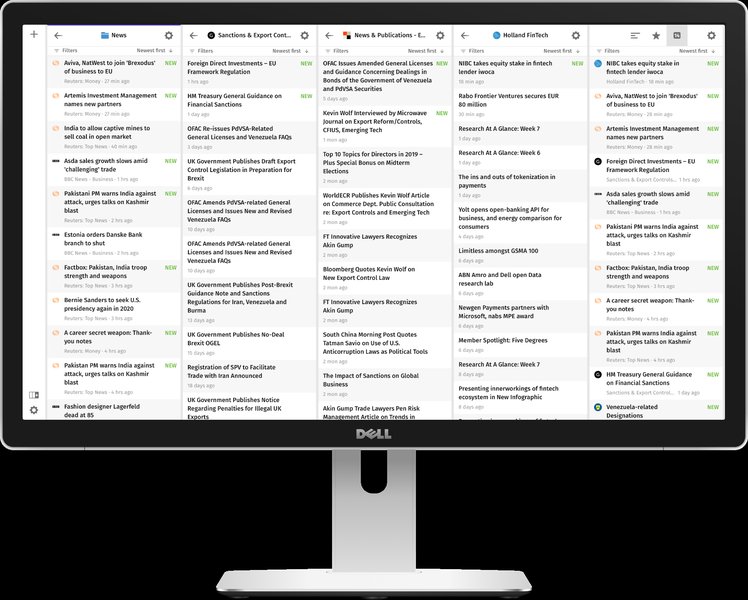
A typical personalized news dashboard interface, which forms the foundation for presenting gap-filling recommendations.
Building Your Knowledge-Completing Aggregator: A Step-by-Step Guide
Step 1: Understanding the User - Modeling Knowledge and Interests
The first crucial step is to build a dynamic and detailed profile of each user's knowledge state. This goes beyond simple keyword tracking.
Data Collection Strategies
- Implicit Data: Track user interactions such as articles read, time spent on articles, scroll depth, clicks, shares, and search queries. This provides behavioral insights into engagement and interest.
- Explicit Data: Allow users to specify topics of interest, preferred sources, or even self-assess their knowledge level on certain subjects. Short questionnaires or onboarding quizzes can also gather baseline information, though they should be used judiciously to avoid impacting user experience.
Semantic User Profiling
- Topic Modeling: Employ techniques like Latent Dirichlet Allocation (LDA) or Non-negative Matrix Factorization (NMF) to identify the underlying topics within the articles a user consumes. This helps map their engagement across different thematic areas.
- Text Embeddings: Utilize advanced NLP models like BERT, RoBERTa, or other transformer-based architectures to create rich, contextual vector representations (embeddings) of both the articles and the user's overall reading history. This allows for a nuanced understanding of the semantic content the user has been exposed to.
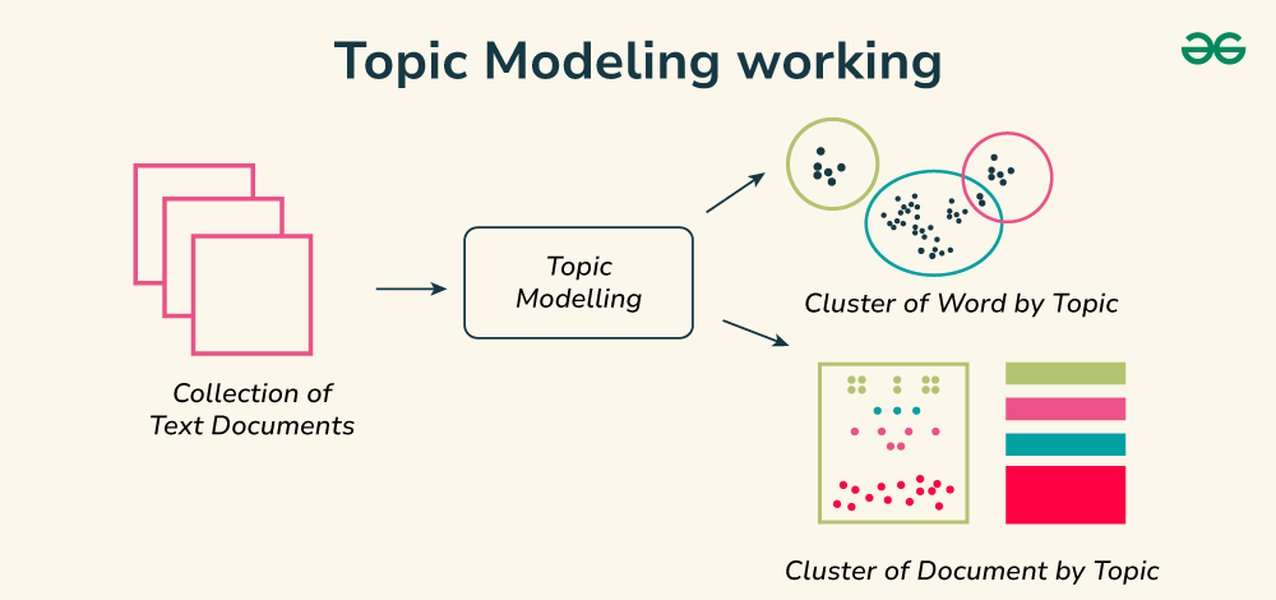
Visual representation of how Topic Modeling algorithms process text to uncover latent topics.
Step 2: Identifying the Knowledge Gaps
Once you have a robust user profile, the next step is to pinpoint the gaps. This involves comparing the user's profile against a comprehensive representation of the topic domain.
Methods for Gap Detection
- Knowledge Graph Approach: Build or leverage existing knowledge graphs (like Wikidata or DBpedia) or create domain-specific ontologies that map concepts, entities, and their relationships within a topic. By comparing the concepts covered in the user's reading history against the graph, you can identify unexplored nodes or connections, representing potential knowledge gaps.
- Content Coverage Analysis: Analyze the distribution of sub-topics within the articles the user has read. If a user frequently reads about "Machine Learning Applications" but rarely encounters articles on "Machine Learning Ethics" or "ML Algorithm Theory," the system flags these areas as gaps. Semantic analysis using embeddings can reveal nuanced thematic omissions.
- Comparative Analysis: Compare the user's knowledge profile (represented as topic vectors or embeddings) against a 'complete' topic profile derived from a large corpus of authoritative articles on the subject. Areas with low similarity or coverage indicate gaps.
- Interactive Diagnostics (Optional): Carefully designed quizzes or questions, potentially generated using NLP, could explicitly probe user understanding. However, this must be balanced against user experience.
Step 3: Aggregating and Tagging Content
To fill the identified gaps, you need a constantly updated pool of relevant news articles.
Source Aggregation
- Utilize RSS feeds from reputable news outlets, official news APIs (like Google News API or NewsAPI), or ethical web scraping techniques (using tools like Scrapy or BeautifulSoup in Python) to gather content.
- Ensure a diverse range of credible sources to provide balanced perspectives.
Content Processing and Tagging
- Apply NLP techniques to incoming articles:
- Topic Classification: Assign articles to relevant predefined topics or categories.
- Named Entity Recognition (NER): Identify key people, organizations, locations, and concepts mentioned in the text.
- Keyword Extraction: Pull out salient terms.
- Semantic Embedding: Generate vector representations for each article.
- Store articles along with this extracted metadata in a database (e.g., PostgreSQL, MongoDB) for efficient querying.
Step 4: The Recommendation Engine - Filling the Gaps
This is where the system intelligently matches content to the user's identified knowledge gaps.
Algorithm Design
- Gap-Focused Content-Based Filtering: Prioritize articles whose content (topics, keywords, semantic embeddings) strongly matches the identified knowledge gaps in the user's profile. Cosine similarity between article embeddings and 'gap vectors' can be used.
- Utility-Based Scoring: Develop a scoring mechanism that ranks articles based not only on relevance to interests but also on their potential to fill a specific knowledge gap. Probabilistic models can estimate the 'utility' of an article for expanding understanding.
- Hybrid Approaches: Combine gap-filling logic with collaborative filtering (recommending articles popular among users with similar knowledge profiles but who *have* explored the gap area) for more robust recommendations.
- Diversity and Serendipity: Ensure the feed doesn't become too narrow. Include mechanisms to introduce related but slightly different topics occasionally to foster broader exploration.
Explainability
- Provide clear explanations for *why* an article is recommended (e.g., "This article explores the ethical considerations of AI, an area related to your interest in AI applications," or "Deepen your understanding of renewable energy with this piece on grid integration challenges"). This builds trust and helps users understand the learning path. Research on topic-centric explanations highlights its importance.
Visualizing Knowledge Gaps
Mapping User Understanding Across Sub-Topics
A radar chart can be a powerful way to visualize the system's assessment of a user's knowledge completeness across different facets of a complex topic. Below is a conceptual example showing inferred knowledge levels for a user interested in "Artificial Intelligence". The scores (out of 10) represent the system's confidence in the user's familiarity based on their interaction history. Lower scores indicate potential knowledge gaps the aggregator aims to fill.
In this example, the chart suggests potential knowledge gaps in "AI Ethics & Society", "Computer Vision", and "AI Research Trends," guiding the aggregator to recommend articles covering these specific sub-topics.
System Architecture Overview
Mapping the Components of the Aggregator
The following mind map illustrates the key components and their interactions within the knowledge-completing news aggregator system:
(e.g., Knowledge Graph)"] id5b["Content Coverage Assessment"] id5c["Identification of Under-explored Areas"] id6["Recommendation Engine"] id6a["Gap-Focused Scoring"] id6b["Content-Based Filtering"] id6c["Hybrid Models"] id6d["Explainability Module"] id7["Personalized Feed Delivery"] id7a["Web Interface / App"] id7b["Notifications (Email, Push)"] id8["System Learning & Refinement"] id8a["Feedback Loop Integration"] id8b["A/B Testing"] id8c["Performance Analytics"]
This map shows the flow from gathering news and user data, through processing and analysis, to the final delivery of personalized, gap-filling recommendations, emphasizing the cyclical nature of learning and refinement.
Technology Stack and Implementation
Tools and Techniques
Building this system involves integrating various technologies:
Core Technologies
- Backend: Python is a strong choice due to its extensive libraries for NLP (spaCy, NLTK, Hugging Face Transformers), web scraping (BeautifulSoup, Scrapy), and web frameworks (Django, Flask).
- Frontend: JavaScript frameworks like React, Vue.js, or Angular can create dynamic and interactive user interfaces.
- Database: Options include PostgreSQL for structured data and relational integrity, or MongoDB for flexibility with unstructured article metadata.
- NLP Libraries: spaCy for efficient processing, Hugging Face Transformers for state-of-the-art embedding models, scikit-learn for traditional ML models like LDA/NMF.
- Recommendation Libraries: Surprise, LightFM, or custom implementations using frameworks like TensorFlow or PyTorch.
- Knowledge Graphs: Tools like Neo4j or leveraging public graphs like Wikidata via SPARQL endpoints.
- Feed Personalization Services: Platforms like GetStream.io offer APIs and infrastructure that can accelerate the development of personalized feeds.
Example Snippet: Basic Gap Identification Logic
While a full implementation is complex, here's a conceptual Python snippet illustrating how you might compare user profile topics against article topics to find potential gap-filling content:
# Assume user_profile_topics is a set of topic IDs the user is familiar with
# Assume all_article_topics is a dictionary {article_id: {topic_id1, topic_id2, ...}}

def find_gap_filling_articles(user_profile_topics, all_article_topics, num_recommendations=10):
    """
    Identifies articles covering topics potentially new to the user.
    This is a simplified example focusing only on topic novelty.
    """
    candidate_articles = {} # {article_id: novelty_score}

    for article_id, article_topics in all_article_topics.items():
        # Calculate how many topics in the article are new to the user
        new_topics = article_topics - user_profile_topics

        # Basic novelty score: count of new topics
        # (could be weighted by topic importance or user interest)
        novelty_score = len(new_topics)

        # Ensure the article covers at least one new topic
        if novelty_score > 0:
             # Add some relevance: check if article *also* covers known topics
             known_topics_covered = len(article_topics.intersection(user_profile_topics))
             # Simple heuristic: prefer articles that bridge known and new topics
             if known_topics_covered > 0:
                 candidate_articles[article_id] = novelty_score + (0.5 * known_topics_covered) # Example combined score
             else:
                 # Lower score if it's entirely new topics (might be too disconnected)
                 candidate_articles[article_id] = novelty_score * 0.8


    # Sort articles by novelty score (descending)
    sorted_candidates = sorted(candidate_articles.items(), key=lambda item: item[1], reverse=True)

    # Return the top N recommendations
    return [article_id for article_id, score in sorted_candidates[:num_recommendations]]

# Example Usage:
# user_topics = {'AI_Basics', 'Python_Programming'}
# articles = {
#     'article1': {'AI_Basics', 'Machine_Learning'},
#     'article2': {'Python_Programming', 'Web_Development'},
#     'article3': {'Machine_Learning', 'AI_Ethics'}, # Covers one known, one new
#     'article4': {'Quantum_Computing', 'Physics'} # Covers only new topics
# }
# recommended_ids = find_gap_filling_articles(user_topics, articles)
# print(recommended_ids) # Expected output might prioritize article3
This simplistic code demonstrates the core idea: identifying articles that contain topics not already well-represented in the user's profile.
Comparing Approaches for User Modeling
Methods to Understand User Knowledge
Choosing the right method to model user knowledge is crucial. The table below compares common approaches:
| Approach | Description | Pros | Cons | Best Suited For |
|---|---|---|---|---|
| Keyword Tracking | Monitors frequency of keywords in read articles. | Simple to implement. | Lacks semantic understanding; sensitive to wording variations. | Basic interest profiling. |
| Topic Modeling (e.g., LDA) | Identifies latent topics in content consumed by the user. | Captures broader themes; relatively interpretable. | Requires tuning; topics can be abstract; less granular. | Understanding general areas of interest and potential broad gaps. |
| Text Embeddings (e.g., BERT) | Creates dense vector representations capturing semantic meaning. | Deep contextual understanding; handles synonyms and nuances. | Computationally expensive; less interpretable ('black box'). | Detailed semantic profiling and identifying fine-grained conceptual gaps. |
| Knowledge Graph Mapping | Maps user activity to nodes/concepts in a structured knowledge graph. | Explicitly represents relationships; good for identifying related but missing concepts. | Requires a well-defined graph; coverage might be limited to graph domain. | Structured domains where relationships are key (e.g., science, history). |
| Explicit Feedback/Quizzes | Directly asks users about their knowledge or tests it. | Potentially very accurate assessment of specific knowledge points. | High user effort; can negatively impact experience; difficult to scale across many topics. | Onboarding or very specific knowledge verification. |
Often, a hybrid approach combining several of these methods yields the most robust and nuanced user knowledge model.
Building Aggregators: Practical Insights
Video Tutorial on News Aggregator Construction
While building a sophisticated knowledge-gap-aware aggregator is complex, understanding the fundamentals of news aggregation is a good starting point. The video below demonstrates how to build a simpler news aggregator using Python, covering concepts like fetching data from APIs or RSS feeds, which are foundational steps for any aggregator project.
Building a Python News Aggregator from SCRATCH! | Data...
This video provides practical coding examples for gathering news data, a critical first step before applying advanced personalization and gap-analysis techniques. It highlights the use of Python scripts to automate the collection process, forming the base upon which user modeling and recommendation layers can be built.
Challenges and Considerations
Navigating the Complexities
- Cold Start Problem: For new users, the system lacks interaction data to model knowledge or identify gaps. Initial recommendations might need to rely on explicitly stated interests, popular content within broad topics, or onboarding quizzes.
- Dynamic Nature of News: Topics evolve rapidly. The system, including any knowledge graphs or topic models, must be continuously updated to reflect current events and changing information landscapes. Content tagging needs to be real-time.
- Scalability: Processing vast amounts of news content and user data in real-time requires efficient algorithms and robust infrastructure.
- Accuracy of Gap Detection: Inferring knowledge gaps is inherently probabilistic. The system might misinterpret user knowledge or recommend content that isn't truly filling a gap. Continuous feedback loops are essential for refinement.
- Privacy and Ethics: Collecting and analyzing user reading habits requires transparency, user consent, and adherence to privacy regulations (like GDPR). Avoid creating filter bubbles, even while personalizing; ensure exposure to diverse viewpoints within gap-filling recommendations.
- Explainability vs. Complexity: Highly complex models (like deep learning embeddings) can be powerful but harder to explain. Balancing performance with the user's ability to understand *why* content is recommended is crucial for trust.
Frequently Asked Questions (FAQ)
How accurate can the knowledge gap detection really be?
Accuracy depends heavily on the quality and quantity of user interaction data, the sophistication of the NLP models used (e.g., embeddings vs. simple keywords), and the comprehensiveness of the topic domain representation (e.g., knowledge graph). It's an inferential process, so it won't be perfect. Accuracy improves over time as the system gathers more data and incorporates user feedback (e.g., ratings on recommendation relevance).
How do you handle the 'cold start' problem for new users?
Several strategies can mitigate the cold start problem:
- Ask users to select topics of interest during onboarding.
- Offer optional, brief quizzes on selected topics to gauge initial knowledge.
- Recommend popular or foundational articles within their stated interest areas.
- Use demographic information (if available and ethically sourced) for initial assumptions (with caution).
- Start with broader recommendations and narrow down as interaction data accumulates.
Isn't this just a more complex version of content-based recommendation?
While it heavily relies on content-based techniques, the core objective is different. Standard content-based systems recommend items *similar* to what the user liked before. A knowledge-gap system specifically looks for content that is *related but different* in a way that addresses identified areas of low user familiarity within a topic. It requires a deeper analysis of topic structure and user understanding, not just similarity matching.
How can I ensure the aggregator doesn't create an overly narrow 'knowledge bubble'?
This is a valid concern. Strategies include:
- Incorporating diversity metrics into the recommendation algorithm to ensure a range of perspectives and related sub-topics are presented.
- Occasionally recommending highly-rated articles slightly outside the immediate gap area (serendipity).
- Allowing users to adjust the balance between gap-filling and exploration.
- Sourcing content from diverse, credible outlets representing different viewpoints on factual reporting.
- Being transparent about the recommendation process.
Recommended Further Exploration
- What are the most advanced techniques for modeling user knowledge in recommender systems?
- How can knowledge graphs be integrated effectively into personalization engines for gap analysis?
- What are the key ethical considerations and privacy best practices when building personalized news aggregators?
- How can the effectiveness of a knowledge-gap filling recommendation system be measured beyond click-through rates?
References
Last updated May 4, 2025