
Unlock Your Potential: The Definitive Guide to Building Habits That Stick
Transform your life by understanding the science and applying proven strategies for lasting behavioral change.
Essential Insights for Habit Formation
- Understand the Habit Loop: Recognize the cycle of Cue, Craving, Response, and Reward to consciously design better habits.
- Start Small and Be Consistent: Focus on tiny, manageable actions performed regularly, rather than overwhelming changes, to build momentum.
- Optimize Your Environment: Shape your surroundings to make good habits obvious and easy, while making bad habits difficult and unattractive.

Motivational quotes can reinforce the power of routine and consistent habits.
The Science Behind Your Habits: Understanding the Loop
The Four Stages Explained
Every habit, good or bad, follows a fundamental neurological pattern known as the "habit loop." Understanding this four-stage cycle is the first step toward intentionally building positive behaviors and breaking negative ones. This loop runs automatically, often without conscious thought, driving much of our daily activity.
Cue: The Trigger
The cue is the trigger that initiates the habit. It's a piece of information that predicts a reward. Cues can be anything: a specific time of day (like waking up), a location (your kitchen), an emotional state (feeling stressed), a preceding action (finishing dinner), or the presence of certain people. Recognizing your cues is vital for changing behavior.
Craving: The Motivation
The craving is the motivational force behind every habit. It's not the habit itself you crave, but the change in state it delivers. For example, you don't crave smoking a cigarette; you crave the feeling of relief it provides. Cravings are linked to the anticipation of the reward.
Response: The Habit Itself
The response is the actual habit you perform, whether it's a thought or an action. It's the behavior triggered by the cue and motivated by the craving. Whether the response occurs depends on the friction associated with the behavior – if it's too difficult, you likely won't do it.
Reward: The Satisfaction
The reward is the end goal of every habit. It satisfies the craving and provides positive reinforcement. Rewards serve two purposes: they satisfy us in the moment, and they teach our brain which actions are worth remembering and repeating in the future. This completes the feedback loop.
The Four Laws of Behavior Change: A Practical Framework
Based on the habit loop, James Clear proposed four laws of behavior change to provide a simple set of rules for building good habits and breaking bad ones. These laws target each stage of the loop:
Law 1: Make It Obvious (Cue)
To build a good habit, ensure the cue is prominent and easily recognizable. If you want to make a habit stick, you need clear signals to trigger it.
Environmental Design
Modify your environment so that cues for good habits are visible and cues for bad habits are hidden. Want to drink more water? Place a water bottle on your desk. Want to read more? Leave a book on your pillow. Conversely, if you want to watch less TV, hide the remote or move the TV out of the bedroom.
Specific Implementation Intentions
Don't just say you want to start a habit; specify when and where you will perform it. Instead of "I will exercise more," use "I will exercise for 30 minutes at 6 PM in my living room on Mondays, Wednesdays, and Fridays." This clarity removes ambiguity and provides a concrete plan.
Habit Stacking
Link your desired new habit to an existing one. The formula is: "After [CURRENT HABIT], I will [NEW HABIT]." For example, "After I brush my teeth each morning, I will meditate for one minute." This leverages the momentum of established routines.
Law 2: Make It Attractive (Craving)
The more appealing a habit is, the more likely you are to perform it. Increase the desirability of good habits to strengthen the craving.
Temptation Bundling
Pair an action you *want* to do with an action you *need* to do. For instance, only allow yourself to watch your favorite show (want) while you're on the treadmill (need). This links the desired behavior with the necessary one, making the latter more attractive.
Joining Supportive Groups
Surround yourself with people for whom your desired behavior is the norm. If you want to exercise regularly, join a fitness class or running group. Social norms are powerful motivators; we tend to adopt the habits of those around us.
Reframing Your Mindset
Focus on the benefits of the habit rather than the drawbacks. Instead of thinking "I *have* to wake up early to exercise," think "I *get* to build strength and energy by exercising." Associate the habit with positive feelings and outcomes.
Law 3: Make It Easy (Response)
Humans naturally gravitate towards the path of least resistance. Reduce the friction associated with good habits and increase it for bad ones.
Start Small (The 2-Minute Rule)
When starting a new habit, make it take less than two minutes to do. "Read before bed" becomes "Read one page." "Run three miles" becomes "Put on my running shoes." The goal is to make the habit easy to start, building momentum and consistency first.
Reduce Friction
Decrease the number of steps between you and your good habits. Prepare your workout clothes the night before. Keep healthy snacks easily accessible. Automate bill payments. The easier a habit is to perform, the more likely you'll stick with it.
Automate Where Possible
Use technology or one-time actions to lock in future behavior. Setting up automatic savings transfers, subscribing to healthy meal delivery, or deleting distracting apps are examples of making good choices easier by reducing future effort.
Law 4: Make It Satisfying (Reward)
Behaviors are more likely to be repeated when the ending is satisfying. Ensure your good habits provide immediate positive reinforcement.
Immediate Reinforcement
The human brain prioritizes immediate rewards over delayed ones. Find ways to give yourself an immediate sense of success after completing your habit. This could be marking an 'X' on a calendar, using a habit tracking app, or simply acknowledging your accomplishment.
Habit Tracking
Visually tracking your progress (e.g., with a journal or app) provides clear evidence of your success and motivates you to continue. Breaking a streak can feel unsatisfying, encouraging consistency. Don't aim for perfection; aim never to miss twice in a row.
Accountability Partners
Share your goals with someone who will check in on your progress. Knowing that someone else is watching can be a powerful motivator to stay on track. Public commitment increases the social cost of failure, making success more satisfying.
Key Strategies for Sustainable Habit Building
Beyond the four laws, several core strategies enhance your ability to build and maintain good habits over the long term.
The Power of Consistency Over Perfection
Lasting habits are built through repetition, not intensity. It's more important to show up consistently, even imperfectly, than to perform the habit perfectly but sporadically. Small, daily actions compound over time. Don't let missing one day derail your progress; focus on getting back on track immediately.
Planning for Obstacles and Setbacks
Life inevitably throws curveballs. Anticipate potential disruptions to your habits (e.g., travel, illness, busy schedules) and plan how you'll navigate them. Having a "Plan B" makes it easier to stay consistent when things don't go as expected. Identify triggers for old, undesirable habits and plan specific coping strategies using your new, positive habits.
Gradual Progression: Scaling Your Habits
Once a small habit becomes routine (like meditating for one minute), gradually increase the difficulty or duration. Scale up slowly to avoid burnout while continuing to challenge yourself. This incremental approach builds confidence and capacity over time.
Replacing Bad Habits Effectively
It's often easier to replace a bad habit than to eliminate it entirely. Identify the underlying craving the bad habit fulfills and find a healthier behavior that provides a similar reward. For example, if you snack when stressed, replace snacking with a short walk or deep breathing exercises that also relieve stress.
Focusing on Identity-Based Habits
Shift your focus from outcome-based goals ("I want to lose 20 pounds") to identity-based goals ("I want to be a healthy person"). Ask yourself, "Who is the type of person that could achieve what I want?" Then, prove it to yourself with small wins. Every action you take is a vote for the type of person you wish to become. True behavior change is identity change.
Visualizing Habit Building Factors
Building habits involves balancing several key factors. This chart visualizes the relative importance of different elements often discussed in habit formation literature. A higher score indicates greater perceived importance based on expert consensus and psychological research. Understanding these components can help tailor your approach.
This radar chart highlights that while Consistency is paramount for success, factors like Starting Small and effective Environment Design are often easier to implement initially and significantly contribute to long-term adherence. Integrating a strong Reward System and focusing on your Mindset & Identity are also crucial drivers.
Mapping the Habit Building Journey
Understanding how different concepts relate to each other can clarify the process of building good habits. This mindmap provides a visual overview of the key principles, strategies, tools, and potential challenges involved in habit formation.
(Cue, Craving, Response, Reward)"] id1b["The Four Laws
(Obvious, Attractive, Easy, Satisfying)"] id1c["Consistency over Perfection"] id1d["Identity-Based Habits"] id1e["Compounding Effects"] id2["Core Strategies"] id2a["Start Small (2-Minute Rule)"] id2b["Habit Stacking"] id2c["Environment Design"] id2d["Temptation Bundling"] id2e["Gradual Progression"] id2f["Plan for Obstacles"] id2g["Replace Bad Habits"] id3["Tools & Techniques"] id3a["Habit Trackers (Apps, Journals)"] id3b["Implementation Intentions"] id3c["Reminders & Alarms"] id3d["Accountability Partners"] id3e["Support Groups"] id3f["Visualization"] id4["Common Challenges"] id4a["Lack of Motivation"] id4b["Forgetting the Habit"] id4c["Feeling Overwhelmed"] id4d["Dealing with Slip-Ups"] id4e["Plateaus in Progress"] id4f["Impatience"]
This mindmap illustrates how the core Key Principles like the Habit Loop inform practical Core Strategies such as Starting Small and Environment Design. These strategies are supported by various Tools & Techniques like tracking and accountability, while acknowledging the need to navigate Common Challenges like motivation dips and setbacks.
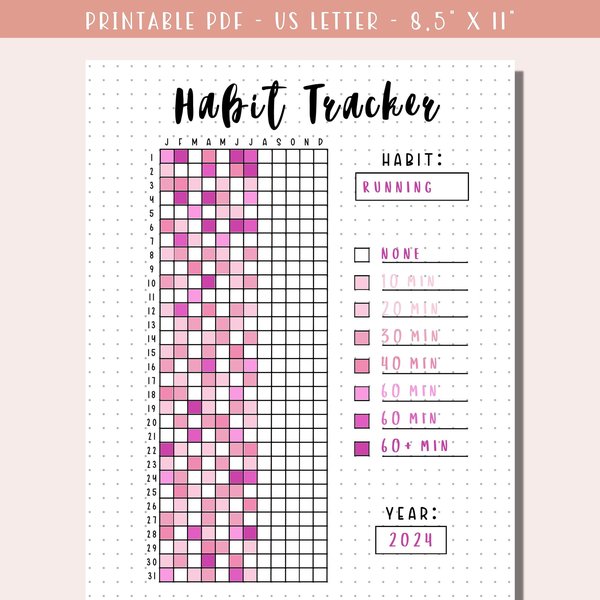
Using a habit tracker provides visual feedback and reinforces consistency.
Practical Tools and Techniques
Applying the principles of habit formation often involves using specific tools and techniques to reinforce consistency and motivation.
Habit Tracking Methods
Tracking your habits provides immediate visual proof of your progress, which is highly motivating. Popular methods include:
- Paper Journals/Planners: Using calendars or dedicated habit tracking sections in bullet journals to mark off successful days.
- Mobile Apps: Numerous apps (like Streaks, Habitify, or TickTick) offer reminders, tracking, and community features.
- Simple Checklists: A basic daily or weekly checklist can be effective for straightforward habits.
The key is choosing a method you'll consistently use and that makes your progress tangible.
Using Reminders and Cues
Especially when starting, external prompts can help trigger your new habit. Consider:
- Alarms/Notifications: Set phone reminders for specific times you plan to perform the habit.
- Post-it Notes: Place physical reminders in relevant locations (e.g., a note on the fridge to drink water).
- Visual Cues: Rearrange your environment (e.g., placing your vitamins next to your toothbrush) to make the cue obvious.
Finding Support Networks
Sharing your goals and progress can significantly increase your chances of success.
- Accountability Partner: A friend, family member, or colleague who checks in on your progress.
- Online Communities/Forums: Platforms like Reddit (e.g., r/getdisciplined) or specialized forums offer shared experiences and encouragement.
- Groups or Classes: Joining groups centered around the habit (e.g., a writing group, a yoga class) provides structure and social reinforcement.
Comparing Habit Building Approaches
Different experts offer slightly varied frameworks for habit building. Understanding these can help you tailor your strategy.
| Approach | Key Concept | Core Strategy | Best Suited For |
|---|---|---|---|
| Atomic Habits (James Clear) | Focus on small, 1% improvements and the Four Laws of Behavior Change. | Make habits obvious, attractive, easy, and satisfying. Start incredibly small. Focus on systems, not goals. | Building foundational habits, optimizing existing routines, long-term sustainable change. |
| Tiny Habits (BJ Fogg) | Behavior = Motivation + Ability + Prompt (B=MAP). Focus on making habits tiny and linking them to existing anchors. | Find an anchor moment, perform a tiny behavior immediately after, and celebrate instantly. | Starting new habits quickly, overcoming inertia, building confidence through small wins. |
| Habit Stacking | Leveraging existing routines by attaching new habits to them. | Identify a current habit and add a new desired habit immediately before or after it. Formula: "After/Before [Current Habit], I will [New Habit]." | Integrating new habits seamlessly into established daily schedules. |
| Environment Design | Shaping your physical and social surroundings to support desired behaviors. | Increase cues for good habits, decrease cues for bad habits. Reduce friction for desired actions. | Overcoming willpower depletion, making good choices the default option. |
This table compares popular habit-building frameworks. Often, the most effective approach involves combining elements from different methodologies to suit your specific goals and personality.
Expert Insights on Habit Formation
Hearing directly from experts can provide valuable context and motivation. This video features James Clear, author of "Atomic Habits," discussing the fundamental principles of how habits work and how to build new ones effectively.
In the video, Clear explains the power of small habits, the importance of systems over goals, and the core mechanics of the habit loop. Understanding these concepts, as outlined previously, is crucial for anyone looking to make meaningful, lasting changes in their behavior.
Frequently Asked Questions (FAQ)
How long does it *really* take to form a habit?
Research suggests the average time is around 66 days, but this varies significantly depending on the person, the complexity of the habit, and consistency. Some studies show ranges from 18 to 254 days. The key takeaway is that it takes time and repetition for a behavior to become automatic. Focus on consistency rather than a specific deadline.
What should I do if I miss a day?
Don't let one missed day derail your progress. The crucial rule is: Never miss twice in a row. Missing once is an accident; missing twice is the start of a new (undesirable) habit. Forgive yourself for the slip-up and get back on track with the next opportunity. Perfection isn't necessary for long-term success, but consistency is.
How can I stay motivated when progress feels slow?
Motivation often follows action, not the other way around. Focus on showing up and executing the small habit, even if you don't feel motivated. Use habit tracking to visualize your progress, which can be motivating in itself. Celebrate small wins to provide immediate satisfaction. Also, connect the habit to your values and identity – reminding yourself *why* you started can reignite motivation.
Is it better to focus on building one habit at a time?
Generally, yes. Trying to change too many things at once can be overwhelming and dilute your focus and willpower. It's often more effective to concentrate on establishing one key habit until it becomes relatively automatic before introducing another. However, you can sometimes bundle related small habits (like morning routine elements) using habit stacking.
How do I choose which habit to start with?
Consider starting with a "keystone habit" – a habit that tends to spark a chain reaction of other positive behaviors (e.g., exercise often leads to better eating and sleeping habits). Alternatively, choose a habit that is relatively easy to implement ("make it easy") to build initial momentum and confidence. Align your choice with your core values and most important long-term goals.
Recommended Next Steps
- How can I use habit stacking effectively in my morning routine?
- What are the best apps for tracking habits and progress?
- How does environment design impact breaking bad habits like procrastination?
- Explore the concept of keystone habits and identify one for personal growth.
References

Last updated May 5, 2025