
Thrones, Treachery, and Triumph: Unveiling the Rulers of the Byzantine Empire
A chronological journey through the emperors, key events, battles, and fates that shaped a millennium of Roman history in the East.
The Byzantine Empire, often called the Eastern Roman Empire, stood for over a thousand years, from the founding of Constantinople in 330 AD to its fall in 1453 AD. Its rulers, carrying the title "Emperor and Autocrat of the Romans," navigated a complex world of theological disputes, court intrigue, existential wars, and profound cultural achievements. This exploration delves into the lineage of these emperors, chronicling their reigns, pivotal moments, military engagements, strategic decisions, and the often dramatic circumstances surrounding their demise or deposition.
Highlights of Byzantine Imperial Rule
- Continuity and Transformation: Byzantine emperors saw themselves as direct successors to Roman Caesars, maintaining Roman legal and administrative traditions while fostering a unique Greek-speaking, Orthodox Christian civilization.
- Military Might and Strategic Defense: Facing constant threats from Persians, Arabs, Slavs, Crusaders, and Turks, emperors relied on sophisticated military strategies, fortifications (like the Theodosian Walls), diplomacy, and legendary units like the Varangian Guard.
- A Perilous Throne: While some emperors died peacefully, many faced violent ends through assassination, execution following revolts, or death in battle, reflecting the high stakes and turbulent nature of Byzantine politics.
The Emperors: A Dynastic Journey
The history of Byzantine leadership is often categorized by dynasties, though periods of instability saw rulers from various backgrounds seize power. Below is a chronological overview highlighting key emperors and periods.
The Foundation: Constantinian Dynasty (324–363 AD)
This era marks the transition from the classical Roman Empire to the Byzantine Empire, centered on the new capital.
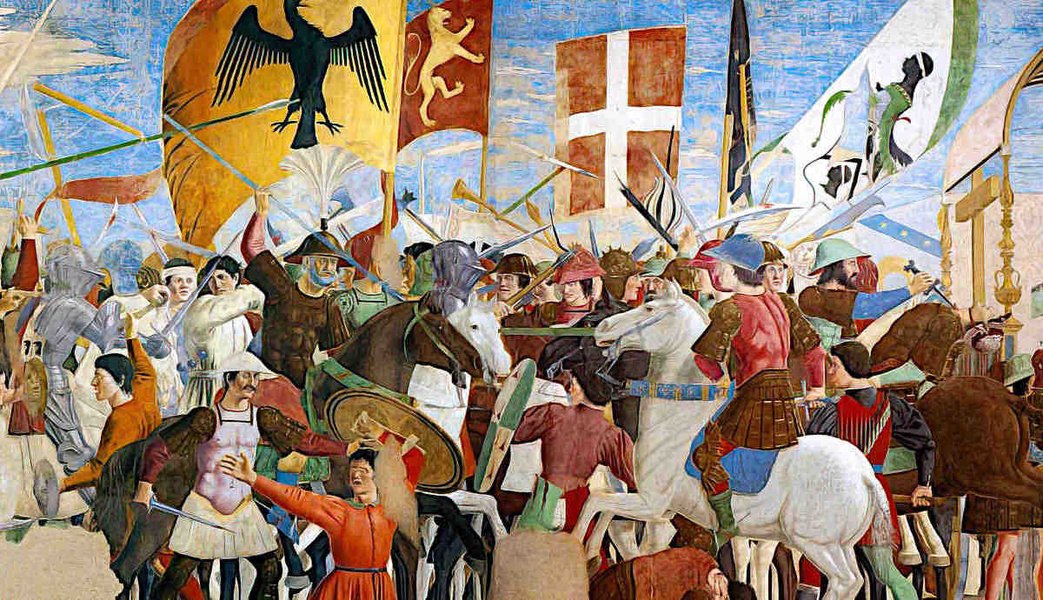
Constantine I 'the Great' (324–337 AD)
- Key Events: Unified the Roman Empire; established Constantinople (formerly Byzantium) as the new capital in 330 AD; legalized and favored Christianity (Edict of Milan prior to sole rule); considered the model ruler by successors.
- Significant Battles: Battle of Chrysopolis (324 AD) secured his sole rule.
- Strategies: Strategic relocation of the capital; promotion of Christianity for unity.
- End of Rule/Death: Died of natural causes (illness) while preparing for a campaign against Persia.
Constantius II (337–361 AD)
- Key Events: Ruled the Eastern part after Constantine I's death; faced wars with the Sassanid Empire and internal power struggles with his brothers; dealt with the Arian controversy.
- Significant Battles: Battle of Mursa Major (351 AD) against usurper Magnentius; ongoing wars with Persia.
- End of Rule/Death: Died of fever while marching to confront his cousin Julian.
Julian 'the Apostate' (361–363 AD)
- Key Events: Attempted to revive Roman paganism and curb the influence of Christianity.
- Significant Battles: Campaigned against the Sassanid Empire, achieving some initial success (e.g., Battle of Ctesiphon, 363 AD) but ultimately forced to retreat.
- Strategies: Military assertiveness against Persia; religious reforms favoring paganism.
- End of Rule/Death: Mortally wounded in battle against the Persians.
Consolidation and Division: Valentinianic & Theodosian Dynasties (364–457 AD)
This period saw the definitive split between the Eastern and Western Roman Empires and the increasing threat from migrating peoples.

Valens (East, 364–378 AD)
- Key Events: Co-ruled with his brother Valentinian I (West); faced Gothic migrations into the Balkans.
- Significant Battles: Battle of Adrianople (378 AD), a catastrophic defeat for the Romans where Valens was killed.
- Strategies: Mismanaged Gothic settlement leading to revolt; underestimated the Gothic forces at Adrianople.
- End of Rule/Death: Killed during or shortly after the Battle of Adrianople.
Theodosius I 'the Great' (379–395 AD)
- Key Events: Last emperor to rule both Eastern and Western halves briefly; made Nicene Christianity the official state religion; suppressed paganism; settled Goths within the empire as foederati.
- Significant Battles: Campaigns to stabilize the Gothic situation after Adrianople.
- Strategies: Diplomacy and integration of Gothic tribes; enforcement of religious orthodoxy.
- End of Rule/Death: Died of natural causes (illness, possibly edema) in Milan; the empire was formally divided between his sons Arcadius (East) and Honorius (West).
Arcadius (East, 395–408 AD)
- Key Events: First emperor of the formally separated Eastern Roman Empire; reign dominated by influential court figures and advisors.
- End of Rule/Death: Died of natural causes.
Theodosius II (408–450 AD)
- Key Events: Construction of the massive Theodosian Walls of Constantinople; compilation of the Theodosian Code (Codex Theodosianus); presided over theological disputes (Council of Ephesus).
- Strategies: Emphasis on fortification and defense; legal codification.
- End of Rule/Death: Died from injuries sustained in a riding accident.
Age of Justinian and Crisis: Leonid & Justinian Dynasties (457–602 AD)
From consolidation to ambitious reconquests and subsequent challenges, this era defined much of the Byzantine identity.
Leo I 'the Thracian' (457–474 AD)
- Key Events: First emperor crowned by the Patriarch of Constantinople; attempted to reduce reliance on Germanic generals by promoting Isaurians.
- End of Rule/Death: Died of dysentery.
Zeno (474–491 AD, with interruption)
- Key Events: Reign marked by internal revolts (notably by Basiliscus and Leontius) and managing the Ostrogoths under Theodoric the Great (whom he eventually encouraged to invade Italy).
- Strategies: Diplomacy and political maneuvering to deal with rivals and migrating groups.
- End of Rule/Death: Died of natural causes (possibly epilepsy or dysentery).
Anastasius I Dicorus (491–518 AD)
- Key Events: Implemented significant financial and tax reforms, leaving a large surplus; built the Anastasian Wall; dealt with the Isaurian War and conflicts with Persia; known for Monophysite sympathies causing religious tension.
- Strategies: Fiscal prudence; defensive construction.
- End of Rule/Death: Died of natural causes, possibly a stroke, during a thunderstorm.
Justin I (518–527 AD)
- Key Events: Rose from humble origins through the military; ended the Acacian Schism, restoring relations with Rome; adopted his nephew Justinian as successor.
- End of Rule/Death: Died of natural causes (likely complications from an old wound).
Justinian I 'the Great' (527–565 AD)
- Key Events: Ambitious reconquest (Renovatio imperii) of Western territories (North Africa, Italy, parts of Spain); codification of Roman Law (Corpus Juris Civilis); construction of Hagia Sophia after the Nika Riots (532 AD); Plague of Justinian devastated the empire.
- Significant Battles: Vandalic War (Battle of Ad Decimum, Tricamarum), Gothic War (Battle of Taginae, Siege of Rome), Persian Wars (Battle of Dara). Led by generals like Belisarius and Narses.
- Strategies: Combined military campaigns with diplomacy; legal and administrative centralization; monumental architecture.
- End of Rule/Death: Died of natural causes at an advanced age.
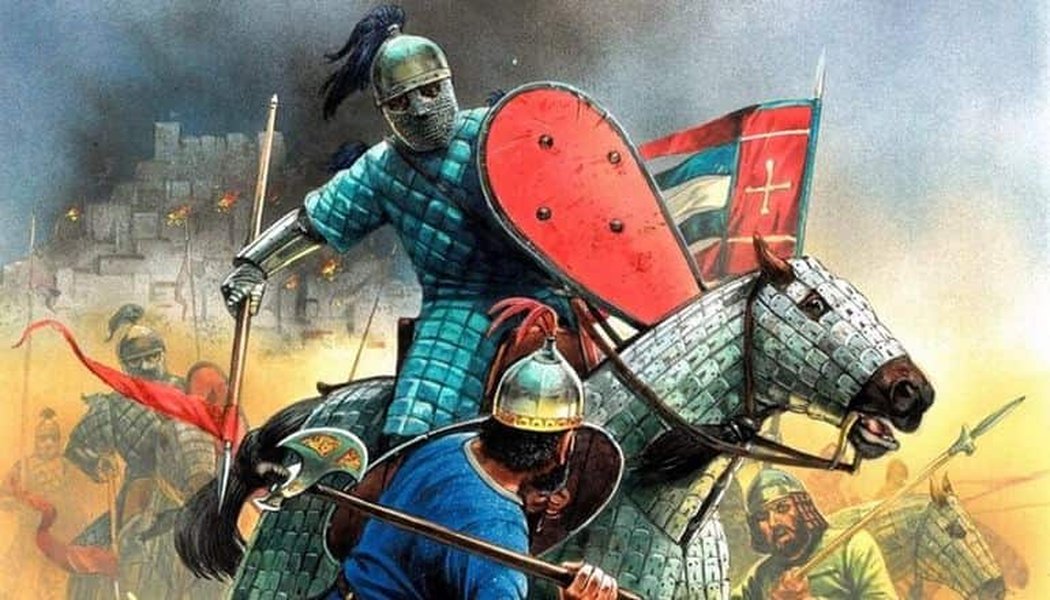
Maurice (582–602 AD)
- Key Events: Successful campaigns against Persians, ending a long war favorably; established the Exarchates of Ravenna and Carthage; implemented military reforms. Faced Avar and Slavic incursions in the Balkans.
- Significant Battles: Campaigns against Persians, Avars, and Slavs.
- Strategies: Administrative reorganization (Exarchates); cost-cutting measures in the army (which proved unpopular).
- End of Rule/Death: Overthrown and executed along with his sons in a military revolt led by Phocas, sparked by unpopular orders.
Struggle for Survival: Heraclian Dynasty (610–711 AD)
This dynasty faced existential threats from the Sassanid Persians and the rise of Islam, leading to dramatic territorial losses and internal transformation.
Heraclius (610–641 AD)
- Key Events: Overthrew the tyrant Phocas; faced a massive Sassanid invasion that captured Jerusalem, Egypt, and Anatolia; launched a brilliant counter-offensive, defeating the Persians decisively; recovered the True Cross. Later witnessed the beginning of the Arab conquests, losing Syria, Palestine, and Egypt. Reorganized the empire into military districts (Themes).
- Significant Battles: Battle of Nineveh (627 AD) against Persians; Battle of Yarmouk (636 AD), a devastating defeat against the Rashidun Caliphate.
- Strategies: Brilliant counter-offensive against Persia, taking the war to their heartland; introduction of the Theme system for defense-in-depth; adoption of Greek as the official language.
- End of Rule/Death: Died of natural causes (illness, possibly edema), reportedly haunted by the Arab victories.
Constans II 'Pogonatos' (the Bearded) (641–668 AD)
- Key Events: Continued the struggle against the expanding Arab Caliphate, losing further territory; reorganized the army and administration; faced internal religious strife (Monothelitism); moved the imperial capital temporarily to Syracuse in Sicily.
- Significant Battles: Battle of the Masts (655 AD), a major naval defeat against the Arabs.
- Strategies: Consolidation of remaining territories; attempt to shift focus westward.
- End of Rule/Death: Assassinated in his bath in Syracuse by a member of his court.
Justinian II 'Rhinotmetos' (the Slit-nosed) (685–695 AD and 705–711 AD)
- Key Events: Known for cruelty and ambition; initially successful against Arabs and Slavs, settling Slavs in Anatolia. Overthrown, mutilated (nose slit), and exiled. Returned to power with Bulgar aid, initiating a reign of terror against his opponents.
- Significant Battles: Campaigns against Arabs and Slavs in his first reign.
- Strategies: Ruthless suppression of opposition; alliance with Bulgars for restoration.
- End of Rule/Death: Overthrown again in a rebellion and executed in 711 AD.
Iconoclasm and Recovery: Isaurian & Amorian Dynasties (717–867 AD)
This period was dominated by the Iconoclast controversy (dispute over religious images) and renewed struggles against Bulgars and Arabs, but also saw stabilization.
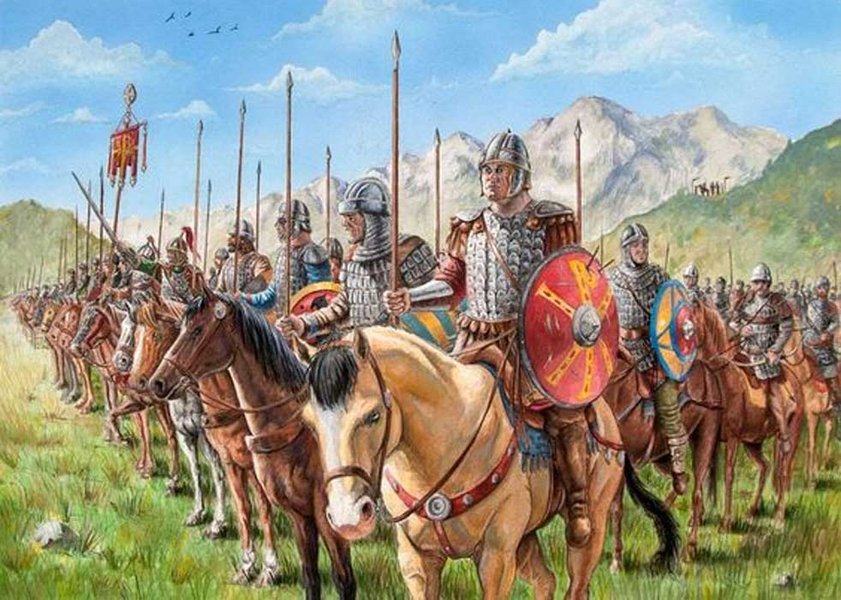
Leo III 'the Isaurian' (717–741 AD)
- Key Events: Seized the throne during a period of anarchy; decisively defeated the massive Arab siege of Constantinople (717-718 AD), saving the empire; initiated the first period of Iconoclasm, banning the veneration of icons. Issued the Ecloga, a law code revision.
- Significant Battles: Second Arab Siege of Constantinople (717-718 AD); Battle of Akroinon (740 AD), a major victory against the Umayyad Caliphate.
- Strategies: Skilled use of defenses (including Greek Fire) during the siege; Iconoclasm possibly aimed at weakening monasteries and unifying the empire under imperial authority.
- End of Rule/Death: Died of natural causes (dropsy).
Constantine V 'Kopronymos' (Dung-named) (741–775 AD)
- Key Events: Staunch Iconoclast who persecuted Iconophiles (supporters of icons); successful military commander, especially against the Bulgars; strengthened the central army (Tagmata).
- Significant Battles: Numerous campaigns against the Bulgars (e.g., Battle of Marcellae, Battle of Anchialus).
- Strategies: Aggressive military campaigns; consolidation of Iconoclast policies through the Council of Hieria (754 AD).
- End of Rule/Death: Died of illness (possibly high fever and leg boils) while campaigning against the Bulgars.
Irene of Athens (Regent 780–790, Empress 797–802 AD)
- Key Events: Restored the veneration of icons at the Second Council of Nicaea (787 AD), ending the first Iconoclast period. Eventually blinded and deposed her own son, Constantine VI, to rule alone as Empress (Basileus).
- Strategies: Diplomatic maneuvering; reversal of Iconoclasm.
- End of Rule/Death: Deposed in a palace coup led by her finance minister Nikephoros I; exiled to Lesbos where she died in poverty.
The Golden Age: Macedonian Dynasty (867–1056 AD)
Often considered the height of Byzantine power and culture, marked by military expansion, economic prosperity, and a flourishing of arts and learning.
Basil I 'the Macedonian' (867–886 AD)
- Key Events: Rose from peasant origins to become co-emperor, then assassinated Emperor Michael III to found the dynasty; initiated legal reforms (Procheiron, Epanagoge); successful campaigns against Arabs in the East and Paulicians.
- Significant Battles: Campaigns in southern Italy and against the Paulicians.
- Strategies: Military consolidation; legal codification; dynastic maneuvering.
- End of Rule/Death: Died following a hunting accident (reportedly dragged by a deer).
Leo VI 'the Wise' (886–912 AD)
- Key Events: Scholar emperor who completed the legal work of his father (Basilika); faced wars with Bulgars under Tsar Simeon and Arab naval raids (Sack of Thessaloniki, 904 AD); controversial fourth marriage caused the 'Tetragamy' Schism.
- Strategies: Emphasis on law and administration; diplomacy often prioritized over war.
- End of Rule/Death: Died of natural causes (illness).
Constantine VII 'Porphyrogennetos' (Born in the Purple) (913–959 AD)
- Key Events: Scholarly emperor overshadowed for much of his reign by co-emperor Romanos I Lekapenos (920-944); wrote important works on imperial administration (De Administrando Imperio), ceremonies (De Ceremoniis), and military tactics; patron of arts and learning.
- Strategies: Focus on preserving knowledge and imperial tradition; diplomacy (e.g., reception of Princess Olga of Kiev).
- End of Rule/Death: Died of natural causes (possibly poisoned by his son Romanos II).
Nikephoros II Phokas (963–969 AD)
- Key Events: Brilliant general who became emperor by marrying Theophano, widow of Romanos II; reconquered Crete (961, before becoming emperor), Cyprus, Cilicia, and Antioch from the Arabs. Known for asceticism and military prowess.
- Significant Battles: Siege of Chandax (Crete); campaigns in Syria.
- Strategies: Emphasis on heavy cavalry (Kataphraktoi); offensive warfare against Arabs.
- End of Rule/Death: Assassinated in the palace by a conspiracy involving his wife Theophano and his nephew John Tzimiskes.
John I Tzimiskes (969–976 AD)
- Key Events: Brilliant military commander who usurped the throne after assassinating Nikephoros II; campaigned successfully against the Rus' in Bulgaria, Arabs in Syria (reaching near Jerusalem), and secured the eastern frontier.
- Significant Battles: Siege of Dorostolon against Sviatoslav of Kiev; campaigns in Syria.
- Strategies: Rapid, decisive military campaigns; consolidation of eastern conquests.
- End of Rule/Death: Died suddenly after returning from campaign, possibly from poison or typhoid fever.
Basil II 'Bulgaroktonos' (the Bulgar-Slayer) (976–1025 AD)
- Key Events: Longest-reigning emperor; suppressed powerful aristocratic revolts (Bardas Skleros, Bardas Phokas); waged a relentless, decades-long war against the First Bulgarian Empire, culminating in its complete annexation; expanded influence in the East (Georgia, Armenia) and southern Italy. Strengthened imperial authority over the aristocracy.
- Significant Battles: Battle of Kleidion (1014 AD), infamous for the blinding of 15,000 Bulgarian prisoners; numerous campaigns against Bulgarians and Fatimids.
- Strategies: Unrelenting military pressure; subjugation of the landed aristocracy; use of the Varangian Guard.
- End of Rule/Death: Died of natural causes, unmarried and childless, leaving the empire at its largest extent since Justinian I but with potential succession issues.
Decline and the Komnenian Restoration (1056–1185 AD)
Internal strife, weakening of the military, and the arrival of new enemies (Seljuk Turks, Normans) led to crisis, followed by a period of recovery under the Komnenos dynasty.
Constantine X Doukas (1059–1067 AD)
- Key Events: Prioritized civilian administration over military needs, weakening the army through neglect and preference for bureaucracy; faced Seljuk Turk incursions in the East and Norman advances in Italy.
- Strategies: Fiscal policies that undermined military readiness.
- End of Rule/Death: Died of natural causes.
Romanos IV Diogenes (1068–1071 AD)
- Key Events: Military man who married Empress Eudokia Makrembolitissa to take the throne; attempted to counter the Seljuk threat.
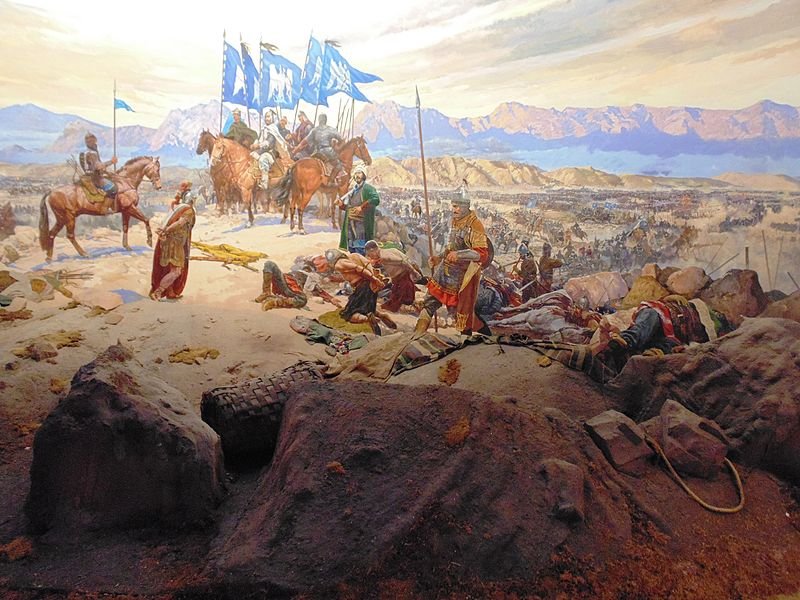
- Significant Battles: Battle of Manzikert (1071 AD), a decisive defeat by the Seljuk Turks where Romanos was captured. This battle is seen as a major turning point, opening Anatolia to Turkish settlement.
- Strategies: Attempted a major field campaign against the Seljuks.
- End of Rule/Death: Released by the Seljuks but overthrown by the Doukas family upon his return; blinded brutally and died shortly after from his wounds in exile.

Alexios I Komnenos (1081–1118 AD)
- Key Events: Seized the throne amidst chaos; faced simultaneous invasions by Normans (led by Robert Guiscard) in the West and Seljuk Turks in the East; stabilized the empire through military reforms, diplomacy, and administrative changes; appealed to the West for aid against the Turks, inadvertently triggering the First Crusade; skillfully managed the Crusaders passing through his lands.
- Significant Battles: Battle of Dyrrhachium (1081 AD) defeat against Normans; Battle of Levounion (1091 AD) victory against Pechenegs; various engagements with Seljuks and Crusaders.
- Strategies: Diplomatic maneuvering (playing enemies against each other); military reorganization (reliance on pronoia system and mercenaries, including the Varangian Guard); careful handling of the Crusaders.
- End of Rule/Death: Died of natural causes after a long and challenging reign.
John II Komnenos 'the Good' (1118–1143 AD)
- Key Events: Pious and dedicated emperor focused on consolidating his father's gains and recovering lost territory; successful campaigns against Pechenegs, Hungarians, Serbs, and Seljuks in Anatolia; asserted Byzantine authority over the Crusader states (Antioch).
- Significant Battles: Battle of Beroia (1122 AD) decisive victory over Pechenegs; campaigns in Anatolia and Syria.
- Strategies: Methodical military campaigns; siege warfare; consolidation of imperial authority.
- End of Rule/Death: Died from a wound infection caused by accidentally poisoning himself with an arrow during a hunt in Cilicia.
Manuel I Komnenos (1143–1180 AD)
- Key Events: Charismatic and ambitious emperor with a Western outlook; extensive military campaigns in Italy, Hungary, the Balkans, and against the Seljuks; active diplomacy with Western powers and Crusader states; patron of arts, but his costly ventures strained the treasury.
- Significant Battles: Campaigns in Italy; Battle of Sirmium (1167 AD) victory against Hungarians; Battle of Myriokephalon (1176 AD), a major defeat against the Seljuks that hampered Byzantine efforts to recover central Anatolia.
- Strategies: Active intervention in Western affairs; large-scale military expeditions; promotion of Western-style chivalry at court.
- End of Rule/Death: Died of natural causes (slow fever) after the setback at Myriokephalon.
Disintegration and Exile: Angeloi Dynasty & Latin Rule (1185–1261 AD)
Weak leadership, internal revolts, and the disastrous Fourth Crusade led to the sack of Constantinople and the fragmentation of the empire.
Isaac II Angelos (1185–1195 AD and 1203–1204 AD)
- Key Events: Overthrew the tyrannical Andronikos I Komnenos; reign marked by extravagance, increased taxation, and revolts (Bulgaria regained independence); overthrown by his brother Alexios III. Restored briefly by the Fourth Crusade alongside his son Alexios IV.
- End of Rule/Death: Deposed and blinded by Alexios III in 1195. Died shortly after the Crusaders took Constantinople in 1204, possibly due to shock or ill health during his brief second reign and imprisonment.
Alexios III Angelos (1195–1203 AD)
- Key Events: Usurped the throne from his brother Isaac II; weak and ineffective ruler, squandered state funds.
- Strategies: Mismanagement and corruption.
- End of Rule/Death: Fled Constantinople with treasure as the Fourth Crusade arrived; captured later and died in a monastery in Nicaea.
Alexios IV Angelos (1203–1204 AD)
- Key Events: Convinced the Fourth Crusade to divert to Constantinople to restore his father Isaac II and himself, promising vast sums of money and church union; unable to fulfill promises, leading to Crusader resentment.
- End of Rule/Death: Deposed and strangled during a coup led by Alexios V Doukas amidst the Crusader siege.
Alexios V Doukas 'Mourtzouphlos' (1204 AD)
- Key Events: Led the resistance against the Crusaders after overthrowing Isaac II and Alexios IV; attempted to defend Constantinople.
- Significant Battles: Final defense of Constantinople against the Fourth Crusade (April 1204).
- Strategies: Active defense against the besiegers.
- End of Rule/Death: Fled the city as it fell; later captured by the Crusaders, tried for treason (against Alexios IV), and executed by being thrown from the top of the Column of Theodosius.
(Following the Sack of Constantinople in 1204, the Byzantine Empire fragmented into successor states: the Empire of Nicaea, the Despotate of Epirus, and the Empire of Trebizond. The Latin Empire was established in Constantinople.)
Restoration and Final Decline: Palaiologan Dynasty (1261–1453 AD)
The recapture of Constantinople marked a restoration, but the revived empire was a shadow of its former self, struggling against internal division and rising external powers, primarily the Ottoman Turks.

Michael VIII Palaiologos (Emperor in Nicaea from 1259, in Constantinople 1261–1282 AD)
- Key Events: As ruler of the Empire of Nicaea, orchestrated the recapture of Constantinople from the Latin Empire in 1261, restoring the Byzantine Empire; focused on diplomacy to fend off threats from Western powers (Charles of Anjou) seeking to restore the Latin Empire, including the controversial Union of Lyons (1274) submitting the Orthodox Church to Papal authority (later repudiated).
- Strategies: Diplomacy (Union of Lyons, inciting the Sicilian Vespers revolt against Charles of Anjou); rebuilding Constantinople.
- End of Rule/Death: Died of natural causes while campaigning in Thrace.
Andronikos II Palaiologos (1282–1328 AD)
- Key Events: Reversed his father's pro-Union religious policy; oversaw a period of military decline (disbanded the navy, reduced army size) and economic hardship; hired the Catalan Company mercenaries, who later ravaged Byzantine territories; faced devastating civil wars against his grandson Andronikos III.
- Strategies: Cost-cutting measures detrimental to defense; reliance on mercenaries.
- End of Rule/Death: Forced to abdicate by his grandson after the civil war; died as a monk two years later.
John VI Kantakouzenos (Co-emperor/Usurper 1347–1354 AD)
- Key Events: Chief minister under Andronikos III, became regent for young John V Palaiologos, then fought a destructive civil war (1341-1347) against John V's regency to become co-emperor; relied heavily on Ottoman Turkish aid during the civil war, facilitating their entry into Europe; presided over the Black Death's arrival; abdicated and became a monk and historian.
- Strategies: Use of foreign allies (Serbs, Turks) in civil war; historical writing.
- End of Rule/Death: Abdicated under pressure; died peacefully as a monk many years later.
Manuel II Palaiologos (1391–1425 AD)
- Key Events: Ruled during a period of severe Ottoman pressure, with the empire reduced to Constantinople and its environs, Thessaloniki, and parts of Greece; traveled extensively in Western Europe (1399-1402) seeking aid against the Ottomans, with limited success; temporarily relieved by Ottoman defeat at the Battle of Ankara (1402) by Timur; patron of arts and letters.
- Strategies: Diplomacy with Western powers; managing vassalage to the Ottomans; cultural preservation.
- End of Rule/Death: Died of natural causes (stroke) after abdicating shortly before his death to become a monk.
Constantine XI Palaiologos (1449–1453 AD)
- Key Events: The last Byzantine Emperor; previously ruled the Despotate of the Morea; faced the final Ottoman siege of Constantinople led by Sultan Mehmed II. Agreed to the Union of Florence (uniting Orthodox and Catholic churches) hoping for Western aid, which largely failed to materialize in sufficient strength.
- Significant Battles: Final Siege of Constantinople (April-May 1453).
- Strategies: Desperate defense of the city with limited forces (Byzantines, Genoese, Venetians); appeals for Western aid; religious union for political gain.
- End of Rule/Death: Died fighting bravely during the final assault on the city walls on May 29, 1453, marking the fall of Constantinople and the end of the Byzantine Empire. His body was reportedly identified by its purple boots.
Comparing Key Byzantine Emperors
Evaluating emperors across millennia is complex, but we can compare some notable figures based on commonly discussed aspects of their reigns. The following chart offers a subjective visualization of how selected emperors might rank across different domains based on historical interpretation.
Note: This chart reflects subjective historical interpretations. Scores are relative and intended for comparative illustration across these selected emperors.
Prominent Byzantine Emperors: A Summary Table
The following table provides a quick reference for some of the most influential Byzantine emperors, highlighting their reign, a key achievement or event, a notable military encounter, and how their rule concluded.
| Emperor | Reign | Major Achievement / Event | Key Battle / Campaign | End of Rule / Death |
|---|---|---|---|---|
| Constantine I | 324–337 AD | Founded Constantinople, favored Christianity | Battle of Chrysopolis (324) | Natural causes |
| Theodosius I | 379–395 AD | Made Christianity state religion, last to rule united empire briefly | Gothic Wars settlement | Natural causes |
| Justinian I | 527–565 AD | Codified Law (Corpus Juris Civilis), Hagia Sophia, Reconquests | Gothic War, Vandalic War | Natural causes |
| Heraclius | 610–641 AD | Defeated Sassanid Persia, introduced Theme system | Battle of Nineveh (627), Battle of Yarmouk (636) | Natural causes |
| Leo III | 717–741 AD | Defended Constantinople (717-18), began Iconoclasm | Siege of Constantinople (717-18), Battle of Akroinon (740) | Natural causes |
| Basil II | 976–1025 AD | Conquered Bulgaria, peak of Byzantine power | Battle of Kleidion (1014) | Natural causes |
| Alexios I Komnenos | 1081–1118 AD | Stabilized empire, dealt with First Crusade | Battle of Levounion (1091) | Natural causes |
| Michael VIII Palaiologos | 1261–1282 AD | Recaptured Constantinople (1261) | Diplomacy vs Charles of Anjou | Natural causes |
| Constantine XI Palaiologos | 1449–1453 AD | Last Emperor, defended Constantinople | Fall of Constantinople (1453) | Killed in battle |
Dynasties and Key Rulers: A Mindmap Overview
This mindmap illustrates the flow of major dynasties and highlights some of the most significant emperors within them, providing a visual structure to the complex succession of Byzantine rule.
Visualizing Byzantine History: Emperors Through Time
The vast timeline of the Byzantine Empire saw numerous rulers, each facing unique challenges and leaving their mark. Understanding this chronology helps grasp the empire's evolution. The following video provides a visual timeline of Roman and Byzantine emperors, offering context for the long succession of rulers discussed here.
This visualization helps place the key emperors and dynasties mentioned above into the broader sweep of Roman and Byzantine history, from its foundations with Constantine the Great to its final moments under Constantine XI.
Frequently Asked Questions
Who was the first Byzantine Emperor? +
Who was the last Byzantine Emperor? +
How many Byzantine Emperors were there? +
How did most Byzantine Emperors die? +
Who is considered the greatest Byzantine Emperor? +
References
- List of Byzantine emperors - Wikipedia
- Byzantine Empire | History, Geography, Maps, & Facts | Britannica
- Byzantine Empire Timeline - World History Encyclopedia
- Medieval Roman Empire: 5 Battles That (Un)Made the Byzantine Empire - The Collector
- Chronological periods of the Byzantine Empire - Khan Academy
- List of Byzantine Emperors - Byzantium.gr
Recommended
Last updated April 14, 2025