
Calculating Total Solids in a Sample: A Comprehensive Guide
Step-by-step instructions and essential insights into determining total solids content.
Key Highlights
- Data Gathering: The first step involves collecting accurate data, including the initial weight of the crucible and the final weight of the crucible plus the dried sample.
- Calculation: The total solid content is calculated using a straightforward formula that relates the weights before and after drying.
- Importance: Determining total solids is crucial across various fields, from wastewater treatment to food science, ensuring quality and process control.
Understanding Total Solids
Total solids (TS) refer to the total amount of solid material present in a sample, which can include both suspended and dissolved solids. Determining total solids is a fundamental analysis in various fields, including environmental science (especially water and wastewater treatment), food science, and agriculture. It helps in assessing the quality of water, determining the dry weight of sludge, and converting analytical results to an oven-dry weight basis.
What are Total Solids?
Total solids consist of all the non-volatile materials in a sample. These solids remain as residue after the evaporation of the water content, typically achieved by drying the sample in an oven at a specific temperature (usually between 103°C and 105°C). The total solids content is crucial for various applications:
- Wastewater Treatment: Monitoring and controlling the solids content is essential for efficient treatment processes.
- Food Science: Determining the moisture content and solid content helps in assessing the quality and stability of food products.
- Agriculture: In soil analysis, total solids help determine the organic and inorganic components affecting soil health and fertility.
Why is Determining Total Solids Important?
Measuring total solids is essential for several reasons:
- Quality Control: Ensures that products and materials meet the required standards.
- Process Monitoring: Helps in optimizing and controlling industrial and environmental processes.
- Regulatory Compliance: Ensures adherence to environmental regulations regarding water and waste management.
- Nutritional Analysis: Provides data for nutritional labeling and dietary assessments.
Step-by-Step Calculation of Total Solids
Step 1: Gather Necessary Data
Before starting the calculation, you need to collect the following data accurately:
- Weight of the Crucible (W1): This is the initial weight of the empty, clean, and dry crucible.
- Weight of the Crucible + Wet Sample: The weight of the crucible with the sample before drying.
- Weight of the Crucible + Dry Sample (W2): The weight of the crucible with the sample after it has been dried in an oven until a constant weight is achieved.
Step 2: Perform the Drying Process
The drying process is critical for accurate determination of total solids:
- Oven Drying: Place the crucible with the wet sample in an oven preheated to 103-105°C.
- Drying Time: Dry the sample until a constant weight is achieved. This usually takes several hours. The sample is considered to be at a constant weight when further drying does not result in a weight change greater than 0.5% of the previous weight.
- Cooling: After drying, allow the crucible to cool in a desiccator to prevent the absorption of moisture from the air.
Step 3: Calculate Total Solids
The formula to calculate the total solids is as follows:
\[ \text{Total Solids (mg/L or ppm)} = \frac{(\text{Weight of Crucible + Dry Sample} - \text{Weight of Crucible})}{\text{Volume of Sample (L)}} \times 10^6 \]Alternatively, if you want to express total solids as a percentage:
\[ \text{Total Solids (%)} = \frac{(\text{Weight of Crucible + Dry Sample} - \text{Weight of Crucible})}{\text{Weight of Wet Sample}} \times 100 \]Where:
- Weight of Crucible = \(W_1\)
- Weight of Crucible + Dry Sample = \(W_2\)
So the formula can be simplified to:
\[ \text{Total Solids (%)} = \frac{W_2 - W_1}{\text{Weight of Wet Sample}} \times 100 \]Step 4: Example Calculation
Let's consider an example:
- Weight of empty crucible (W1) = 25.000 g
- Weight of crucible + wet sample = 35.000 g
- Weight of crucible + dry sample (W2) = 30.000 g
Weight of wet sample = 35.000 g - 25.000 g = 10.000 g
Using the formula:
\[ \text{Total Solids (%)} = \frac{30.000 \text{ g} - 25.000 \text{ g}}{10.000 \text{ g}} \times 100 \] \[ \text{Total Solids (%)} = \frac{5.000 \text{ g}}{10.000 \text{ g}} \times 100 = 50\% \]Therefore, the total solids content of the sample is 50%. This means that 50% of the original wet sample is solid material after drying.
Alternative Calculation Method
Another way to calculate total solids involves using the moisture content. If you know the moisture content, you can determine the total solids as the complement of the moisture content.
\[ \text{Total Solids (%) = 100% - Moisture Content (%)} \]For example, if the moisture content of a sample is 70%, then the total solid content is:
\[ \text{Total Solids (%) = 100% - 70% = 30%} \]Factors Affecting Accuracy
Several factors can affect the accuracy of total solids determination:
- Sampling Technique: Ensure the sample is representative of the entire material.
- Drying Temperature: Maintain the oven temperature consistently between 103°C and 105°C.
- Crucible Cleanliness: The crucible must be thoroughly cleaned and dried before use.
- Desiccation: Always cool the crucible in a desiccator to prevent moisture absorption.
- Weighing Accuracy: Use a calibrated analytical balance for accurate weighing.
Applications Across Industries
Environmental Monitoring
In environmental monitoring, determining total solids is crucial for assessing water quality. High levels of total solids can indicate pollution or other environmental issues. Regulatory bodies often set limits on the amount of total solids allowed in wastewater discharge to protect aquatic ecosystems.
Food and Beverage Industry
In the food industry, total solids analysis is vital for determining the dry matter content of various products. This helps in ensuring product consistency, quality, and nutritional labeling accuracy. For example, in dairy processing, the total solids content affects the texture, taste, and shelf life of products like cheese and yogurt.
Pharmaceuticals
In the pharmaceutical industry, total solids analysis is used to determine the concentration of active ingredients and excipients in drug formulations. Accurate determination of solids content ensures that medications meet the required quality standards and dosage requirements.
Agriculture
In agriculture, total solids analysis is used to assess the quality of soil and animal feed. The solids content of soil affects its water-holding capacity and nutrient availability, while in animal feed, it helps in determining the nutritional value and digestibility.
Visualizing the Process
Understanding the total solids determination process can be enhanced with visual aids. Here are some images illustrating key steps:
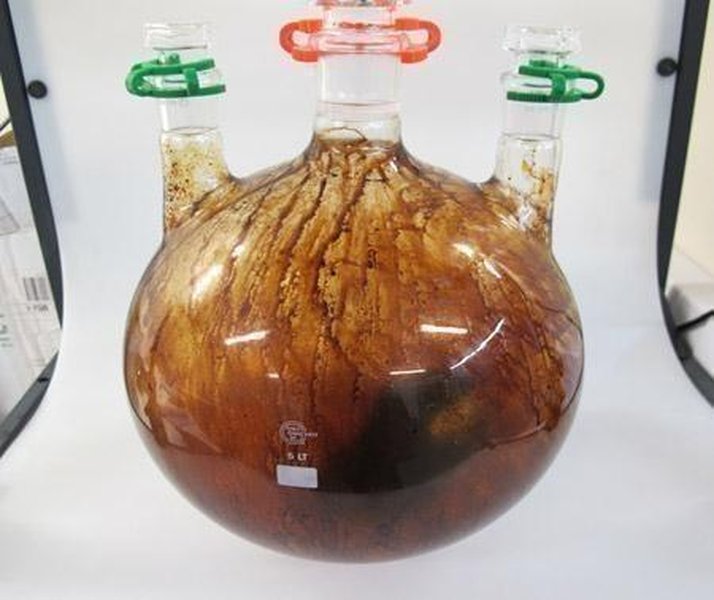
Properly cleaned glassware is essential for accurate measurements.
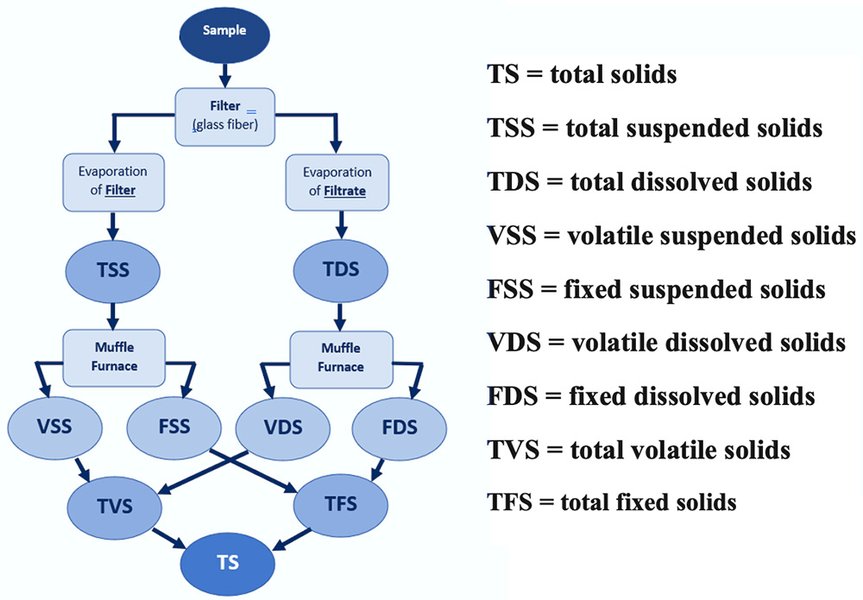
Schematic Diagram showing the different types of solids.
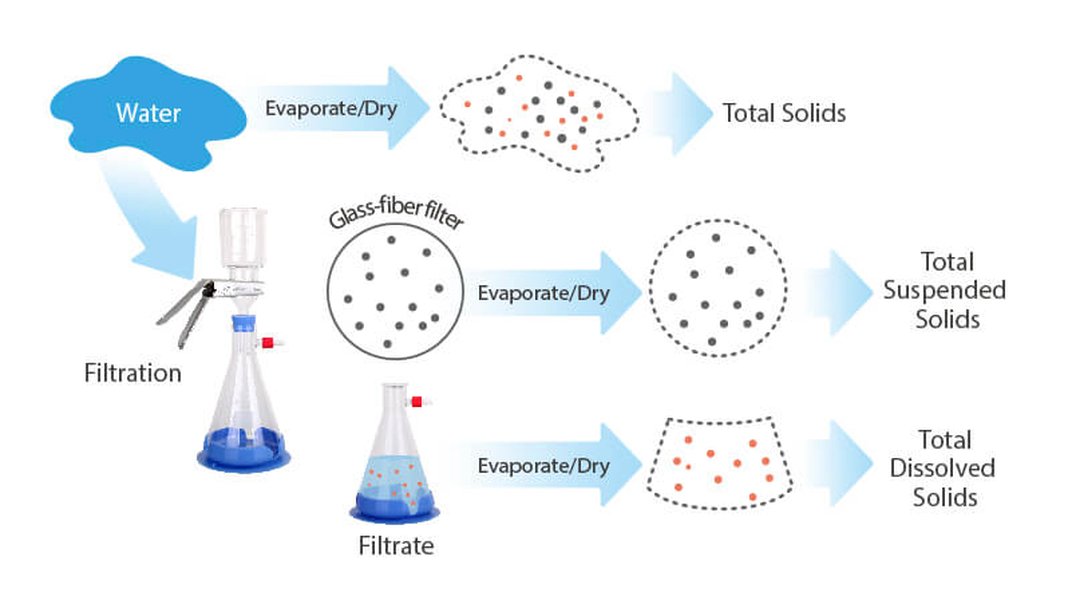
Apparatus for performing the Total Suspended Solids test.
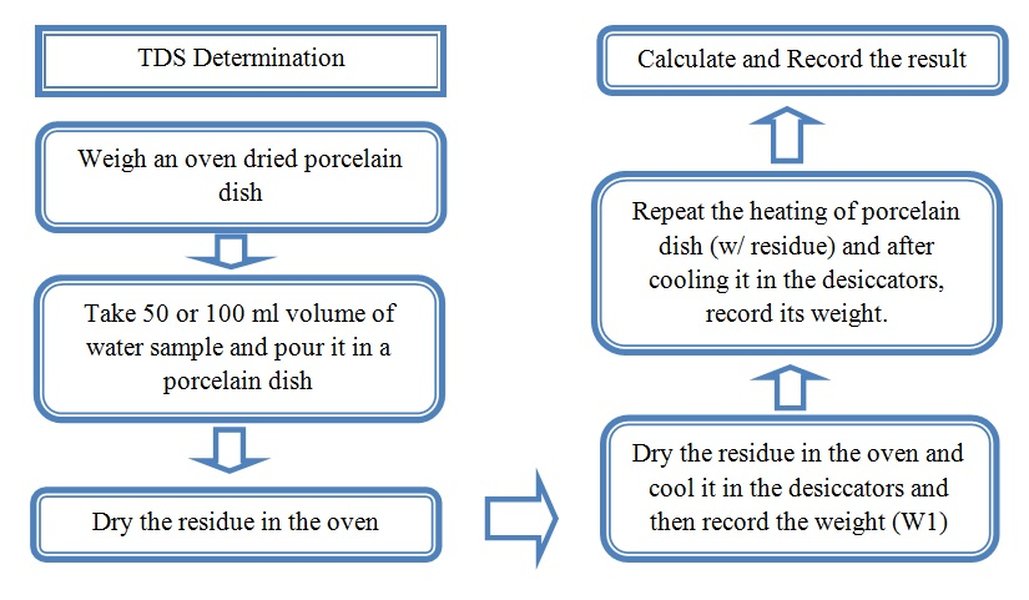
A TDS meter used for measuring total dissolved solids.
These images provide a visual guide to the equipment and procedures involved in determining total solids, aiding in better comprehension and application of the methods.
Methods for Determining Total Solids
Several methods can be used to determine total solids, each with its own advantages and applications. The most common method is the gravimetric method, but instrumental methods are also available for rapid analysis.
Gravimetric Method
The gravimetric method involves drying a sample in an oven until all the moisture is evaporated, and then weighing the remaining solids. This method is straightforward and widely used due to its simplicity and accuracy.
- Sample Preparation: A known volume or weight of the sample is placed in a pre-weighed crucible.
- Drying: The crucible with the sample is placed in an oven at 103-105°C until a constant weight is achieved.
- Cooling and Weighing: The crucible is cooled in a desiccator and then weighed using an analytical balance.
- Calculation: The total solids content is calculated using the formula mentioned earlier.
Instrumental Methods
Instrumental methods provide a faster way to determine total solids content. These methods often use thermogravimetric analyzers or solids analyzers, which automate the drying and weighing process.
-
Thermogravimetric Analyzers: These devices continuously monitor the weight of a sample as it is heated, providing real-time data on moisture loss and solids content.
-
Solids Analyzers: These analyzers use similar principles to thermogravimetric analyzers but are specifically designed for rapid total solids analysis. They are commonly used in industries where quick results are needed.
Comprehensive Comparison Table
The following table summarizes the key aspects of total solids, total suspended solids, and total dissolved solids.
| Parameter | Definition | Measurement Method | Importance |
|---|---|---|---|
| Total Solids (TS) | All solid material (dissolved and suspended) in a sample. | Evaporation at 103-105°C followed by gravimetric determination. | Overall indication of solid content in water, wastewater, or food products. |
| Total Suspended Solids (TSS) | Solid particles that are not dissolved and are large enough to be retained on a filter. | Filtration through a pre-weighed filter, drying, and gravimetric determination. | Indication of water clarity and potential for sediment pollution. |
| Total Dissolved Solids (TDS) | Minerals, salts, metals, and other substances dissolved in water. | Filtration followed by evaporation of water and gravimetric determination of the residue. | Indication of water salinity and potential for scale formation in plumbing systems. |
Youtube: Determination of Total Solid Content
This video demonstrates the practical steps involved in determining the total solid content of a sample. It shows the process from initial weighing to the final calculation, providing a clear visual guide that complements the written instructions. This video helps illustrate the key steps, making it easier to understand and replicate the process in a laboratory setting.
FAQ Section
What temperature should I use to dry the sample?
The sample should be dried at a temperature between 103°C and 105°C to ensure that all moisture is evaporated without causing decomposition of the solids.
How do I know when the sample is completely dry?
The sample is considered completely dry when it reaches a constant weight. This means that further drying does not result in a weight change greater than 0.5% of the previous weight.
Why is it important to cool the crucible in a desiccator?
Cooling the crucible in a desiccator prevents the absorption of moisture from the air, which can affect the accuracy of the final weight measurement.
What is the difference between total solids, total suspended solids, and total dissolved solids?
Total solids (TS) include all solid material in a sample. Total suspended solids (TSS) are the solid particles that are not dissolved and can be filtered out. Total dissolved solids (TDS) are the minerals, salts, metals, and other substances dissolved in the water.
Can I use this method for all types of samples?
While the basic principle remains the same, the specific procedures may need to be adjusted depending on the nature of the sample. For example, samples with high sugar content may require a lower drying temperature to prevent caramelization.
References
Last updated April 11, 2025