
Comparison Between Old Calculation Tools and Modern Tools
From Abaci to Smartphones: The Transformation of Computation
Key Takeaways
- Technological Evolution: Calculation tools have progressed from manual devices like the abacus and slide rule to sophisticated electronic calculators and computing software, dramatically enhancing speed and accuracy.
- Usability and Accessibility: Modern tools offer greater ease of use, portability, and accessibility, enabling complex computations to be performed effortlessly across various platforms.
- Educational and Professional Impact: While older tools laid the foundational understanding of numerical concepts, modern devices have expanded the scope and efficiency of calculations in education, engineering, finance, and everyday life.
1. Introduction to Calculation Tools
Calculation tools have been integral to human advancement, enabling the performance of arithmetic operations essential for trade, engineering, science, and daily life. The evolution from ancient manual devices to modern digital instruments reflects significant technological progress and changes in how we interact with numbers and solve problems.
2. Old Calculation Tools
2.1 Abacus
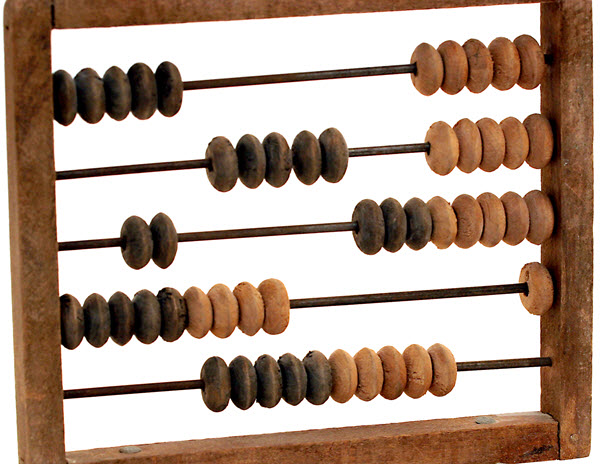
The abacus, one of the earliest known calculation tools, originated around 3000 BC in Mesopotamia and was later adopted by civilizations such as China, Japan, Egypt, and Greece. This manual device consists of beads or counters on rods within a wooden frame, allowing users to perform basic arithmetic operations including addition, subtraction, multiplication, and division. The abacus requires significant manual dexterity and mental arithmetic skills, fostering a deep understanding of numerical relationships. Even today, it is used in some parts of Asia as a tool for mental math training, demonstrating its enduring educational value.
2.2 Slide Rule
Developed in the 17th century, the slide rule became a staple for engineers and scientists up until the 1970s. Operating on the principle of logarithmic scales, the slide rule facilitates multiplication, division, roots, logarithms, and other functions. While it offers greater complexity than the abacus, it requires substantial skill and experience to use effectively, and it provides only approximate results. Despite these limitations, the slide rule was indispensable for complex calculations prior to the advent of digital electronics.
2.3 Mechanical Calculators
Mechanical calculators, such as Blaise Pascal's Pascaline (1642) and the Arithmometer developed in the 19th century, represented significant advancements by automating arithmetic operations. These devices utilized gears, rods, and levers to perform calculations, greatly reducing the time required for complex computations compared to manual methods. Although more reliable and faster than the abacus or slide rule, mechanical calculators were bulky, expensive, and required specialized knowledge to operate, limiting their accessibility.
2.4 Counting and Pebble Boards
Prior to specialized calculation devices, humans used counting boards and pebble boards, which involved arranging stones or using drawn grids to track counts and perform basic arithmetic. These rudimentary tools were essential for keeping records and conducting simple calculations, serving as precursors to more sophisticated instruments like the abacus.
3. Modern Calculation Tools
3.1 Electronic Calculators
The introduction of electronic calculators in the early 1960s marked a revolution in computation. By the 1970s, pocket-sized electronic calculators became widely available, offering rapid and accurate calculations far surpassing the capabilities of their mechanical predecessors. Modern calculators range from basic models performing simple arithmetic to advanced scientific and graphing calculators capable of handling complex mathematical functions, including trigonometry, statistics, and programming. These devices are characterized by their speed, accuracy, ease of use, and portability, making them indispensable tools in educational, professional, and personal settings.
3.2 Computers and Software
The advent of computers and specialized software has exponentially expanded the scope and capacity for computation. Modern computers can perform billions of calculations per second, enabling them to handle tasks ranging from simple arithmetic to complex simulations and data analysis. Software applications such as spreadsheets, mathematical modeling tools, and computer algebra systems (CAS) provide users with powerful platforms for performing intricate calculations, analyzing data, and visualizing mathematical concepts. These tools are widely used across various fields, including finance, engineering, science, and education, facilitating advancements that rely on precise and efficient computation.
3.3 Mobile Devices
The rise of smartphones and tablets has further democratized access to advanced calculation tools. Mobile applications can transform these devices into powerful calculators, often surpassing the functionality of dedicated devices. Features include not only basic arithmetic but also scientific calculations, graph plotting, and connectivity to online resources for cloud-based computation and data sharing. The portability and multifunctionality of mobile devices make complex calculations accessible anywhere and anytime, enhancing productivity and convenience.
3.4 Cloud-Based Tools and Online Calculators
With the proliferation of the internet, many calculation functionalities are now available through cloud-based platforms and online calculators. These tools offer collaborative capabilities, data sharing, and remote computational resources, allowing users to perform advanced calculations and analyses without the need for high-powered local hardware. Cloud-based solutions are continually updated with new features and integrations, providing scalable and flexible computation options suitable for both individual and organizational needs.
4. Comparative Analysis
4.1 Speed and Accuracy
Modern calculation tools, particularly electronic calculators and computers, offer unprecedented speed and accuracy compared to older mechanical devices. Electronic calculators can perform complex calculations in milliseconds, while computers and specialized software can handle billions of operations per second, minimizing human error and increasing reliability.
4.2 Usability and Accessibility
Modern tools are designed with user-friendly interfaces, requiring minimal training to perform basic and advanced calculations. In contrast, older tools like the abacus and slide rule demand significant practice and expertise to operate effectively. Additionally, the widespread availability and affordability of modern devices have made advanced computational capabilities accessible to a broader audience.
4.3 Versatility and Functionality
While old calculation tools were limited to specific types of arithmetic operations, modern tools offer a vast array of functionalities. From basic arithmetic to complex mathematical modeling, data analysis, symbolic manipulation, and graphical representations, modern calculators and software provide versatile solutions that cater to diverse computational needs across various disciplines.
4.4 Portability and Integration
The portability of modern calculation tools has significantly improved. Electronic calculators are compact and lightweight, while smartphones and tablets integrate multiple computational capabilities into single devices. This contrasts with older tools like mechanical calculators and slide rules, which were often bulky and less convenient to transport. Furthermore, modern devices offer seamless integration with other technologies, enhancing their usability in different environments.
4.5 Educational and Cognitive Impact
Old calculation tools like the abacus and slide rule played crucial roles in developing mental arithmetic skills and numerical understanding. They required users to engage deeply with numerical relationships and problem-solving processes. Modern calculators and software, while efficient, have sparked discussions about potential over-reliance on digital tools, possibly diminishing foundational arithmetic skills. However, when integrated thoughtfully into education, modern tools can enhance learning by allowing students to focus on higher-level mathematical concepts and applications.
4.6 Dependency on Technology
Modern computation heavily relies on digital technology, creating dependencies that differ from the manual operations of older tools. While this dependence has enabled unparalleled efficiency and capability, it also raises concerns about accessibility in the absence of technology, the need for technical skills to operate advanced tools, and issues related to data security and privacy in cloud-based computations.
4.7 Evolution of Design
The design evolution from mechanical and analog devices to digital systems reflects broader technological advancements, including miniaturization, energy efficiency, and enhanced connectivity. Modern calculation tools are not only more powerful but also incorporate sleek designs and intuitive interfaces, making them more appealing and easier to use than their predecessors.
5. Comparative Features Table
| Feature | Old Calculation Tools | Modern Calculation Tools |
|---|---|---|
| Speed | Manual and time-consuming | Instantaneous computations |
| Accuracy | Prone to human error | Highly accurate and reliable |
| Functionality | Basic arithmetic operations | Complex mathematical functions and data analysis |
| Portability | Bulky and less portable | Compact and highly portable |
| Usability | Requires extensive training | User-friendly interfaces |
| Versatility | Limited to specific operations | Wide range of applications across various fields |
| Dependency | Independent of digital technology | Reliant on electronic devices and software |
6. Conclusion
The journey from ancient calculation tools like the abacus and slide rule to modern electronic calculators and sophisticated computing software highlights a remarkable evolution in human ingenuity and technological advancement. Older tools laid the foundational understanding of arithmetic operations and numerical relationships, fostering essential mathematical skills and cognitive development. However, the advent of modern calculation tools has exponentially increased the speed, accuracy, and complexity of computations, making them indispensable in today's fast-paced and data-driven world.
Modern tools have transformed not only the efficiency of mathematical operations but also how calculations are integrated into various aspects of daily life, education, and professional fields such as engineering, finance, and science. The enhanced usability, portability, and versatility of modern devices have democratized access to advanced computational capabilities, enabling individuals and organizations to tackle complex problems with ease. Nonetheless, the educational paradigm continues to balance the benefits of digital computation with the need to maintain foundational arithmetic skills, ensuring a comprehensive understanding of mathematical principles.
Ultimately, the evolution of calculation tools reflects the broader trajectory of technological progress, emphasizing the continuous pursuit of greater efficiency, precision, and capability in mathematical computation. As technology advances further, it is likely that even more sophisticated and integrated calculation tools will emerge, continuing to shape how humanity interacts with and applies mathematical concepts.
7. References
Last updated February 11, 2025