
Navigating Call Recording in India: Apps, Legality, and Best Practices
A Comprehensive Guide to Mobile Call Recording Solutions and the Indian Legal Landscape
Key Insights into Call Recording in India
- Legality for Participants: In India, recording a phone conversation where you are a participant is generally permissible, even without the other party's explicit consent. However, caution is advised regarding the use of such recordings to avoid privacy violations or defamation.
- Third-Party Recording Restrictions: Recording calls where you are not a participant (i.e., wiretapping) is strictly illegal and prohibited by Article 21 of the Indian Constitution, unless there is prior governmental authorization under specific circumstances like public emergency or national security.
- App Availability and Features: A wide array of call recording apps are available for both Android and iPhone users in India, offering features like automatic recording, clear audio quality, cloud storage integration, and even AI-powered transcriptions. Popular options include Cube ACR, Rev Call Recorder, TapeACall, and Truecaller.
The Evolving Landscape of Call Recording Apps in India
In today's fast-paced digital world, the ability to record phone calls has become increasingly relevant for various personal and professional reasons. From retaining crucial business details to documenting important personal conversations, call recording apps offer a convenient solution. India, like many other nations, has seen a rise in the demand for such applications. However, selecting the right app and understanding the legal nuances surrounding call recording are paramount.
The availability and functionality of call recording apps have evolved significantly. While older Android versions sometimes faced limitations, especially after Android 9, many modern apps have found ways to continue providing reliable recording services. For iPhones, where native call recording is generally not available, third-party apps often utilize conference call methods to facilitate recording.
Top Call Recording Applications for Android and iPhone
The market is flooded with various call recording applications, each offering a unique set of features. When choosing an app, consider factors like audio quality, ease of use, storage options, and additional functionalities like transcription. Here's an overview of some of the leading call recording apps popular in India:
Leading Android Call Recording Apps
- Cube Call Recorder ACR: This is a highly popular choice for Android users, known for its ability to record both standard phone calls and VoIP conversations from platforms like WhatsApp, Viber, Telegram, and Skype. It offers automatic recording, a built-in file explorer for managing recordings, and cloud storage integration.
- Automatic Call Recorder (ACR): Often praised for its reliability and simplicity, ACR allows users to automatically record incoming and outgoing calls. It provides options for saving recordings to cloud storage and can be configured to auto-delete old recordings to save space.
- Truecaller: Beyond its primary function as a caller ID and spam-blocking app, Truecaller has integrated AI-powered call recording with transcription and call summary features, making it a comprehensive communication tool.
- Rev Call Recorder: While available on both Android and iOS, Rev is particularly highlighted for its high-quality audio recordings and an option for professional human transcription services, guaranteeing high accuracy.
- Other Noteworthy Android Apps: Blackbox Call Recorder, Boldbeast Call Recorder, and CallMaster are also frequently mentioned for their respective strengths, including features like call blocking and adjustable recording quality.
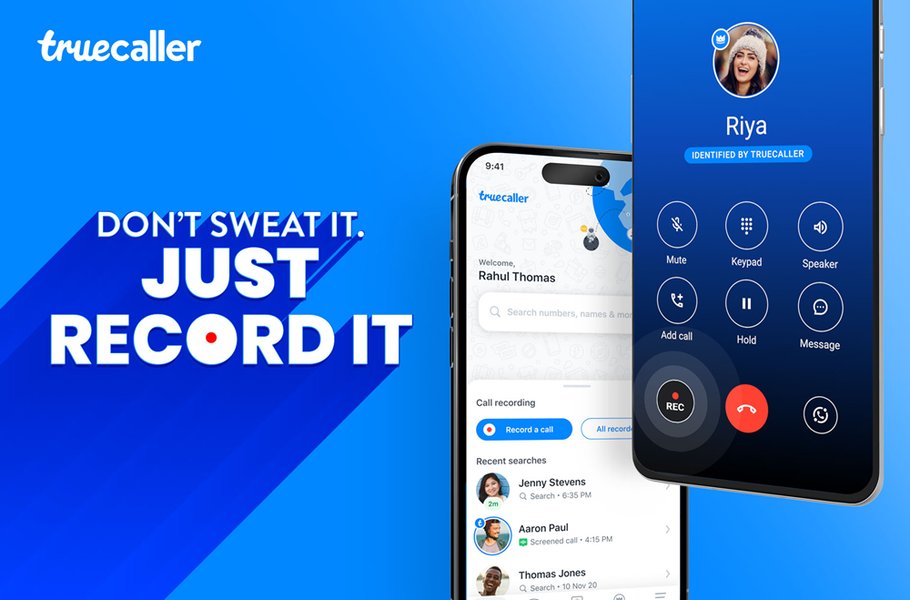
Truecaller has emerged as a comprehensive solution, integrating AI-powered call recording and transcription for users in India.
Prominent iPhone Call Recording Apps
Due to Apple's strict privacy policies and hardware limitations, direct call recording is not a native feature on iPhones. Call recording apps for iOS typically use a three-way calling method or require callers to merge calls with the recording service.
- TapeACall: A leading call recorder app for both Android and iPhone, TapeACall records conversations in clear audio and offers features like easy sharing and secure storage. It typically works by merging your call with their recording line.
- Rev Call Recorder: As mentioned for Android, Rev also provides a robust solution for iPhone users, offering unlimited recording duration and in-app transcription capabilities.
- Call Recorder iCall: This app allows users to record outgoing and incoming calls with just a few taps. It provides features like voice-to-text transcription and translation to multiple languages, making it a versatile tool for professionals.
- Call Recorder for iPhone (by AccordMobi): Praised for its user-friendly interface and high-quality recording, this app also offers automated voice-to-text transcription and allows sharing of recordings.
Factors to Consider When Choosing a Call Recording App
With a multitude of options, choosing the best call recording app can be a daunting task. Here are critical factors to consider:
- Audio Quality: Ensure the app delivers clear and crisp audio, crucial for accurately reviewing conversations. Look for apps that employ noise suppression and audio enhancement.
- Ease of Use: An intuitive and user-friendly interface is vital. The process of starting, stopping, and accessing recordings should be straightforward.
- Recording Functionality: Determine if you need automatic recording, manual recording, or both. Check if the app supports recording VoIP calls in addition to standard phone calls.
- Storage and Sharing: Look for apps that offer ample storage space, preferably with cloud integration (e.g., Google Drive, Dropbox) for easy backup and access. The ability to share recordings via email, messaging, or other apps is also beneficial.
- Transcription Services: For business or legal purposes, integrated transcription services can be incredibly valuable, converting audio to text for easy review and searchability.
- Cost: Many apps offer free versions with basic features, while premium versions unlock advanced functionalities, often through subscriptions or one-time purchases.
- Compatibility: Verify that the app is compatible with your device's operating system version, as some apps might have limitations on newer Android versions due to security policies.
The Legal Landscape of Call Recording in India
Understanding the legality of call recording in India is crucial to ensure compliance and avoid potential legal repercussions. While there isn't a single, specific law dedicated solely to call recording, various provisions across different acts and judicial interpretations govern this area.
Participant vs. Third-Party Recording
The distinction between recording a conversation you are a part of and recording a conversation between two other parties is fundamental in Indian law:
- Recording Your Own Calls (Participant Recording): Generally, Indian law does not explicitly prohibit an individual from recording a phone conversation in which they are a participant, even without the explicit consent of the other parties involved. This means if you are making or receiving the call, recording it is typically considered legal. However, the use of such recordings must be exercised with caution.
- Recording Others' Calls (Third-Party Interception): Recording conversations where you are not a party to the call (e.g., wiretapping or spying) is illegal and constitutes a violation of privacy, which is protected under Article 21 of the Indian Constitution. Section 5(2) of the Indian Telegraph Act, 1885, deals with the interception of messages and provides that only the government, under stipulated circumstances (such as public emergency or national security), can authorize such interceptions. Misusing call recordings can lead to serious legal consequences under Indian laws.
This video provides a concise overview of the legality of call recording in India, emphasizing the distinction between participant and third-party recording, which is crucial for understanding your rights and responsibilities.
Admissibility of Recorded Calls as Evidence
While recording your own calls might be legal, their admissibility as evidence in court is a separate matter. Electronic records, including call recordings, are generally admissible as documentary evidence under Section 65B of the Indian Evidence Act of 1872. However, certain conditions must be met for their admissibility, focusing on the authenticity and integrity of the electronic record. Courts have also considered the manner in which the recording was obtained and whether it infringes upon privacy rights. If a recording is obtained to defame or blackmail someone, it could lead to legal liability, even if you were a participant in the conversation.

The image illustrates the act of recording a phone call, a practice governed by specific legal considerations in India.
Ethical Considerations and Best Practices
Even where legally permissible, ethical considerations play a significant role. It is widely recommended, particularly in professional and corporate environments, to seek consent from the other party before recording a conversation. This promotes transparency and trust. Some sectors or companies may also have their own internal policies requiring two-way consent.
In summary, while you are generally permitted to record calls you are a part of in India, it is crucial to understand the purpose of the recording and its potential legal implications, especially concerning privacy and misuse of information.
Comparative Analysis of Call Recording App Features
To help you better understand the diverse offerings of call recording apps, the following radar chart provides an opinionated comparison of key features across some of the most popular applications. This chart illustrates their perceived strengths in various aspects based on common user reviews and reported functionalities.
This radar chart provides a visual comparison, allowing users to quickly assess which app might best suit their specific needs based on these weighted features. For instance, if transcription accuracy is paramount, an app like Rev Call Recorder might stand out, whereas for overall versatility including VoIP calls, Cube ACR could be preferred.
Choosing the Right App for Your Needs
Ultimately, the "best" call recording app depends on your individual requirements, your device's operating system, and your comfort level with the legal landscape. Always ensure you are aware of the legal implications of recording calls in your specific context, and prioritize apps that offer clear audio, reliable performance, and robust privacy features.
Summary of Key Features and Considerations
The following table summarizes the key aspects to consider when evaluating call recording applications in India, encompassing both technical features and legal compliance.
| Feature/Consideration | Description | Importance |
|---|---|---|
| Automatic vs. Manual Recording | Does the app record all calls automatically or only when initiated manually? | Convenience and specific use cases (e.g., business vs. personal documentation). |
| Incoming & Outgoing Call Support | Ability to record both sides of the conversation. | Essential for comprehensive record-keeping. |
| VoIP Call Recording | Support for calls made via WhatsApp, Skype, Google Meet, etc. | Crucial for users who communicate frequently on these platforms. |
| Audio Quality | Clarity and fidelity of recorded conversations. | Ensures accurate understanding and usability of recordings. |
| Cloud Storage Integration | Option to save recordings directly to cloud services (Google Drive, Dropbox). | Data backup, accessibility across devices, and freeing up phone storage. |
| Transcription Services | Converting recorded audio into text. | Enhances searchability, review, and utility for notes or documentation. |
| User Interface & Ease of Use | Intuitive design and simple navigation for core functions. | Directly impacts user experience and efficiency. |
| Admissibility in Court | Understanding conditions under which recordings can be used as legal evidence. | Critical for individuals recording for legal protection or disputes. |
| Consent Requirements (Legal) | Awareness of "one-party consent" vs. "two-party consent" laws. | Ensures legal compliance and avoids privacy violations. |
| Privacy and Security | How the app handles and protects your recorded data. | Safeguards sensitive information and personal privacy. |
Frequently Asked Questions (FAQ) about Call Recording in India
Is it legal to record phone calls in India without informing the other person?
Can call recordings be used as evidence in Indian courts?
Are there free call recording apps available for Android and iPhone in India?
Do call recording apps work on all Android and iPhone models in India?
What is the difference between participant recording and third-party recording in India?
Recommended Further Exploration
- Explore the Indian Telegraph Act, 1885 and its implications for call recording legality.
- Understand the conditions for admissibility of electronic evidence in Indian courts.
- Delve deeper into privacy laws in India as they relate to phone call recordings.
- Learn about ethical considerations and best practices for responsible call recording.
References
Last updated May 21, 2025