
Maximize Your Cambridge MPhil Prep: Which Summer Experience Reigns Supreme?
Comparing Cambridge Research, Max Planck Internships, and AI Startups for your Scientific Computing Journey.
Embarking on an MPhil in Scientific Computing at the University of Cambridge after completing a Master's in Applied Physics is an exciting step. The summer preceding this intensive program offers a crucial window to gain experiences that can significantly enhance your preparation and success. Choosing between a research position at Cambridge, a similar role at a Max Planck Institute in Dresden, or practical experience at an AI startup requires careful consideration of how each aligns with the MPhil's demands and your future aspirations. This guide provides a detailed comparison to help you make the most informed decision.
Key Highlights: Which Path Best Suits You?
- Cambridge Research Immersion: Offers unparalleled integration into the MPhil environment, aligning directly with the program's curriculum, research focus, and faculty connections.
- Max Planck Prestige: Provides world-class, potentially specialized research experience within a renowned international institution, broadening your scientific perspective.
- AI Startup Agility: Delivers practical, industry-focused skills in AI and software development, boosting employability but diverging from the MPhil's core academic research emphasis.
Evaluating Your Summer Options
The MPhil in Scientific Computing at Cambridge is a rigorous 12-month program focusing on high-performance computing (HPC), advanced numerical algorithms, computational modeling, and software development for scientific research. It prepares graduates for demanding roles in academia and industry. Let's evaluate how each summer option contributes to building the necessary foundation.
Option 1: Research Student at Cambridge
Undertaking research within the University of Cambridge itself presents the most direct route to prepare for the MPhil.
Direct MPhil Alignment and Curriculum Integration
This option allows you to dive straight into the academic ecosystem you'll inhabit during your MPhil. You can familiarize yourself with the specific research areas, methodologies, and computational tools prevalent in the Scientific Computing program. Exposure to Cambridge's High-Performance Computing Service and potentially working on projects aligned with the MPhil's focus areas (like continuum or atomic-scale modeling) provides a significant head start. This experience directly complements the MPhil's emphasis on research skills, parallel computing architectures, and object-oriented programming for scientific applications.
Environment Familiarization and Networking
Spending the summer at Cambridge helps you acclimate to the university's unique culture, departmental workflows, and academic expectations. You can build invaluable connections with faculty members, potential supervisors (especially if considering a PhD afterward), and even future MPhil peers. Engaging with the research community early can smooth your transition and potentially open doors for your MPhil research project.
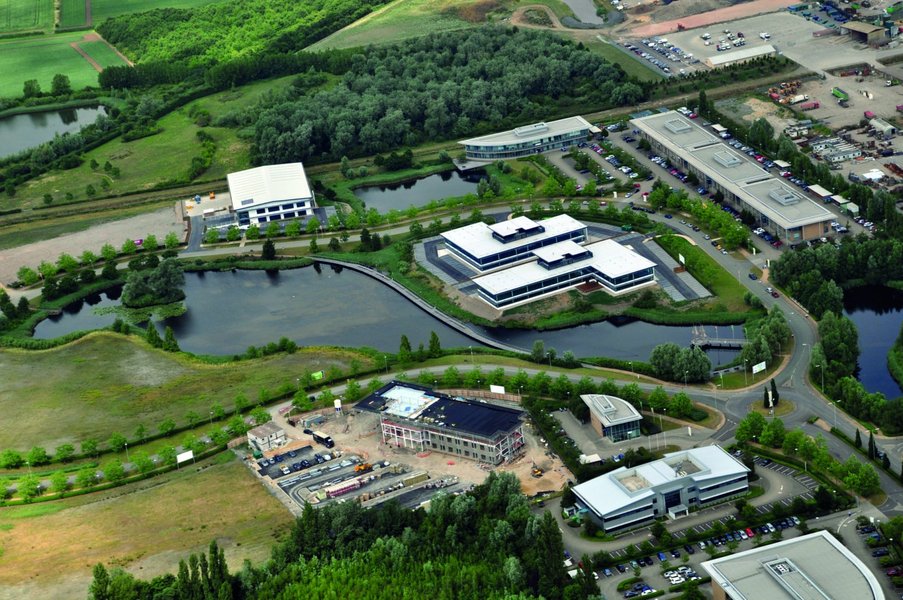
The Cambridge Research Park environment, indicative of the research-intensive settings at the University.
Potential Drawbacks
While highly relevant, this option might offer less diversity in terms of research approaches or institutional cultures compared to an international placement. The experience might overlap significantly with the MPhil itself, potentially limiting exposure to entirely new perspectives before the program starts.
Option 2: Research Student at Max Planck Institute (Dresden)
The Max Planck Society is globally recognized for its cutting-edge research, making an internship at one of its institutes, such as those in Dresden, a prestigious opportunity.
World-Class Research Exposure
Max Planck Institutes (MPIs) in Dresden specialize in areas like the Physics of Complex Systems, Chemical Physics of Solids, and Molecular Cell Biology and Genetics, often involving sophisticated computational methods. A research position here offers exposure to high-caliber science, advanced computational techniques (potentially in areas like computational physics, systems biology, or materials science), and well-funded projects. This experience provides robust research training that is highly transferable to the demands of the Cambridge MPhil.

Architectural view of the Max Planck Institute for the Physics of Complex Systems in Dresden.
International and Interdisciplinary Experience
Working in Germany at an MPI provides valuable international research exposure, allowing you to experience a different academic culture and broaden your professional network across Europe. Many MPI research groups operate in English and host numerous international students. This can foster adaptability and provide insights into interdisciplinary approaches that might differ from those emphasized at Cambridge.
Environment and Relevance Considerations
While the research quality is exceptional, the specific projects available might not align perfectly with Cambridge's Scientific Computing MPhil focus unless carefully chosen. You'll also need to adapt to a new environment temporarily. While generally supportive, be aware of the broader context; some sources mention Dresden's socio-political climate or occasional reports of institutional challenges within German research environments, though many researchers report positive experiences within MPIs.
Option 3: Working at an AI Startup
Engaging with the fast-paced world of an AI startup offers a different, yet potentially valuable, set of experiences.
Practical Skills and Industry Insight
Startups provide hands-on experience with real-world applications of AI and computational techniques. You'll likely gain practical skills in programming (e.g., Python), machine learning frameworks (TensorFlow, PyTorch), data handling, software deployment, and agile development methodologies. This aligns with the MPhil's goal of producing graduates with transferable skills relevant to industry sectors like finance, tech, and energy.
Career Diversification and Employability
This experience significantly enhances your profile for industry roles post-MPhil. Understanding product development cycles, scalability challenges, and the commercial application of computational methods can be highly attractive to employers. Given that a substantial number of AI PhDs move into industry, this path offers valuable insights into potential career trajectories.
Alignment with Academic Rigor
The primary drawback is the potential mismatch with the MPhil's academic and research focus. Startups typically prioritize rapid development and deployment over deep theoretical understanding or rigorous scientific investigation. While you'll use computational tools, the work might lack the depth in numerical methods or high-performance computing central to the MPhil curriculum, unless the startup specifically operates in a scientific domain (e.g., AI for drug discovery or physical simulations).
Comparative Analysis: Visualizing Your Options
To better understand the trade-offs, let's compare the three options across key dimensions relevant to your MPhil preparation and career goals.
Option Suitability Radar Chart
This chart visually compares the three summer opportunities based on their potential contributions to various aspects of your development. Scores are assigned on a scale of 1 to 5 (higher is better), reflecting the synthesized analysis from expert opinions and program details. This provides an opinionated perspective based on the typical characteristics of each environment.
As the chart illustrates, the Cambridge option excels in direct relevance and internal networking. Max Planck leads in research depth and international exposure. The AI startup stands out for industry skill acquisition and potentially enhancing career flexibility towards the tech sector.
Decision Factors Mindmap
This mindmap outlines the core considerations, potential benefits, and outcomes associated with each summer choice, helping structure your decision-making process.
(Scientific Computing)"] id1["Cambridge Research"] id1_1["Pros:
- Direct MPhil Alignment
- Environment Familiarization
- Internal Networking"] id1_2["Cons:
- Less Diverse Exposure"] id1_3["Outcome:
Optimized MPhil Start,
Strong Internal Foundation"] id2["Max Planck Research (Dresden)"] id2_1["Pros:
- World-Class Research
- International Experience
- Specialized Skills Potential"] id2_2["Cons:
- Less Direct Cambridge Fit
- Adaptation Required"] id2_3["Outcome:
Broadened Research Profile,
International Network"] id3["AI Startup"] id3_1["Pros:
- Practical AI/Coding Skills
- Industry Experience
- Enhanced Employability (Tech)"] id3_2["Cons:
- Less Academic Rigor
- Variable MPhil Alignment"] id3_3["Outcome:
Industry-Ready Skills,
Diverse Career Options"]
Summary Table: Pros, Cons, and Suitability
This table provides a concise summary of the advantages and disadvantages of each option, linking them to potential career paths.
| Option | Key Advantages | Key Disadvantages | Best Suited For |
|---|---|---|---|
| 1. Research at Cambridge | Highest relevance to MPhil; Smooth transition; Strong internal networking; Familiarity with resources & faculty. | Limited exposure outside Cambridge; Potentially less diverse research perspective. | Maximizing MPhil success; Pursuing PhD at Cambridge; Strong academic focus. |
| 2. Research at Max Planck (Dresden) | Prestigious international research experience; Potential for specialized computational skills; Broadened scientific network; High research rigor. | Less direct integration with Cambridge MPhil structure; Requires adaptation to new environment; Potential alignment mismatch depending on project. | Broadening research horizons; Gaining international experience; Pursuing PhD (globally); Interest in MPI's specific research strengths. |
| 3. AI Startup Experience | Develops practical industry skills (AI, coding, deployment); Real-world application exposure; Enhances tech sector employability; Fast-paced learning. | Lower alignment with academic MPhil research focus; Less emphasis on theoretical depth/HPC; Potentially less structured mentorship. | Careers in AI/tech industry; Gaining practical/applied skills; Diversifying skillset beyond pure academia. |
Insights from the Field: Physics-Informed Machine Learning
The intersection of physics and AI/ML is a rapidly growing area within scientific computing. Understanding how machine learning techniques can be integrated with physical principles is highly relevant for someone with your background in Applied Physics entering a Scientific Computing MPhil. The following video features Josh Bloom discussing Physics-Informed Machine Learning, offering valuable context on how these fields converge, which might influence your perspective on the AI startup option or potential research projects at Cambridge or Max Planck.
This discussion highlights the sophisticated computational challenges and opportunities at the forefront of scientific research, blending traditional numerical methods with modern AI. Experience in any of the three summer options could potentially touch upon these themes, but the context (academic research vs. industry application) would differ significantly.
Frequently Asked Questions (FAQ)
How important is prior High-Performance Computing (HPC) experience for the MPhil? +
While prior HPC experience is beneficial, it's often not a strict prerequisite. The MPhil program includes taught modules designed to introduce students to HPC concepts and tools used at Cambridge. However, having some familiarity (gained through a research position at Cambridge or potentially MPI) can provide a smoother start, especially for the research project component which often utilizes these resources.
Will AI startup experience be viewed negatively by Cambridge faculty? +
It's unlikely to be viewed negatively, especially given the increasing importance of AI in science and the MPhil's goal of producing employable graduates. However, faculty will primarily assess your readiness for rigorous academic research. Frame your startup experience by highlighting the transferable computational skills, problem-solving abilities, and any relevance to scientific applications you encountered. Emphasize how it complements, rather than replaces, the academic skills you aim to develop during the MPhil.
Can I combine elements, e.g., a short research stint and online AI courses? +
Absolutely. Summer allows for flexibility. Combining a shorter research internship (perhaps 6-8 weeks) at Cambridge or MPI with self-directed learning through online courses (e.g., in machine learning, advanced algorithms, or specific programming languages) can be a highly effective strategy. This allows you to gain focused research experience while also broadening your practical skill set, potentially bridging the gap between academic preparation and industry-relevant knowledge.
What specific research areas at MPI Dresden are relevant to scientific computing? +
MPIs in Dresden cover diverse fields. The MPI for the Physics of Complex Systems (MPI-PKS) heavily utilizes computational methods for theoretical physics research, including nonlinear dynamics, statistical physics, and quantum systems. The MPI of Molecular Cell Biology and Genetics (MPI-CBG) employs computational biology, bioinformatics, and image analysis techniques. The MPI for Chemical Physics of Solids (MPI-CPfS) involves computational materials science. Look for specific research groups working on simulation, modeling, data analysis, or algorithm development within these institutes.
Does the summer choice significantly impact PhD prospects after the MPhil? +
Yes, it can. A successful research experience, particularly at Cambridge or a prestigious institution like MPI, strengthens a PhD application by demonstrating research aptitude and potential. Working closely with Cambridge faculty during the summer can be particularly advantageous if applying for a PhD there. While startup experience builds valuable skills, a strong academic research record (often built through internships and the MPhil project itself) is typically paramount for competitive PhD admissions in scientific computing.
Recommended Next Steps
- Explore specific research groups in Scientific Computing at Cambridge.
- Compare Max Planck Institutes in Dresden for computational research opportunities.
- Investigate the role of AI and Machine Learning within the Cambridge MPhil curriculum.
- Analyze career paths for graduates of the Cambridge MPhil in Scientific Computing.
References
Last updated April 27, 2025