
The Role and Impact of Capacitor Technology in Electric Vehicles
Exploring how cutting-edge capacitor technology boosts EV performance and efficiency
Key Highlights
- Rapid Energy Management: Capacitors enable quick storage and burst energy delivery crucial for acceleration and regenerative braking.
- Improved Stability and Protection: They stabilize voltage, manage power conversion, and protect sensitive electronic systems.
- Technological Breakthroughs: Advances in energy density and supercapacitors are revolutionizing EV design and performance.
Understanding Capacitor Technology in Electric Vehicles
Capacitors are vital electronic components in modern electric vehicles (EVs), playing multifaceted roles that extend well beyond basic energy storage. Their ability to handle rapid charge and discharge cycles, mitigate voltage fluctuations, and integrate seamlessly into high-voltage systems makes them indispensable in the contemporary EV landscape. As automotive technology evolves, the integration of advanced capacitor technologies is fostering improved performance, energy efficiency, and overall system reliability.
Capacitor Basics and Their Multifunctional Roles
At their core, capacitors are devices that store electrical energy in an electric field. Unlike batteries, which are designed for long-term energy storage, capacitors excel at delivering energy in short, powerful bursts. This unique capability makes them particularly valuable for functions that require a rapid response, such as acceleration, regenerative braking, and voltage stabilization in complex electrical systems.
Energy Storage and Quick Discharge
One of the most innovative applications of capacitors in EVs is leveraging their ability to store and rapidly release energy. During scenarios like acceleration or when tapping into regenerative braking, capacitors deliver the needed electrical surge almost instantaneously. Batteries, while efficient at long-term storage, are not as effective at providing these quick bursts of energy. This complementary relationship enhances overall vehicle performance by reducing reliance on battery systems during peak demands.
Voltage Regulation and Noise Filtering
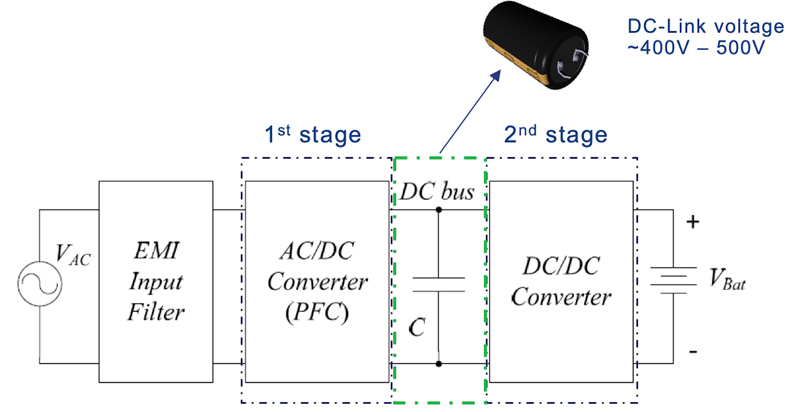
Electric vehicles operate within high-voltage systems, often ranging from 400V to 800V in Battery Electric Vehicles (BEVs), and around 48V in Hybrid Electric Vehicles (HEVs). Such operating conditions necessitate precise regulation of electric potentials. Capacitors are strategically employed to smooth out DC bus voltage fluctuations and filter out noise from the system. Their role in suppressing voltage ripple and harmonic distortions protects sensitive components from potential damage caused by voltage spikes or surges, ensuring stable vehicle operation.
Power Conversion and Integration in Electronic Modules
Modern EVs utilize a sophisticated network of components such as traction inverters, onboard chargers, and DC/DC converters. These modules rely on capacitors to manage energy conversion between AC and DC power. During these conversion processes, capacitors help remove unwanted electrical noise and manage sudden power level changes, thereby ensuring a consistent and stable energy supply. Their integration minimizes losses and enhances the overall efficiency of power circuits.
Technological Advancements and Enhanced Capacitor Performance
Recent breakthroughs in capacitor technology are paving the way for an exciting future in electric vehicle design and performance. Engineers and materials scientists are exploring new structures and materials that significantly increase a capacitor’s energy density—a measure of how much energy a capacitor can store per unit volume. Some novel capacitor designs promise up to 19 times higher energy density than traditional models, a leap that could transform both the energy storage landscape and the overall efficiency of EV systems.
Supercapacitors: Bridging the Gap Between Batteries and Conventional Capacitors
Supercapacitors, often known as ultracapacitors, are taking center stage in the evolution of EV power systems. Unlike traditional capacitors, which manage rapid energy discharge, supercapacitors combine the high power density of capacitors with an enhanced ability to store more energy. This combination makes them ideal for handling the strenuous, high-cycle operations of electric vehicles.
Enhanced Energy Density
A recurring theme in modern capacitor research is the pursuit of enhanced energy density. The advent of supercapacitors with significantly higher energy densities is a game changer in automotive technology. With energy storage capabilities that can potentially reach up to 19 times that of conventional capacitors, these components promise extended EV driving ranges. They also enable more efficient regenerative braking systems, allowing vehicles to capture and reuse energy that would otherwise be lost.
Improved Thermal Stability and Durability
In high-performance applications such as electric vehicles, components must handle high temperatures and rapid thermal changes. Advanced capacitor technologies now offer improved thermal management properties, which in turn ensure reliability under demanding conditions. This durability is crucial for maintaining consistent performance in the complex and high-voltage environments typical of modern EV systems.
Integration Challenges and Design Optimizations
While the benefits of advanced capacitors are clear, their integration into high-voltage systems presents engineering challenges. Engineers must consider factors such as capacitor size, weight, and compatibility with other components. Despite these challenges, the compact size and weight efficiency of modern capacitors facilitate better overall design by reducing wiring complexity and allowing more flexible placement within the vehicle architecture.
Impact on Battery Longevity
One of the critical advantages of using capacitors in conjunction with batteries is the reduction in battery load during peak power cycles. Capacitors absorb and deliver energy rapidly, thereby mitigating the stress on batteries during acceleration and regenerative braking. This partnership not only enhances the immediate performance of EVs but also contributes to longer battery life—a key consideration in the sustainability and cost-effectiveness of electric vehicles.
Weight and Space Efficiency in EV Design
Weight reduction is a central theme in modern EV design. Capacitors, due to their intrinsically lightweight nature, allow design engineers to optimize wiring and electronic distribution systems. Thinner, lighter cables and reduced numbers of large batteries contribute to overall vehicle efficiency. This approach can further enhance the range of EVs and reduce the environmental impact by lowering energy consumption.
Comparative Analysis and System Integration
A comprehensive understanding of capacitor technology in EVs requires a look at how various capacitor types compare in terms of functionality and integration into electrical systems. The following table summarizes key aspects of different capacitor categories and their primary roles within electric vehicle systems.
| Capacitor Type | Primary Functions | Key Benefits |
|---|---|---|
| Standard Capacitors | Basic energy storage, voltage smoothing | Low cost, straightforward integration |
| Supercapacitors | Rapid energy delivery, energy recapture | High power density, improved regenerative braking |
| Film Capacitors | AC/DC conversion, filtering, decoupling | Compact size, reliability under high voltage |
| Ceramic MLCCs | Noise reduction, filtering | High temperature/high voltage tolerance, surface mount capability |
Advancement in Power Electronics Using Capacitors
Capable capacitors in EV systems are not limited to mere energy storage. They play a significant role in power electronics, particularly in areas such as voltage regulation and transient voltage suppression, which are paramount in maintaining the integrity of electronic subsystems. By integrating capacitors into critical nodes of electrical circuits, engineers ensure that spurious voltage spikes are absorbed, thereby minimizing the risk of component failure. This safeguard is essential in protecting both the digital control units and high-power modules in electric vehicles.
Voltage Spike Mitigation
Voltage spikes, especially in high-power environments, can be detrimental to the operation of sensitive electronic control systems. Capacitors serve as buffers, absorbing these transient spikes and ensuring that only stable voltages reach the hardware. This process involves employing snubber capacitors and bypass capacitors, which are tailored to absorb and dissipate unwanted electrical energy, thus maintaining a healthy voltage level across the circuitry.
Balancing AC/DC Conversions
Many critical systems within an electric vehicle rely on the precise conversion of AC to DC and vice versa. Capacitors facilitate this conversion by regulating the voltage fluctuations and filtering out noise that might compromise efficiency. Through careful integration, power converters such as inverters and DC/DC converters can operate more efficiently, ensuring that both the driving motors and auxiliary systems receive stable, clean power.
Innovation and Future Perspectives
As researchers continue to push the boundaries of materials science and electronic engineering, the future of capacitor technology in electric vehicles appears promising. Current research is focused on developing materials and designs that not only boost the energy density of capacitors but also enhance their operational lifetime and reliability under extreme conditions.
Emerging Technologies and Next-Generation Capacitors
One of the most exciting prospects in capacitor technology is the development of next-generation capacitors and supercapacitors. Innovations include novel dielectric materials and composite structures with significantly higher energy densities. These advancements are anticipated to revolutionize EV power systems by:
Extending Driving Range
With the ability to store and rapidly dispense energy more efficiently, next-generation capacitors could significantly extend the driving range of electric vehicles. By optimally pairing with battery systems, the overall energy management becomes more balanced, allowing the vehicle to harness regenerative energy more effectively.
Enhanced Charging Speeds
Rapid-charging capabilities are another area where advanced capacitor technology can lead to substantial improvements. As more energy is stored within a capacitor in a shorter timeframe, charging cycles can become shorter and more efficient without compromising the health of main battery packs. This improvement translates to reduced downtime for EVs and a more seamless integration into the fast-paced lifestyle of modern consumers.
Addressing Integration Challenges
Despite these promising advancements, several challenges remain regarding the integration of supercapacitors and advanced capacitor systems into EV architectures. Engineers must balance factors such as component size, thermal stability, cost considerations, and compatibility with existing high-voltage systems. Continued research and iterative design processes are essential to addressing these hurdles. With focused innovation, engineers are optimistic that these challenges can be surmounted, thereby unlocking even greater efficiencies and reliability in EV systems.
A Comprehensive Look at Capacitor Functions in EVs
Below is a summary table capturing the multifunctional roles of capacitors in electric vehicles along with their technological impacts:
| Function | Application in EVs | Technological Benefits |
|---|---|---|
| Rapid Energy Storage & Release | Supports acceleration and regenerative braking | Quick energy delivery; reduces battery load |
| Voltage Regulation | Smooths DC bus voltage; stabilizes inverter operations | Protects sensitive electronics from power spikes |
| Power Conversion | Facilitates AC/DC and DC/DC conversions | Ensures clean, efficient energy supply |
| Noise and Ripple Filtering | Mitigates electromagnetic interference | Enhances overall system reliability |
| Enhanced Energy Density | Next-generation supercapacitors in hybrid systems | Improved driving range and efficiency |
References
- Capacitor Technologies in EV Power Systems - Passive Components
- Exploring Capacitor Technologies for Electric Vehicles - Knowles Capacitors
- EV Batteries and Next-Gen Capacitors - Live Science
- Looking Closer at DC Link Capacitors in Electric Vehicles - Knowles Capacitors
-
Capacitors in Automotive Applications - Arrow Electronics
Recommended Further Reading
Last updated March 6, 2025