
Understanding Cartesian Dualism
A comprehensive exploration of the mind-body divide proposed by Descartes
Highlights
- Distinct Substances: Cartesian dualism posits that mind and body are fundamentally different substances – an immaterial mind and a material body.
- Interactionism: Despite their distinct natures, the theory maintains that these two substances can interact, influencing one another.
- Philosophical Implications: This dualistic view has significant consequences in philosophy, neuroscience, and the study of consciousness, prompting debates about the nature of self and the mind-body problem.
Introduction to Cartesian Dualism
Cartesian dualism, also known as mind-body dualism or substance dualism, is a philosophical theory famously associated with the 17th-century French philosopher René Descartes. This concept articulates a clear distinction between two kinds of substances: the mind (or soul) and the body. Descartes argued that while the body is physical and subject to the laws of physics, the mind is non-physical, immaterial, and not confined by physical laws. Such a distinction laid the foundation for centuries of debate regarding human consciousness, the nature of existence, and the interaction between thought and physicality.
Core tenets of Cartesian Dualism
Distinct Substances
At the heart of Cartesian dualism is the assertion that two fundamentally different kinds of substance constitute human existence:
The Mind
- Considered an immaterial substance, the mind is characterized by its capacity for thought, self-awareness, and consciousness. It is not extended in space, meaning that it does not occupy physical dimensions. As a non-physical entity, the mind is not governed by physical laws and is capable of introspection, reasoning, and subjective experiences.
The Body
- The body, in contrast, is a material substance that occupies space and is subject to physical and mechanical laws. Unlike the indivisible nature of the mind, the body is divisible into parts, each of which forms the structure of our physical existence. The body is observable, measurable, and acts as the vehicle through which we experience the external world.
Mind-Body Interaction
Despite the radically different natures of the mind and body, Cartesian dualism holds that these substances can causally interact. For instance, in the act of deciding to move a hand, the mental decision manifests into a physical movement. Likewise, sensory experiences originating in the body are processed and interpreted by the mind. This gives rise to the central challenge known as the "mind-body problem": how do these two distinct substances that exist in such radically different realms interact?
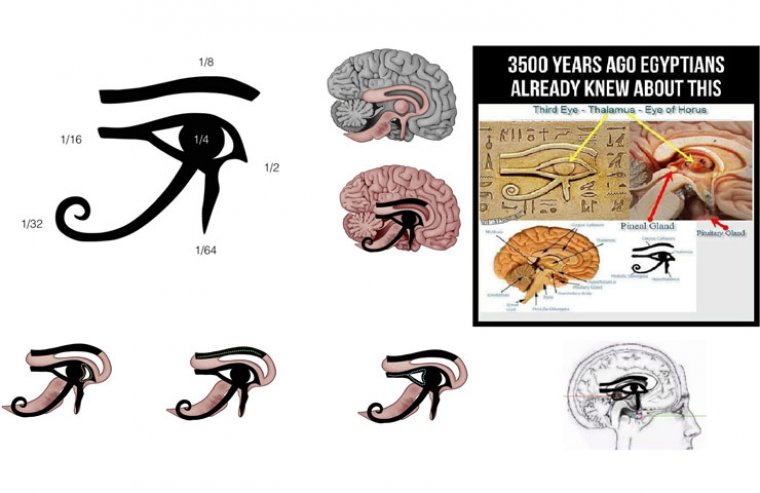
Descartes proposed that this interaction occurs via a specific region in the brain – the pineal gland – which, he argued, acted as a conduit between the immaterial mind and the physical body. Although this explanation has drawn considerable criticism and has been largely abandoned by modern science, it remains a significant historical attempt to address the mystery of mind-body interaction.
Philosophical and Scientific Implications
The introduction of Cartesian dualism has had a lasting impact on various fields:
Philosophy
- Philosophers continue to debate the validity of the dualistic perspective. Cartesian dualism has influenced discussions about consciousness, personal identity, and the nature of reality. By proposing that the mind could exist independently of the body, dualism has also opened pathways for religious and metaphysical interpretations concerning the soul and immortality.
Psychology and Cognitive Science
- Although Cartesian dualism inspired early thoughts on human consciousness, modern cognitive science often adopts a more materialistic or emergent viewpoint. Nevertheless, the dualistic framework has historically provided a starting point for understanding the separation between mental and physical phenomena. Contemporary debates consider whether mental states can be fully explained by brain processes or whether there is an experiential quality beyond physical explanation.
Neuroscience
- Advances in neuroscience have largely challenged the dualist perspective by showing that nearly all aspects of mental function correlate strongly with brain activity. However, the intuitive appeal of Cartesian dualism continues to influence discussions about the "hard problem" of consciousness – explaining why and how physical processes in the brain give rise to subjective experiences.
Historical Context and Influence
Historical Development
Cartesian dualism emerged during the Renaissance, a time of significant intellectual upheaval and the questioning of traditional doctrines. Descartes sought to establish a foundation for scientific knowledge that was immune to skeptical doubt. One of his famous statements, "Cogito, ergo sum" ("I think, therefore I am"), reflects his emphasis on the primacy of the mental or thinking self.
By positing a clear divide between the mind and body, Descartes offered a radical rethinking of what it means to be human. In a world where mechanistic physics was beginning to explain natural phenomena, the existence of an immaterial mind provided a space for subjective experience, free will, and personal identity.
Impact on Western Philosophy
The dualistic perspective has resonated through centuries of Western thought. It influenced subsequent philosophical debates regarding the nature of the soul, the problem of free will, and the limits of scientific understanding when addressing metaphysical matters. Even critics of Cartesian dualism, such as those advocating for physicalism or emergent materialism, find themselves engaging with its core propositions as a part of the broader inquiry into the nature of consciousness.
Key Arguments and Criticisms
Supporting Arguments
Despite its criticisms, there are several arguments that have historically been used to support Cartesian dualism:
The Modal Argument
- Descartes argued that it is conceivable for the mind to exist without the body. This thought experiment suggests that the mind has an existence independent of physical form, underscoring its immaterial character.
The Indivisibility Argument
- The mind is characterized by an indivisible unity, in contrast to the body, which can be divided into constituent parts. This distinct qualitative difference bolsters the claim that mental phenomena cannot be reduced to physical processes.
Criticisms and Counterarguments
Cartesian dualism is not without its detractors. Some of the major criticisms include:
The Interaction Problem
- One of the most persistent challenges is explaining exactly how an immaterial mind can interact with a material body. The pineal gland hypothesis proposed by Descartes lacks empirical support, and numerous philosophers and scientists question whether such an interaction mechanism is plausible.
Empirical Evidence from Neuroscience
- Modern neuroscience has found compelling evidence that all mental phenomena are correlated with physical processes in the brain. Neuroimaging studies and cognitive research have mapped many aspects of thought, emotion, and perception to specific brain activities, challenging the need for a separate non-material substance.
Philosophical Alternatives
- Alternative theories, such as materialism and emergentism, suggest that mental states arise solely from physical interactions within the brain. These theories obviate the need for a dualistic explanation by positing that consciousness is an emergent property of complex neural networks.
Comparative Overview Table
| Aspect | Mind | Body |
|---|---|---|
| Nature | Immaterial, non-spatial, capable of thought | Material, extended in space, subject to physical laws |
| Properties | Indivisible; characterized by consciousness and introspection | Divisible; composed of multiple parts that form physical structure |
| Interaction | Influences physical movements and processes | Provides sensory data triggering mental processes |
| Philosophical Importance | Focus on the essence of consciousness and identity | Focus on biological and mechanical aspects of human existence |
| Criticisms | Challenge in explaining causal efficacy in physical reality | Largely understood through observable and measurable phenomena |
Modern Perspectives and Contemporary Debates
Relevance in Today’s Discourse
Although Cartesian dualism originated in the 17th century, its legacy continues to influence modern discussions in philosophy, cognitive science, and artificial intelligence. With rapid advancements in technology and neuroscience, weighted questions persist regarding the full nature of consciousness:
Researchers employ techniques such as functional magnetic resonance imaging (fMRI) and electroencephalography (EEG) to explore brain activity associated with thought processes. While these observations largely support a materialistic view of the mind, they also leave open questions about subjective experience, self-awareness, and what some refer to as the "hard problem" of consciousness – the gap between physical observations and the qualitative feel of mental states.
Some contemporary philosophers argue for forms of dualism that are less rigid than Cartesian dualism, proposing models such as property dualism. In property dualism, while everything is composed of physical matter, mental properties that emerge cannot be fully explained by physical processes alone. This perspective attempts to reconcile aspects of Cartesian thought with modern scientific discoveries.
Impact on Artificial Intelligence and Robotics
In discussions about artificial intelligence, Cartesian dualism offers a contrasting backdrop to purely computational views of the mind. AI research typically investigates the brain’s processes through computational models, whereas dualism introduces questions about whether a machine ever could possess “consciousness” akin to a human mind.
These debates have led to numerous inquiries, ranging from whether AI can truly be said to "think" to what it means for a system to have subjective experiences. While the materialist paradigm dominates the technology sector, the dualistic perspective persists as a philosophical counterweight, stimulating debates about the essence of thought and awareness.
Extended Discussion: Philosophical, Ethical, and Cultural Dimensions
Philosophical Dimensions
Cartesian dualism has had far-reaching philosophical implications. It challenges the reductionist view that all phenomena, including consciousness, can be entirely explained by physical interactions. This prompts a broader inquiry into what constitutes the self:
Consciousness and Subjectivity: The idea that the mind exists as an immaterial entity lays open the possibility for subjective experiences that transcend mere biological function. Debates in philosophical circles revolve around whether consciousness is simply an emergent property of complex neural mechanisms or if there is an inherent "mind" that is irreducible to physical explanations.
Personal Identity: With the mind and body regarded as distinct, questions arise regarding the persistence of personal identity after physical changes or even bodily death. Traditionally, this dualistic perspective has provided conceptual support for the notion of an immortal soul or self, influencing religious and ethical perspectives on life, death, and morality.
Ethical and Cultural Considerations
The dualistic division of the human person into mind and body has also contributed to various ethical discussions. In debates on topics such as medical ethics, the notion of a separate mind has been invoked when discussing issues like consciousness in brain-dead patients, the rights of individuals whose cognitive faculties might be impaired, and even philosophical debates on the culpability of actions as influenced by mental states.
In cultural discourse, Cartesian dualism has impacted literature, film, and art. The concept of an inner life distinct from physical existence has inspired narratives that explore the nature of selfhood, the afterlife, and the conflict between the spiritual and the corporeal. Such themes continue to resonate in contemporary media and popular culture, where introspective explorations of identity and morality remain ever-present.
Conclusion
In summary, Cartesian dualism is a seminal philosophical theory that articulates a clear dichotomy between the immaterial mind and the material body. Developed by René Descartes, this theory asserts that while the mind is the seat of thought, consciousness, and identity, the body is an extended entity subject to physical laws. The interaction between these two distinct substances, although historically attributed to mechanisms such as the pineal gland, has remained a contentious issue. Despite challenges from modern neuroscience and alternative materialistic theories, Cartesian dualism continues to influence debates in philosophy, cognitive science, and even ethical discussions in contemporary society.
The enduring legacy of Cartesian dualism lies in its capacity to provoke thought about who we are as human beings. It invites ongoing inquiry into consciousness and challenges reductionist worldviews, keeping alive the philosophical debate over the true nature of the mind and its relationship with the body. Whether seen as a historical stepping stone or a continuing source of inspiration, Cartesian dualism remains one of the cornerstones of Western philosophical discourse.
References
- Mind–Body Dualism - Wikipedia
- Explaining Cartesian Dualism - CliffsNotes
- Cartesian Dualism - Psychology Dictionary
- Dualism - Stanford Encyclopedia of Philosophy
-
The Mind-Body Cartesian Dualism and Psychiatry - NCBI
- Mind-Body Dualism - Britannica
-
Cartesian Dualism Overview - ScienceDirect
- Mind-Body Divide - Philosophy Institute
- Cartesian Dualism in Cognitive Science - Fiveable
Recommended Related Queries
Last updated February 22, 2025