
Understanding the Soul in Cartesian Dualism
An in-depth exploration of the non-physical mind and its relation to the body
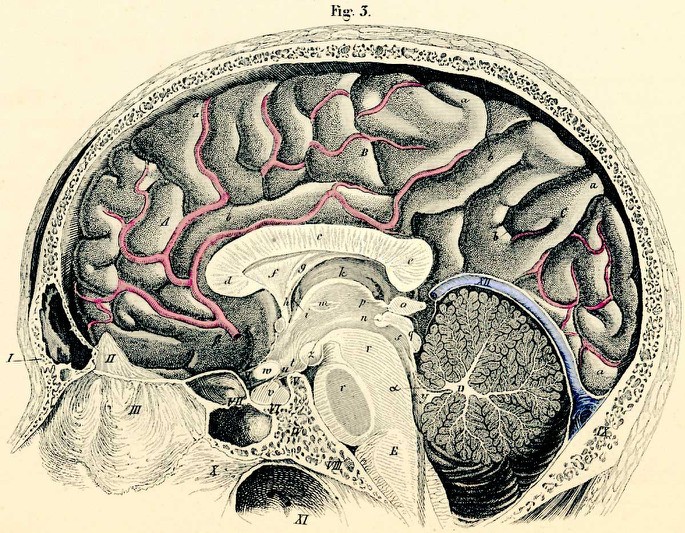
Key Highlights
- Dual Nature: Cartesian Dualism posits that the soul (or mind) is an immaterial, thinking substance distinct from the physical body.
- Interaction: Despite their radically different natures, the soul and body interact, with the pineal gland serving as the alleged interface.
- Immortality and Independence: The soul is conceived as capable of existing independently, implying its immortality and providing a foundation for its survival beyond the physical life.
Introduction to Cartesian Dualism
Cartesian Dualism, a philosophy introduced by the 17th-century French philosopher René Descartes, is a landmark perspective in the history of philosophy, especially in the discussions surrounding the mind-body relationship. At the core of this view is the claim that reality consists of two fundamentally distinct kinds of substance: the physical and the non-physical. The physical substance corresponds to the body — extended, divisible, and governed by the laws of physics — while the non-physical substance corresponds to what Descartes refers to as the mind or soul — unextended, indivisible, and the seat of thought, self-awareness, and consciousness.
According to Descartes, the soul is the embodiment of thought and consciousness. He famously declared, "Cogito, ergo sum" (I think, therefore I am), emphasizing that the very act of thinking is proof of one's existence. This declaration underpins his arguments for the soul’s primacy and distinctness from the body.
Core Concepts of the Soul in Cartesian Dualism
Distinct Substance
In Cartesian Dualism, the soul is conceived as a distinct type of substance entirely separate from the corporeal body. While the body is characterized by its physical properties such as extension in space and divisibility into parts, the soul is non-physical and inherently indivisible. This substance difference is crucial for explaining both the nature of consciousness and the capacity for rational thought, attributes that Descartes exclusively associates with the soul.
The notion of a non-extended substance has far-reaching implications. For instance, because the soul lacks spatial extension, it does not obey the laws of physics that regulate the behavior of physical objects. Its non-material nature means it cannot be dissected or localized in the same way as the body. This immateriality forms the philosophical basis for the idea that the soul could survive bodily death, thus supporting traditional ideas of immortality.
Thinking and Consciousness
According to Descartes, the defining characteristic of the soul is its capacity for thought. This includes rational thought, imagination, judgment, creativity, and will. The soul is often equated with the mind, forming the “thinking thing” or res cogitans in Cartesian terms. This quality of conscious thought, which cannot be adequately explained by physical processes alone, is what distinguishes the soul from bodily functions that are merely mechanistic.
The ability to process ideas, reflect on one’s existence, engage in introspection, and generate complex thoughts further establishes the soul as the locus of personal identity. In this framework, the soul is not simply a passive observer of bodily sensations but an active participant in the decision-making process, capable of sustaining self-awareness and creative thought.
Interaction with the Physical Body
Despite asserting that the soul and the body are fundamentally different substances, Descartes maintained that they are causally linked; they routinely interact and influence each other. Descartes proposed that this interaction occurs primarily through the pineal gland, a small endocrine gland in the brain. Although the specific mechanism of this interaction has been a source of ongoing debate, the idea remains central: the soul can affect bodily movements, sensations, and functions, while the physical state of the body can also influence the soul.
This concept of interaction serves to reconcile the seemingly incompatible characteristics of the non-physical soul and the physical body. For example, when one decides to move one's arm, it is the immaterial soul that initiates this decision. Through its supposed interaction at the pineal gland, that decision is transformed into a physical action executed by the body. This dualistic model thus attempts to address the problem of how mental intentions result in physical movements.
Independence and Immortality
A core tenet of Cartesian Dualism is that the soul is not inherently tied to the physical body; it is capable of existing on its own. This separability is what provides the philosophical groundwork for the soul’s immortality. Descartes believed that the soul's independence implies that even if the body dies or is destroyed, the soul might continue to exist. This idea is closely interwoven with religious and metaphysical conceptions of the afterlife and eternal existence.
The assertion of the soul’s immortality had significant implications both in the context of religious thought, particularly within Christianity, and in the broader philosophical tradition. It provided an argument against purely materialistic explanations of human existence by suggesting that essential aspects of human identity and consciousness transcend the physical domain.
Philosophical and Theological Implications
Beyond the descriptions of its physical and functional attributes, the soul in Cartesian Dualism bears profound philosophical and theological consequences. By asserting a clear division between the mental and the physical, Descartes laid a foundation for many modern debates in philosophy of mind, including discussions about the nature of consciousness, personal identity, and the mind-body problem.
This dualistic approach significantly resonates with many religious traditions that emphasize the existence of an immortal soul, frequently seen as the essence of a person that endures beyond death. In Cartesian terms, the soul’s character as a non-extended and indestructible entity provides logical support for these beliefs, setting the stage for the dialogue between philosophy and theology regarding the nature of human existence.
Historical Context and Evolution of the Concept
Descartes’ Intellectual Landscape
René Descartes formulated his dualistic view in a period of intellectual transformation, during which the scientific revolution and the re-emergence of classical philosophies were reshaping European thought. His method of systematic doubt — questioning all that could possibly be doubted — led him to a singular point of certainty: the act of doubting itself confirmed the existence of a thinker, the soul. This insight became the cornerstone of his philosophy and facilitated the bifurcation of reality into two discrete substances.
This approach, emphasizing reason and first principles, distinguished Descartes’ work from both scholastic traditions and the emerging mechanistic explanations of nature. His emphasis on the primacy of thought was revolutionary, positioning the soul as the seat of all rationality and self-awareness. Descartes thereby challenged prevailing materialist perspectives and introduced a coherent framework that has continued to influence discussions in metaphysics, epistemology, and cognitive science.
The Evolution of Mind-Body Debates
Cartesian Dualism set the stage for centuries of debate over the relationship between mind and body. Its clear delineation between the non-physical and physical realms has given rise to numerous philosophical inquiries, ranging from the nature of consciousness to the possibility of artificial intelligence. Critics have challenged the plausibility of a non-material soul interacting with a material body, and these challenges have evolved into key questions in both philosophy and neuroscience.
Despite these criticisms, Cartesian Dualism remains influential. Modern discussions often revisit and refine Descartes’ original arguments, questioning whether the universal division between mind and body adequately captures the complexities of human consciousness. Scholars have also explored alternative models, such as property dualism and physicalism, yet many continue to see value in the insights provided by Descartes’ emphasis on the unique nature of thought.
Comparative Perspectives
The concept of the soul as an immaterial thinking substance is not unique to Cartesian thought. Throughout history, various philosophical and religious traditions have proposed ideas about a non-physical essence that constitutes the core of one's being. However, what sets Cartesian dualism apart is its methodical approach to establishing the mind’s distinct ontological status through deductive reasoning.
While many traditions see the soul in a mystical or spiritual light, Descartes approached the subject with a blend of philosophical rigor and emerging scientific methods. His arguments rely on logical coherence and a systematic examination of what it means to think, thereby demarcating the soul as a critical foundation for understanding both identity and consciousness.
Analytical Breakdown of Key Attributes
A Summary Table of Cartesian Dualism
The following table provides a structured summary of the key characteristics of the soul and its interaction with the body under Cartesian Dualism:
| Aspect | Description |
|---|---|
| Nature | The soul is a non-physical, immaterial substance that is indivisible and entirely distinct from physical matter. |
| Primary Function | It serves as the seat of thought, consciousness, and self-awareness, embodying all forms of rational cognition. |
| Interaction | The soul interacts with the body via the pineal gland, mediating the impact of mental decisions on physical actions. |
| Independence | The soul is capable of existing independently of the body, which reinforces the notion of its immortality and eternal nature. |
| Philosophical Significance | This dualistic framework challenges materialistic interpretations of consciousness, providing a basis for discussing the nature of identity and the afterlife. |
The Role of the Pineal Gland
One of the most debated elements of Cartesian Dualism is the role of the pineal gland. Descartes proposed that this small, centrally located gland in the brain is the point at which the non-physical soul influences the physical body. Although later scientific research has shown that the pineal gland serves primarily endocrine functions and does not explain mind-body interaction in the way Descartes envisioned, his idea was groundbreaking in suggesting a specific anatomical locus for the bridge between mind and body.
The concept, while historically significant, continues to stimulate discussion in both philosophical and neuroscientific communities. It serves as a reminder that early modern theories, even if later revised or refuted, played a crucial role in shaping the questions and discussions that continue to drive current research into the nature of consciousness and human cognition.
Rational Thought and Volition
Descartes emphasized that the soul is not limited to passive contemplation; it is an active entity capable of exerting will and initiating action. The very act of decision-making—when one chooses to move, speak, or think a particular thought—demonstrates the effective operation of the soul. In this sense, the soul is the ultimate source of intentionality. It can be understood as the origin of all meaningful human actions, supporting the traditional idea of free will.
The capacity for volition not only differentiates the soul from the mechanistic processes of the body but also underpins many ethical and moral theories that presuppose a free, rational agent capable of making moral judgments. By positing that the soul is capable of independent thought and will, Cartesian Dualism invites further examination of personal responsibility, the nature of self-determination, and the philosophical foundations of ethics.
Impacts and Criticisms
Influence on Modern Philosophy and Science
Despite significant criticisms, Cartesian Dualism has had a profound impact on the development of modern Western thought. It established the framework for considering mental phenomena as distinct from mere physical events, thereby legitimizing the study of consciousness as an autonomous field of inquiry. Philosophers, neuroscientists, and cognitive scientists have since grappled with Descartes' ideas, either by arguing for alternative theories of mind-body interaction or by seeking to reconcile the dualistic views with emerging empirical findings.
The debate over the nature of consciousness remains one of the most active areas of research in philosophy and neuroscience. Cartesian Dualism has served as both a point of departure and a useful foil against which alternative models – such as physicalism, functionalism, and non-reductive materialism – are measured and critiqued. These discussions continue to influence contemporary debates about artificial intelligence, the nature of subjective experience, and the possibilities for mind uploading and other technologically mediated forms of consciousness.
Critiques of the Dualistic Model
Among the major criticisms levied against Cartesian Dualism is the challenge of explaining how two fundamentally disparate substances—immaterial thought and physical matter—can interact. Critics argue that there is a lack of a physically plausible mechanism that could account for how a non-extended substance can affect a body that is governed by spatial and causal laws. This issue, often referred to as the "interaction problem," has led many to favor monistic theories, which propose that mental phenomena are either entirely reducible to physical processes or are emergent properties of complex neural networks.
Additionally, modern neuroscience has increasingly provided explanations for many of the functions that Descartes attributed to the soul. The correlations between brain states and mental activities challenge the notion of an entirely separate non-physical substance, suggesting instead that what we consider the mind may instead be a product of intricate, physical processes. Despite these debates, Cartesian Dualism remains a historically significant position and continues to influence various philosophical and theological discourses concerning personal identity and the nature of consciousness.
Relevance in Contemporary Thought
Although many modern theories have largely supplanted Cartesian Dualism in explaining the nature of the mind, its core ideas persist in contemporary debates around consciousness. Questions about free will, subjective experience, and the potential for artificial intelligence to exhibit genuine consciousness often invoke dualistic language. Moreover, debates surrounding near-death experiences and the possibility of an afterlife frequently echo Cartesian notions of a soul that is separable from bodily existence.
The resilience of Cartesian Dualism in philosophical discussion underscores its role as a crucial heuristic tool. Even among those who favor a more scientifically grounded materialist perspective, the language and approach of dualism provide a useful framework for addressing aspects of human experience that seem to far transcend mere physical processes.
Detailed Analysis and Synthesis
Union of Thought and Identity
What emerges from the various discussions of the soul in Cartesian Dualism is a rich, multilayered concept that unites aspects of thought, identity, and intentionality. The soul is not simply an abstract idea; it is posited as the fundamental essence responsible for a person’s individuality. Every thought, feeling, decision, and action springs from this non-physical core. In this way, the soul is intimately tied to the concept of selfhood; it is what makes each person a unique sentient being.
The central focus on conscious thought as the primary function of the soul means that even if the physical processes underlying thought could be explained by neural mechanisms, the subjective experience – what it feels like to think and to perceive – remains an elusive phenomenon. This subjective aspect of experience is often referred to as "qualia" and is one of the enduring challenges for any purely physical theory of the mind.
Philosophical Legacy and Modern Relevance
Cartesian Dualism laid the groundwork for many of the issues that continue to animate discussions in both philosophy of mind and cognitive science. Its insistence on a clear distinction between the mind (soul) and body has influenced debates on topics ranging from the nature of personal identity to the ethical implications of emergent technologies like brain-machine interfaces.
The dualistic framework continues to be relevant as scholars and scientists examine whether consciousness is best explained by traditional materialistic models or whether there remains a place for non-material explanations that echo Descartes’ vision. The interplay between these perspectives fosters a vibrant intellectual field that bridges metaphysics, ethics, neuroscience, and artificial intelligence.
Modern Interpretations and Reconciliations
In the evolving landscape of philosophy and neuroscience, some contemporary thinkers have sought ways to reconcile dualistic intuitions with physicalist accounts. These attempts include various forms of property dualism, where mental properties are seen as real and irreducible features of physical systems, without necessitating a separate non-material substance. Others have approached the problem from the perspective of phenomenology, exploring the intrinsic nature of subjective experience as an emergent yet distinct aspect of neural activity.
Despite these efforts, the fundamental questions raised by Cartesian Dualism remain unresolved. How does subjective experience arise from physical processes? Is there a definitive basis for asserting that the mind is a separate, non-physical substance? The lasting influence of Descartes’ ideas lies in their ability to provoke such deep reflection on the nature of human existence, ensuring that the dialogue between dualism and monism will continue to be a central feature of philosophical inquiry.
Conclusion and Final Thoughts
In summary, Cartesian Dualism offers a robust philosophical account of the soul as a non-physical, indivisible, and thinking substance distinct from the mere physicality of the body. Central to this view is the belief that the soul — synonymous with the mind — embodies consciousness, rationality, and free will, all of which underpin personal identity and meaningful human existence. Descartes’ methodology laid the foundation for an enduring debate over the nature of consciousness that continues to challenge and inspire inquiries in philosophy, theology, and neuroscience.
While the interaction between the soul and body, particularly through the pineal gland, has been subject to criticism, the dualistic framework remains influential as a conceptual tool. It establishes that there exists a realm of thought and self-awareness that defies simple physical explanation, thereby preserving the notion of an enduring, perhaps immortal, self. The legacy of Cartesian Dualism is evidenced in its ongoing relevance in contemporary discussions about what it means to be human and how the mind might relate to emerging scientific insights into brain function.
Ultimately, Cartesian Dualism not only defines the soul as the core of rational thought and identity but also underscores the profound mystery of consciousness. This enduring philosophical position serves as a testament to the complexity of human experience and reminds us that even the most precise scientific paradigms struggle to fully capture the essence of our inner lives.
References
- Descartes' Mind-Body Distinction - Internet Encyclopedia of Philosophy
- Mind-Body Dualism - Britannica
- Mind–Body Dualism - Wikipedia
-
Mind–Body Cartesian Dualism and Psychiatry - NIH PMC
- Dualism - Stanford Encyclopedia of Philosophy
- Soul and Body - New Dualism
Recommended Further Queries
Last updated February 22, 2025