
Castro Parking Puzzle: What Changes Are on the Horizon from SFMTA?
Exploring upcoming SFMTA parking initiatives and their potential ripple effects in San Francisco's vibrant Castro district.
As of May 21, 2025, the San Francisco Municipal Transportation Agency (SFMTA) has not announced specific, new initiatives exclusively dedicated to a comprehensive review of parking policies solely within the Castro district. However, a number of broader, city-wide parking management strategies and ongoing projects are in motion, which will undoubtedly influence parking availability, regulations, and enforcement in the Castro, like in other San Francisco neighborhoods. Understanding these wider initiatives provides insight into potential future adjustments in the area.
Key Highlights: Castro Parking & SFMTA's City-Wide Approach
- No Castro-Specific Review Currently Announced: While the SFMTA continuously manages parking, there isn't a dedicated upcoming initiative solely focused on overhauling Castro's parking policies at this moment.
- City-Wide Initiatives Will Impact Castro: Broader projects like the "Pay or Permit Parking Expansion," extended meter hours, and citywide meter replacement will affect parking dynamics in the Castro.
- Focus on Demand Management and Revenue: Many SFMTA initiatives aim to improve parking availability in high-demand areas, manage congestion, and generate revenue for transit improvements, all of which are relevant to a bustling area like the Castro.
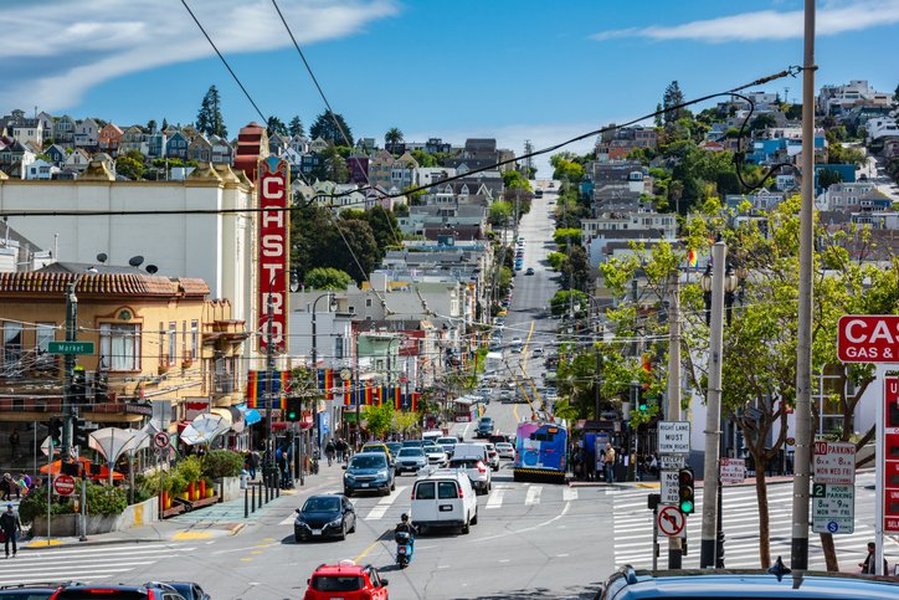
A view of the lively Castro district, where parking is a key consideration for residents and visitors alike.
SFMTA's Broader Parking Strategies and Their Potential Impact on the Castro
The SFMTA employs a multi-faceted approach to parking management across San Francisco. While the Castro isn't singled out for a unique policy review at present, several ongoing city-wide initiatives and existing frameworks are pertinent to how parking is, and will be, managed in the neighborhood.
Pay or Permit Parking Expansion Project
Shifting Dynamics in Residential Permit Parking Zones
One significant city-wide initiative is the Pay or Permit Parking Expansion Project. This proposal aims to change how visitor parking is managed in Residential Parking Permit (RPP) areas. Instead of traditional time limits for non-permit holders, this project could introduce paid parking options for visitors on RPP blocks. The Castro district has significant RPP zones, so if this project is broadly implemented, it could alter parking for visitors, potentially increasing turnover and revenue, while aiming to prioritize parking for permitted residents. This aligns with the SFMTA's goals of improving parking availability in high-demand neighborhoods.
Parking Meter Modernization and Operational Changes
New Meters and Extended Hours
The SFMTA is in the midst of a citywide replacement of parking meters, an effort expected to continue through mid-2025. These new meters offer more payment options and are part of a system that can support dynamic pricing based on demand. Furthermore, there have been proposals to extend parking meter operating hours into the evenings (potentially until 10 p.m.) and to include Sundays (e.g., noon to 6 p.m.). Such changes, if implemented, would apply to metered areas within the Castro, impacting when and how much it costs to park and aiming to better manage parking availability during peak times and generate funds for transit services.

Typical San Francisco street parking, highlighting the complexity of regulations SFMTA manages.
Enhanced Parking Enforcement
Increased Scrutiny City-Wide
Recent trends indicate that the SFMTA has increased its parking enforcement efforts across San Francisco. Since its enforcement team reached full staffing levels, there has been a noticeable rise in citations for various parking violations, including parking on sidewalks, in bike lanes, and blocking crosswalks. While not specific to the Castro, this heightened enforcement environment means that existing parking regulations are likely to be more strictly applied throughout the city, including in the Castro's commercial and residential areas.
Existing Parking Management Tools in Play
The Castro district, like other parts of San Francisco, is subject to a range of established SFMTA parking management tools. These form the baseline upon which any new initiatives would build.
Residential Parking Permits (RPP)
Large portions of the Castro are designated RPP zones, designed to prioritize street parking for residents. These permits are now primarily virtual, linked to license plates. RPP regulations, including household permit limits (generally up to four per household, with exceptions in certain areas), are actively managed. The 72-hour rule, which limits how long a vehicle can remain parked in one spot without moving, also applies in RPP zones unless other restrictions are posted.
SFMTA-Owned Parking Lots in the Castro
The SFMTA operates off-street parking facilities in the Castro, which are subject to specific rules:
- Castro/18th St. Lot (457 Castro Street): This surface lot has metered parking from Monday to Saturday, 9:00 a.m. to 6:00 p.m. Importantly, no overnight or monthly parking is permitted. Security gates were installed at this location to address concerns about vehicle break-ins and other safety issues, reflecting ongoing management and updates to existing facilities.
- 18th St./Collingwood Lot: Another SFMTA-owned lot, offering 28 spaces with similar meter operating hours (Mon-Sat, 9:00 a.m. – 6:00 p.m.) and no overnight or monthly parking.
Management of these lots, including security upgrades and enforcement of rules, demonstrates SFMTA's continuous efforts to maintain functional parking resources in the neighborhood.
Visualizing Parking Policy Trade-offs
Parking management involves balancing various competing needs. The radar chart below illustrates hypothetical trade-offs for different parking policy focuses that could be applied in a dense, mixed-use area like the Castro. It compares strategies based on their potential impact on resident satisfaction, visitor accessibility, revenue generation, local business vitality, congestion reduction, and the simplicity of enforcement. This is an illustrative model to understand the complexities involved in parking policy decisions.
Understanding SFMTA's Parking Policy Framework
The SFMTA's approach to parking is guided by its On-Street Parking Policy, approved in 2012. This foundational document emphasizes transparency, effectiveness, and alignment with broader transportation goals. The mindmap below illustrates the interconnected elements of SFMTA's parking management strategy, showing how city-wide tools and policies ultimately influence specific neighborhoods like the Castro.
Summary of Key SFMTA Parking Tools
The following table summarizes some of the primary parking management tools utilized by the SFMTA, their general purpose, and how they currently or could potentially apply to the Castro district:
| Parking Tool/Initiative | General Purpose | Relevance/Potential Impact on Castro |
|---|---|---|
| Parking Meters | Manage demand in commercial areas, generate revenue, encourage turnover. | Active in commercial parts of Castro. Subject to citywide replacement and potential operating hour extensions. |
| Residential Parking Permits (RPP) | Prioritize parking for residents in designated zones. | Extensive RPP zones in Castro. Policies on virtual permits and household limits apply. |
| Pay or Permit Parking Expansion | Convert free visitor parking in RPP zones to paid parking to increase turnover and availability. | Could significantly change visitor parking rules in Castro's RPP areas if implemented. |
| 72-Hour Parking Rule | Prevent long-term vehicle storage on public streets. | Applies city-wide, including Castro, enforced typically based on complaints. |
| Increased Enforcement | Ensure compliance with parking regulations, improve safety and traffic flow. | General increase in enforcement activity city-wide will affect Castro. |
| SFMTA-Owned Lots | Provide off-street parking options. | Castro has SFMTA lots (e.g., Castro/18th St.) with specific rules and ongoing management. |
SFMTA Discussions on Parking and Budget
The SFMTA frequently discusses parking changes in the context of its overall budget and transportation goals. Revenue from parking is a significant funding source for Muni and other agency operations. The following video provides insight into how the SFMTA approaches potential parking changes, often driven by budgetary needs and the goal of managing a complex urban transportation system. This context is crucial for understanding why parking policies evolve.
SFMTA discussing potential parking changes amid budget considerations.
Frequently Asked Questions (FAQ)
Is the SFMTA planning any specific parking studies for the Castro district soon?
How can I find out about parking rules on a specific street in the Castro?
Will parking meter rates or hours change in the Castro?
What is the "Pay or Permit Parking Expansion Project" and will it affect the Castro?
Where can I provide feedback on parking issues in the Castro?
Conclusion
While there are no immediate, Castro-exclusive parking policy review initiatives announced by the SFMTA, the neighborhood's parking landscape is continuously shaped by broader city-wide strategies. Initiatives such as the Pay or Permit Parking Expansion Project, the ongoing citywide parking meter replacement, proposed extensions to meter operating hours, and heightened enforcement efforts will all have implications for residents, businesses, and visitors in the Castro. The SFMTA's general approach, guided by its On-Street Parking Policy, aims to manage demand, improve availability, and support the city's overall transportation goals. For the most current information, individuals are encouraged to monitor the SFMTA's official website and participate in public engagement opportunities.
Recommended Further Exploration
Delve Deeper into Related Topics:
- What are the specific proposals of the SFMTA's Pay or Permit Parking Expansion Project?
- How is the SFMTA planning to change parking meter hours across San Francisco?
- What are the current rules and application processes for Residential Parking Permits in San Francisco?
- How does the SFMTA utilize data and technology to inform its parking rates and policies?
References
Last updated May 21, 2025