
Unlocking the Heart of Faith: What the Catholic Catechism Reveals About Prayer
Discover the profound teachings on prayer as a vital relationship with God, a source of grace, and a transformative journey.
Highlights: Key Insights on Prayer from the Catechism
- A Vital Relationship: Prayer is fundamentally defined as a "vital and personal relationship with the living and true God," initiated by Him and responded to with humility.
- Diverse Expressions: The Catechism recognizes various ways to pray, including vocal prayer (using words), meditation (reflection), and contemplative prayer (silent presence), catering to different spiritual needs.
- An Ongoing Battle: Prayer is acknowledged as a spiritual "battle" requiring perseverance against distractions, dryness, and temptation, emphasizing its importance and the effort it demands.
Defining Prayer: More Than Just Words
Understanding Prayer as Dialogue and Relationship
The Catechism of the Catholic Church (CCC), particularly in its extensive Part Four (paragraphs 2558-2865), presents prayer not merely as an obligation or a set of formulas, but as the lifeblood of faith. It draws upon the classic definition provided by St. John Damascene, describing prayer as "the raising of one's mind and heart to God or the requesting of good things from God" (CCC 2559). More profoundly, it characterizes prayer as a "vital and personal relationship with the living and true God" (CCC 2558). This relationship is not something humans initiate on their own; rather, prayer is understood as a response to God who first calls us. It is a divine invitation to communion.
This dialogue is made possible through grace and the work of the Holy Spirit within the believer. The Catechism emphasizes that prayer is a gift, one that must be received with humility – the "foundation of prayer" (CCC 2559). It springs from recognizing our dependence on God and His boundless love for us. As St. Thérèse of Lisieux beautifully described it, prayer can be "a surge of the heart; it is a simple look turned toward heaven, it is a cry of recognition and of love, embracing both trial and joy" (CCC 2558).
The Many Voices of Prayer: Expressions and Forms
How Catholics Engage in Prayer
Recognizing that the relationship with God can be expressed in diverse ways, the Catechism outlines three principal expressions of the life of prayer (CCC 2699-2724):
Vocal Prayer: Engaging the Senses
This is prayer expressed through words, whether spoken aloud or recited silently. It associates the body with the interior prayer of the heart. Jesus himself prayed using vocal prayer, teaching the "Our Father" to his disciples. Formal prayers like the Hail Mary, the Rosary, or prayers from the liturgy fall into this category, as do spontaneous conversations with God. The Catechism notes that vocal prayer is an essential element of Christian life, helping to incarnate and externalize our inner faith (CCC 2700-2704).
Meditation: Engaging the Mind and Heart
Meditation is a prayerful reflection, primarily on the Word of God (Scripture), holy icons, liturgical texts, or spiritual writings. It is a quest to understand the 'why' and 'how' of the Christian life to better respond to God's call. Unlike simple intellectual study, meditation engages thought, imagination, emotion, and desire. Its goal is to make the spiritual reality present and to appropriate it, leading to a deeper love for God and resolution for conversion (CCC 2705-2708).
Contemplative Prayer: Resting in God's Presence
Often considered the simplest yet highest form of prayer, contemplation is a silent, loving "gaze" fixed on Jesus. It's less about 'doing' and more about 'being'—being present to God who is present to us. The Catechism describes it as the "prayer of the child of God," a close sharing in God's life and love. It is a gift, a moment of pure faith where the one praying seeks Christ, surrenders to the loving will of the Father, and is united with the Holy Spirit. It is a communion of love bearing life for the multitude (CCC 2709-2719).
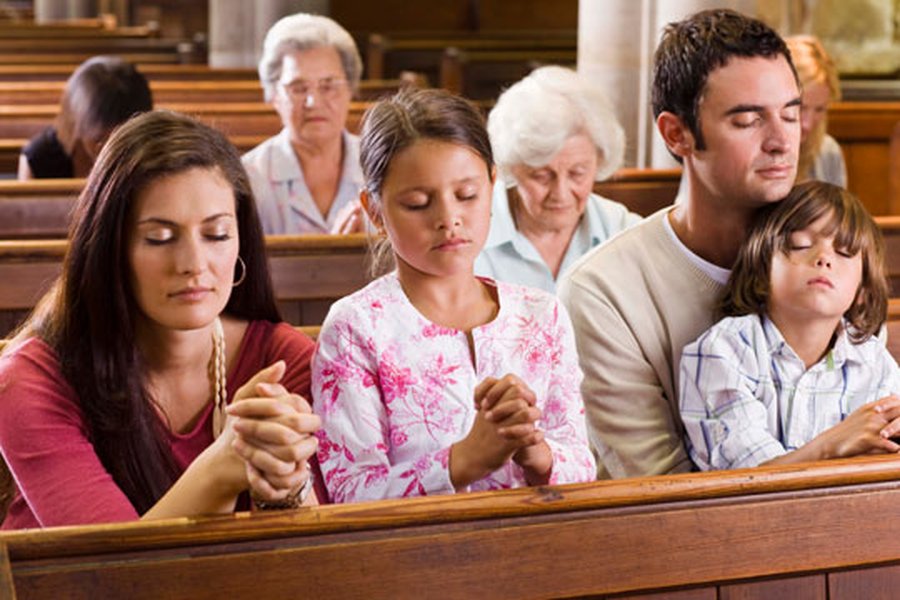
Prayer within the Church community reflects its communal dimension.
The Four Basic Forms: A.C.T.S.
Beyond these expressions, traditional Catholic teaching, reflected in the Catechism, identifies four basic forms or orientations of prayer, often remembered by the acronym A.C.T.S.:
- Adoration and Blessing (A): Acknowledging God's greatness, power, and holiness. It is the fundamental attitude of humanity recognizing itself as a creature before the Creator (CCC 2626-2628).
- Contrition (C): Asking for God's mercy and forgiveness for sins committed. It involves humility and trust in God's loving forgiveness (CCC 2631).
- Thanksgiving (T): Expressing gratitude for all God's gifts – life, salvation, specific blessings. The Eucharist is the quintessential prayer of thanksgiving (CCC 2637-2638).
- Supplication (Petition) (S): Asking God for our needs, both spiritual and material. This includes prayers of intercession, where we pray for the needs of others, mirroring Christ's role as our great intercessor (CCC 2629-2636).
Summary of Basic Prayer Forms
This table summarizes the A.C.T.S. framework, highlighting the focus of each prayer form as understood within the Catechism:
| Form | Focus | Catechism Reference (Primary) | Attitude |
|---|---|---|---|
| Adoration & Blessing | Acknowledging God's greatness and sovereignty | CCC 2626-2628 | Humility, Worship, Praise |
| Contrition | Seeking forgiveness for sins | CCC 2631 | Repentance, Humility, Trust in Mercy |
| Thanksgiving | Expressing gratitude for God's gifts | CCC 2637-2638 | Gratitude, Recognition of Dependence |
| Supplication (Petition & Intercession) | Asking for needs (ourselves and others) | CCC 2629-2636 | Dependence, Faith, Charity, Hope |
Prayer as the Life of the Heart
Integrating Prayer into Daily Christian Life
The Catechism insists that prayer is not meant to be confined to specific moments but should become the "life of the new heart," animating believers at every moment (CCC 2697). It is the breath of the soul. While constant awareness of God's presence is the ideal, the Catechism realistically acknowledges the need for specific, dedicated times for prayer to nourish this continuous connection. These include:
- Daily prayers (morning and evening)
- Grace before and after meals
- The Liturgy of the Hours (the official prayer cycle of the Church)
- Sunday Eucharist (the summit of the Church's liturgical life)
- The feasts of the liturgical year
- Praying the Rosary
- Short, spontaneous prayers throughout the day (ejaculatory prayers), such as invoking the name of "Jesus" or saying "Come, Holy Spirit."
Prayer is deeply communal, even when prayed in solitude. It is always prayer "in Christ," uniting the individual with the entire Body of Christ, the Church, on earth and in heaven. This is why the Catechism encourages prayer in communion with the Virgin Mary, the Mother of God, recognizing her as a perfect model of prayer and a powerful intercessor (CCC 2673-2679). Likewise, praying to the saints and angels for their intercession is commended as participating in the communion of saints.
Emphasis on Key Aspects of Prayer in the Catechism
The Catechism presents a rich and balanced view of prayer. The following chart offers a visual representation of the relative emphasis placed on various facets of prayer, based on the teachings synthesized from the Catechism. It highlights the centrality of the relationship with God and the role of the Holy Spirit, alongside the importance of discipline, community, and transformation.
The Battle of Prayer
Overcoming Obstacles and Persevering in Faith
The Catechism doesn't romanticize prayer; it realistically portrays it as a "battle" (CCC 2725). This spiritual combat is waged against oneself (distractions, dryness, lack of faith, acedia or spiritual sloth), the surrounding world (secular pressures, noise), and "the wiles of the tempter," the Devil, who does everything possible to turn humans away from prayer and union with God.
Key challenges highlighted include:
- Distractions: Unveiling what we are attached to, requiring a turning back to the Lord with humility.
- Dryness: A time of trial, purification, and faith, where one must cling to God even without feeling consolation.
- Lack of Faith: The most common yet hidden temptation, often manifesting as prioritizing worldly tasks over prayer.
- Acedia: A form of spiritual depression or laziness that discourages prayer and asceticism.
Perseverance is crucial. The Catechism encourages believers not to be discouraged, citing Jesus' parables on praying without ceasing (e.g., the persistent widow). Faithfulness in prayer during times of difficulty is itself a powerful prayer. The core message is one of trust: "We pray as we live, because we live as we pray" (CCC 2725), meaning our commitment to prayer both reflects and shapes our overall commitment to God and the Christian life.
Mindmap: Prayer According to the Catechism
This mindmap visually organizes the core concepts of prayer as taught in the Catechism of the Catholic Church, showing the interconnectedness of its definition, nature, expressions, forms, importance, and challenges.
(CCC 2558-2865)"] id1["Definition
CCC 2559"] id1a["Raising Mind & Heart to God"] id1b["Requesting Good Things"] id1c["Vital & Personal Relationship"] id2["Nature"] id2a["Gift of Grace"] id2b["Requires Humility"] id2c["God's Initiative"] id2d["Human Response"] id2e["Enabled by Holy Spirit"] id3["Expressions
CCC 2700-2724"] id3a["Vocal Prayer
(Words)"] id3b["Meditation
(Reflection)"] id3c["Contemplative Prayer
(Silent Gaze)"] id4["Forms
CCC 2626-2643"] id4a["Adoration
(Worship)"] id4b["Contrition
(Repentance)"] id4c["Thanksgiving
(Gratitude)"] id4d["Supplication
(Petition/Intercession)"] id5["Importance"] id5a["Life of the New Heart"] id5b["Essential for Salvation"] id5c["Animates Daily Life"] id5d["Communion with Christ & Church"] id6["Challenges
'The Battle of Prayer'
CCC 2725-2758"] id6a["Distractions"] id6b["Dryness"] id6c["Temptation"] id6d["Requires Perseverance"]
The Model Prayer: The Our Father
Jesus Teaches Us How to Pray
The Catechism dedicates a significant section (CCC 2759-2865) to exploring the Lord's Prayer, the "Our Father." It is presented as the quintessential Christian prayer, taught by Jesus Himself. It's considered the summary of the whole Gospel and the most perfect of prayers because it teaches us what we should desire and ask for from God. Each petition of the Our Father is explored in depth, revealing layers of meaning concerning our relationship with God the Father, His Kingdom, His will, our daily needs, forgiveness, and protection from evil.
Exploring the Lord's Prayer with Fr. Mike Schmitz
The video below offers insights into the Lord's Prayer as explained in the Catechism, providing context and reflection on this central prayer of the Church.
This prayer encapsulates the core elements of adoration, supplication, and contrition, guiding believers in how to approach the Father with filial trust and confidence.
Frequently Asked Questions (FAQ)
What does the Catechism mean by prayer being a "relationship"?
The Catechism emphasizes that prayer is more than just reciting words; it's a "vital and personal relationship with the living and true God" (CCC 2558). This means prayer is fundamentally about communion and dialogue with God (Father, Son, and Holy Spirit). It's initiated by God's love and grace, inviting us into conversation and intimacy with Him. Like any relationship, it involves listening, speaking (sharing our thoughts, feelings, needs), being present, and growing in love and trust.
What are the main ways the Catechism says Catholics should pray?
The Catechism outlines three main expressions of prayer: Vocal Prayer (using words, like the Our Father or spontaneous prayer), Meditation (reflecting on Scripture or spiritual truths to deepen understanding and love), and Contemplative Prayer (a silent, loving awareness of God's presence). It also highlights four basic forms: Adoration (praising God), Contrition (asking forgiveness), Thanksgiving (expressing gratitude), and Supplication (asking for needs for oneself and others). A balanced prayer life often incorporates elements of these different expressions and forms.
Why does the Catechism call prayer a "battle"?
The Catechism calls prayer a "battle" (CCC 2725) because maintaining a consistent and focused prayer life involves struggle. This battle is fought against internal obstacles like distractions, fatigue, dryness (feeling nothing), lack of faith, and spiritual laziness (acedia). It's also fought against external pressures from a secular world and the temptations of the Devil, who seeks to pull us away from God. Recognizing prayer as a battle encourages perseverance, vigilance, and reliance on God's grace rather than expecting it always to be easy or emotionally consoling.
How does the Holy Spirit help in prayer according to the Catechism?
According to the Catechism, the Holy Spirit is the "interior Master of Christian prayer" (CCC 2672). Prayer is possible because the Holy Spirit acts within us. The Spirit teaches the Church and recalls to her all that Jesus said; He also trains her in the life of prayer (CCC 2650-2651). Even when "we do not know how to pray as we ought," the Spirit "intercedes for us with sighs too deep for words" (Romans 8:26, cited in CCC 2630). Therefore, the Holy Spirit guides our prayer, inspires it, purifies it, and brings us into living communion with the Trinity.
Recommended
- How does the Catechism explain the Lord's Prayer in detail?
- What are the differences between meditation and contemplation in Catholic prayer according to the Catechism?
- What role does Mary play in prayer according to Catholic teaching in the Catechism?
- How can one overcome distractions during prayer as suggested by the Catechism?
References
Last updated May 3, 2025