

- Local Properties from Global Data: Cauchy's Integral Formula reveals the remarkable truth that the value of a holomorphic function at any interior point within a region is entirely determined by its values along the boundary of that region. This is a profound distinction from real analysis.
- Infinite Differentiability: A direct and powerful implication of the formula is that any function that is holomorphic (analytic) in an open set is automatically infinitely differentiable within that set. This property underpins much of complex analysis.
- Integral Evaluation and Derivatives: Beyond its theoretical elegance, the formula provides practical methods for evaluating complex contour integrals and offers integral representations for all derivatives of a holomorphic function, simplifying complex calculations.
Cauchy's Integral Formula, a cornerstone of complex analysis pioneered by Augustin-Louis Cauchy, stands as a testament to the elegant interconnectedness within mathematical principles. This formula provides a powerful relationship, demonstrating that the behavior of a holomorphic (or analytic) function within a given region is intrinsically linked to its values on the boundary of that region. Essentially, if you know what a "nice" complex function does along a closed path, you know everything about its values inside that path.
This principle is not merely an abstract mathematical curiosity; it underpins numerous applications across various fields, from theoretical physics to engineering. It provides a unique lens through which to understand the properties of functions in the complex plane, revealing insights that have no direct analogues in real calculus.
What Defines Holomorphic Functions?
Before diving into the formula itself, it's crucial to understand what a "holomorphic function" entails. In complex analysis, a function \(f(z)\) is said to be holomorphic in an open set if it is complex-differentiable at every point in that set. This condition is far more stringent than real differentiability and leads to significantly stronger properties. Functions that satisfy the Cauchy-Riemann equations are often called analytic, and for complex functions, the terms "holomorphic" and "analytic" are largely interchangeable.
The Formula's Elegant Statement
The basic form of Cauchy's Integral Formula is expressed as follows:
\[ f(z_0) = \frac{1}{2\pi i} \oint_{\gamma} \frac{f(z)}{z - z_0} \, dz \]Let's break down the components of this powerful equation:
- \(f(z)\): This represents a function that is holomorphic (analytic) everywhere inside and on a simple closed contour \(\gamma\).
- \(z_0\): This is any point that lies strictly inside the contour \(\gamma\).
- \(\oint_{\gamma}\): This symbol denotes a contour integral, which is an integral taken along the specified closed path \(\gamma\) in the complex plane, typically traversed in a counter-clockwise (positive) direction.
- \(dz\): The differential element along the contour.
- \(2\pi i\): A fundamental constant appearing in many complex analysis results, linking the geometry of circles to the nature of complex numbers.
In essence, this formula states that to find the value of a holomorphic function \(f\) at an interior point \(z_0\), you only need to integrate \(f(z)/(z-z_0)\) around a boundary curve \(\gamma\) enclosing \(z_0\). This seemingly simple relationship has profound consequences.
Integral Representations of Derivatives
One of the most remarkable extensions of Cauchy's Integral Formula is its ability to provide integral representations for all derivatives of a holomorphic function. This means that if a function is holomorphic, not only is it infinitely differentiable, but each of its derivatives can also be expressed as a contour integral. The generalized formula for the \(n\)-th derivative at a point \(z_0\) is:
\[ f^{(n)}(z_0) = \frac{n!}{2\pi i} \oint_{\gamma} \frac{f(z)}{(z - z_0)^{n+1}} \, dz \]Here, \(f^{(n)}(z_0)\) denotes the \(n\)-th derivative of \(f(z)\) evaluated at \(z_0\). This formula elegantly connects differentiation, which is a local operation, with integration, which is a global operation, in the realm of complex numbers. For \(n=0\), this formula reduces to the basic Cauchy Integral Formula, confirming its consistency.
The Significance of Winding Number
For more general contours that might wind around the point \(z_0\) multiple times, the formula can be extended using the concept of a winding number. The winding number \(n(\gamma, z_0)\) quantifies how many times the contour \(\gamma\) encircles the point \(z_0\). In such cases, the integral is multiplied by this winding number:
\[ \oint_{\gamma} \frac{f(z)}{z - z_0} \, dz = 2\pi i \, n(\gamma, z_0) \, f(z_0) \]For a simple, positively oriented contour with \(z_0\) inside, the winding number is 1, and we recover the standard formula.
Infinite Differentiability of Holomorphic Functions
One of the most surprising and profound implications of Cauchy's Integral Formula is that if a function is holomorphic in an open set, it is automatically infinitely differentiable within that set. This is a stark contrast to real-valued functions, where differentiability once does not guarantee differentiability twice. This property simplifies much of complex analysis, as it means we don't need to repeatedly check for higher-order derivatives once a function is known to be holomorphic.
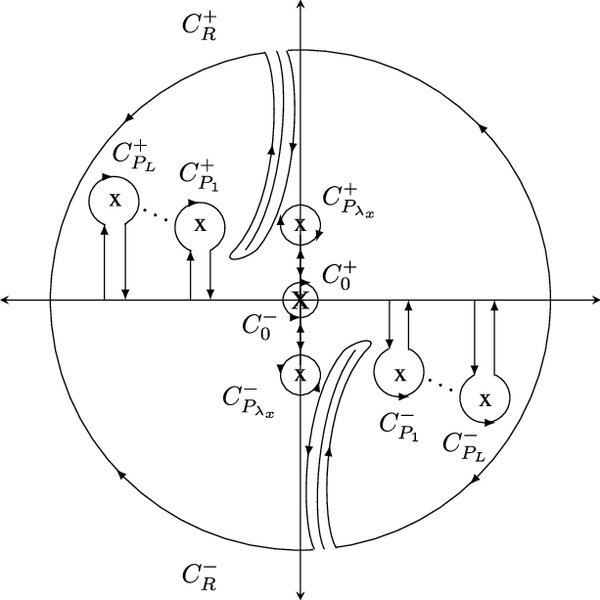
Figure 2: An illustration demonstrating complex integration contours, fundamental to understanding Cauchy's Integral Formula.
Evaluation of Contour Integrals
Beyond theoretical insights, the formula offers a direct and powerful method for evaluating complex contour integrals. Integrals of the form \(\oint_C \frac{f(z)}{z - z_0} \, dz\) can be quickly resolved to \(2\pi i f(z_0)\) if \(f(z)\) is holomorphic within and on \(C\) and \(z_0\) is inside \(C\). This simplifies many computations that would otherwise be extremely challenging, especially in the context of rational functions or when dealing with singularities (poles).
Analytic Continuation
Cauchy's Integral Formula also serves as a critical tool for analytic continuation. This concept allows for the extension of a holomorphic function defined on a smaller domain to a larger domain, provided certain conditions are met. This is invaluable in fields like quantum mechanics and signal processing, where functions might only be initially defined over a limited range.
Estimates and Bounds for Holomorphic Functions
The formula can be used to derive important estimates for holomorphic functions, such as the Cauchy estimates, which provide bounds on the magnitudes of derivatives of holomorphic functions. These estimates are foundational for proving other significant theorems, including Liouville's theorem and the Maximum Modulus Principle, which states that a non-constant holomorphic function's maximum modulus must occur on the boundary of its domain.
Relationship to Power Series
The infinite differentiability implied by Cauchy's Integral Formula leads directly to the fact that every holomorphic function can be represented locally by a convergent Taylor series. This establishes a profound link between holomorphic functions and power series, showing that these two concepts are essentially equivalent in complex analysis.
Mermaid Mindmap: A Structural Overview
This mindmap provides a visual breakdown of Cauchy's Integral Formula, illustrating its core components, applications, and foundational aspects within complex analysis.
Figure 3: Mindmap illustrating the interconnected concepts and applications surrounding Cauchy's Integral Formula.
When Does the Formula Apply? Essential Conditions
The applicability of Cauchy's Integral Formula hinges on specific conditions being met. Understanding these conditions is crucial to correctly applying the theorem:
- Holomorphicity: The function \(f(z)\) must be holomorphic (analytic) at every point inside and on the simple closed contour \(\gamma\). If \(f(z)\) has any singularities within the contour, the formula in its basic form does not apply directly.
- Simple Closed Contour: The path of integration \(\gamma\) must be a simple (non-self-intersecting) closed curve.
- Interior Point: The point \(z_0\) at which \(f(z_0)\) is being evaluated must lie strictly inside the contour \(\gamma\). If \(z_0\) is outside the contour, then, by Cauchy's Integral Theorem, the integral is typically zero (assuming \(f(z)/(z-z_0)\) is holomorphic inside \(\gamma\)).
- Positive Orientation: The contour \(\gamma\) is typically traversed in a positive (counter-clockwise) direction. If traversed clockwise, a negative sign is introduced.
A Practical Example: Verifying the Formula
Let's consider a quick example to illustrate the formula's use. Suppose \(f(z) = z^2\) and the contour \(C\) is the circle \(|z|=2\) (centered at the origin with radius 2), and we want to find \(f(1)\) using the integral formula. Here, \(z_0 = 1\), which is inside the circle \(|z|=2\).
According to the formula:
\[ f(1) = \frac{1}{2\pi i} \oint_{|z|=2} \frac{z^2}{z - 1} \, dz \]The function \(f(z) = z^2\) is holomorphic everywhere. The singularity of the integrand \(z^2/(z-1)\) is at \(z=1\), which is inside the contour. By Cauchy's Integral Formula, the integral evaluates to \(2\pi i \cdot f(1)\). Since \(f(1) = 1^2 = 1\), we have:
\[ \oint_{|z|=2} \frac{z^2}{z - 1} \, dz = 2\pi i \cdot f(1) = 2\pi i \cdot 1 = 2\pi i \]Thus, \(f(1) = \frac{1}{2\pi i} (2\pi i) = 1\), which matches the direct evaluation of \(f(1)\).
Video 1: This video provides a detailed explanation of Cauchy's Integral Formula and walks through practical examples, making it an excellent resource for visual learners.
Comparing Key Properties of Complex Integral Theorems
To provide a clearer overview, the following table summarizes the main characteristics and distinctions between Cauchy's Integral Formula and related theorems in complex analysis.
| Property | Cauchy's Integral Formula | Cauchy's Integral Theorem | Residue Theorem |
|---|---|---|---|
| Core Purpose | Evaluates function value at interior point from boundary integral | States integral of holomorphic function over closed contour is zero | Calculates contour integrals for functions with isolated singularities |
| Function Requirements | Holomorphic on and inside contour, except possibly at \(z_0\) in the integrand's denominator | Holomorphic on and inside contour | Holomorphic on and inside contour, except for a finite number of isolated singularities inside |
| Point \(z_0\) Location | Strictly inside contour | Not applicable (integrand is fully holomorphic) | Singularities must be inside contour |
| Result Type | \(f(z_0)\) or \(f^{(n)}(z_0)\) | Zero (for the integral) | \(2\pi i \times (\text{sum of residues})\) |
| Generalization | To derivatives (higher orders) | Foundation for Integral Formula | Generalizes Integral Formula for multiple poles |
Table 1: A comparative analysis of Cauchy's Integral Formula and related theorems.
FAQ
What makes Cauchy's Integral Formula so important?
What does "holomorphic" mean in this context?
Can Cauchy's Integral Formula be used if there's a singularity on the contour?
How does this formula relate to Cauchy's Integral Theorem?
Are there real-world applications of Cauchy's Integral Formula?
Conclusion
Cauchy's Integral Formula is more than just a mathematical equation; it is a profound declaration about the inherent order and interconnectedness within the complex number system. It establishes that for holomorphic functions, local behavior is dictated by global boundary conditions, leading to remarkable properties like infinite differentiability and the ability to represent all derivatives as contour integrals. From evaluating complex integrals to extending function domains through analytic continuation, its applications are vast and essential across numerous scientific and engineering disciplines. Understanding this formula is pivotal to grasping the depth and utility of complex analysis.
Recommended Further Exploration
- How is Cauchy's Integral Formula derived from Cauchy's Integral Theorem?
- What are the advanced applications of the Generalized Cauchy Integral Formula?
- Explore the relationship between holomorphic functions and power series expansions.
- Can Cauchy's Integral Formula be applied to functions with multiple singularities?