
Edgar Cayce and the March 29, 2025 Eclipse
Exploring Spiritual Traditions and Astronomical Events Through Cayce's Prophecies
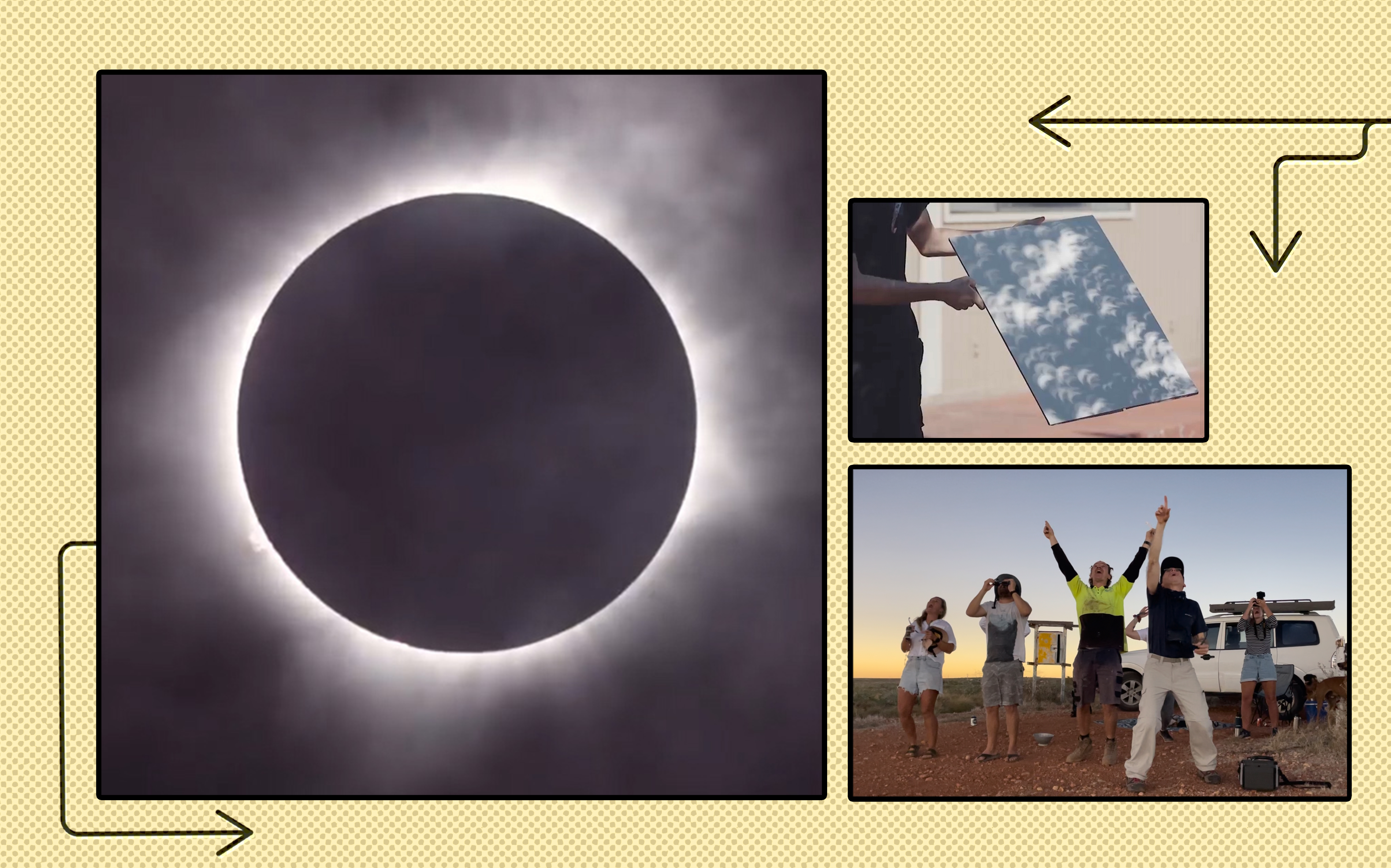
Key Highlights
- Direct Reference: There is no specific mention of the March 29, 2025 partial solar eclipse in Cayce’s documented readings.
- Broader Themes: Cayce’s prophecies often encompass themes of transformative spiritual growth and technological advancement that some interpret as congruent with astronomical events.
- Interpretive Connections: While the eclipse is not directly noted, its symbolic potential as an agent of change aligns with Cayce’s larger narrative of evolving human consciousness.
Introduction to Edgar Cayce's Prophetic Tradition
Edgar Cayce, often referred to as the "Sleeping Prophet," is a well-known figure in the realms of spirituality, holistic health, and prophetic insights. His readings, which have been studied and interpreted by many over the years, cover a diverse range of topics from physical health and healing to cosmic events and philosophical ideas about human consciousness. Although his extensive body of work does not include a direct reference to the specific partial solar eclipse that will occur on March 29, 2025, his broader predictions have nevertheless captured the imagination of his adherents.
Cayce’s prophecies are frequently seen as metaphors or symbolic narratives rather than precise astronomical predictions. This approach has led some of his followers to correlate various celestial events with his predictions about a coming era of transformation. The fact that the eclipse on March 29, 2025, occurs against a backdrop of broader spiritual and technological changes has naturally prompted comparative discussions, even though the eclipse itself is not explicitly mentioned in his readings.
Understanding the 2025 Partial Solar Eclipse
Astronomical Facts
Scientifically, the partial solar eclipse on March 29, 2025, is a significant astronomical event that will be observable from various parts of the world. This eclipse is characterized by the Moon partially covering the Sun, which creates unique lighting effects and serves as a natural phenomenon that has fascinated astronomers and the general public alike.
Key Astronomical Details
Observers should note that the eclipse is scheduled to occur when the New Moon positions itself in the zodiac sign of Aries. This positioning is of particular interest because Aries is often associated with new beginnings and dynamic energy - a theme that resonates with many spiritual and prophetic interpretations.
| Event Detail | Description |
|---|---|
| Astronomical Type | Partial Solar Eclipse |
| Date | March 29, 2025 |
| Moon's Zodiac | Aries |
| Time (EDT) | Approximately 6:58 AM |
The scientific details of this eclipse have been well-documented and are widely available. Its occurrence is an opportunity for both scientific observation and symbolic reflection.
Cayce's Prophetic Viewpoints and Celestial Events
Spiritual Evolution and Celestial Influence
Edgar Cayce’s work largely revolves around the idea that celestial events have a deep symbolic meaning and are interconnected with shifts in human consciousness. Cayce’s followers believe that major celestial occurrences—such as solar eclipses and planetary alignments—signal times of potential spiritual awakening and transformation. In this context, even though there is no explicit citation of the March 29, 2025 eclipse in his readings, the event is still viewed by many as fitting into the wider narrative he established.
Cayce proposed that periods marked by significant astronomical activity often coincide with major transitions on Earth. His teachings suggested that these times might involve underlying shifts in energy, both on a personal level for individuals and on a collective level for societies. Hence, although the eclipse is not directly mentioned, its occurrence during a period predicted for substantial changes in energy and consciousness is interpreted as indirectly related to his visionary insights.
Technological and Energy Advancements
Alongside themes of spiritual evolution, Cayce also touched on the idea of technological progress and energy harnessing. By 2025, according to various interpretations of his work, humanity was expected to see breakthroughs in energy technology that would alter the way we live and interact with the natural world. This expectation aligns with the notion that celestial events have historically been seen as markers for innovation or turning points in human evolution.
Followers of Cayce often use these themes to draw parallels between the symbolic meaning of an eclipse and the transformative changes anticipated in the near future. In their commentary, the partial solar eclipse becomes a metaphor for moments of partial obscuration in our understanding, followed by the unveiling of new insights and opportunities.
Connecting the Dots Between the Eclipse and Cayce's Teachings
Symbolism Versus Literal Prediction
When considering Edgar Cayce’s prophecies, it is important to differentiate between literal predictions and symbolic representations. In Cayce’s readings, many references to celestial and cosmic phenomena serve as symbols for deeper truths about the human condition, the evolution of consciousness, and the emergence of new paradigms in life. The absence of a specific mention of the March 29, 2025 eclipse does not diminish the potential perceived significance of the event. Instead, it highlights the interpretative nature of his work.
While some individuals might be tempted to look for direct correlations, a careful review of his documented readings suggests that Cayce was more focused on providing a broad framework for monumental shifts rather than enumerating exact events with precise dates. His discussions about the evolution of human consciousness, the potential for global change, and the impact of technological innovation are nuanced and layered—inviting multiple interpretations. Within this interpretative framework, the eclipse is seen as one of many celestial events that offer an opportunity for reflection and renewal.
Public Perception and Occult Interpretations
In the years following his era, Cayce’s reputation has grown, and his prophecies continue to be a source of inspiration for those who seek spiritual enlightenment and a deeper understanding of cosmic cycles. Communities of spiritual enthusiasts and researchers occasionally draw parallels between current astronomical events and the symbolic language that Cayce employed. The March 29, 2025 eclipse, while not explicitly forecasted by him, has become a focal point for such interpretations given its timing and the symbolic resonance of a celestial event heralding change.
This trend underscores the importance of understanding that for many, the true value of Cayce’s predictions lies in their capacity to inspire inner transformation and a holistic view of life. His legacy is built on the idea that transformation often begins with the recognition of hidden, or partially obscured, truths—themes that are metaphorically echoed during an eclipse.
Examining the Broader Context of Celestial Patterns in Prophecy
Historical Perspectives on Eclipses
Solar eclipses have captivated human societies since ancient times. Historically, eclipses were regarded with both awe and trepidation; they were sometimes seen as omens heralding change, chaos, or renewal. In many cultural traditions, the momentary darkening of the sun is interpreted as an opportunity to reset, purify, and embark on a new path. Such symbolism finds an echo in the interpretations of Edgar Cayce’s readings.
While Cayce himself did not reference the March 29, 2025 eclipse, his broad discourse on celestial patterns speaks to the idea that major astronomical events can serve as catalysts for introspection and societal evolution. His discussions invite individuals to look beyond the surface phenomena and explore the deeper, often hidden, dynamics at work.
Interdisciplinary Relevance
Scholars and enthusiasts alike have noted that the intersection of astronomy and spirituality can yield rich insights into how human societies perceive and integrate natural events. In this light, the partial solar eclipse is not simply a scientific event but also a portal that encourages reflection on past cycles of change and the potential for future transformation. Edgar Cayce’s vision, with its layered metaphors and symbolic language, therefore aligns well with the multidisciplinary traditions that combine art, science, and spirituality.
Synthesizing Scientific and Spiritual Interpretations
A Unified Perspective on Uncertainty and Change
One of the enduring qualities of Cayce’s work is its ability to resonate with people on multiple levels. Although he did not provide a direct prediction for the partial solar eclipse on March 29, 2025, the themes that underpin his teachings relate to the notion of hidden change becoming visible—much like the interplay of light and shadow during an eclipse.
The partial obscuration of the sun during an eclipse serves as a powerful metaphor for the ways in which individuals and societies confront uncertainty. It encourages a recognition that what is temporarily hidden can eventually be revealed, suggesting that periods of darkness or challenge may precede moments of clarity and renewal. In this sense, the eclipse becomes a symbolic mirror for Cayce's broader messages about the cyclical nature of transformation.
Implications for Personal and Collective Growth
From a spiritual perspective, the eclipse invites personal reflection and growth. Cayce’s readings stress the importance of being attuned not only to the external, observable events in the cosmos but also to the internal shifts that occur within our consciousness. During such celestial events, individuals are encouraged to reconnect with their inner selves, explore their spiritual path, and prepare for the emergence of new energies that can reshape life on both micro and macro scales.
Consequently, while the direct mention of the March 29, 2025 eclipse is absent from Cayce's records, the symbolic resonance of an eclipse dovetails perfectly with his ideas about overcoming darkness and embracing the promise of light. It represents a timely reminder that change—although sometimes partially shrouded in mystery—brings opportunities for revitalization and a new way of being.
References
- New Moon/Solar Eclipse on March 29, 2025 - Cafe Astrology
- 29 March 2025 Partial Solar Eclipse - Time and Date
- Followers Anticipate Age of Aquarius - WKMS
- Edgar Cayce 2025 Predictions: Countdown to Truth Begins - Chi-Nese
- Spiritual Growth Introduction - Edgar Cayce
- Solar Eclipse of March 29, 2025 - Wikipedia
- Edgar Cayce's Prophecies Yet to Come - Edgar Cayce
- Cafe Astrology - Cafe Astrology
- Time and Date - Time and Date
- WKMS Arts & Culture - WKMS
Recommended Related Queries
Last updated March 3, 2025