
Unlock the Perfect Visual Identity: Designing Your Cedar Room Logo
A comprehensive guide to crafting a memorable logo that captures the essence of 'Cedar Room'.
Highlights
- Define Your Brand: Understand the specific purpose (venue, lounge, business?), target audience, and desired atmosphere (rustic, modern, elegant?) of your Cedar Room before starting the design process.
- Embrace Cedar Symbolism: Leverage natural elements intrinsically linked to "cedar"—such as wood textures, tree silhouettes, leaves, or branches—combined with earthy color palettes (greens, browns) and suitable typography.
- Choose Your Creation Path: Evaluate whether to use accessible DIY tools like online logo makers, leverage stock templates, run a design contest, or hire professional freelancers or agencies based on your budget, timeline, and need for customization.
Understanding Your "Cedar Room"
Before diving into fonts and colors, the first crucial step is defining what "Cedar Room" represents. A logo is more than just a graphic; it's the visual ambassador for your brand. Its design should stem directly from the core identity and purpose of your specific Cedar Room.
Defining Your Brand Identity
Ask yourself these fundamental questions to build a solid foundation for your logo design:
What is the primary function of Cedar Room?
Is it an upscale event venue, a cozy restaurant or lounge, a modern nightclub, a consulting business, a retail space, or something else entirely? The function dictates the overall tone.Who is your target audience?
Are you appealing to luxury clients, casual diners, young professionals, families, or a niche market? Understanding your audience helps tailor the visual language.What is the desired ambiance or style?
Should the logo evoke feelings of warmth and rusticity, sleek modernity, timeless elegance, casual comfort, or perhaps vintage charm? The atmosphere you want to create is key.
Drawing Inspiration from Examples
Looking at existing concepts or venues named "Cedar Room" can provide valuable context and inspiration, though your logo should ultimately be unique.
Case Study: Event Venues
For example, The Cedar Room in Charleston, SC, is a well-known event space located in a historic building. Its branding likely reflects its features: original wood columns, hardwood floors, rustic brick, and elegant atmosphere. A logo for such a space might incorporate historical elements, wood textures, or sophisticated typography.Other Concepts
A "Cedar Room" nightclub might demand a modern, edgy logo with darker colors and perhaps abstract geometric shapes. A branding/consulting business named Cedar Room could opt for a clean, professional, and perhaps minimalist logo signifying clarity and growth. A cigar lounge might lean towards vintage fonts and rich, warm tones.
Understanding these nuances ensures your logo effectively communicates the unique story and offering of your Cedar Room.
Core Design Elements for Your Logo
Once you've defined your brand identity, you can start exploring the visual components that will make up your Cedar Room logo. These elements work together to create a cohesive and impactful design.
Leveraging Cedar Symbolism
The name "Cedar" offers rich symbolic potential. Consider incorporating elements that directly reference cedar or the feeling it evokes:
Visual Motifs
Common choices include silhouettes or line art of cedar trees, branches, or leaves. Wood grain patterns or textures can add depth and a natural feel. Depending on the style, these can range from realistic illustrations to minimalist icons or abstract representations.Connecting "Cedar" and "Room"
If appropriate, subtly integrate elements representing a "room" or space. This could be through geometric shapes suggesting interiors, window frames, or clever use of negative space within a cedar tree graphic to imply an opening or enclosure.
Choosing the Right Typography
The font(s) you select significantly impact the logo's personality:
Font Styles
- Serif Fonts: Often convey tradition, elegance, and reliability (e.g., Times New Roman, Garamond). Suitable for historic venues or upscale brands.
- Sans-serif Fonts: Typically appear modern, clean, and approachable (e.g., Montserrat, Open Sans). Ideal for contemporary businesses or minimalist designs.
- Script Fonts: Can range from formal and elegant to casual and handcrafted. Use judiciously, often for accents, to add personality.
- Display Fonts: Unique, stylized fonts best used sparingly for high impact.
Font Pairing
Consider using two complementary fonts – perhaps a bolder font for "Cedar" and a lighter or different style for "Room" – to create visual interest and hierarchy. Ensure readability is maintained at all sizes.
Selecting an Effective Color Palette
Colors evoke emotions and associations. For "Cedar Room," palettes often draw from nature:
Earthy Tones
Deep greens (forest, olive, sage), rich browns (cedar wood, chocolate), and warm reds or oranges often form the core palette, reflecting the natural wood and foliage.Accents
To add sophistication or contrast, consider accents like cream, beige, deep black, charcoal grey, or metallic shades like gold, silver, or bronze. The specific combination should align with your brand's desired ambiance (e.g., gold for luxury, black for modernity).
Visualizing the Design Journey: A Mindmap
To help organize the various aspects involved in creating your Cedar Room logo, this mindmap outlines the key stages and considerations, from initial concept to final execution. It covers defining your brand, choosing design elements, selecting logo types, deciding on a creation path, and adhering to best practices.
Exploring Logo Types and Styles
Understanding the different formats and stylistic approaches for logos can help you decide which best suits your Cedar Room brand.
Common Logo Formats
There are several standard types of logos, each with its own strengths:Wordmark (or Logotype)
This type uses the business name itself, styled in a unique font or typographic treatment. Example: Google, Coca-Cola. It's straightforward and puts the focus on the name "Cedar Room."Combination Mark
This popular format combines a symbol or icon with a wordmark. Example: Adidas, Target. It offers visual interest and reinforces the name, allowing the icon to potentially stand alone over time. A cedar tree icon next to the text "Cedar Room" would be a combination mark.Emblem
An emblem features the text integrated within a shape or symbol, like a badge, seal, or crest. Example: Starbucks, Harley-Davidson. Emblems often convey tradition, quality, and a sense of establishment. "Cedar Room" text could be enclosed within a circle featuring wood grain texture.
Considering Visual Styles
Beyond the format, the overall aesthetic style is crucial:Minimalist
Focuses on simplicity, clean lines, limited colors, and often abstract or highly stylized symbols. Conveys modernity and clarity.Rustic/Natural
Emphasizes organic shapes, textures (like wood grain), earthy colors, and sometimes handcrafted-looking fonts. Evokes warmth, nature, and authenticity.Modern/Sleek
Often uses sans-serif fonts, geometric shapes, potentially darker palettes or gradients, and a clean layout. Suggests innovation and sophistication.Elegant/Luxury
May involve serif or script fonts, finer lines, balanced compositions, and perhaps metallic accents (gold, silver). Conveys premium quality and refinement.Vintage/Retro
Draws inspiration from specific historical design eras (e.g., Art Deco, Mid-century Modern) using characteristic fonts, color palettes, and illustration styles.
Comparing Logo Style Approaches
Different logo styles for "Cedar Room" will emphasize different brand attributes. This radar chart provides a subjective comparison of potential style directions based on common qualities like Modernity, Natural Feel, Elegance, Simplicity, and Memorability. A higher score indicates a stronger emphasis on that attribute for the given style. This can help you visualize which style best aligns with your brand goals.
For example, a 'Rustic Emblem' scores high on 'Natural Feel' but lower on 'Modernity', while a 'Minimalist Wordmark' prioritizes 'Simplicity' and 'Modernity' over a strong 'Natural Feel'. Use this comparison to guide your choice based on the primary attributes you want your Cedar Room logo to project.
Bringing Your Logo to Life: Creation Options
Once you have a clearer idea of the style and elements you want, you need to decide how to actually create the logo. There are several paths, ranging from DIY solutions to professional services.
DIY Approaches
If you have a limited budget or want hands-on control:
Online Logo Makers
Platforms like VistaPrint's Logomaker offer templates specifically themed around concepts like "cedar." You can customize pre-designed layouts, fonts, colors, and icons. This is often the quickest and most cost-effective option, ideal for getting started or for simpler needs.Using Stock Vectors/Templates
Marketplaces like Adobe Stock or TheHungryJPEG offer professionally designed vector icons, illustrations, and logo templates related to cedar trees or nature themes. You can purchase a template or elements and customize them using graphic design software (like Adobe Illustrator or Affinity Designer), provided you have the skills or are willing to learn.
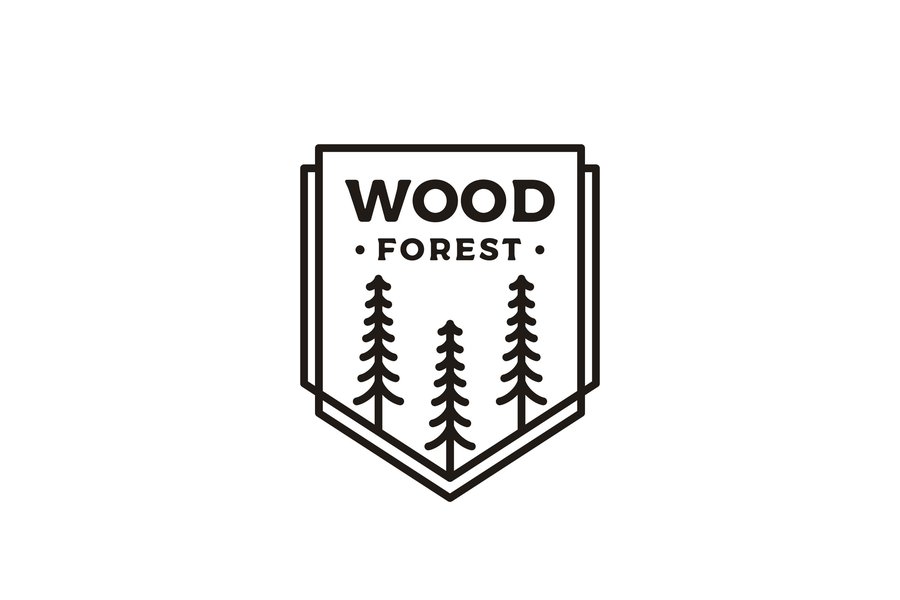
Example of vintage monoline cedar tree logo elements available on stock sites.
Professional Design Services
For a unique, high-quality, and tailored logo:
Design Contests
Platforms like 99designs allow you to submit a brief outlining your needs (e.g., "Logo for Cedar Room, rustic but elegant venue"). Multiple designers submit concepts based on your brief, and you choose your favorite. This offers variety and a fixed price point.Hiring Freelancers
Websites like Fiverr, Upwork, or DesignCrowd connect you with individual graphic designers. You can browse portfolios, review ratings, and hire a designer directly based on their style and expertise. This allows for more direct collaboration.Working with Branding Agencies
For a comprehensive approach that includes strategy, brand identity development, and creative direction beyond just the logo, partnering with a professional branding or design agency is the best option. This is typically the most expensive route but yields the most strategic and cohesive results.
Comparing Logo Creation Methods
Choosing between DIY methods and professional services involves trade-offs in cost, time, customization, and the final quality. This table summarizes the key differences to help you decide which path is right for your Cedar Room logo.
| Method | Pros | Cons | Best For |
|---|---|---|---|
| DIY Logo Makers (e.g., VistaPrint) | Fast, very low cost (often free initially), easy to use, many templates. | Limited customization, potentially generic results, may lack professional polish, ownership/licensing issues can arise. | Startups with very small budgets, testing ideas quickly, simple internal uses. |
| Stock Templates/Vectors | Affordable, professional-looking elements available, faster than designing from scratch. | Requires design software/skills to customize, risk of others using similar templates, licensing restrictions may apply. | Users with some design skills needing a budget-friendly but polished starting point. |
| Design Contests (e.g., 99designs) | Multiple design options/styles to choose from, fixed price, competitive environment can yield creativity. | Communication can be less direct, quality varies between designers, may feel overwhelming. | Businesses wanting variety and exploring different concepts without direct hiring. |
| Hiring Freelancers (e.g., Fiverr, Upwork) | Direct collaboration, tailored design, potentially unique results, wide range of price points and skills. | Finding the right designer takes time/effort, quality depends heavily on the individual, project management required. | Businesses needing a custom logo with direct input and a moderate budget. |
| Branding Agencies | Strategic approach, comprehensive brand identity, highest quality and originality, professional project management. | Most expensive option, longer timeline, requires significant investment. | Established businesses or those seeking a complete brand identity system and long-term partnership. |
Video Inspiration: Visualizing a Cedar Space
Sometimes seeing a physical "Cedar Room" can spark design ideas for the logo. This video showcases a garden room clad in Canadian cedar, highlighting the wood's natural beauty, texture, and color – elements you might want to capture visually in your logo design. Observing how the cedar integrates with the overall structure and environment can inform decisions about color palettes, textures, and the general feeling (warm, modern, natural) you want the logo to convey.
Best Practices and Final Considerations
Regardless of how you create your logo, keep these fundamental principles in mind to ensure it's effective and serves your brand well.
Ensuring Versatility and Scalability
Size Matters
Your logo must look sharp and legible whether it's tiny on a mobile app icon or large on building signage. Vector formats (.ai, .eps, .svg) are essential as they can be scaled infinitely without losing quality, unlike raster formats (.jpg, .png).Color and Black & White
Ensure the logo works effectively in full color, as well as in single-color (black or white) versions for different applications (e.g., watermarks, embroidery).Adaptable Layouts
Consider creating both horizontal and vertical (stacked) versions (lockups) of your logo to fit various spaces and layouts gracefully, such as website headers vs. social media profiles.
Aiming for Simplicity and Memorability
The most effective logos are often simple and easy to recognize and recall. Avoid overly complex designs, too many colors, or intricate details that might get lost at small sizes or become visually cluttered. A clean, distinctive design is more likely to be memorable.
Legal Aspects
Ensure your logo is original and doesn't infringe on existing trademarks. If using stock elements or templates, carefully check the licensing terms to understand usage rights. If hiring a professional, ensure the contract grants you full ownership and rights to the final design.
Frequently Asked Questions (FAQ)
What are the most important elements for a "Cedar Room" logo?
The key is relevance and execution. Most importantly:
- Reflect Brand Identity: Does it match the purpose (venue, lounge, etc.) and desired feel (rustic, modern, elegant)?
- Cedar Connection: Does it visually suggest "cedar" through symbols (tree, wood grain, leaf) or color (earthy tones)?
- Appropriate Typography: Is the font style suitable for the brand and legible?
- Effective Colors: Does the palette support the brand's message and work well visually?
Should I use a logo maker or hire a designer?
This depends on your budget, timeline, and need for uniqueness.
- Logo Makers: Best for very tight budgets, quick initial ideas, or simple internal use. Risk potentially generic results.
- Hiring Designers (Freelancers/Contests/Agencies): Better for achieving a unique, professional, and strategically sound logo tailored to your brand. Requires more investment (time and money).
Refer to the comparison table above for a detailed breakdown of pros and cons.
What colors work best for a cedar theme?
Typically, colors associated with cedar trees and wood work well:
- Earthy Tones: Various shades of brown (from light tan to deep chocolate), green (sage, forest, olive), and sometimes warm reds or oranges.
- Neutrals: Cream, beige, grey, or black can provide balance and contrast.
- Accents: For a touch of sophistication or modernity, consider metallic accents like gold, silver, or bronze, or a single bright contrast color used sparingly.
The final choice should align with your overall brand identity and target audience.
How do I make sure my logo is unique?
Achieving uniqueness involves several steps:
- Avoid Generic Templates: While useful for ideas, heavily relying on basic templates from logo makers increases the chance of similarity to others.
- Research Competitors: Look at logos of similar businesses to ensure your design stands out.
- Custom Design: Hiring a professional designer (freelancer or agency) or running a design contest is the most reliable way to get a truly custom and original logo.
- Unique Combination: Even if using common elements (like a tree), combine them with unique typography, color palettes, and layout choices to create distinction.
- Trademark Search: Before finalizing, consider conducting a trademark search to ensure your design isn't infringing on existing marks.
Recommended
- Explore color psychology for nature-inspired brand logos.
- Find case studies of successful event venue branding.
- Learn about typography pairings for rustic and modern logos.
- Discover the difference between logo file types like vector vs raster.
References
Last updated May 5, 2025