
Challenges in Incorporating Cellulose Nanoparticles in Composites
Exploring key hurdles and strategies for advanced composite materials
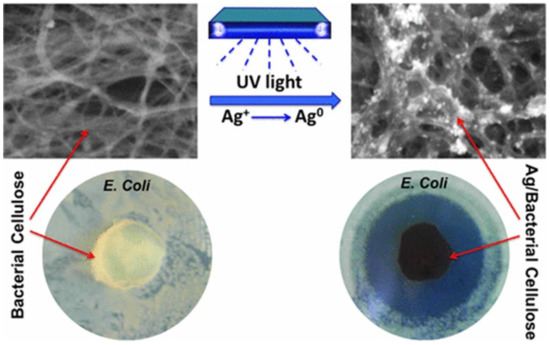
Key Highlights
- Uniform Dispersion and Aggregation Control: Preventing nanoparticle clumping is crucial.
- Interfacial Bonding and Compatibility: Bridging hydrophilic nanoparticles with hydrophobic matrices.
- Processing, Scalability, and Cost Issues: Addressing manufacturing challenges while maintaining performance.
Introduction
Cellulose nanoparticles (CNPs) have garnered significant attention in recent years due to their unique mechanical, thermal, and biodegradable properties, making them an attractive reinforcement in composite materials. However, despite their promising attributes, incorporating CNPs into various polymer matrices poses several technical challenges that must be addressed to fully harness their potential. In this discussion, we delve into the core challenges associated with incorporating cellulose nanoparticles into composites and explore recent strategies and techniques devised to overcome these hurdles.
Challenges in Incorporating Cellulose Nanoparticles
1. Uniform Dispersion and Aggregation
One of the most critical challenges is achieving a uniform dispersion of cellulose nanoparticles within the composite matrix. Due to their high surface energy and tendency to aggregate, CNPs often cluster together rather than distributing evenly. This aggregation can reduce the effective interaction area between the nanoparticles and the polymer, thereby negating the reinforcement benefits.
Key Factors Involved:
- The inherent high aspect ratio and hydrophilic nature of CNPs promote van der Waals attractions that lead to clustering.
- Insufficient dispersion can significantly reduce the mechanical strength and performance of the final composite.
- Advanced processing techniques such as in-situ polymerization and ultrasonication are often required to mitigate aggregation.
2. Interfacial Bonding and Compatibility
The success of a composite relies heavily on the interfacial bond between the reinforcing phase (CNPs) and the matrix material. The hydrophilic surface of cellulose nanoparticles introduces difficulties when mixing with predominantly hydrophobic polymers. This discrepancy results in weak interfacial adhesion, which can impede effective stress transfer during mechanical loading.
Considerations for Enhanced Bonding:
- Surface modification of CNPs through acetylation or silanization improves their compatibility with hydrophobic matrices.
- Using compatibilizers or coupling agents can bridge the interface between CNPs and the polymer, facilitating better load transfer.
- Tailored processing methods that focus on interfacial engineering are critical to achieving robust composites.
3. Moisture Sensitivity and Thermal Stability
Due to the intrinsic hydrophilicity of cellulose, composites incorporating CNPs are particularly prone to moisture absorption. This characteristic can lead not only to swelling and degradation but also to diminished mechanical properties over time, especially in humid or marine environments. Additionally, the thermal stability of cellulose may not always align with that of synthetic polymers, thereby escalating the challenges during high-temperature processing.
Implications:
- Moisture absorption can lead to property changes and instability in structural applications.
- Mismatch in thermal properties may result in degradation or loss of reinforcing capability during processing.
- Strategies such as chemical modification can reduce the hygroscopic tendencies of CNPs and improve overall thermal behavior.
4. Processing Techniques and Scale-Up
The integration of cellulose nanoparticles into polymer matrices requires more than just proper mixing. Standard melt processing techniques might not effectively disperse CNPs due to the elevated viscosity of polymer melts. This necessitates the adoption of specialized processing techniques that can accommodate the peculiarities of nanoparticle behavior.
Modern Processing Challenges:
- Innovative techniques such as in-situ polymerization allow for the direct incorporation of well-dispersed nanoparticles.
- There is a continuous need for developing technologies that align with large-scale manufacturing while preserving nanoparticle integrity.
- Balancing the processing temperature to retain both polymer and nanoparticle properties is essential.
5. Economic and Environmental Considerations
Although cellulose nanoparticles are often marketed as an inexpensive, sustainable material, their production and integration into composites can be cost-prohibitive at a larger scale. The complexity of extraction, purification, and surface modification processes contributes to elevated costs. Additionally, environmental concerns, including the sustainable sourcing of raw materials and the potential release of nanoparticles during the life cycle of the composite, warrant careful consideration.
Key Economic and Environmental Aspects:
- Scaling up production while maintaining quality and consistency remains a significant barrier.
- The cost associated with surface modifications and specialized processing techniques is high.
- Ensuring the sustainability and environmental safety of nanoparticle production processes is vital for regulatory and public acceptance.
6. Standardization and Characterization
A less discussed but equally important challenge is the lack of standardization in the production and characterization of cellulose nanoparticles. The variations in particle size, surface chemistry, and degree of crystallinity affect the performance of the final composite, making it difficult to compare results across different studies or products.
Impact on Research and Development:
- Standardized methods are needed to ensure consistency and reproducibility in nanoparticle performance.
- Enhanced characterizations using advanced microscopy and spectroscopy techniques help in understanding the behavior of CNPs within composites.
- Uniform standards would facilitate cross-comparison of data and accelerate innovation in composite materials.
Comprehensive Overview in a Tabular Format
| Challenge | Description | Potential Strategies |
|---|---|---|
| Uniform Dispersion | CNPs tend to agglomerate due to high surface energy; even distribution is difficult. | Ultrasonication, in-situ polymerization, improved mixing techniques. |
| Interfacial Bonding | Hydrophilic CNPs have weak interactions with hydrophobic polymers, reducing stress transfer. | Surface modifications, use of compatibilizers, and coupling agents. |
| Moisture Sensitivity | Hydrophilicity leads to moisture uptake, causing swelling and degradation. | Chemical treatments to reduce hygroscopicity, environmental barrier coatings. |
| Thermal Stability | Discrepancies in thermal behavior between CNPs and polymers affect processing. | Optimized processing temperatures, thermal stabilizers, and cross-linking techniques. |
| Processing and Scale-Up | High viscosity of polymers challenges the uniform distribution and large-scale processing. | Development of advanced processing methods, in-situ polymerization, pilot-scale studies. |
| Economic Costs | High production costs due to complex extraction and modification processes. | Cost reduction via process optimization, increased production scale, alternative extraction methods. |
| Standardization | Lack of agreed-upon standards in nanoparticle production and characterization. | Development of universal protocols and enhanced characterization methods. |
Strategies to Overcome the Challenges
Surface Modification Techniques
One of the primary strategies involves modifying the surface of cellulose nanoparticles to enhance compatibility with various polymer matrices. Surface modifications can be achieved through methods like acetylation, silylation, or the use of graft copolymers. This not only improves dispersion but also fosters stronger interfacial adhesion between the CNPs and the matrix, which is crucial for stress transfer and mechanical reinforcement.
Advanced Processing Methods
Innovative processing techniques such as in-situ polymerization or solvent casting have been shown to improve the distribution of CNPs within the composite. These methods help diminish aggregation by ensuring that the nanoparticles are uniformly embedded during the matrix formation. The development of specialized equipment and protocols to manage the viscosity and flow of polymer melts further supports the efficient processing of these nanocomposites.
Optimizing Composite Formulation
The overall performance of the composite is highly dependent on how the individual components interact. Formulation optimization involves carefully selecting the matrix, determining the appropriate nanoparticle loading, and integrating compatibilizers as needed. Researchers have found that even small adjustments in the composite recipe can lead to significant improvements in properties like tensile strength, elasticity, and thermal stability.
Economic and Environmental Balancing
To tackle cost challenges, research is focusing on developing economically viable production techniques that maintain quality. This includes optimizing raw material use, scaling up production methods, and investing in renewable energy sources to reduce the environmental footprint. Moreover, the sustainability aspect of cellulose nanoparticles, given their biodegradability and renewable origin, is an essential advantage when managed correctly.
Standardization and Advanced Characterization
The lack of standardized protocols can be partially mitigated by developing universal testing and characterization methods. Using advanced analytical techniques such as atomic force microscopy (AFM) and dynamic light scattering (DLS) allows for precise measurement of particle size, morphology, and surface chemistry. These insights can drive improvements in both processing and performance evaluation.
Future Outlook and Research Directions
Future research in the field of cellulose nanoparticle-reinforced composites is expected to focus on several fronts. Enhancing the understanding of multiscale interactions within the composite will aid the development of predictive models that simulate behavior under various conditions. Moreover, environmental impact assessments will become integral as manufacturers aim to create sustainable and recyclable products. Improvements in processing techniques, coupled with innovative surface modifications, are likely to yield composites with superior properties while reducing overall costs and enhancing reliability. This holistic approach, combining materials science, process engineering, and economic analysis, is anticipated to drive further advancements in industrial applications spanning automotive, aerospace, and consumer electronics.
References
-
In situ processing of cellulose nanocomposites - PMC
- Cellulose Nanocomposites: Challenges and Strategies - MDPI
- Moisture Absorption in Cellulose Composites - PubMed
-
Challenges in Cellulose Composite Materials - ScienceDirect
-
Cellulose Nanocomposites and Processing Techniques - ScienceDirect
Recommended Queries
Last updated March 21, 2025