
Cellulose Nanocrystals Based Composites
Advancements, Properties, and Applications in Modern Materials
Key Takeaways
- Exceptional Mechanical Strength: CNCs provide significant reinforcement to composite materials, enhancing their tensile strength and stiffness.
- Environmental Sustainability: Derived from abundant natural sources, CNCs contribute to the development of biodegradable and eco-friendly composites.
- Versatile Applications: CNC-based composites are utilized across various industries, including packaging, biomedical devices, electronics, and construction.
Introduction to Cellulose Nanocrystals (CNCs)
Cellulose nanocrystals (CNCs) are nanoscale, highly crystalline materials derived from cellulose, the most abundant biopolymer on Earth. Typically extracted from natural sources such as wood, cotton, or agricultural residues, CNCs exhibit remarkable mechanical properties, high surface area-to-volume ratios, and versatile surface chemistry. These characteristics make CNCs an invaluable reinforcing agent in the development of advanced composite materials.
Properties of CNCs
Nanostructure and Composition
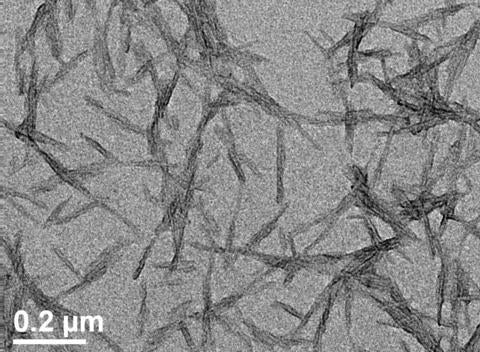
CNCs are rod-like nanoparticles with diameters ranging from 3 to 20 nanometers and lengths between 100 to 500 nanometers. Their high crystallinity imparts exceptional mechanical rigidity, with a Young's modulus approaching 150 GPa and tensile strength around 10 GPa. The high aspect ratio of CNCs contributes to their effectiveness as reinforcing agents in composite materials.
Mechanical Properties
The inherent mechanical strength of CNCs significantly enhances the mechanical performance of composite matrices. When incorporated into polymers, CNCs improve tensile strength, stiffness, and overall structural integrity. This reinforcement is effective even at low filler loadings, making CNCs an efficient choice for strengthening a variety of polymeric materials.
Surface Chemistry
CNCs are rich in hydroxyl groups, allowing for extensive chemical modification. This tunable surface chemistry enables the functionalization of CNCs to improve compatibility with different polymer matrices or to introduce specific functionalities, such as antimicrobial properties or enhanced barrier performance. Surface modifications can adjust the hydrophilicity or hydrophobicity of CNCs, facilitating their dispersion within diverse composite systems.
Extraction and Preparation of CNCs
Source Materials
CNCs are primarily extracted from renewable sources including wood, cotton, and agricultural residues. The choice of source material can influence the properties of the resulting CNCs, such as their crystallinity and aspect ratio.
Extraction Methods
The most common method for extracting CNCs is acid hydrolysis, typically using sulfuric or hydrochloric acid. This process removes the amorphous regions of cellulose fibers, isolating the crystalline parts. Alternative extraction methods, such as enzymatic hydrolysis and mechanical treatments, are being explored to offer more environmentally friendly and scalable production processes.
Types of CNC-Based Composites
Polymer/CNC Composites
CNCs are dispersed into synthetic or biopolymer matrices like polyethylene, polypropylene, polylactic acid (PLA), and polyvinyl alcohol to enhance mechanical, thermal, and barrier properties. These composites benefit from the high strength and stiffness of CNCs, making them suitable for a wide range of applications.
Nanocellulose Hybrids
By combining CNCs with other nanomaterials such as clays, graphene, or metal nanoparticles, multifunctional composites can be created. These hybrids exhibit unique electrical, optical, or antimicrobial properties, expanding the potential applications of CNC-based composites.
All-Natural Composites
CNCs can be integrated with natural polymers like starch, hemicellulose, or proteins to develop fully biodegradable and sustainable materials. These composites are particularly attractive for applications requiring eco-friendly solutions, such as sustainable packaging and biomedical devices.
Fabrication and Processing Techniques
Solution Casting
In solution casting, CNCs are dispersed in a polymer solution, followed by solvent evaporation to form thin films. This method allows for the formation of homogenous composite films with enhanced mechanical and barrier properties.
Melt Processing
Melt processing involves the incorporation of CNCs into polymers under high temperatures. Due to the hydrophilic nature of CNCs, surface modifications like acetylation or silanization are often necessary to improve compatibility with hydrophobic polymer matrices, enabling effective melt compounding.
Layer-by-Layer Assembly
This technique involves the sequential deposition of CNC and polymer layers to build up a composite with controlled multilayer architectures. Layer-by-layer assembly allows for precise control over the surface properties and functional responses of the composite material.
Key Challenges in CNC-Based Composite Development
Dispersion Issues
Achieving a homogeneous dispersion of CNCs within non-polar polymer matrices remains a significant challenge. Poor dispersion can lead to agglomeration of CNCs, adversely affecting the mechanical properties and overall performance of the composite. Surface modification or the use of compatibilizers is often employed to enhance CNC dispersion.
Moisture Sensitivity
CNCs are inherently hydrophilic, which makes CNC-based composites susceptible to moisture absorption. This can affect the mechanical integrity and dimensional stability of the composites, especially under high humidity conditions. Strategies to mitigate moisture sensitivity include chemical modifications to reduce hydrophilicity and the incorporation of hydrophobic additives.
Interfacial Adhesion
The efficiency of stress transfer from the polymer matrix to the CNC reinforcement is crucial for achieving enhanced mechanical properties. Poor interfacial adhesion can diminish the reinforcing effect of CNCs. Addressing this requires careful attention to interfacial interactions through surface functionalization and the use of coupling agents.
Applications of CNC-Based Composites
Packaging
CNC-based composites are employed in sustainable packaging solutions due to their enhanced barrier properties against gases, moisture, and grease. This results in extended shelf life for food products and reduced reliance on traditional, non-biodegradable packaging materials.
Biomedical Devices
The biocompatibility and mechanical strength of CNCs make them ideal for applications in biomedical devices, including wound dressings, scaffolds for tissue engineering, and drug delivery systems. CNC-based composites can support cell growth and provide structural integrity for regenerative medicine applications.
Electronics
CNCs are being explored in the development of flexible electronics and sensors. When combined with conductive fillers, CNC-based composites can exhibit unique electrical properties, making them suitable for applications in wearable technology and smart devices.
Automotive and Construction
In the automotive and construction industries, CNC-based composites offer lightweight and strong materials for structural components. These composites contribute to weight savings, improved fuel efficiency, and enhanced sustainability in manufacturing processes.
Energy Storage and Catalysis
CNC-based composites are also being developed for energy-related applications, including energy storage systems and as catalysts. The incorporation of nanoparticles onto CNCs can enhance the functionality of the composites, enabling their use in advanced energy storage and catalytic processes.
Modification Techniques for Enhanced Performance
Surface Functionalization
Chemical modifications of CNC surfaces are employed to improve compatibility with various polymer matrices. Functionalization can introduce specific chemical groups that enhance interfacial bonding, reduce hydrophilicity, or add new functionalities such as antimicrobial properties.
Cross-Linking
Cross-linking techniques are used to enhance the mechanical properties of CNC-based composites. By creating covalent bonds between CNCs and polymer chains, the overall structural integrity and stress transfer efficiency within the composite are improved.
Dynamic Covalent Chemistry
Dynamic covalent chemistry involves the formation of reversible bonds under solvent-free melt conditions. This approach allows for in situ functionalization of CNCs, leading to homogeneous composites with superior mechanical properties and enhanced processability.
Emerging Research and Future Perspectives
Sustainable Materials Development
Ongoing research is focused on developing fully sustainable CNC-based composites by sourcing CNCs from various agricultural residues and optimizing extraction methods to reduce environmental impact. Efforts are also directed towards scaling up production processes to meet industrial demands.
Smart and Functional Materials
Advances in surface modification and composite design are paving the way for smart materials with responsive behaviors. Future CNC-based composites may exhibit properties such as self-healing, stimuli-responsive changes, and enhanced multifunctionality for advanced technological applications.
Biomedical and Environmental Applications
The biocompatibility of CNCs continues to drive research in biomedical applications, including tissue engineering, regenerative medicine, and drug delivery systems. Additionally, CNC-based composites are being explored for environmental applications such as water treatment and air purification, leveraging their high surface area and functionalizability.
Comprehensive Overview Table
| Aspect | Description | Impact on Composite |
|---|---|---|
| Mechanical Strength | High Young's modulus and tensile strength | Enhanced tensile strength and stiffness of the composite |
| Surface Chemistry | Numerous hydroxyl groups allowing functionalization | Improved compatibility and interfacial bonding with polymers |
| Biodegradability | Derived from renewable cellulose sources | Development of eco-friendly and sustainable composite materials |
| Aspect Ratio | High length-to-diameter ratio | Effective reinforcement at low filler loadings |
| Hydrophilicity | Absorbs moisture | Affects mechanical integrity; requires modification for hydrophobic matrices |
Conclusion
Cellulose nanocrystals-based composites represent a transformative advancement in material science, combining the exceptional mechanical properties of CNCs with the versatility of various polymer matrices. Their biodegradability and renewable origins align with the growing demand for sustainable materials, making CNC-based composites highly attractive across multiple industries. Despite challenges such as dispersion and moisture sensitivity, ongoing research and development in surface modification and processing techniques continue to enhance their performance and expand their application scope. As technology progresses, CNC-based composites are poised to play a pivotal role in the creation of high-performance, eco-friendly materials that meet the evolving needs of modern society.
References
Last updated February 15, 2025