
Ceramic Membranes with Nanoparticle Enhancements
Revolutionizing Filtration with Advanced Nanotechnology
Key Takeaways
- Enhanced Performance: Nanoparticles significantly improve membrane properties such as permeability, antifouling capabilities, and chemical stability.
- Versatile Applications: Ceramic membranes with nanoparticles are pivotal in diverse sectors including water treatment, industrial processing, and energy storage.
- Durability and Sustainability: These membranes offer superior longevity and environmental benefits compared to traditional polymeric membranes.
Introduction to Ceramic Membranes
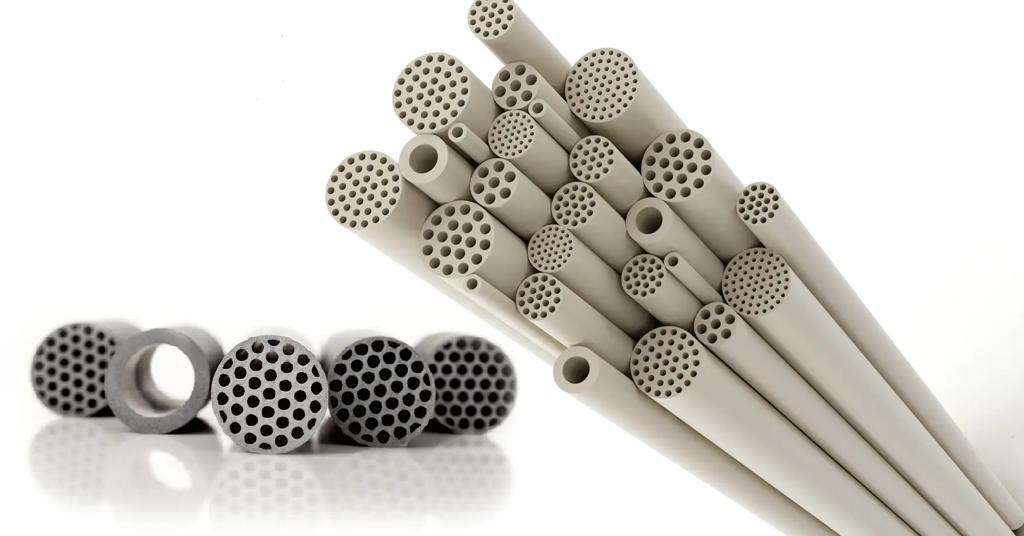
Ceramic membranes are inorganic filtration materials renowned for their exceptional chemical, thermal, and mechanical stability. Composed primarily of oxides such as alumina, zirconia, titania, and silicon carbide, these membranes offer a robust alternative to conventional polymeric membranes, especially in environments requiring resilience against harsh conditions. The integration of nanoparticles into ceramic membranes has emerged as a transformative approach, enhancing their functionalities and expanding their applicability across various industrial processes.
Key Characteristics of Ceramic Membranes
Inorganic and Heat-Resistant Composition
Unlike polymeric membranes, ceramic membranes are composed of inorganic materials that withstand high temperatures and aggressive chemical environments. This intrinsic property ensures their reliability and longevity in applications subjected to extreme conditions, such as industrial wastewater treatment and gas separation processes.
Nanoporous Structures
Ceramic membranes possess nanoporous structures with pore sizes in the nanometer range, enabling them to achieve fine separations like nanofiltration and ultrafiltration. These minute pores are highly effective in removing contaminants at the molecular and colloidal levels, making them indispensable in applications requiring high precision.
Nanoparticle Integration Methods
Direct Incorporation into Membrane Matrix
One of the primary methods for enhancing ceramic membranes is the direct incorporation of nanoparticles into the membrane matrix during fabrication. This process ensures a uniform distribution of nanoparticles, which can enhance properties such as permeability and mechanical strength.
Surface Coating
Another approach involves coating the surface of ceramic membranes with nanoparticles. This method allows for the modification of surface characteristics without altering the underlying membrane structure. Surface coatings with nanoparticles like silver or titanium dioxide can impart antimicrobial properties and improve hydrophilicity.
Commonly Used Nanoparticles
Various nanoparticles are employed to enhance ceramic membranes, including:
-
Titania (TiO2): Enhances photocatalytic activity and antimicrobial properties.
-
Zirconia (ZrO2): Improves mechanical strength and thermal stability.
-
Silica (SiO2): Increases hydrophilicity and antifouling characteristics.
-
Iron Oxide (Fe2O3): Enhances magnetic properties and facilitates pollutant removal.
Performance Improvements through Nanoparticle Integration
Enhanced Flux Stabilization and Permeability
The incorporation of nanoparticles into ceramic membranes leads to improved flux stabilization and increased permeability. Nanoparticles create additional pathways for fluid flow, reducing resistance and allowing for higher throughput without compromising filtration efficacy.
Improved Anti-Fouling Characteristics
Fouling, the accumulation of contaminants on membrane surfaces, is a significant challenge in membrane technology. Nanoparticle-modified ceramic membranes exhibit superior antifouling properties due to increased hydrophilicity and the presence of antimicrobial agents. This reduces the frequency of membrane cleaning and extends the operational lifespan.
Increased Chemical and Thermal Stability
Nanoparticles such as zirconia and titania enhance the chemical resistance and thermal stability of ceramic membranes. This ensures consistent performance even in environments with fluctuating pH levels and high temperatures, making them suitable for a broad range of industrial applications.
Applications of Nanoparticle-Enhanced Ceramic Membranes
Water and Wastewater Treatment
Ceramic membranes are extensively used in treating wastewater, including industrial effluents and municipal sewage. The integration of nanoparticles like iron oxide and silica enhances the removal of dissolved organic carbon, emulsified oils, and suspended solids, ensuring cleaner effluent output compliant with environmental regulations.
Drinking Water Purification
In the context of potable water production, nanoparticle-modified ceramic membranes effectively eliminate pathogens, viruses, and other contaminants. Their high selectivity and permeability make them ideal for producing safe and clean drinking water.
Industrial Process Water
Industries such as pharmaceuticals, food and beverage, and textiles require high-purity water for their processes. Ceramic membranes with nanoparticle enhancements provide the necessary filtration precision and durability, ensuring process efficiency and product quality.
Mining Water Management
Mining operations produce significant amounts of contaminated water. Nanoparticle-enhanced ceramic membranes are utilized to remove heavy metals and other toxic substances, facilitating water recycling and reducing environmental impact.
Energy Storage Systems
Beyond filtration, ceramic membranes coated with nanoparticles have applications in energy storage, particularly in lithium-ion batteries. For instance, nanoparticle-coated polyvinylidene fluoride (PVDF) membranes offer improved capacity retention and higher current density performance.
Advantages Over Conventional Polymeric Membranes
Superior Chemical and Mechanical Stability
Ceramic membranes exhibit higher resistance to extreme pH levels, temperatures, and oxidative environments compared to polymeric membranes. This makes them more durable and reliable in challenging operational conditions, reducing the need for frequent replacements.
Longer Service Life and Enhanced Durability
The robust nature of ceramic membranes ensures a longer service life, even under continuous operation. Their mechanical strength prevents physical degradation, maintaining filtration performance over extended periods.
Better Stability During Cleaning and Regeneration
Ceramic membranes can withstand aggressive cleaning agents and high-temperature sterilization processes without losing integrity. This allows for effective regeneration and extended usage without compromising their functional properties.
Environmental Sustainability
The durability and reusability of ceramic membranes contribute to environmental sustainability by reducing waste generation and minimizing the consumption of raw materials. Additionally, their enhanced antifouling properties decrease the reliance on chemical additives for cleaning.
Challenges and Future Directions
Optimization of Nanoparticle Loading
Achieving the optimal concentration and distribution of nanoparticles within the ceramic matrix is crucial for maximizing performance benefits. Excessive nanoparticle loading can lead to agglomeration, while insufficient loading may not provide the desired enhancements.
Preventing Nanoparticle Leaching
Ensuring that nanoparticles remain securely integrated within the membrane structure is essential to prevent leaching, which can lead to contamination and reduced membrane lifespan. Developing robust integration techniques is a key area of ongoing research.
Cost Reduction and Scalability
While nanoparticle-enhanced ceramic membranes offer superior performance, the cost of production remains a barrier to widespread adoption. Research efforts are focused on developing cost-effective fabrication methods and scalable production processes to make these membranes economically viable for broader applications.
Expanding Application Scope
Future developments aim to extend the application range of ceramic membranes with nanoparticles. Innovations include integrating these membranes into multifunctional systems for simultaneous filtration and catalysis, as well as exploring their use in emerging sectors like renewable energy and advanced manufacturing.
Enhanced Antimicrobial Properties
Incorporating antimicrobial nanoparticles, such as silver, into ceramic membranes is an ongoing research trend aimed at preventing biofouling and ensuring safer filtration processes. These advancements are particularly beneficial in healthcare and food processing industries.
Comparative Analysis of Common Nanoparticles in Ceramic Membranes
| Nanoparticle Type | Primary Enhancement | Typical Applications |
|---|---|---|
| Titania (TiO2) | Photocatalytic activity, antimicrobial properties | Water purification, self-cleaning surfaces |
| Zirconia (ZrO2) | Mechanical strength, thermal stability | High-temperature filtration, industrial process water |
| Silica (SiO2) | Hydrophilicity, antifouling characteristics | Drinking water purification, wastewater treatment |
| Iron Oxide (Fe2O3) | Magnetic properties, pollutant removal | Heavy metal removal, magnetic separation processes |
| Silver (Ag) | Antimicrobial properties | Healthcare applications, food processing |
Conclusion
Ceramic membranes enhanced with nanoparticles represent a significant advancement in filtration and separation technologies. Their superior chemical, thermal, and mechanical stability, combined with enhanced functional properties provided by nanoparticles, make them indispensable in a wide array of applications ranging from water treatment to energy storage. Despite challenges related to nanoparticle integration and cost, ongoing research and technological innovations are poised to overcome these hurdles, paving the way for broader adoption and more sustainable industrial practices. As industries continue to seek efficient and durable filtration solutions, nanoparticle-modified ceramic membranes stand at the forefront of next-generation separation technologies.
References
Last updated February 15, 2025