
Wafer-Scale Revolution: How Cerebras is Redefining AI Computing with Massive Chip Architecture
Explore how a single massive chip the size of a dinner plate is challenging traditional GPU clusters in the race for AI supremacy
Key Advantages of Cerebras Technology
- Unprecedented Scale: The Wafer-Scale Engine (WSE-3) contains 4 trillion transistors on a single chip, making it the largest chip ever built
- Performance Leap: Cerebras systems deliver up to 10x faster AI model inference compared to traditional GPU-based solutions
- Architectural Innovation: A unified massive chip eliminates interconnect bottlenecks that plague multi-GPU systems
Cerebras Company Overview
Founded in 2015 by Andrew Feldman, Gary Lauterbach, and Michael Wong, Cerebras Systems has rapidly emerged as a pioneering force in the artificial intelligence computing landscape. Headquartered in Sunnyvale, California, with additional offices in San Diego, Toronto, and Bangalore, the company specializes in developing revolutionary hardware solutions for complex deep learning applications.
Cerebras has gained significant recognition for its radical approach to AI computing. Rather than following the traditional path of connecting multiple smaller chips together, Cerebras engineers an entire wafer as a single, massive chip. This architectural innovation allows for unprecedented performance in AI workloads, particularly for training and running large language models (LLMs) and other computation-intensive AI applications.
The company has secured substantial funding and is currently planning an initial public offering (IPO), with plans to list on the Nasdaq exchange under the ticker 'CBRS'. This move underscores the growing interest in specialized AI hardware solutions as organizations worldwide seek more efficient ways to develop and deploy increasingly complex AI models.
The radar chart above illustrates how Cerebras's WSE-3 compares to other leading AI accelerators across seven key performance metrics. The data highlights Cerebras's dominance in single-chip performance and large model support, while showing competitive positions in other areas.
The Revolutionary Wafer-Scale Engine
Evolution of the Wafer-Scale Engine
The Wafer-Scale Engine (WSE) represents Cerebras's cornerstone innovation. Unlike traditional chip manufacturing, where multiple chips are produced on a single silicon wafer and then separated, Cerebras engineers an entire wafer as one massive chip. This approach eliminates the interconnect bottlenecks that typically limit performance in multi-chip systems.
The original WSE was groundbreaking in its scale, but Cerebras has continued to advance the technology through multiple generations:
WSE-1 (First Generation)
The first-generation Wafer-Scale Engine established Cerebras's revolutionary approach to AI computing. It featured an unprecedented number of cores and on-chip memory, setting the stage for subsequent developments.
WSE-2 (Second Generation)
The WSE-2 represented a significant leap forward, incorporating 2.6 trillion transistors and 850,000 AI-optimized cores. It featured 40GB of on-chip SRAM, 20 petabytes per second of memory bandwidth, and 220 petabits per second of total fabric bandwidth. The Computer History Museum has recognized the WSE-2 as an "epochal" achievement in transistor fabrication, highlighting its significance in computing history.
WSE-3 (Third Generation)
The latest iteration, the WSE-3, pushes boundaries even further with 4 trillion transistors and 900,000 AI-optimized cores. Manufactured using a 5nm process, it delivers 125 petaflops of peak AI performance and features 44GB of ultra-fast on-chip SRAM. This massive integration enables the WSE-3 to process large-scale AI models with unprecedented efficiency.
| Specification | WSE-1 | WSE-2 | WSE-3 | Comparison to Leading GPUs |
|---|---|---|---|---|
| Transistor Count | 1.2 Trillion | 2.6 Trillion | 4 Trillion | ~4-8x more than top GPU chips |
| AI-Optimized Cores | 400,000+ | 850,000 | 900,000 | ~100x more cores than GPU solutions |
| On-Chip Memory | 18GB SRAM | 40GB SRAM | 44GB SRAM | Unified memory vs. distributed HBM |
| Manufacturing Process | 16nm | 7nm | 5nm | Comparable to current GPU nodes |
| Peak AI Performance | ~20 Petaflops | ~80 Petaflops | 125 Petaflops | Single-chip advantage vs. cluster performance |
| Physical Size | 46,225 mm² | 46,225 mm² | 46,225 mm² | ~56x larger than typical GPU chips |
Cerebras Systems: Bringing WSE to Production
Cerebras has developed complete computing systems that harness the power of its Wafer-Scale Engines:
CS-1 System
The CS-1 was Cerebras's first commercial system, built around the original WSE. It represented the company's initial foray into the AI computing market and demonstrated the viability of the wafer-scale approach.
CS-2 System
Powered by the WSE-2, the CS-2 delivered significantly enhanced performance over its predecessor. In June 2022, Cerebras set a record with the CS-2 by training AI models with up to 20 billion parameters on a single device, highlighting the system's capabilities for handling large language models.
CS-3 System
The latest CS-3 AI supercomputer leverages the WSE-3 and features a memory system of up to 1.2 petabytes. It is specifically designed to train next-generation AI models that are significantly larger than GPT-4 and Gemini, positioning Cerebras at the forefront of large-scale AI development.
Andromeda Supercomputer
In November 2022, Cerebras unveiled the Andromeda supercomputer, which combines 16 WSE-2 chips into a cluster with 13.5 million AI-optimized cores. This massive system delivers up to 1 Exaflop of AI computing power, demonstrating Cerebras's ability to scale its technology for the most demanding AI workloads.
The Technology Behind Cerebras
Understanding the technical architecture that powers Cerebras systems helps explain their performance advantages. Here's a deeper look at the key technological innovations:
The mindmap above illustrates the comprehensive technology ecosystem that Cerebras has developed. From the foundational Wafer-Scale Engine to the software stack and diverse applications, Cerebras has built a complete platform for advanced AI computing.
Applications and Partnerships
Cerebras systems are being applied across various domains, from scientific research to commercial AI applications:
Key Industry Applications
Healthcare and Pharmaceutical Research
GlaxoSmithKline uses Cerebras CS systems to increase the complexity of encoder models and decrease their training time for drug discovery and development. The massive computational power helps accelerate medical research by enabling more complex simulations and faster analysis of biological data.
Energy and Climate Modeling
The high-performance computing capabilities of Cerebras systems make them ideal for complex energy simulations and climate modeling, allowing researchers to analyze data more efficiently and develop more accurate predictive models.
Large Language Models
Cerebras has positioned itself as a key player in the development and deployment of large language models. The company's systems can efficiently train and run models with billions of parameters, making them valuable tools for organizations working on cutting-edge natural language processing applications.
Strategic Partnerships
Qualcomm Collaboration
Cerebras has formed a strategic partnership with Qualcomm to sell its WSE-3 systems together with Qualcomm AI 100 Ultra chips. This collaboration aims to provide comprehensive solutions for running AI applications, particularly focusing on inference workloads.
Mistral AI
Cerebras has partnered with the French AI company Mistral, providing the computing power that makes Mistral one of the world's fastest AI assistants. This partnership demonstrates the real-world benefits of Cerebras's technology for enhancing AI performance.
Meta's LLaMA 3.1
Cerebras is set to deploy Meta's LLaMA 3.1 on its chip, showcasing the versatility of its systems for working with various AI models and frameworks developed by leading technology companies.
U.S. Military Contract
In April 2024, Cerebras was awarded a $45 million contract from the U.S. military to speed up connections between computing chips. This significant government partnership highlights the strategic importance of Cerebras's technology for advanced computational applications.
Inside the Wafer-Scale Engine: A Visual Tour
Cerebras's Wafer-Scale Engine represents a radical departure from conventional chip design. Below are visual representations of this groundbreaking technology:
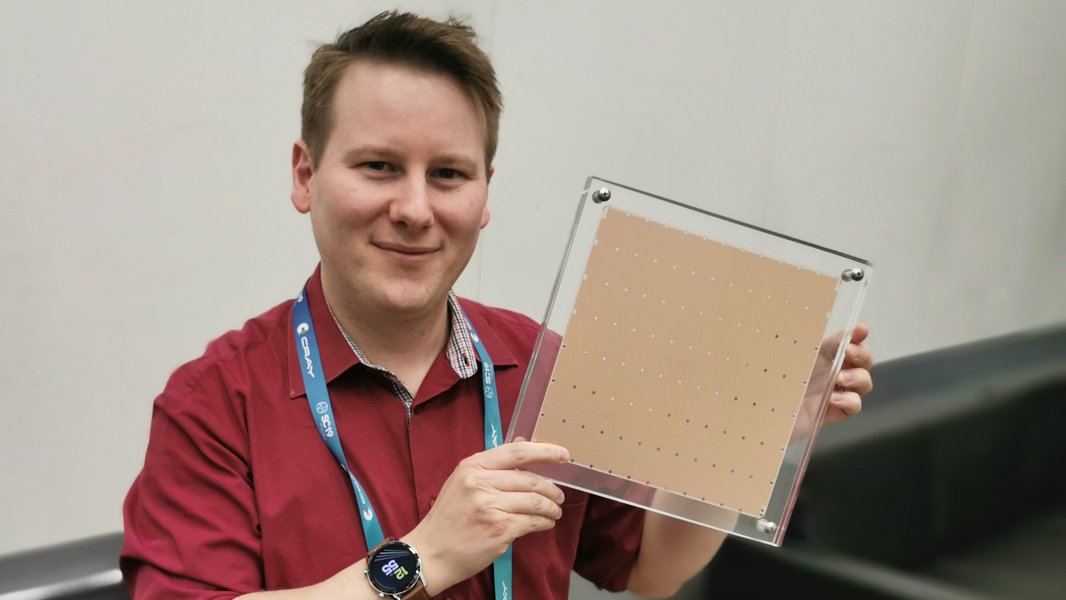
The Cerebras Wafer-Scale Engine (WSE-2) compared to a typical processor chip, illustrating the dramatic size difference.

Close-up view of the Cerebras Wafer-Scale Engine, showing the intricate architecture of the world's largest chip.

The Cerebras CS-1 system, which houses the Wafer-Scale Engine in a complete computing solution with cooling and power systems.
Market Position and Competition
Cerebras occupies a unique position in the AI hardware market, competing with established players like Nvidia and emerging companies like Groq. While Nvidia dominates the market with its GPU-based solutions that power many of today's AI applications, Cerebras is betting that its wafer-scale approach can provide superior performance for specific AI workloads.
In August 2024, Cerebras launched a tool that allows AI developers to access its chips to run applications, positioning it as a potentially more cost-effective alternative to Nvidia processors. This move highlights Cerebras's strategy of targeting specific segments of the AI market where its unique architecture can deliver compelling advantages.
As the AI hardware landscape continues to evolve, Cerebras's distinctive approach represents an important alternative path in computing architecture. The company's success will likely depend on its ability to demonstrate clear performance and cost benefits for high-value AI workloads, particularly as competition in the AI chip market intensifies.
This video provides an in-depth look at Cerebras's massive chip technology, explaining how the company's 4 trillion transistor chip represents a fundamentally different approach to AI computing. The video explores the technical details behind Cerebras's architecture and discusses the potential implications for AI development and deployment.
Frequently Asked Questions
References
- Cerebras Wafer-Scale Engine - Cerebras Systems
- Cerebras - Wikipedia
-
Chip startup Cerebras launches new AI processor - Reuters
- Cerebras Announces Third Generation Wafer-Scale Engine - Cerebras Systems
- Cerebras Speeds AI By Putting Entire Foundation Model On Its Giant Chip - Forbes
-
Cerebras Systems clears hurdle on its path to IPO - The Register
- Cerebras Unveils Its Next Waferscale AI Chip - IEEE Spectrum
Recommended Searches
Last updated April 9, 2025