
Freely Available Tools for Verifying Precertificate and Certificate Correspondence
An in-depth guide to tools that implement RFC 6962 procedures for precertificate verification
Highlights
- Google’s Certificate Transparency Go tools provide robust support for processing TLS certificates including precertificates.
- Community-developed repositories on GitHub such as those by rvictory offer tools to parse and validate Certificate Transparency logs according to RFC 6962.
- OpenSSL and related utilities can aid in examining Signed Certificate Timestamps and ensuring certificates are properly logged, which indirectly supports correspondence verification.
Understanding RFC 6962 and Precertificate Verification
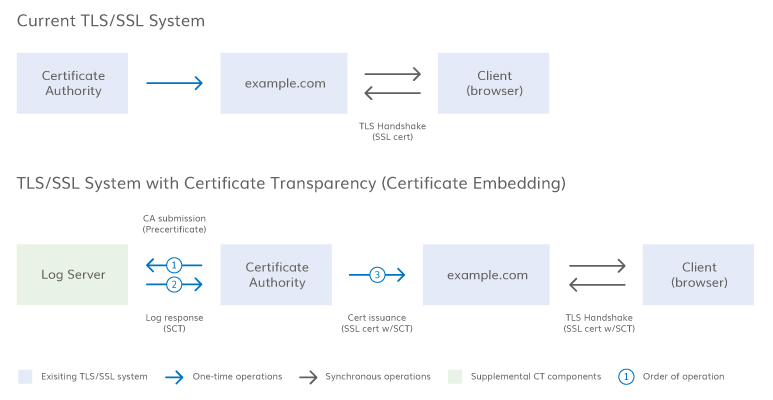
RFC 6962, which outlines the Certificate Transparency (CT) framework, is a key component in modern TLS/SSL security infrastructure. The protocol was designed with the aim of improving trust and security within the ecosystem of Public Key Infrastructure (PKI) by publicly logging TLS certificates. Among its many functionalities, it introduces the concept of "precertificates." A precertificate is generated by a Certificate Authority (CA) before the final certificate is issued, allowing it to be logged by CT logs for auditability and accountability. The presence of these logs enables third parties to review any certificate issued by CAs automatically, thereby making it easier to detect fraudulent or misissued certificates.
Verifying the correspondence between a precertificate and an issued certificate is a crucial step in ensuring that the certificate in use has undergone proper logging and validation under the CT framework. Verification involves confirming that cryptographic data and extensions have been preserved from the precertificate to the final certificate, ensuring that no extraneous alterations or compromises have occurred. With these principles in mind, a number of freely available tools have been developed by open-source communities and major industry players to support the automated auditing process.
Freely Available Tools for Precertificate Verification
1. Google’s Certificate Transparency Go Repository
Google’s Certificate Transparency Go tools offer one of the most comprehensive suites available for working within the CT ecosystem. This repository contains implementations in Go that can parse, process, and validate precertificates along with their corresponding final certificates. These tools facilitate the extraction of Signed Certificate Timestamps (SCTs), parsing of TLS-encoded data, and other operations in accordance with the RFC 6962 specifications.
Key features include:
- Support for both precertificate and certificate parsing
- Handling of SCT verification and validation procedures
- Utilities for auditing CT logs and checking certificate consistency
This repository is actively maintained and benefits from community contributions as well as oversight from large industry players like Google, making it a reliable choice when dealing with CT-related tasks.
2. Community Tools on GitHub (e.g., Certificate Transparency Tools by rvictory)
In addition to tools backed by large enterprises, several community-driven repositories are also available. One such example is the Certificate Transparency Tools repository developed by a GitHub community member. These tools are designed specifically to interact with Certificate Transparency logs, extract necessary metadata, and perform checks that are compliant with RFC 6962 protocols.
Some of their notable functionalities include:
- Processing and analyzing CT log entries
- Validating precertificate chains against their issued certificate counterparts to check for proper correspondence
- Providing both command-line utilities and library functions for integration into broader security tooling
These community projects are valuable as they consolidate the collective expertise of the open-source community, and they are often used as reference implementations or starting points for custom security auditing solutions.
3. OpenSSL and Ancillary SSL Tools
While OpenSSL is traditionally known for general TLS/SSL operations including certificate signing and encryption, it also includes features that can aid in the verification of precertificates. OpenSSL can be used to extract certificate data such as extensions and SCTs from both the precertificates and the final certificates. By using custom scripts or additional utility programs built on top of OpenSSL, users can compare these components to verify the integrity and correspondence in accordance with RFC 6962.
Products and online tools based on OpenSSL provide additional functionalities like:
- Decoding certificate contents and displaying key fields
- Highlighting discrepancies in changes between a precertificate and its corresponding final certificate
- Integrating with CT log analysis platforms to cross-reference SCT records
Despite not being a dedicated tool for precertificate-to-certificate comparison, OpenSSL-based utilities have proven useful when combined with custom auditing scripts.
4. Additional CT Diagnostic Tools
Other tools exist that aid in managing and verifying certificate logs and structures. These include utilities that automatically retrieve, examine, and audit certificate entries from public CT logs. Although these tools often serve a broader purpose and may not exclusively focus on verifying the precise match between precertificates and final certificates, they are nonetheless quite useful. For example, some utilities allow users to:
- Retrieve certificate entries from CT log databases
- Monitor changes or additions to certificate chains
- Perform a detailed analysis of the certificate fields that are critical in confirming precertificate correspondence
Using these diagnostics in tandem with dedicated verification tools provides a more holistic approach to certificate validation. They help ensure that all aspects of certificate transparency, including both logging and correspondence verification, are monitored efficiently.
Table of Tools and Their Key Features
The following table summarizes the major tools available for verifying the correspondence between a precertificate and its final certificate according to RFC 6962:
| Tool | Description | Key Features | Repository/URL |
|---|---|---|---|
| Google’s Certificate Transparency Go | A comprehensive Go-based toolkit for CT operations. | Precertificate parsing; SCT validation; CT log auditing. | Visit Repository |
| Certificate Transparency Tools (Community) | Open-source toolset to interface with CT logs and verify certificate structures. | CT log processing; precertificate comparison; command-line tools. | Visit Repository |
| OpenSSL | A robust SSL/TLS toolkit often used for certificate decoding and validation. | Certificate decoding; extension extraction; SCT processing through custom scripts. | Visit Website |
| CT Diagnostic Utilities | Various ancillary tools that monitor CT logs and certificate changes. | CT log retrieval; auditing; field comparison for precertificate verification. | Visit Resource |
How These Tools Work in Practice
Certificate Parsing and Extraction
The first step in verifying the correspondence between a precertificate and its final certificate involves parsing the certificate data. Tools like Google’s Certificate Transparency Go repository and OpenSSL extract detailed information from the certificates, including subject names, issuer names, validity periods, and specific extensions that are critical to CT verification. The extraction of Signed Certificate Timestamps (SCTs) is especially important because SCTs constitute a core element of Certificate Transparency. These timestamps prove that the certificate was logged before being issued, and the integrity of these SCTs is a key factor in the overall verification process.
Cryptographic Integrity Checks
Once certificate data has been parsed, these tools perform cryptographic integrity checks. The primary goal is to confirm that the cryptographic hash of the precertificate matches the corresponding fields in the final certificate. This ensures that the final certificate has not been altered in a manner that invalidates the CT log entries. Implementations of these checks utilize secure hash functions as specified in the CT standards, ensuring that the correspondence is validated reliably. MathJax can be used here for any equations involved in the hash validation process, for example:
$$ H(\text{Precertificate}) = H(\text{Certificate with modifications}) $$
where H denotes a hash function such as SHA-256. Any discrepancy between these hash outputs indicates a mismatch or potential tampering within the certificate chain, prompting further investigation.
SCT Verification and CT Log Auditing
Another integral part of verifying certificate transparency is the validation of Signed Certificate Timestamps (SCTs). SCTs act as cryptographic proofs from the CT logs that a certificate has been recorded. The tools under discussion integrate procedures to verify these timestamps against the log’s public keys. When the SCTs are verified, this suggests not only that the certificate resides in the log but also that the log’s recorded entry corresponds to the certificate’s contents. This automated auditing is essential in large-scale deployments, where manual verification would be infeasible.
Beyond individual certificate checks, comprehensive CT log auditing is performed to ensure that all logged entries are consistent and that precertificate information has been accurately preserved. Some tools allow the user to query CT log repositories, automatically retrieving relevant data and performing field-by-field comparisons between the precertificate and the final certificate. These diagnostics are crucial for security analysts who rely on continuous monitoring and auditing for potential misissuance or other anomalies.
Integration and Customization
While dedicated repositories and utilities offer out-of-the-box functionality for CT and precertificate verification, many environments require integration into larger security ecosystems. For instance, developers may incorporate these tools into a custom Certificate Authority management system or as part of a security information and event management (SIEM) solution. The modular nature of the libraries provided by Google and community sources allows for such integration, enabling automated workflows and periodic audits in compliance with corporate or regulatory security policies.
Script-based integrations using OpenSSL, for example, can be combined with detailed logging to alert administrators about discrepancies between a precertificate and its issued certificate. Additionally, many of these tools are extensible, providing APIs or command-line interfaces that allow security teams to tailor the verification process to meet specific analytical requirements.
Practical Considerations and Future Directions
While the existing tools provide robust mechanisms for verifying the correspondence between precertificates and final certificates, there are still practical considerations when deploying these solutions. Organizations should consider the following:
- Regular Updates: As certificate standards evolve and new vulnerabilities are discovered, regularly updating toolkits and libraries is essential to maintain effective verification processes.
- Custom Integration Needs: Some environments may encounter unique challenges that require building custom scripts or extending existing tools to address specific aspects of certificate transparency beyond what standard repositories offer.
- Cross-Referencing Multiple Sources: Effective verification may require combining data from multiple CT logs and using diverse tools concurrently to ensure a comprehensive view of certificate integrity. Tools that provide multi-source querying can help reconcile discrepancies.
On the horizon, advances in automation and machine learning are likely to further streamline the auditing process by enabling more proactive anomaly detection. Such enhancements promise to reinforce the security ecosystem by quickly identifying inconsistencies or patterns indicative of fraudulent behavior.
Challenges in Verification
There are some inherent challenges in the verification process. The primary challenge lies in the fact that while many tools focus on ensuring that certificates are logged and that SCTs are valid, directly comparing the structure and contents of a precertificate to a final certificate may require bespoke analysis. This often involves verifying that no additional attributes or modifications have been made during the conversion process from the precertificate to the issued certificate. The lack of a standardized, out-of-the-box tool that specifically automates every detail of that comparison means that some scenarios may still require custom solutions built on the foundations provided by the existing tools.
Despite these challenges, the open-source community and industry players continue to collaborate on enhancing Certificate Transparency implementations. Improvements in protocol understanding, better diagnostic tools, and additional integrations with modern logging and auditing platforms are expected to make the certificate verification landscape even stronger in the future.
Conclusion
In summary, freely available tools for verifying the correspondence between a precertificate and an issued certificate as defined in RFC 6962 do exist. The ecosystem is rich with robust solutions provided by both major organizations such as Google and community-developed projects hosted on GitHub. Tools like Google’s Certificate Transparency Go repository offer comprehensive support for precertificate parsing, SCT validation, and CT log auditing—a critical pathway for enforcing the security brought by Certificate Transparency. Complementary solutions using OpenSSL allow for deep inspection of certificate fields and the integration of custom scripts to compare cryptographic details between precertificates and final certificates.
Additionally, community-contributed tools ensure that there is a versatile range of utilities available, each contributing to a multi-layered strategy for certificate verification. These tools not only help determine that the certificate has been correctly logged, but also provide mechanisms to verify that the integrity of the certificate data has been preserved throughout the issuance process. While challenges remain, particularly in automating every detail of the direct correspondence verification, the available toolkit forms a strong basis for building reliable and accurate certificate transparency solutions.
The continuing evolution of these tools, as well as their integration into larger security infrastructures, leads to a more secure realm where trust in Public Key Infrastructures is maintained through transparency and rigorous auditing standards. As cybersecurity threats evolve, the ongoing collaboration between industry professionals and the open-source community remains key to advancing how we verify and trust digital certificates.
References
- Certificate Transparency Go - GitHub
- Certificate Transparency Tools - GitHub
- OpenSSL - Official Website
- SSL Tools - SSL2BUY
Recommended
Last updated February 22, 2025