
Comparing CFA and Bored Piles: A Comprehensive Guide
Unveiling the Core Differences, Advantages, and Limitations
Key Takeaways
- Installation Efficiency: CFA piles offer a rapid, continuous installation process, reducing construction time and minimizing site disturbance.
- Load and Depth Capabilities: Bored piles provide higher load-bearing capacities and can be installed to greater depths, making them suitable for more demanding foundation requirements.
- Soil and Environmental Compatibility: CFA piles are ideal for urban and sensitive environments due to lower noise and vibration, while bored piles excel in challenging soil conditions, including hard rock and dense gravel.
1. Installation Methods
Continuous Flight Auger (CFA) Piles
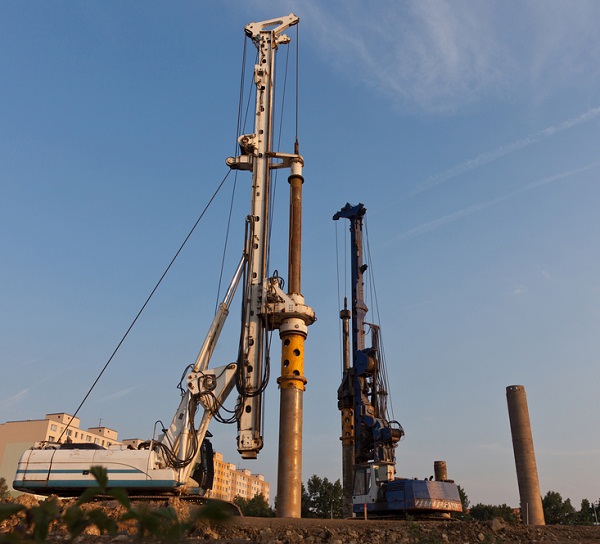
CFA piles are installed using a specialized auger that continuously drills into the ground while simultaneously injecting concrete. This integrated process eliminates the need for separate drilling and concreting stages. As the auger penetrates the soil, it removes spoil and allows for the immediate placement of concrete through the hollow stem of the auger. Reinforcement cages are typically inserted into the wet concrete as the auger is withdrawn, ensuring proper integration within the pile structure.
Conventional Bored Piles
In contrast, conventional bored piles involve a multi-step construction process. Initially, a hole is drilled into the ground using various drilling techniques such as rotary or percussion methods. Once the hole is fully excavated, the auger is removed, and reinforcement is placed into the bored hole. Following reinforcement placement, concrete is poured into the excavated space, often requiring temporary casing or slurry to stabilize the hole, especially in loose or water-saturated soils. This segmented approach allows for greater control over each construction phase but tends to be more time-consuming.
2. Load Capacity and Diameter
CFA Piles
CFA piles are generally constructed with smaller diameters, typically ranging from 300mm to 900mm. This size range makes them suitable for supporting low to medium loads, which is ideal for residential and light commercial projects. The limited diameter inherently restricts their load-bearing capacity, making them less suitable for high-rise buildings or infrastructure requiring substantial foundational support.
Bored Piles
Bored piles, on the other hand, can be constructed with significantly larger diameters, often exceeding 900mm and sometimes reaching up to 2100mm. The increased size facilitates higher load-bearing capacities, making bored piles suitable for heavy-duty applications such as bridges, high-rise structures, and complex infrastructure projects. The capacity to handle greater loads is a direct consequence of both their larger diameter and the ability to install them to deeper depths.
3. Depth Capacity
CFA Piles
The depth to which CFA piles can be effectively installed is generally limited to approximately 25 to 29 meters. This depth limitation restricts their use to projects that do not require extensive foundation systems. While sufficient for many urban and medium-scale developments, the inability to reach greater depths makes CFA piles unsuitable for projects necessitating deep foundations.
Bored Piles
Bored piles excel in scenarios that demand deep foundation systems. They can be installed to depths exceeding 70 meters, depending on the project requirements and soil conditions. This capability allows bored piles to provide robust support for structures that require substantial foundational depth, including high-rise buildings and large infrastructural projects. The use of temporary casing or slurry systems in bored piling facilitates deeper installation by stabilizing the excavated hole.
4. Ground Condition Suitability
CFA Piles
CFA piling is particularly effective in soils such as dense sands, clays, and low-grade rocks. The continuous flight auger method minimizes soil disturbance, preserving the integrity and strength of the surrounding ground. This makes CFA piles especially suitable for urban environments where maintaining adjacent soil stability and minimizing environmental impact are critical. However, CFA piles may struggle in very soft clays, silts, or loose sands, where the continuous injection of concrete may not provide sufficient stabilization.
Bored Piles
Bored piles are highly adaptable to a variety of challenging ground conditions, including hard rock and dense gravel. The use of temporary casing or slurry support allows for effective installation in unstable or waterlogged soils, providing enhanced stability during the concreting process. This adaptability makes bored piles a preferred choice in regions with complex soil profiles or where foundation integrity is paramount. Additionally, bored piles can navigate and overcome underground obstructions more effectively than CFA piles.
5. Pros and Cons of CFA Piles
Advantages
- Rapid Installation: The continuous process of drilling and concreting allows CFA piles to be installed swiftly, significantly reducing construction timelines.
- Minimal Noise and Vibration: CFA piling generates lower levels of noise and vibration compared to bored piling, making it ideal for use in urban areas and environmentally sensitive locations.
- Cost-Effective: For projects with suitable soil conditions, CFA piles can be more economical due to faster installation and reduced equipment requirements.
- Reduced Spoil Generation: The integrated process of drilling and concrete placement minimizes the generation and handling of spoil, leading to a cleaner construction site.
- Suitable for Tension Loads: CFA piles perform well under tension, making them suitable for stability elements within a foundation system.
Disadvantages
- Limited Load Capacity: The smaller diameter of CFA piles restricts them to supporting lighter to medium loads, limiting their applicability in heavy-duty projects.
- Shallower Depths: CFA piles cannot be installed to the same depths as bored piles, restricting their use in projects requiring deep foundations.
- Soil Condition Limitations: CFA piling is less effective in very hard or rocky soils, where continuous augering may be challenging.
- Potential for Concrete Segregation: If the augering and concrete injection rates are not properly synchronized, there is a risk of concrete segregation or void formation.
- Reinforcement Constraints: The insertion of reinforcement cages into wet concrete can be challenging, potentially affecting the structural integrity of the pile.
6. Pros and Cons of Bored Piles
Advantages
- High Load-Bearing Capacity: Bored piles, with their larger diameters and deeper installation, can support significantly higher loads, making them suitable for major infrastructure and high-rise buildings.
- Adaptability to Challenging Soils: The use of temporary casing or slurry systems allows bored piles to be installed in unstable or waterlogged soils, providing enhanced foundation stability.
- Flexibility in Construction Stages: The segmented construction process enables thorough inspections and quality control at each stage, ensuring the integrity of the pile.
- Deeper Foundation Penetration: Bored piles can reach substantial depths, providing robust support for structures that require deep foundations.
- Full-Depth Reinforcement: The ability to install full-depth reinforcement before concrete placement enhances the structural performance of bored piles.
Disadvantages
-
Slower Installation Process: The multi-step nature of bored piling—drilling, cleaning, reinforcement placement, and concreting—results in a longer installation timeline compared to CFA piles.
-
Higher Costs: The extended construction time and the requirement for additional equipment and labor make bored piles more expensive, especially for smaller projects.
-
Increased Soil Disturbance: The open-hole excavation phase can cause greater soil disturbance, potentially impacting nearby structures and necessitating additional stabilization measures.
-
Higher Noise and Vibration Levels: Bored piling typically generates more noise and vibration, which can be problematic in urban or sensitive environments.
-
Complexity in Quality Control: The numerous construction stages increase the potential for variability in pile quality if not meticulously monitored and managed.
7. Application Comparisons
| Feature | CFA Piles | Bored Piles |
|---|---|---|
| Typical Use | Residential and light commercial buildings | Bridges, high-rise structures, and large infrastructure projects |
| Diameter Range | 300mm – 900mm | 600mm – 2100mm |
| Depth Limit | Up to 29 meters | 70 meters and beyond, depending on casing and soil conditions |
| Load Capacity | Low to medium loads | High loads, suitable for heavy-duty applications |
| Soil Compatibility | Dense sands, clays, low-grade rock | Hard rock, dense gravel, unstable or waterlogged soils |
| Installation Speed | 300–450 meters per day for large projects | 60–150 meters per day for spread-out piles |
| Noise and Vibration | Minimal noise and vibration | Higher noise and vibration levels |
| Cost Consideration | Generally more cost-effective for suitable conditions | Higher costs due to extended construction phases and equipment needs |
The table above encapsulates a direct comparison between CFA and bored piles across various features. CFA piles are optimal for projects requiring rapid installation with minimal environmental impact, particularly in urban settings. Conversely, bored piles are better suited for high-load, deep foundation needs and complex soil conditions, despite their higher costs and longer installation times.
8. Conclusion
Selecting between CFA and conventional bored piles hinges on multiple factors including project scale, soil conditions, load requirements, environmental considerations, and budget constraints. CFA piles offer a streamlined, cost-effective solution for light to medium loads in favorable soil conditions, with the added benefits of reduced noise and faster installation. They are particularly advantageous in urban environments where minimizing site disturbance is crucial. On the other hand, bored piles provide the necessary robustness and depth for supporting heavy structures and navigating challenging soil landscapes, albeit with increased costs and longer construction timelines. Understanding these distinctions enables engineers and contractors to make informed decisions, ensuring the foundation system aligns with the specific demands of each construction project.
References
Last updated February 4, 2025