
Unlocking Security: Are Anti-Further Charge & Crystallisation Clauses the Same?
Exploring two crucial clauses in security agreements and how they shield lenders from risk.
In the world of secured lending, specific contractual clauses are vital tools for protecting the lender's (chargee's) interests against the borrower's (chargor's) assets. Two common clauses are the prohibition against granting further charges and the crystallization of a floating charge. While both enhance the chargee's security, they operate distinctly and are not duplicates. Understanding their unique roles is key to appreciating how lenders safeguard their investments.
Key Insights
- Distinct Functions: A prohibition on further charges is a preventative covenant stopping the borrower from creating new security interests, while crystallization is a mechanism specific to floating charges that transforms the charge's nature upon certain events.
- Different Protection Mechanisms: The prohibition clause primarily protects the chargee's priority ranking against subsequent creditors, whereas crystallization protects by fixing the charge onto specific assets, restricting the borrower's ability to deal with them and facilitating enforcement.
- Complementary, Not Duplicate: These clauses work together to provide comprehensive protection. One prevents the dilution of security by future actions, while the other provides a responsive tool to secure assets when risk materializes, especially in distress scenarios.
Decoding the Clause Prohibiting Further Charges
A Shield Against Competing Claims
A clause prohibiting the granting of further charges, often referred to as a negative pledge clause, is a contractual promise (covenant) made by the chargor (borrower) within a security agreement. It explicitly restricts the chargor from creating any additional charges, liens, mortgages, or other encumbrances over the assets that are already secured in favour of the current chargee (lender).
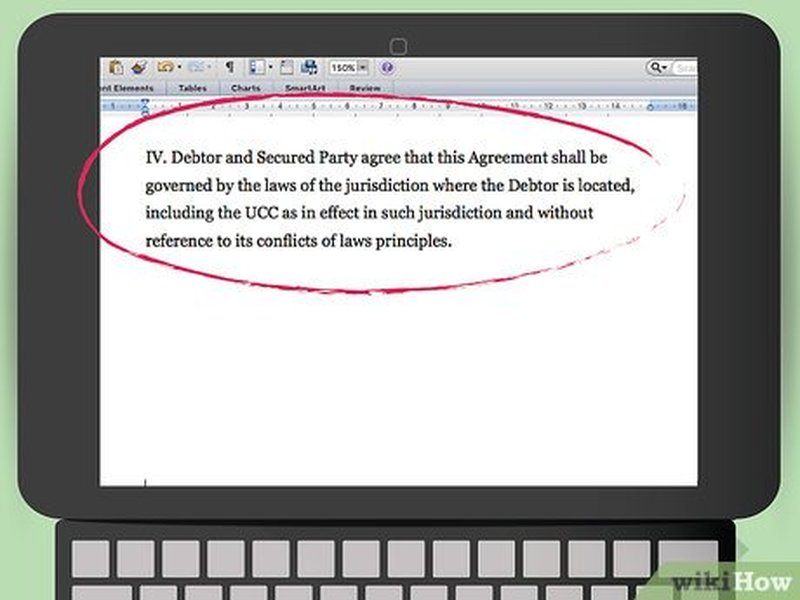
Security agreements meticulously detail covenants like the prohibition on further charges.
Core Purpose: Preserving Priority
The primary goal of this clause is to protect the chargee's priority. When a borrower defaults, the secured assets are often sold to repay the debt. The proceeds are distributed to creditors based on the ranking or priority of their security interests. By preventing the borrower from granting new security over the same assets, the original chargee aims to ensure their claim ranks first (or in the agreed-upon order) against those assets. This maximizes the likelihood that the chargee can recover the full amount owed from the proceeds of the collateral, without having to share it with or be ranked behind later creditors.
How it Protects the Chargee:
- Maintains Priority Ranking: It contractually blocks the creation of competing security interests that could rank equally with or ahead of the chargee's claim.
- Prevents Dilution: It ensures the value of the security isn't diminished by subsequent encumbrances granted to other parties.
- Reduces Disputes: It minimizes the potential for complex legal disputes over priority among multiple secured creditors during enforcement or insolvency.
- Provides Grounds for Default: Breaching this clause often constitutes an event of default under the security agreement, potentially allowing the chargee to accelerate the debt or enforce their security.
This clause acts as a continuous safeguard from the moment the security agreement is signed, focusing squarely on preventing the chargor from taking actions that could undermine the chargee's established position.
Understanding Crystallisation of a Floating Charge
Transforming Flexibility into Fixed Security
To understand crystallization, one must first grasp the concept of a floating charge. Unlike a fixed charge, which attaches to specific, identifiable assets (like land or machinery), a floating charge is taken over a class of assets that constantly change in the ordinary course of the borrower's business. Common examples include inventory (stock-in-trade), raw materials, and accounts receivable (book debts).
The key feature is that the borrower retains the freedom to deal with these assets—buy, sell, collect payments—without needing the chargee's consent for each transaction, *until* the floating charge "crystallizes."
What is Crystallisation?
Crystallisation is the event or process by which a floating charge ceases to "float" over a changing pool of assets and becomes a "fixed" charge, attaching to the specific assets within that class existing at that precise moment. Once crystallized, the borrower's freedom to deal with those assets in the ordinary course of business ends. The chargee gains significantly greater control over the disposition of these now-fixed assets.
Triggers for Crystallisation
Security agreements typically contain express clauses outlining the specific events that will trigger crystallization. Common triggers include:
- The borrower defaulting on loan payments or breaching other covenants.
- The borrower entering insolvency proceedings (e.g., administration, liquidation, receivership).
- The appointment of a receiver or administrator over the borrower's assets.
- The chargee serving a formal notice on the borrower to crystallize the charge (if permitted by the agreement).
- Specific events defined in the agreement, such as an attempt by the borrower to create a charge that would rank ahead of or equal to the floating charge (sometimes triggering "automatic crystallization").
How it Protects the Chargee:
- Secures Specific Assets: It converts the chargee's security from a general claim over a fluctuating asset class into a fixed claim over identifiable assets present at the time of crystallization.
- Restricts Asset Disposal: It prevents the borrower from dissipating or selling off the charged assets, preserving their value for the chargee's benefit during times of financial distress.
- Facilitates Enforcement: Crystallisation is often a necessary step before the chargee can appoint a receiver or take other enforcement actions to realize the value of the secured assets.
- Improves Priority: Once crystallized into a fixed charge, it typically gains priority over certain other claims, such as subsequently created floating charges and potentially unsecured creditors, depending on jurisdiction and specific circumstances.
Essentially, crystallization acts as a crucial mechanism allowing the chargee to solidify their claim and assert control over the floating assets precisely when the risk of non-payment or asset depletion becomes high.
Comparative Analysis: Distinct Roles in Chargee Protection
Why These Clauses Are Not Duplicates
While both the prohibition on further charges and the crystallization clause serve the ultimate goal of protecting the chargee's security interest, they are fundamentally different in their nature, timing, and effect. They are complementary tools, not duplicates.
Key Differences:
- Nature: The prohibition clause is a preventative covenant (a promise not to do something). Crystallisation is a transformative mechanism specific to the nature of floating charges.
- Timing: The prohibition applies continuously from the agreement's inception, restricting future actions. Crystallisation is triggered by specific events, often related to default or financial distress, acting as a response mechanism.
- Scope: The prohibition typically applies to all charged assets (whether under fixed or floating charges) to prevent *any* new competing security. Crystallisation applies *only* to assets under a floating charge, changing the *nature* of that specific charge.
- Function: The prohibition focuses on maintaining the chargee's **priority position** relative to potential future creditors. Crystallisation focuses on gaining **control over specific assets** under the floating charge and improving the charge's standing for enforcement.
Therefore, a security agreement often includes both clauses to provide layered protection. The negative pledge prevents the borrower from voluntarily weakening the chargee's position by adding more secured debt, while the crystallization clause provides the chargee with a tool to reactively secure the floating assets if the borrower's situation deteriorates or specific trigger events occur.
Visualizing the Protective Mechanisms
Comparing Clause Attributes
The following chart provides a visual comparison of how each clause contributes to protecting the chargee across several key dimensions. Scores are assigned on a relative scale (1-10, higher means stronger emphasis/effect) based on their primary functions:
This comparison highlights their distinct strengths: the prohibition clause excels at proactively safeguarding priority, while crystallization excels at reactively securing assets and enabling enforcement specifically for floating charges.
Mindmap: Chargee Protection Strategies
Mapping the Functions of Security Clauses
This mindmap illustrates the relationship between the two clauses and their specific roles in protecting the chargee:
The mindmap clearly shows how these two distinct legal tools branch out from the central objective of protecting the lender, each tackling different facets of risk management in secured transactions.
Understanding Fixed vs. Floating Charges
Visual Explanation
The concept of floating charges and their transformation (crystallization) into fixed charges is fundamental to understanding the second clause. This video provides a helpful overview of fixed and floating charges, which can clarify the context in which crystallization operates:
This video explains the characteristics of both fixed and floating charges, illustrating why the distinction is important in commercial lending and how the ability of a floating charge to crystallize provides a dynamic form of security for the lender.
Summary Table: Prohibition vs. Crystallisation
Key Differences at a Glance
This table summarizes the core distinctions and protective functions of the two clauses:
| Feature | Clause Prohibiting Further Charges (Negative Pledge) | Crystallisation of Floating Charge Clause |
|---|---|---|
| Primary Purpose | Prevent creation of new, competing security interests over charged assets. | Convert a floating charge into a fixed charge upon specified trigger events. |
| Nature of Clause | Restrictive Covenant (Promise not to act). | Trigger Mechanism (Transforms charge's nature). |
| Applies To | Assets subject to the charge (can be fixed or floating). | Assets subject specifically to a floating charge. |
| Timing of Effect | Continuous, from agreement execution. Prevents future actions. | Upon occurrence of specific trigger events (e.g., default, insolvency). Reactive. |
| Main Protective Function | Protects chargee's priority ranking against subsequent encumbrances. Prevents security dilution. | Secures specific assets, restricts borrower's disposal rights, facilitates enforcement, potentially improves priority. |
| Effect on Borrower's Actions | Restricts ability to grant *new* security. | Restricts ability to *deal with* existing charged assets post-crystallisation. |
Frequently Asked Questions (FAQ)
Are these clauses standard in all security agreements?
A prohibition on granting further charges (negative pledge) is very common in most types of secured lending agreements, including those involving fixed or floating charges. Crystallisation clauses are, by definition, only relevant and included in agreements where a floating charge is being granted. Both are considered standard practice in commercial lending to provide robust protection for the lender.
What happens if the borrower breaches the prohibition on further charges?
Breaching a negative pledge clause usually constitutes an Event of Default under the security agreement. This can entitle the chargee to take various actions, such as demanding immediate repayment of the loan (acceleration) and enforcing their security. Furthermore, depending on the jurisdiction and notice requirements, the subsequent charge granted in breach may be invalid against the original chargee or rank behind it. A breach might also automatically trigger the crystallization of any floating charge held by the original chargee, if the agreement provides for this.
Can a floating charge crystallize without an express clause in the agreement?
Yes, in many legal systems (like the UK and Ireland), a floating charge can crystallize automatically by operation of law upon certain fundamental events, even without an express clause. The most common events are the commencement of winding-up (liquidation) of the company or the appointment of a receiver over the assets subject to the charge. However, security agreements almost always include express crystallization clauses to define additional triggers and clarify the process, giving the chargee more control and certainty.
Does crystallization give the chargee ownership of the assets?
No, crystallization does not transfer ownership of the assets to the chargee. It converts the security interest from a floating charge to a fixed charge over the specific assets existing at that time. This gives the chargee greater control over the assets and priority in the event of enforcement (like appointing a receiver to sell the assets), but the borrower still legally owns the assets until they are sold as part of the enforcement process. The proceeds from the sale are then used to repay the debt owed to the chargee.
Recommended Reading
Explore Further Insights
- What are the key differences between fixed and floating charges in practice?
- How is the priority of charges determined in insolvency?
- What are the legal consequences of breaching a negative pledge clause?
- Explain the process of enforcing security after a floating charge crystallizes.
References
Sources Used
Last updated April 26, 2025