
Exploring the Evolution of Chemical Warfare
A comprehensive research proposal into historical developments and modern impacts
Highlights
- Historical Context: Tracing ancient uses to modern-day developments of chemical warfare.
- Technological & Regulatory Impact: Evaluating how innovations influenced tactics and led to international treaties.
- Modern Implications: Assessing ongoing effects on security policies, public health, and warfare strategies.
Introduction
Chemical warfare has drastically transformed the nature of armed conflict, leaving behind a legacy that touches upon military strategy, technological innovation, international law, and humanitarian concerns. This research proposal, titled "The Evolution of Chemical Warfare: Historical Development And Its Effect on the Modern World," aims to provide a detailed analysis of the trajectory that chemical warfare has taken—from its primitive inception to its sophisticated modern applications—and how these developments have shaped contemporary warfare practices, regulatory frameworks, and public health issues.
By analyzing key historical milestones, technological breakthroughs, and the subsequent regulatory measures implemented in reaction to chemical weapons use, this proposal seeks to bridge historical insights with modern challenges. This study is particularly significant because it not only traces the chronological progress of chemical warfare but also evaluates its enduring impact on international relations and modern security policies.
Research Objectives
The primary objectives of this research proposal are:
- Historical Documentation: To document the evolution of chemical warfare from ancient practices, through pivotal events such as World War I, to its current form.
- Technological Analysis: To investigate the advancements in chemical agent development, delivery mechanisms, and protective measures such as gas masks and detection systems.
- Regulatory Examination: To critically assess international treaties and protocols—including the Geneva Protocol and the Chemical Weapons Convention (CWC)—and their efficacy in curbing chemical warfare.
- Impact Assessment: To analyze the modern implications of historical chemical warfare on contemporary military strategies, international security policies, and public health.
- Ethical and Humanitarian Considerations: To explore the ethical dilemmas and human rights issues that arise from the use of chemical weapons.
Research Questions
The study will be guided by the following key research questions:
- What are the origins and historical development of chemical warfare?
- How did advancements in chemical technology transform warfare tactics and strategic decisions?
- What are the primary international regulatory measures that have been implemented to manage chemical warfare, and how effective have they been?
- In what ways have chemical warfare practices influenced modern military strategies and international security protocols?
- What are the enduring ethical and humanitarian impacts on affected populations?
Methodology
Literature Review
A comprehensive literature review will be undertaken to gather insights from historical texts, military records, academic journals, and reputable online sources. This review will focus on:
- Ancient and medieval instances of chemical weapon usage.
- Detailed accounts from World War I and subsequent conflicts where chemical warfare played a significant role.
- Technological developments and industrial advancements in chemical agent production.
- Analysis of international treaties such as the Geneva Protocol (1925) and the Chemical Weapons Convention (1992).
Case Studies
The research will include multiple case studies that focus on critical historical instances:
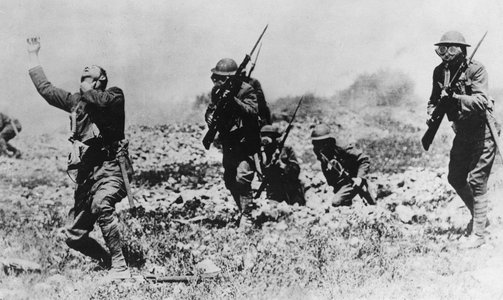
- World War I: Emphasis on early chemical warfare tactics including the use of chlorine, phosgene, and mustard gas, and their immediate military and humanitarian impacts.
- World War II and Cold War: Analysis of the proliferation, research, and responses to chemical warfare developments.
- Modern Conflicts: Evaluating recent chemical attacks, such as those in Syria, and their implications for modern warfare and global security.
Regulatory Analysis
A systematic review of international treaties and regulatory frameworks will be conducted. The analysis will include:
- The evolution of the Geneva Protocol, examining its historical context and limitations.
- The effectiveness of the Chemical Weapons Convention (CWC) in eliminating chemical weapons stockpiles and preventing their use.
- The role of organizations such as the Organisation for the Prohibition of Chemical Weapons (OPCW) in enforcing international norms.
Quantitative Data Analysis
In addition to qualitative analyses, quantitative data, including casualty figures, military expenditures related to chemical defenses, and economic impacts, will be compiled and analyzed. Statistical methods will be applied to:
- Measure the incidence and impact of chemical warfare over various conflicts.
- Assess changes in military spending related to chemical weapon development and protection measures over time.
- Correlate data on chemical warfare incidents with subsequent changes in international policy and treaty enforcement.
Proposed Research Framework and Timeline
Research Framework
The research framework is designed to systematically approach the evolution of chemical warfare through a multidisciplinary lens. The framework will be divided into the following phases:
- Phase 1: Historical and Literature Review – Collect and synthesize primary and secondary sources spanning ancient warfare tactics to modern chemical attacks.
- Phase 2: Case Study Analysis – Detailed examination of key events, including World War I, the Cold War, and recent conflicts involving chemical agents.
- Phase 3: Regulatory and Ethical Analysis – Critical review of international legal frameworks, ethical controversies, and humanitarian responses linked to chemical warfare.
- Phase 4: Quantitative Data Collection – Compiling statistical data on the deployment and impact of chemical warfare and its associated costs.
- Phase 5: Synthesis and Policy Recommendations – Integrating findings to propose actionable insights and recommendations for future security policies.
Timeline
The proposed timeline for this research project is as follows:
| Phase | Duration | Key Activities |
|---|---|---|
| Phase 1 | 3 Months | Comprehensive literature review and archival research. |
| Phase 2 | 4 Months | Detailed case studies on major historical events; interviews with experts. |
| Phase 3 | 2 Months | Regulatory and ethical analysis of treaties such as the Geneva Protocol and CWC. |
| Phase 4 | 3 Months | Collection and statistical analysis of quantitative data. |
| Phase 5 | 2 Months | Compilation of research findings and development of policy recommendations. |
Expected Outcomes
The results of this research are expected to provide a comprehensive narrative of the evolution of chemical warfare with a keen focus on its modern implications. The research outcomes include:
- Historical Narrative: A detailed timeline capturing the evolution and key milestones of chemical warfare starting from ancient practices through its modern incarnations.
- Strategic Impact: An analysis of the influence of chemical warfare on military tactics, including the introduction of protective gear and the reshaping of battlefield strategies.
- Regulatory Evaluation: Insights into the effectiveness and limitations of international treaties, with recommendations for stronger global disarmament measures.
- Ethical and Humanitarian Analysis: A thorough examination of the ethical dilemmas and long-term psychosocial impacts on populations affected by chemical attacks.
- Policy Recommendations: Actionable recommendations for military planners and policymakers to manage and mitigate future chemical threats.
Comprehensive Analysis and Contextual Discussion
Historical Development
The origins of chemical warfare can be traced back to ancient civilizations where natural toxins and incendiaries were used as rudimentary means to undermine enemy forces. While these early methods lacked precision, they laid the foundation for systematic exploration into chemical agents. With the advent of modern chemistry during the mid-19th century, scientific methods revolutionized how chemical agents were synthesized and weaponized. The large-scale use of chemical warfare during World War I became a catalyst for international scrutiny, as the unprecedented devastation wrought by chlorine, phosgene, and mustard gas fundamentally altered public perceptions of warfare.
The lessons from World War I spurred international efforts culminating in the Geneva Protocol of 1925. However, despite these agreements, technological advancements continued, with subsequent conflicts witnessing ongoing research into chemical and biological agents, thereby shaping modern military doctrines.
Technological and Regulatory Impacts
Advances in chemical technology have had a dual effect. On one hand, they have led to the development of sophisticated agents capable of inflicting mass casualties; on the other, they spurred equally significant innovations in protective measures, such as gas masks, advanced detection systems, and decontamination protocols. This duality illustrates the paradox where technological innovation in warfare not only enhances offensive capabilities but also necessitates robust defensive strategies.
On the regulatory front, the establishment and subsequent evolution of international treaties have played a crucial role in mitigating the threat posed by chemical weapons. The Chemical Weapons Convention (CWC), in particular, has been instrumental in reducing the global stockpile of chemical agents and enhancing regulatory measures through continual monitoring and verification by organizations such as the OPCW. The interplay between technological innovation and regulatory response underscores a dynamic landscape where advancements in warfare technologies are constantly counterbalanced by efforts to uphold humanitarian norms and international law.
Modern Implications for Global Security
In the contemporary world, the historical trajectory of chemical warfare has lasting implications for global security and international diplomacy. Current research continues to explore how past chemical warfare influences military strategies, arms regulation, and even psychological aspects of warfare, such as the long-term effects on veterans and civilian populations. The challenges faced in modern conflict zones, where emerging threats include not only chemical but also biological agents, necessitate a comprehensive understanding of both historical precedents and modern technological capabilities.
Additionally, the geopolitical landscape is influenced by the legacy of chemical warfare. Modern nations continue to assess the potential of chemical agents as weapons of mass destruction, while international bodies strive to ensure that regulatory frameworks evolve to tackle new threats. This remains a focal point in academic and policy-oriented discussions aimed at preventing the proliferation of such weapons.
Ethical Considerations and Humanitarian Impact
Ethical Dilemmas in Chemical Warfare
One of the most enduring debates surrounding chemical warfare is the ethical implications inherent in its use. The development and deployment of chemical agents raise serious questions about proportionality, civilian protection, and the long-term environmental impacts. Historical usage has often led to significant civilian casualties and lingering health effects, such as respiratory disorders, neurological deficits, and psychological trauma.
These ethical dilemmas continue to influence modern international policies. The persistent occurrence of chemical attacks in conflict zones emphasizes the need for robust legal frameworks and swift international intervention. Moreover, the ethical underpinnings of prohibiting chemical warfare are deeply embedded in humanitarian principles that seek to minimize human suffering even amid the exigencies of war.
Humanitarian and Public Health Concerns
The impact of chemical warfare extends well beyond the immediate battlefield. Survivors of chemical attacks often face long-term public health challenges including chronic respiratory illnesses, dermatological problems, and psychological conditions such as post-traumatic stress disorder (PTSD). Analyzing these health impacts offers critical insights into the societal costs of chemical warfare and underscores the need for comprehensive rehabilitation and public health policies in post-conflict settings.
This research will incorporate case studies and statistical data to evaluate the broader humanitarian implications, offering a clearer picture of the enduring legacy of chemical warfare on civilian populations.
Synthesis and Policy Recommendations
Integrating Historical and Modern Perspectives
Synthesizing historical data with modern analytical techniques will enable researchers and policymakers to identify recurring patterns and emerging trends in chemical warfare. The integration of qualitative and quantitative insights, gathered through literature reviews, case studies, and statistical analysis, will form the cornerstone of actionable policy recommendations.
Policy recommendations will focus on:
- Enhancing international collaboration and strengthening verification mechanisms under frameworks such as the CWC.
- Investing in advanced detection and decontamination technologies.
- Developing robust crisis response plans that integrate lessons learned from historical chemical attacks.
- Promoting transparency and accountability among nations to deter the resurgence of chemical warfare practices.
Strategic Recommendations
The ultimate goal of this research is not only to document the evolution of chemical warfare but also to provide strategic recommendations that can help mitigate future risks. By drawing upon a rich historical context and aligning it with current security challenges, the study aims to furnish policymakers with actionable insights that promise enhanced global stability and improved public health outcomes.
References
The following sources provide foundational information and contextual background, underscoring the significance of chemical warfare research:
- Chemical Warfare and Historical Battles - Total Military Insight
- History of Chemical Warfare - Wikipedia
- History of Chemical Weapons - Total Military Insight
- Chemical Weapon - Britannica
-
The Evolution of Chemical Warfare - Military Saga
Recommended Further Queries
For readers interested in exploring related topics in greater depth, here are some recommended queries that may spark further investigation:
Last updated March 26, 2025