
Unlock Chemistry Mastery: Your Comprehensive Roadmap for Physics Success
Learn chemistry from the ground up to ace your first-year physics exams and build a lasting understanding.
Embarking on a physics degree often reveals the intricate connections between different scientific disciplines. Chemistry, the science of matter and its transformations, provides an essential foundation for understanding many physics concepts, from the quantum behavior of atoms to the thermodynamics of energy systems. This guide offers a structured roadmap designed specifically for physics students aiming to not just pass, but truly master first-year university chemistry.
Key Insights for Your Chemistry Journey
- Foundation First: Mastering basic concepts like atomic structure, the periodic table, and chemical bonding is crucial before tackling more complex topics.
- Practice is Paramount: Chemistry is learned by doing. Consistent problem-solving is essential for internalizing concepts and developing analytical skills vital for both chemistry and physics.
- Leverage Diverse Resources: Combine textbooks, online courses (like Khan Academy), interactive simulations, and study guides to build a robust understanding from multiple perspectives.
Why Chemistry Matters for Physics Students
Before diving into the roadmap, it's helpful to understand why a strong grasp of chemistry is beneficial for your physics studies. Chemistry explores:
- The structure of atoms and molecules, crucial for quantum mechanics and atomic physics.
- Chemical bonding, which dictates material properties studied in solid-state physics and materials science.
- Thermodynamics and kinetics, principles shared and applied across both fields (e.g., energy transfer, reaction rates, equilibrium).
- Spectroscopy, a technique used extensively in physics that relies on understanding electron transitions and molecular energy levels.
Building this chemical intuition will provide a deeper context for many physical phenomena you'll encounter.
Knowledge cutoff: Monday, 2025-05-05.
Your Step-by-Step Chemistry Learning Roadmap
This roadmap breaks down the learning process into manageable stages, guiding you from fundamental principles to the level required for university success.
Step 1: Building the Bedrock (Approx. Weeks 1-4)
Focus: The Absolute Basics
Start by understanding the language and fundamental building blocks of chemistry. This stage lays the groundwork for everything that follows.
- Measurement and Units: Get comfortable with the metric system (SI units), scientific notation, significant figures, and dimensional analysis (unit conversions). These skills are essential for quantitative problem-solving in both chemistry and physics.
- The Atom: Learn about the structure of the atom (protons, neutrons, electrons), isotopes, and ions. Understand atomic number and mass number.
- The Periodic Table: Familiarize yourself with its layout. Learn about periods, groups, and basic periodic trends (like atomic radius, ionization energy, electronegativity). This is your map of the elements.
- Introduction to Bonding: Grasp the fundamental difference between ionic (electron transfer) and covalent (electron sharing) bonds.
Learning Strategies:
Use introductory chapters of textbooks (like Tro's "Chemistry: Structure and Properties" or free options like David W. Ball's "Introductory Chemistry"). Supplement with interactive online resources like Khan Academy's initial chemistry modules. Practice basic problems daily.
Physics Connection:
Understanding atomic structure is directly applicable to atomic physics and provides the basis for quantum mechanical models you'll encounter later.
Step 2: Mastering Core General Chemistry (Approx. Weeks 5-12)
Focus: Reactions, Quantities, and States
This is the heart of first-year chemistry, covering how substances interact and the principles governing their behavior.
- Stoichiometry: Learn to balance chemical equations, understand the mole concept (Avogadro's number), calculate molar mass, determine empirical and molecular formulas, and solve problems involving limiting reactants and reaction yields. This is the quantitative backbone of chemistry.
- Chemical Bonding and Molecular Structure (Deeper Dive): Explore Lewis structures, VSEPR theory (predicting molecular geometry), molecular polarity, and intermolecular forces (hydrogen bonding, dipole-dipole, London dispersion forces).
- States of Matter: Study the properties of gases (Ideal Gas Law, Kinetic Molecular Theory), liquids, and solids. Understand phase transitions and phase diagrams.
- Solutions: Learn about different concentration units (molarity, molality), solubility principles, and colligative properties.
- Introduction to Reactions: Classify basic reaction types (e.g., precipitation, acid-base, redox).
Learning Strategies:
Continue with your chosen textbook, focusing heavily on working through example problems and end-of-chapter exercises. Utilize Khan Academy's general chemistry sections and simulations (e.g., PhET Interactive Simulations) to visualize concepts. Practice balancing equations and stoichiometry calculations relentlessly.
Physics Connection:
Gas laws and kinetic molecular theory directly overlap with thermodynamics in physics. Understanding intermolecular forces helps explain material properties.
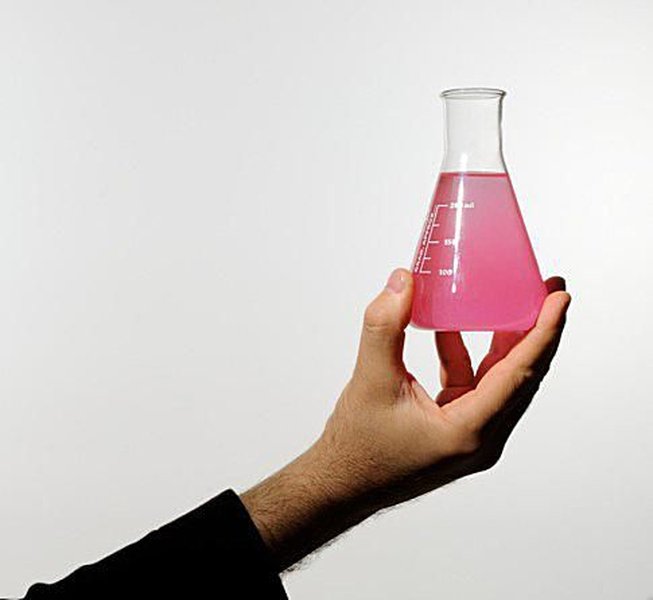
Visualizing chemical reactions and properties is key to understanding.
Step 3: Exploring Energy, Rates, and Equilibrium (Approx. Weeks 13-20)
Focus: Dynamics and Driving Forces
This stage delves into why and how fast reactions occur, and the balance they reach.
- Thermochemistry: Study energy changes in chemical reactions. Understand concepts like enthalpy (ΔH), Hess's Law, heat capacity, and calorimetry. Introduce entropy (ΔS) and Gibbs free energy (ΔG) as indicators of spontaneity.
- Chemical Kinetics: Explore reaction rates, factors affecting rates (temperature, concentration, catalysts), rate laws, reaction orders, and activation energy (Arrhenius equation).
- Chemical Equilibrium: Understand dynamic equilibrium, the Law of Mass Action (equilibrium constant, Kc/Kp), and Le Chatelier's Principle (how systems respond to stress).
- Acid-Base Chemistry: Learn different definitions (Arrhenius, Brønsted-Lowry, Lewis), pH and pOH scales, weak vs. strong acids/bases, Ka/Kb, buffer solutions, and titrations.
- Redox Reactions and Electrochemistry: Master assigning oxidation numbers, balancing redox reactions, and understanding galvanic (voltaic) and electrolytic cells, standard electrode potentials, and the Nernst equation.
Learning Strategies:
These topics often require deeper conceptual understanding. Draw diagrams (energy profiles for reactions, equilibrium shifts), work through multi-step problems, and use online simulations to visualize abstract concepts like equilibrium. Focus on understanding the *principles* behind the equations.
Physics Connection:
Thermochemistry is essentially thermodynamics applied to chemical systems. Electrochemistry involves principles of electricity and potential difference. Kinetics relates to rates of change, a common theme in physics.
Step 4: Branching Out & Physics Integration (Approx. Weeks 21-28)
Focus: Connecting to Physics & Advanced Basics
While general chemistry is the core, brief introductions to other areas and explicit connections to physics are valuable.
- Physical Chemistry Basics: Revisit thermodynamics from a more rigorous perspective (entropy, Gibbs free energy). Introduce basics of quantum chemistry (atomic orbitals, electron clouds beyond simple configurations) and spectroscopy (how light interacts with matter – essential for astrophysics and condensed matter physics).
- Organic Chemistry Fundamentals: Gain familiarity with basic hydrocarbon structures (alkanes, alkenes, alkynes), common functional groups, and the concept of isomerism. Understanding molecular structure is key.
- Inorganic Chemistry Essentials: Briefly touch upon coordination compounds and deeper periodic trends if covered in your course syllabus.
- Solid-State Chemistry Basics: Understand basic crystal structures and unit cells, relevant for materials science aspects of physics.
Learning Strategies:
Focus on the overlap. When studying spectroscopy in chemistry, relate it to the physics of light and energy levels. When studying thermodynamics, compare the approaches in both fields. Use resources that bridge the gap, potentially sections in physical chemistry textbooks or specific online modules.
Step 5: Solidifying Skills and Exam Preparation (Approx. Weeks 29 onwards)
Focus: Mastery and Application
Shift focus from learning new material to consolidating knowledge and mastering problem-solving under exam conditions.
- Intensive Problem Solving: Work through complex, multi-concept problems. Practice applying different principles to a single scenario. Use practice exams from your university or online resources.
- Concept Mapping: Create visual diagrams (mind maps) connecting different topics. How does bonding relate to reactivity? How does thermodynamics relate to equilibrium?
- Timed Practice: Simulate exam conditions by doing practice tests under time pressure.
- Review and Identify Weaknesses: Go back over all topics, paying special attention to areas where you struggled. Use flashcards (physical or digital like Anki) for memorizing key definitions, formulas, and trends.
- Seek Clarification: Utilize professor/TA office hours, university learning centers, or online forums (like specific subreddits) to clear up lingering doubts.
Learning Strategies:
Focus on active recall (testing yourself) rather than passive rereading. Teach concepts to peers (or even an imaginary audience) to solidify your understanding. Analyze mistakes on practice problems to understand the root cause.
Visualizing the Chemistry Landscape
Interconnectedness of Chemistry Topics
Chemistry isn't just a list of topics; it's an interconnected web of ideas. Understanding these connections is crucial for a deeper comprehension. This mindmap illustrates how fundamental concepts branch out and relate to one another, providing a mental framework for your learning journey.
(Protons, Neutrons, Electrons)"] id1b["Periodic Table & Trends"] id1c["Measurement & Units"] id1d["Basic Bonding
(Ionic, Covalent)"] id2["Core General Chemistry"] id2a["Stoichiometry
(Moles, Reactions, Yields)"] id2b["Molecular Structure
(Lewis, VSEPR, Polarity)"] id2c["States of Matter
(Gases, Liquids, Solids)"] id2d["Solutions & Concentration"] id2e["Thermochemistry
(Enthalpy, Energy Changes)"] id2f["Kinetics
(Reaction Rates, Factors)"] id2g["Equilibrium
(Constants, Le Chatelier's)"] id2h["Acids & Bases
(pH, Buffers, Titrations)"] id2i["Redox & Electrochemistry"] id3["Bridging to Physics"] id3a["Physical Chemistry"] id3a1["Thermodynamics
(Entropy, Gibbs Free Energy)"] id3a2["Quantum Chemistry Basics"] id3a3["Spectroscopy"] id3b["Organic Chemistry Basics
(Functional Groups, Structure)"] id3c["Solid-State Chemistry
(Crystal Structures)"] id4["Skills & Application"] id4a["Problem Solving"] id4b["Analytical Thinking"] id4c["Exam Preparation"] id4d["Lab Principles (Theory/Simulations)"]
Relative Importance of Topics for Physics Students
While all areas of first-year chemistry are important, some have stronger and more immediate connections to a typical physics curriculum. This chart provides an illustrative representation (not based on quantitative data) of the relative emphasis you might place on different areas as a physics student aiming for deep integration between the subjects.
As indicated, understanding atomic structure, quantum concepts, thermodynamics, and bonding often has the most direct overlap with foundational physics courses.
Effective Study Strategies for Deep Understanding
Simply reading material isn't enough for mastery. Adopt active learning techniques:
- Consistency is Key: Study chemistry regularly, even if it's just for an hour a day, rather than cramming before exams. This builds long-term retention.
- Active Recall: Regularly test yourself without looking at your notes. Use flashcards, practice problems, or explain concepts aloud.
- Pre-Reading & Post-Review: Read the relevant textbook chapter *before* watching a lecture or online video on the topic. Review your notes *after* the session, ideally the same day.
- Problem-Solving Focus: Chemistry is a problem-solving science. Work through as many practice problems as possible, focusing on understanding the *process*, not just the answer.
- Ask "Why" and "How": Don't just memorize facts or formulas. Constantly ask yourself *why* a reaction happens, *how* a trend works, or *what* the underlying principle is. This fosters deeper understanding.
- Visualize Concepts: Draw diagrams, create concept maps, use molecular modeling kits (if available), or utilize online simulations (PhET, ChemDoodle Web Components) to make abstract ideas concrete.
- Connect to Physics: Actively look for links between chemistry topics and your physics coursework. How does thermodynamics in chemistry relate to the laws you learn in physics? How do atomic orbitals relate to quantum mechanics?
- Simulate Lab Work: While hands-on labs are ideal, if self-studying, use virtual labs and simulations (like those from the Royal Society of Chemistry or textbook companion sites) to understand experimental procedures and data interpretation.
- Study Environment: Create a dedicated study space free from distractions to maximize focus.

A well-organized study space can significantly improve focus and learning efficiency.
Supporting Higher Order Thinking in Chemistry
Moving beyond memorization to true understanding requires developing higher-order thinking skills. This involves analyzing, evaluating, and creating connections between concepts. The following video discusses methodologies aimed at fostering this deeper level of learning, providing students with a clearer roadmap for their own cognitive processes. Understanding these approaches can help you structure your own study habits for maximum effectiveness and long-term retention, crucial for applying chemical principles within your physics studies.
Recommended Learning Resources
A variety of resources will enrich your learning experience. Here’s a table summarizing some highly recommended options based on common suggestions:
| Resource Type | Examples | Key Benefits |
|---|---|---|
| Textbooks (Introductory/General) | "Chemistry: Structure and Properties" by Nivaldo Tro "Chemical Principles" by Dickerson, Gray, Haight "Introductory Chemistry" by David W. Ball (Open Textbook) |
Structured content, detailed explanations, practice problems. Tro is often cited for conceptual clarity. Open textbooks offer free access. |
| Online Courses & Platforms | Khan Academy (Chemistry) MIT OpenCourseWare (Chemistry Courses) Crash Course Chemistry (YouTube) |
Video explanations, interactive exercises, structured learning paths (Khan), access to university-level materials (MIT OCW), engaging overviews (Crash Course). |
| Interactive Simulations | PhET Interactive Simulations Royal Society of Chemistry Resources |
Visualize abstract concepts, simulate experiments, explore relationships between variables. |
| Practice & Study Aids | University Learning Center Resources (e.g., UNC, Stanford) Online Chemistry Forums (e.g., Reddit r/chemistry) The Pocket Chemist |
Targeted study tips, extra practice problems, community support, quick reference tools. |
| Concept Mapping Tools | MindMeister, Coggle, or Pen & Paper | Visualize connections between topics, aid memory and understanding. |
Frequently Asked Questions (FAQ)
How long will it realistically take to learn chemistry to this level? +
This depends heavily on your background, dedication, and study habits. Following a structured roadmap like this, dedicating 1-2 hours per day consistently, could take anywhere from 6 to 12 months to build a strong, comprehensive understanding suitable for first-year university level. Aim to complete the core learning well before your exams to allow ample time for review and practice.
Can I truly understand chemistry without hands-on lab experience? +
You can gain a very strong theoretical and conceptual understanding through self-study using textbooks, online courses, and simulations. Virtual labs and simulations can effectively demonstrate principles and experimental techniques. However, practical lab skills (handling glassware, performing techniques accurately, observing real reactions) are best learned through hands-on experience. For acing exams focused on theory and problem-solving, self-study can be sufficient, but recognize that practical proficiency requires a physical lab setting.
Which chemistry topics are MOST important for a physics major? +
While all of general chemistry provides valuable context, areas with the most direct overlap and importance for physics include: Atomic Structure (basis for quantum mechanics), Thermodynamics (energy, heat, entropy), Chemical Bonding and Molecular Structure (understanding materials), Spectroscopy (interaction of light and matter), Kinetics (rates of change), and fundamentals of Quantum Chemistry. Understanding these areas deeply will significantly enhance your physics studies.
What's the best way to practice problem-solving? +
Start with textbook examples, then move to end-of-chapter problems, gradually increasing difficulty. Don't just look up answers; struggle with the problem first. If stuck, identify the specific concept you're missing. Work through problems step-by-step, writing out your reasoning. Use online platforms like Khan Academy for interactive practice with immediate feedback. Practice consistently – quality and understanding the process are more important than sheer quantity.
Recommended Further Exploration
- How does spectroscopy bridge chemistry and physics?
- Compare thermodynamics principles in chemistry versus physics.
- Best online simulations for learning chemistry concepts.
- Applications of quantum chemistry in modern physics.
References
Last updated May 5, 2025