
Future Scenarios for Chess World Rankings and Magnus Carlsen's Performance
Analyzing Potential Outcomes for Top Chess Players by 2029 and 2031
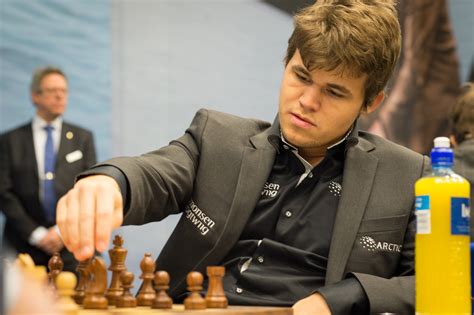
Key Takeaways
- Magnus Carlsen is projected to maintain a leading position in the chess world, potentially retaining the #1 ranking through 2029.
- Rising talents such as Arjun Erigaisi and Fabiano Caruana possess significant potential to ascend to the top ranking.
- Carlsen's involvement in classical chess and his motivation may play crucial roles in his bid to reclaim the FIDE World Championship by 2031.
Detailed Scenarios
Scenario 1: Magnus Carlsen Maintains Dominance (Prior: 30%)
Magnus Carlsen continues to exhibit exceptional performance in both classical and rapid formats, securing multiple major tournament victories from 2025 to 2029. His adaptability to evolving chess strategies and minimal participation in controversies bolster his standing, allowing him to retain the #1 world ranking through 2029.
Scenario 2: Arjun Erigaisi Rises to #1 (Prior: 20%)
Arjun Erigaisi demonstrates significant improvement in his gameplay, excelling in both classical and rapid chess. By 2029, his consistent high performance in key tournaments, including a victory in the Candidates Tournament, propels him to surpass Carlsen and other competitors to claim the top spot.
Scenario 3: Fabiano Caruana Ascends to #1 (Prior: 15%)
Fabiano Caruana resurges with outstanding performances in the World Championship cycle between 2025 and 2028. His strategic prowess and consistent high ratings in tournaments enable him to reclaim the #1 ranking, especially if Carlsen reduces his focus on classical chess or retires from it.
Scenario 4: Magnus Carlsen Retires from Classical Chess (Prior: 10%)
In a surprising move, Magnus Carlsen announces his retirement from classical chess after the 2026 World Championship. While he continues to compete in rapid and blitz formats, the vacancy at the top of the classical rankings is contested by rising stars such as Caruana and Erigaisi.
Scenario 5: Emergence of a New Prodigy (Prior: 10%)
A young prodigy breaks onto the international scene, showcasing exceptional talent and rapidly climbing the rankings. By 2029, this new star outperforms established players, including Carlsen and Caruana, to become the new world #1.
Scenario 6: Competitive Balance with Multiple Top Players (Prior: 10%)
The chess world sees a dynamic shift with multiple players, including Carlsen, Caruana, and Erigaisi, rotating at the #1 position. Increased competition and the emergence of strong contenders prevent any single player from maintaining dominance, resulting in a more balanced and unpredictable ranking landscape.
Scenario 7: Carlsen Returns to FIDE Championship and Wins (Prior: 5%)
Magnus Carlsen re-enters the FIDE World Chess Championship cycle around 2027. With renewed determination and strategic refinement, he successfully wins the championship in a closely contested match, reclaiming the #1 spot and securing his legacy as one of the greatest chess players.
Scenario 8: Carlsen Focuses on Other Formats (Prior: 5%)
Magnus Carlsen shifts his focus predominantly to online chess, speed chess, and other non-classical formats starting in 2025. This strategic pivot leads to a decline in his classical chess rating, allowing other players like Caruana and Erigaisi to ascend to the top rankings.
Scenario 9: Gradual Decline in Carlsen's Performance (Prior: 3%)
Due to age-related factors and diminishing motivation, Magnus Carlsen experiences a gradual decline in his performance from 2025 onwards. This decline opens the door for younger players, particularly Erigaisi and Caruana, to climb the rankings and eventually take over the #1 position by 2029.
Scenario 10: Early Retirement of Carlsen (Prior: 2%)
In an unprecedented move, Magnus Carlsen retires from professional chess entirely by 2025 to pursue other interests. This early retirement leaves the #1 ranking open, sparking intense competition among remaining top players and rising stars to claim the top spot in the global chess rankings.
Squiggle Model
The following Squiggle model quantifies the probabilities of each scenario described above, combining priors and key events to estimate the likelihood of each outcome.
// Define priors for each scenario
scenario1 = 0.30  // Carlsen Maintains Dominance
scenario2 = 0.20  // Arjun Erigaisi Rises to #1
scenario3 = 0.15  // Fabiano Caruana Ascends to #1
scenario4 = 0.10  // Carlsen Retires from Classical Chess
scenario5 = 0.10  // Emergence of a New Prodigy
scenario6 = 0.10  // Competitive Balance with Multiple Top Players
scenario7 = 0.05  // Carlsen Returns to FIDE Championship and Wins
scenario8 = 0.05  // Carlsen Focuses on Other Formats
scenario9 = 0.03  // Gradual Decline in Carlsen's Performance
scenario10 = 0.02 // Early Retirement of Carlsen

// Define distributions for key events
carlsen_dominance_event = uniform(0.25, 0.35)
erigaisi_rise_event = uniform(0.15, 0.25)
caruana_ascend_event = uniform(0.10, 0.20)
carlsen_retire_classical_event = uniform(0.08, 0.12)
new_prodigy_event = uniform(0.05, 0.15)
competitive_balance_event = uniform(0.08, 0.12)
carlsen_fide_return_event = uniform(0.04, 0.06)
carlsen_focus_other_formats_event = uniform(0.04, 0.06)
carlsen_performance_decline_event = uniform(0.02, 0.04)
carlsen_early_retire_event = uniform(0.01, 0.03)

// Combine priors and events into final probabilities
scenario1_final = scenario1 * carlsen_dominance_event
scenario2_final = scenario2 * erigaisi_rise_event
scenario3_final = scenario3 * caruana_ascend_event
scenario4_final = scenario4 * carlsen_retire_classical_event
scenario5_final = scenario5 * new_prodigy_event
scenario6_final = scenario6 * competitive_balance_event
scenario7_final = scenario7 * carlsen_fide_return_event
scenario8_final = scenario8 * carlsen_focus_other_formats_event
scenario9_final = scenario9 * carlsen_performance_decline_event
scenario10_final = scenario10 * carlsen_early_retire_event

// Output final probabilities
{
  Scenario1: scenario1_final,
  Scenario2: scenario2_final,
  Scenario3: scenario3_final,
  Scenario4: scenario4_final,
  Scenario5: scenario5_final,
  Scenario6: scenario6_final,
  Scenario7: scenario7_final,
  Scenario8: scenario8_final,
  Scenario9: scenario9_final,
  Scenario10: scenario10_final
}
Explanation of the Squiggle Model
The Squiggle model above assigns prior probabilities to each of the ten scenarios based on their plausibility. It then defines uniform distributions for the key events within each scenario to account for uncertainty. By multiplying the priors with the event probabilities, the model provides estimated final probabilities for each scenario's likelihood.
Summary Table of Scenarios and Priors
| Scenario | Description | Plausible Prior (%) |
|---|---|---|
| 1 | Magnus Carlsen Maintains Dominance | 30% |
| 2 | Arjun Erigaisi Rises to #1 | 20% |
| 3 | Fabiano Caruana Ascends to #1 | 15% |
| 4 | Magnus Carlsen Retires from Classical Chess | 10% |
| 5 | Emergence of a New Prodigy | 10% |
| 6 | Competitive Balance with Multiple Top Players | 10% |
| 7 | Carlsen Returns to FIDE Championship and Wins | 5% |
| 8 | Carlsen Focuses on Other Formats | 5% |
| 9 | Gradual Decline in Carlsen's Performance | 3% |
| 10 | Early Retirement of Carlsen | 2% |
Conclusion
The future of chess rankings, particularly concerning Magnus Carlsen, Arjun Erigaisi, and Fabiano Caruana, presents a variety of potential outcomes. While Carlsen remains a strong contender to retain his dominance, the emergence of new talents and strategic shifts in player focus could reshape the top tiers of global chess. The Squiggle model offers a quantitative framework to assess these scenarios, highlighting the inherent uncertainties and dynamic nature of competitive chess.
References
For more detailed analyses and updates on chess rankings and player performances, please visit reputable chess websites and official FIDE resources.
Last updated January 17, 2025