
Understanding Pediatric Digestive Anatomy and Health
Exploring the Development and Function of the Digestive System in Children
Key Highlights
- Pediatric gastroenterologists are specialists who diagnose and treat digestive issues in infants, children, and adolescents.
- The digestive system in children undergoes significant development from birth through adolescence, with structural and functional differences compared to adults.
- Conditions such as constipation and diarrhea are common pediatric digestive issues that may require specialized care.
Understanding the anatomy and function of the digestive system in children is crucial for ensuring their overall health and well-being. While the basic components of the digestive tract are similar in children and adults, there are important developmental differences that impact how the system works in younger individuals. Pediatric gastroenterologists are medical doctors who specialize in these unique aspects of children's digestive health, addressing a wide range of conditions from common issues like reflux and constipation to more complex disorders.
The Developing Digestive System
The digestive system, also known as the gastrointestinal (GI) tract, is a series of hollow organs connected in a long, twisting tube from the mouth to the anus. It includes the mouth, esophagus, stomach, small intestine, large intestine, rectum, and anus. The liver, pancreas, and gallbladder are also vital organs that support digestion by producing enzymes and bile.
In children, the digestive system is still developing and maturing. This developmental process influences everything from nutrient absorption to the frequency and consistency of bowel movements. For example, newborns have extra bones that fuse over time, and their body's ability to regulate temperature through sweating and shivering is not as developed as in adults. These broader developmental aspects can indirectly impact digestive function and overall health.
Anatomical Differences and Their Impact
While the general structure is in place from birth, the size and function of digestive organs change as a child grows. The capacity of the stomach increases, the small intestine lengthens, and the muscles controlling bowel function mature. These changes are part of the complex process of physical growth and maturation influenced by genetics, nutrition, physical activity, and hormones.
Understanding these developmental differences is particularly important for medical professionals. For instance, anatomical variations in a child's airway or skeletal system can influence medical procedures and treatment approaches. Similarly, the developing nature of the GI tract means that digestive issues in children may present and be managed differently than in adults.
The Role of the Anus in Digestion
The anus is the final opening of the digestive tract, where stool leaves the body. Its function is controlled by internal and external sphincter muscles, which relax and contract to regulate bowel movements. The tightness or tone of these muscles can vary among individuals, regardless of age. In infants and young children, the ability to consciously control the external sphincter muscle develops over time as part of toilet training.
Issues related to the anus and rectum, such as constipation, can be common in children. Constipation, characterized by hard, dry stools, can be uncomfortable and may lead to pain during bowel movements. Addressing constipation in children often involves dietary changes, increased fluid intake, and sometimes medication under the guidance of a healthcare professional.
Common Pediatric Digestive Issues
Children can experience a variety of digestive problems. Some are relatively common and easily managed, while others may require specialized care from a pediatric gastroenterologist.
Recognizing Signs and Symptoms
Parents and caregivers should be aware of signs that might indicate a digestive issue in their child. These can include:
- Persistent or severe stomach pain
- Chronic constipation or diarrhea
- Difficulty swallowing
- Frequent vomiting or reflux
- Poor weight gain or slow growth
- Blood in the stool
If a child exhibits any of these symptoms, it is advisable to consult a pediatrician. Depending on the nature and severity of the symptoms, the pediatrician may refer the child to a pediatric gastroenterologist for further evaluation and treatment.
Conditions Treated by Pediatric Gastroenterologists
Pediatric gastroenterologists are trained to diagnose and treat a wide range of digestive disorders in children, including:
- Gastroesophageal reflux disease (GERD)
- Constipation and encopresis
- Chronic diarrhea
- Inflammatory bowel disease (IBD), such as Crohn's disease and ulcerative colitis
- Celiac disease
- Food allergies and intolerances
- Liver disorders
- Pancreatic disorders
- Feeding and swallowing difficulties
These specialists utilize various diagnostic tools and treatments tailored to the unique needs of children, often working as part of a multidisciplinary team to provide comprehensive care.
Diagnostic Approaches in Pediatric Gastroenterology
To accurately diagnose digestive conditions in children, pediatric gastroenterologists may use a variety of diagnostic procedures. These procedures are adapted for children to ensure their safety and comfort.
Common Diagnostic Procedures
Some common diagnostic procedures include:
- Blood tests: To check for infection, inflammation, nutritional deficiencies, or markers for specific diseases like celiac disease. Blood tests can also measure electrolyte levels, which are important for children who have experienced significant fluid loss.
- Imaging studies:
- X-rays: May be used to visualize the digestive tract, sometimes with the help of contrast agents like barium. An upper GI series examines the esophagus, stomach, and upper small intestine, while a lower GI series (barium enema) examines the large intestine and lower small intestine.
- Ultrasound: Uses sound waves to create images of internal organs.
- MRI (Magnetic Resonance Imaging): Uses magnets and radio waves to create detailed images of organs and structures. This is a painless test but may require sedation for some children to ensure they remain still.
- Endoscopy and Colonoscopy: Procedures that involve inserting a thin, flexible tube with a camera attached into the digestive tract to visualize the lining and obtain tissue samples (biopsies). Endoscopy examines the upper GI tract, while colonoscopy examines the large intestine.
- Manometry: Measures pressure within parts of the digestive tract, such as the esophagus or anus, to assess muscle function.
The choice of diagnostic procedure depends on the child's symptoms and the suspected condition.
Developmental Insights into Pediatric Anatomy
Beyond the digestive system, the overall physical development of a child presents unique anatomical considerations. These differences are important in various medical fields, including surgery, orthopedics, and emergency medicine.
Skeletal and Muscular Development
Children's bones are still growing and have different properties than adult bones. The presence of growth plates (physes) makes them susceptible to specific types of fractures. Muscle strength and coordination also develop over time. For example, the neck muscles in infants are not as developed as in older children and adults, making their heads proportionally larger and more vulnerable to injury.
Body Composition and Temperature Regulation
Infants and young children have a larger surface area to body weight ratio compared to adults. This affects their ability to regulate body temperature, making them more prone to heat loss in cold environments and more susceptible to dehydration and overheating in warm environments. Their thinner layer of subcutaneous fat also contributes to this difference.
Visualizing Developmental Anatomy and Digestive Function
To better understand the interplay of developmental anatomy and digestive health, visualizations can be helpful. The following radar chart provides a conceptual overview of how certain anatomical and physiological aspects evolve from infancy to late childhood, impacting digestive function.
This radar chart illustrates the relative maturation of various systems and functions in children across different age ranges. Higher values indicate a greater degree of maturity or capacity in that area. Note that this is a conceptual representation based on general developmental patterns and not precise quantitative data.
The chart highlights how aspects like skeletal maturity, muscle strength related to digestive control, and nutrient absorption efficiency generally increase as a child gets older. Temperature regulation and immune system maturity also improve with age, contributing to overall health, including digestive health.
Understanding Digestive Anatomy Visually
Visual aids can significantly enhance the understanding of the digestive system's structure in children. Below is an image illustrating the organs involved in a child's digestive process.
Understanding the Pathway of Food in Children
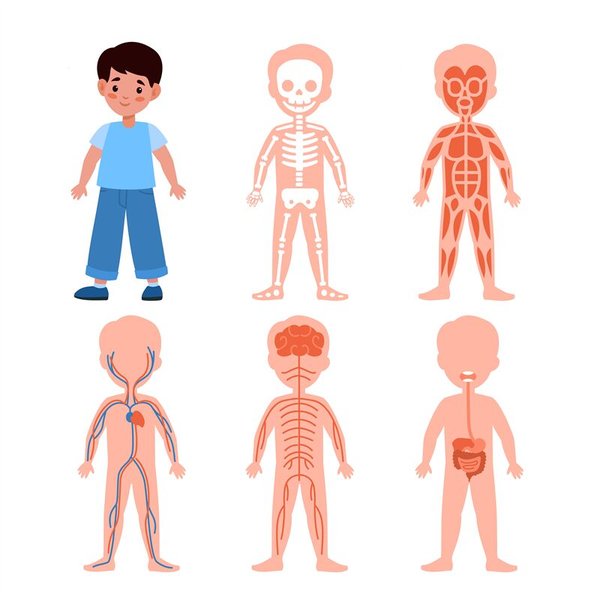
This illustration shows the primary organs of a child's digestive system, from the mouth down to the large intestine. It helps visualize the pathway food takes and the organs involved in breaking it down and absorbing nutrients.
Comparing Pediatric and Adult Digestive Systems
While the fundamental processes of digestion are the same, there are notable differences between the pediatric and adult digestive systems. The following table summarizes some of these key distinctions:
| Feature | Pediatric Digestive System | Adult Digestive System |
|---|---|---|
| Stomach Capacity | Smaller relative to body size, increases with age. | Larger and more developed. |
| Intestinal Length | Shorter relative to body size, increases with growth. | Longer and fully developed. |
| Enzyme Production | May be less mature, affecting digestion of certain foods (e.g., lactose intolerance is more common in infants). | Generally fully functional for a wider range of foods. |
| Motility (Movement of food) | Can be more variable, leading to issues like reflux or constipation. | Generally more consistent and predictable. |
| Sphincter Control (Anus) | Voluntary control develops over time with toilet training. | Voluntary control is typically fully developed. |
| Immune System Development in Gut | Still maturing, influencing susceptibility to infections and allergies. | More mature and robust. |
These differences highlight why digestive issues in children require specialized medical attention from professionals familiar with pediatric anatomy and physiology.
Further Resources and Support
For parents and caregivers seeking more information about pediatric digestive health, several resources are available. Organizations like the North American Society for Pediatric Gastroenterology, Hepatology and Nutrition (NASPGHAN) provide valuable information and resources for families and healthcare providers.
Frequently Asked Questions
What is a pediatric gastroenterologist?
When should I take my child to see a GI specialist?
Are digestive issues common in children?
How does the digestive system change as a child grows?
Recommended Further Reading
- What are the common symptoms of pediatric gastrointestinal disorders?
- How do childhood developmental milestones relate to physical growth?
- What are effective ways to manage constipation in children?
- Explore the detailed anatomy and physiology of a child's digestive system.
References
Last updated May 21, 2025