
Diagnosing the Roar: Pinpointing Noise Sources in Large Centrifugal Chillers
Unraveling the Complexities of Chiller Acoustics and Vibration
Large centrifugal chillers are critical components in many commercial and industrial HVAC systems, providing essential cooling. However, their operation can generate significant noise and vibration, often leading to discomfort, regulatory issues, and indicating underlying mechanical problems. Identifying the precise source of this noise is paramount for effective troubleshooting, maintenance, and implementing targeted noise reduction solutions. The sound produced by chillers is a complex combination of various mechanical and aerodynamic factors, making a systematic diagnostic approach essential. This comprehensive guide will explore the primary sources of noise in large centrifugal chillers and outline effective methods to determine their origin.
Key Insights into Chiller Noise Diagnosis
- Comprehensive Assessment: Effective noise troubleshooting requires a holistic approach, combining visual inspections, auditory analysis, and advanced vibration measurements.
- Multifaceted Noise Sources: Chiller noise stems from various components, including compressors (especially surge), fans, pumps, refrigerant flow, and structural vibrations, each with distinct characteristics.
- Targeted Solutions: Pinpointing the exact noise source is crucial for implementing efficient and cost-effective mitigation strategies, such as vibration isolation, acoustic barriers, or component repair/replacement.
Understanding the Anatomy of Chiller Noise
Before diving into diagnostic methods, it's crucial to understand the main culprits behind centrifugal chiller noise. These machines are designed for high-capacity cooling, and this involves powerful rotating machinery and high-velocity refrigerant flow, both inherent noise generators.
Primary Noise Contributors
Compressor-Related Noise
The compressor is often the most significant source of noise in a centrifugal chiller. This can manifest in several ways:
- Surge: This is a critical and potentially damaging phenomenon where the refrigerant vapor flow becomes unstable during low partial loads. Chiller surge produces a distinctive "drum sound" or "long sound followed by short drum sounds" and can cause significant noise and vibration. Monitoring motor current and pressure readings is key to identifying surge beyond just audible cues.
- Blade Passing Frequency Noise: In centrifugal compressors, noise arises from the interaction of rotating impeller blades with stationary vanes. Every time a blade passes a given point, it generates noise.
- Compressor Internal Wear: Worn bearings or other internal components within the compressor can lead to abnormal grinding, clicking, or rattling noises. If the abnormal noise due to wear is too loud and affects chiller use, the compressor may need replacement.
- Refrigerant Gas Discharge: High-velocity refrigerant gas discharged from the compressor into the condenser interacts with piping and mechanical components, radiating significant acoustic energy.
- Reversed Compressor Rotation: At initial startup, a three-phase scroll compressor running backward due to incorrect wiring can cause excessive noise. Switching any two legs on the chiller's three-phase power bus can correct this.
Fan Noise
Air-cooled chillers, in particular, rely on large fans to move air over condenser coils, generating significant noise:
- Aerodynamic Noise: As fan blades cut through the air, they generate high-pitched noise. Up-blast fans, commonly found on top of units, also generate low-frequency noise.
- Loose Fan Components: Screws on fan blades or the fan assembly can loosen over time, leading to abnormal noise. Deformed fan blades or foreign objects can also contribute.
- Bearing Noise: Insufficient precision, improper assembly, or poor maintenance of fan bearings can cause abnormal noise.
Pumps and Fluid Flow Noise
The circulation of water and refrigerant through the chiller system can also generate noise:
- Pump Anomalies: Unusual pump noises can indicate wear or failure.
- Blocked Flow: Scale in the circulating water system can cause blockages, leading to abnormal noise. Flushing process lines can help remove potential blockages. Low condensing pressure due to blockages can also increase exhaust gas pressure and operation noise.
- Piping Vibrations: The vibration of outlet pipes from the compressor, as well as the general interaction of high-velocity refrigerant flow with intervening piping, can radiate noise.
Structural and Electrical Noise
- Loose Hardware: Over time, hardware accessories such as screws on feet, wheels, or sheet metal can become loose, resulting in rattling or clunking noises.
- Structural Vibration: The unbalanced centrifugal force of rotating parts is a primary cause of unit vibration, which can then be transmitted through the structure and radiated as noise. Panels, frames, or other elements can be major noise contributors.
- Electrical Issues: While less common for direct noise, issues like tripped breakers or loose electrical connections can lead to erratic operation, indirectly contributing to unusual sounds or preventing proper chiller function.
Systematic Methods for Noise Source Determination
To accurately identify the source of noise in a large centrifugal chiller, a structured diagnostic process is essential. This often involves a combination of sensory observations, instrument-based measurements, and a thorough understanding of chiller mechanics.
Initial Visual and Auditory Inspection
Start with a qualitative assessment. Sometimes, the simplest observations can reveal the problem.
- Listen Carefully: Pay attention to the type, pitch, and intermittency of the noise. Is it a high-pitched whine, a low-frequency hum, a clicking, grinding, or rattling sound? Different sounds often correspond to specific issues. For example, a clicking noise followed by the compressor restarting might indicate overheating.
- Walk Around the Chiller: Systematically check all areas of the chiller. Pay attention to the compressor area, fan sections (for air-cooled units), pumps, and piping. Try to localize where the sound is loudest.
- Check for Loose Parts: Visually inspect for any loose screws, bolts, panels, or other hardware on the chiller's feet, wheels, and sheet metal. Tightening these can often resolve simple rattling noises.
- Observe Chiller Operation: Note if the noise occurs continuously, intermittently, or only during specific operating conditions (e.g., startup, shutdown, full load, partial load). Noise that appears after an hour of operation, especially if it was initially fine, suggests evolving conditions like air in the system or falling condenser water levels.
- Monitor Gauges and Readings: Check pressure gauges, temperature readings (oil, water, refrigerant), and sight glasses. Abnormal readings can correlate with noise. For instance, a purge system alarm combined with abnormal noise could indicate air in the system, leading to surging.
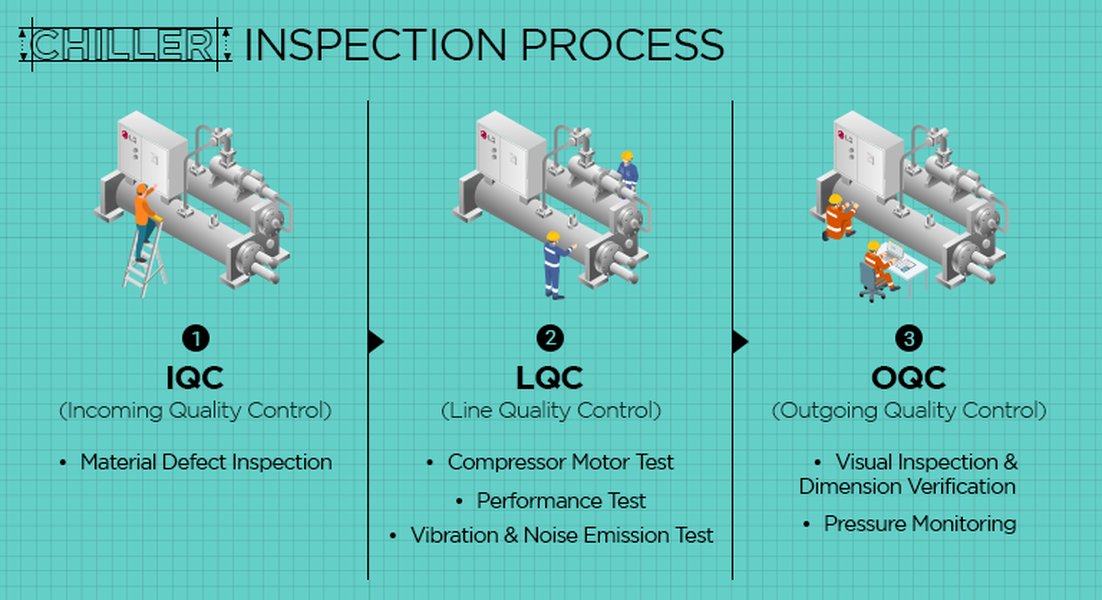
An HVAC technician performing an inspection on a chiller, a critical step in diagnosing potential noise sources.
Advanced Diagnostic Techniques
For more complex or persistent noise issues, specialized tools and techniques are necessary.
Vibration Analysis
Vibration measurements are often more definitive than sound alone, as sound can be affected by reflections and ambient noise. Vibration analysis helps determine if the noise is originating from vibration from the chiller compressor or just the sounds of compression. It's especially useful for diagnosing mechanical imbalances or misalignments.
- Accelerometer Placement: Attach accelerometers to various components like the compressor, fan motors, pump casings, and associated piping.
- Frequency Analysis: Use a vibration analyzer to perform a frequency analysis. Specific frequencies correspond to certain rotating components or phenomena:
- Blade passing frequency in compressors.
- Fan rotational speed harmonics.
- Pump cavitation or bearing issues.
- Structural resonances.
- Identifying Tonal Noise: Tonal noise from compressor whine (low-frequency tones plus harmonics) or fan hums (often around 49Hz with harmonics) can be diagnosed using frequency analysis apps on smartphones or dedicated spectrum analyzers.
Acoustic Measurements
While vibration tells you about the source, acoustic measurements tell you about the sound propagation and its impact on the environment.
- Sound Level Meter: Use a sound level meter to measure overall noise levels (dBA) at various distances and directions from the chiller.
- Sound Power Data: Chiller manufacturers can provide sound power data for their units, which can be used to predict sound levels at a distance and assess compliance with noise ordinances.
- Acoustic Imaging Cameras: These devices can visually map sound sources, providing a quick way to pinpoint the exact location of a noise within a complex system.
Pressure and Flow Diagnostics
Abnormal refrigerant or water flow can lead to noise.
- Pressure Gauges: Monitor suction, discharge, condenser, and cooler pressures. Unstable pressures can indicate issues like surging or blockages.
- Flow Meters: Verify adequate coolant flow. Inadequate flow can lead to pump strain and noise.
- Refrigerant Sight Glass: Check the sight glass for bubbles, which can indicate a low refrigerant charge or air in the system, both of which can cause abnormal compressor operation and noise.
Common Chiller Faults and Their Noises
The following table summarizes common chiller problems and the typical noises associated with them, providing a quick reference for diagnosis.
| Common Chiller Problem | Associated Noise Character | Potential Causes | Diagnostic Clues |
|---|---|---|---|
| Chiller Surge | Long sound followed by short drum sounds, whooshing/rattling | Low partial loads, air in system, low condenser water flow, refrigerant issues | Fluctuating motor current, high discharge pressure, low suction pressure, unstable operation |
| Loose Hardware/Components | Rattling, banging, clicking, clunking | Vibration over time, improper installation | Visible movement of parts, can often be tightened |
| Compressor Internal Wear/Bearing Failure | Grinding, screeching, knocking, loud humming | Lack of lubrication, age, operational stress | High oil temperature, reduced efficiency, excessive vibration, hot compressor shell |
| Fan Issues (Motor/Blades/Bearings) | Whining, screeching, rattling, droning (low frequency) | Worn bearings, loose blades, foreign objects, motor issues | Visible fan wobble, reduced airflow, fan stops/starts intermittently |
| Pump Problems | Grinding, cavitation noise (gurgling/rattling), loud humming | Worn bearings, impellers, cavitation due to low flow/air, blockage | Low flow rates, unusual pump temperatures, pressure drops across pump |
| Refrigerant Flow Issues (e.g., blockage) | Hissing, gurgling, clicking (from compressor restarting) | Excess moisture (ice blockage), non-condensables, undercharge | Reduced cooling effect, erratic compressor cycling, hot compressor, refrigerant sight glass issues |
| Misaligned/Backwards Running Compressor | Excessive noise at startup, loud humming | Incorrect electrical wiring (phase reversal) | Occurs immediately at startup, chiller may not cool effectively |
The Importance of Chiller Surge Identification
Chiller surge is a particularly important noise source to identify due to its potential for severe damage to the compressor. It's characterized by a rapid reversal of refrigerant flow, causing violent fluctuations in pressure and vibration. While it creates a very distinct sound, it's critical to identify it beyond just audible noise. Monitoring motor current and pressure readings can confirm surge, even if the sound is masked by other plant noise.
Understanding Chiller Surge: This video explains what centrifugal chiller surge is and provides examples of what it sounds like, offering valuable insights for diagnosis.
Comparative Analysis of Chiller Noise Characteristics
To further illustrate the complexities of chiller noise, let's consider a comparative analysis of different noise types across various operational aspects. This radar chart will visually represent hypothetical noise impact and diagnostic ease for typical chiller noise sources, based on expert opinion.
This radar chart illustrates how different noise sources compare across various metrics. For instance, Compressor Surge has high ratings for Audibility, Vibration Intensity, and Damage Potential, but also presents a higher Diagnostic Difficulty due to its complex nature. Fan Noise, while highly audible and often in a higher frequency range, generally has lower vibration intensity and damage potential compared to internal mechanical failures. This visual aid underscores the necessity of a multi-faceted approach to accurately diagnose and address chiller noise.
When to Call a Professional
While initial troubleshooting can identify many common issues, some noise problems require expert intervention. If you encounter:
- Persistent, loud, or unusual noises that don't respond to simple fixes.
- Error codes or alarms related to compressor, fan, or pump faults.
- Signs of severe vibration or potential damage (e.g., fluid leaks, burning smells).
- Situations requiring refrigerant handling or complex electrical diagnostics.
A qualified HVAC technician or chiller expert can provide a precise diagnosis using specialized tools and knowledge, ensuring safe and effective repairs.
Frequently Asked Questions (FAQ)
What is chiller surge and why is it noisy?
Can loose parts cause significant noise in a large chiller?
How can I differentiate between fan noise and compressor noise in an air-cooled chiller?
Are there any simple, low-cost steps to reduce chiller noise before calling a professional?
Conclusion
Diagnosing the source of noise in a large centrifugal chiller requires a systematic and comprehensive approach. By understanding the primary noise contributors—ranging from compressor surge and internal wear to fan aerodynamics, pump issues, and structural vibrations—maintenance personnel and technicians can effectively narrow down the potential causes. Initial visual and auditory inspections, combined with advanced techniques like vibration and acoustic analysis, provide a robust diagnostic framework. Accurate identification of the noise source is not only crucial for resolving immediate complaints but also for preventing costly damage, optimizing chiller performance, and ensuring compliance with environmental noise regulations. Regular maintenance and proactive monitoring are key to minimizing noise and extending the lifespan of these vital cooling systems.
Recommended Further Exploration
- Explore advanced techniques for analyzing chiller vibrations to pinpoint mechanical faults.
- Discover effective soundproofing solutions, including enclosures and barriers, for industrial chillers.
- Learn how to diagnose and resolve refrigerant flow problems that lead to chiller noise.
- Understand maintenance strategies that can proactively reduce noise levels and extend chiller lifespan.
References
Last updated May 21, 2025