
China Redefines Sovereign Boundaries: Understanding the Landmark Foreign State Immunity Law
A pivotal shift from absolute to restrictive immunity transforms how foreign states interact with Chinese courts.
On September 1, 2023, the People's Republic of China (PRC) enacted its first comprehensive legislation on foreign state immunity, the Foreign State Immunity Law (FSIL). This law, which officially took effect on January 1, 2024, signifies a monumental shift in China's long-standing legal position, moving away from the doctrine of absolute immunity towards a restrictive approach. This change aligns China more closely with international norms and has profound implications for foreign states, international businesses, and the landscape of international law.
Key Highlights of the FSIL
- Shift to Restrictive Immunity: China abandons its traditional adherence to absolute immunity, now allowing foreign states to be sued in Chinese courts under specific circumstances, primarily concerning commercial activities.
- Commercial Activity Exception: The law explicitly states that foreign states do not enjoy immunity for disputes arising from commercial activities, distinguishing between sovereign acts (acta jure imperii) and private/commercial acts (acta jure gestionis).
- Alignment with International Practice: The adoption of restrictive immunity brings China's legal framework closer to that of many other major jurisdictions and international conventions like the UN Convention on Jurisdictional Immunities of States and Their Property.
From Absolute Protection to Conditional Accountability: The Core Shift
Understanding the Transition
Historically, the PRC adhered strictly to the principle of absolute sovereign immunity. This doctrine meant that foreign states, regardless of the nature of their actions, were generally shielded from the jurisdiction of Chinese courts. This position was rooted in the principle of sovereign equality, where one state cannot exercise jurisdiction over another.
However, the global landscape of state immunity has evolved significantly. Many nations adopted the restrictive theory, recognizing that states increasingly engage in activities indistinguishable from private commercial entities. The FSIL represents China's adaptation to this reality and its increasing integration into the global economy. The law aims to clarify the rules, protect the lawful rights and interests of parties involved, safeguard state sovereignty, and promote friendly international exchanges.
What is Restrictive Immunity under the FSIL?
Restrictive immunity differentiates between a state's public acts (sovereign functions like diplomatic relations or military actions) and its private or commercial acts. Under the FSIL:
- Sovereign Acts (Acta Jure Imperii): Foreign states generally retain immunity for acts performed in their sovereign capacity.
- Commercial/Private Acts (Acta Jure Gestionis): Foreign states generally *do not* enjoy immunity for acts that are commercial or private in nature. This allows individuals and organizations to bring lawsuits against foreign states in Chinese courts concerning these activities.
This shift is crucial because it opens the door for legal recourse within China for disputes arising from commercial dealings with foreign states or state-controlled entities acting in a commercial capacity.
Dissecting the Foreign State Immunity Law (FSIL)
Scope and Definition
Who is considered a "Foreign State"?
Article 2 of the FSIL defines a "foreign state" broadly to include:
- The foreign sovereign state itself.
- State organs or constituent parts of the foreign sovereign state.
- Organizations or individuals authorized by the foreign sovereign state to exercise sovereign authority and acting based on that authority.
This definition is critical for determining which entities can potentially claim immunity and under what circumstances they might be subject to exceptions.
Jurisdictional Basis
The FSIL provides the legal basis for PRC courts to exercise jurisdiction over civil cases involving foreign states and their property, subject to the specific exceptions outlined in the law. The default position remains that foreign states enjoy immunity, but the exceptions significantly limit its application.
Exceptions to State Immunity: When Can Foreign States Be Sued?
The core of the FSIL lies in its exceptions to the general rule of immunity. A foreign state will *not* enjoy immunity from the jurisdiction of PRC courts in several key situations:
1. Consent (Waiver of Immunity)
- Express Consent: A foreign state explicitly agrees to the jurisdiction of PRC courts, either through international agreements, written contracts (including arbitration agreements), or written submissions in specific court proceedings (Article 3). Advance written waivers are permissible.
- Implied Consent (Submission to Jurisdiction): A foreign state is deemed to have consented if it initiates proceedings in a PRC court as a plaintiff, participates in proceedings as a defendant without asserting immunity, or files a counterclaim (Article 4). Merely appearing to assert immunity or appearing as a witness does not constitute a waiver.
2. Commercial Activities
This is arguably the most significant exception (Article 7). Immunity is waived for proceedings arising out of commercial activities if:
- The commercial activity occurs between the foreign state and an organization or individual of another state (including the PRC).
- The activity either takes place within PRC territory OR occurs outside PRC territory but has a "direct effect" within the PRC.
A "commercial activity" is defined as any transaction for goods or services, investment, lending, or other act of a commercial nature that is *not* an exercise of sovereign authority. The determination considers both the nature and purpose of the act.
3. Contracts for Labor or Services
Immunity generally does not apply to proceedings concerning contracts for labor or services performed wholly or partly within PRC territory (Article 8), with specific exceptions (e.g., for employees exercising specific public functions or diplomatic staff).
4. Personal Injury and Property Damage (Territorial Torts)
Immunity is waived for proceedings seeking compensation for death, personal injury, or damage to/loss of tangible property caused by an act or omission of the foreign state, provided the act occurred wholly or partly within PRC territory and the actor was present in PRC territory at the time (Article 9).
5. Property Matters
Exceptions exist for proceedings related to rights or interests in immovable property located in the PRC, interests in property arising by way of succession or gift, etc. (Article 10).
6. Intellectual Property
Immunity does not apply to proceedings concerning the determination of ownership and related rights/interests in intellectual property protected under PRC law (Article 11).
7. Participation in Companies
Exceptions apply to proceedings concerning a foreign state's participation in companies or other bodies corporate established under PRC law (Article 12).
8. Arbitration
If a foreign state agrees in writing with an organization or individual of another state to submit disputes arising from commercial activities or investment to arbitration, it does not enjoy immunity from PRC court jurisdiction concerning the validity of the arbitration agreement, recognition/enforcement of the award, or setting aside the award, subject to the arbitration agreement or relevant laws (Article 14). This explicitly opens a pathway for PRC courts to review aspects of investor-state and commercial arbitrations involving foreign states.
The FSIL and the "Act of State" Doctrine
An Indirect Influence
The user's query specifically mentioned the "act of state" doctrine. It's important to clarify the relationship between the FSIL and this doctrine. The traditional "act of state" doctrine, particularly as understood in common law systems like the US, is a principle of judicial restraint where courts refrain from adjudicating the legality of sovereign acts performed by a foreign state within its own territory. It concerns the *justiciability* of a case – whether a court *should* rule on the validity of a foreign government's official actions.
The FSIL, conversely, deals primarily with *jurisdictional immunity* – whether a foreign state can be sued in PRC courts *at all*. While the FSIL doesn't explicitly codify or reject the "act of state" doctrine as understood elsewhere, its adoption of restrictive immunity inherently changes the landscape. By carving out exceptions, particularly for commercial activities, the FSIL mandates that Chinese courts *can* exercise jurisdiction over certain acts of foreign states that previously enjoyed absolute immunity.
In effect, the FSIL narrows the scope of acts that are absolutely shielded from judicial scrutiny in China. While purely sovereign acts (*acta jure imperii*) committed abroad might still implicitly fall under principles akin to the act of state doctrine (i.e., non-justiciable or immune), the FSIL explicitly makes commercial acts (*acta jure gestionis*) justiciable and removes immunity for them, even if performed by the state itself or its entities. Therefore, the *position* on how PRC courts treat foreign state actions has indeed changed significantly, guided by the distinction between sovereign and non-sovereign (commercial) acts defined within the framework of immunity law.
Navigating the New Landscape: Immunity Doctrines Compared
Absolute vs. Restrictive Immunity under FSIL
The shift from absolute to restrictive immunity represents a fundamental change in how China approaches legal disputes involving foreign states. The radar chart below visualizes key differences between the old approach (absolute immunity) and the new framework established by the FSIL (restrictive immunity) across several dimensions.
This chart illustrates that while the overall scope of immunity decreases under the FSIL, areas like predictability, alignment with international norms, potential for enforcement against commercial assets, and avenues for investor recourse see a marked increase compared to the previous absolute immunity regime.
Structure of China's Foreign State Immunity Law
A Mindmap Overview
The Foreign State Immunity Law establishes a framework centered around the principle of restrictive immunity, with clearly defined exceptions and procedural aspects. This mindmap provides a visual summary of the law's key components and relationships.
This structure highlights the transition towards allowing legal action against foreign states under specific, largely commercially-oriented circumstances, while incorporating mechanisms like MFA involvement and reciprocity.
Detailed Exceptions to Immunity
When Sovereign Shield Doesn't Apply
The following table summarizes the primary exceptions under which a foreign state cannot claim immunity from the jurisdiction of Chinese courts according to the FSIL:
| Exception Category (FSIL Article) | Condition Triggering Exception | Brief Explanation / Example |
|---|---|---|
| Consent / Waiver (Arts. 3-4) | Express or implied agreement to jurisdiction. | A state signs a contract with a jurisdiction clause submitting to PRC courts; A state files a lawsuit in a PRC court. |
| Commercial Activities (Art. 7) | Dispute arises from a commercial transaction with connection to the PRC (occurs in PRC or has direct effect). | A state-owned airline sells tickets in China; A state entity defaults on a loan provided by a Chinese bank for a commercial project. |
| Labor / Services Contracts (Art. 8) | Contract for labor/services performed wholly or partly in the PRC. | A local individual hired by a foreign embassy for non-diplomatic administrative work disputes their contract. (Exclusions apply for certain roles). |
| Personal Injury / Property Damage (Art. 9) | Act/omission by the state in PRC territory causes relevant harm, and the actor was present in PRC. | Damage caused by a vehicle operated by a non-diplomatic employee of a state agency within China. |
| Property Matters (Art. 10) | Dispute concerns rights/interests in property (e.g., immovable property in PRC, succession). | A dispute over ownership of a building in China purchased by a foreign state. |
| Intellectual Property (Art. 11) | Determination of ownership/rights in IP protected under PRC law. | A dispute over a patent registered in China by a foreign state entity. |
| Participation in Companies (Art. 12) | Dispute concerns a foreign state's participation in a corporate body under PRC law. | A shareholder dispute involving a foreign state's investment in a Chinese company. |
| Arbitration (Art. 14) | Written agreement to arbitrate commercial/investment disputes. | A party seeks PRC court assistance to enforce an arbitral award against a foreign state based on a commercial contract with an arbitration clause. |
This table provides a clear overview of the specific circumstances defined by the law where foreign states lose their immunity shield in PRC courts.
Visualizing the Legal Context
Institutions and Symbols
The implementation of the Foreign State Immunity Law operates within the broader legal and institutional framework of the People's Republic of China. The images below depict various facets related to China's judicial system, government buildings associated with legal and foreign affairs, and symbolic representations relevant to the rule of law and international relations in the Chinese context. Understanding this visual context helps appreciate the environment in which the FSIL is applied.

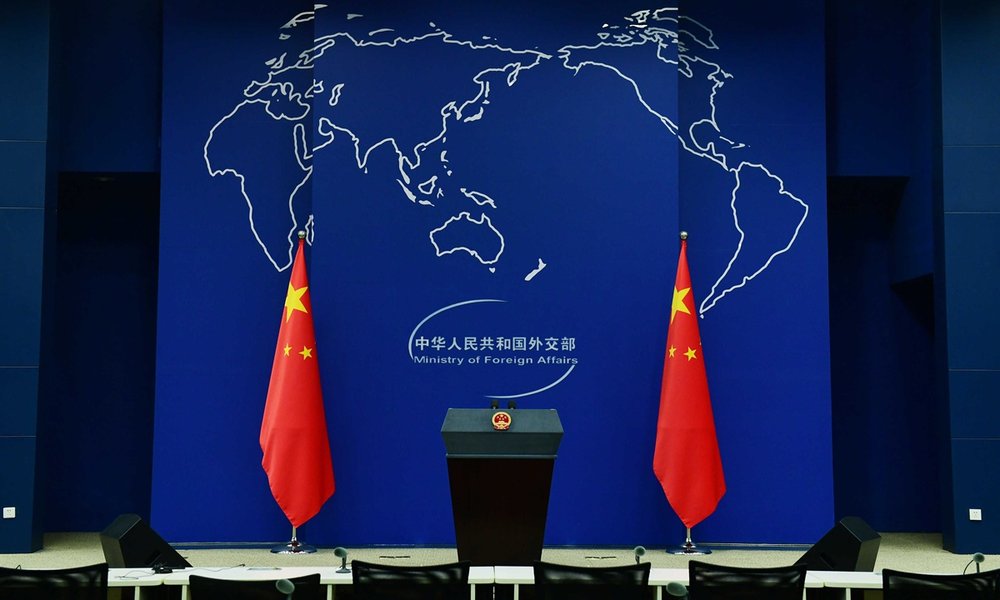

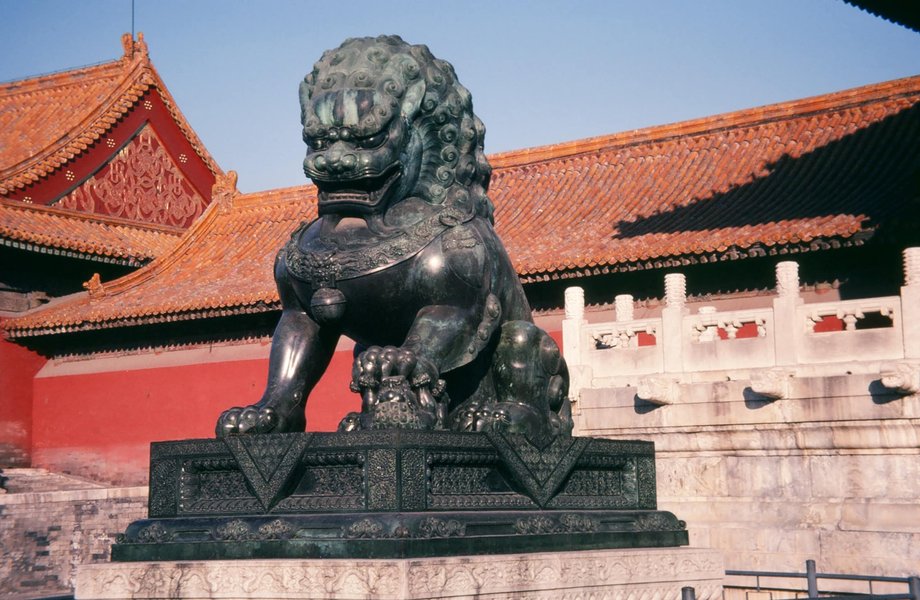
These images represent the legislative body responsible for enacting laws like the FSIL (National People's Congress), the symbolic seat of government power (Great Hall of the People), specialized courts dealing with international commercial disputes, and traditional symbols often associated with authority and protection in Chinese culture.
Contextualizing the FSIL: China's Evolving Legal Framework for Foreign Relations
The Broader Picture
The enactment of the Foreign State Immunity Law did not happen in isolation. It is part of a broader trend in China to develop and codify its legal framework governing international interactions. This includes the Foreign Relations Law, also enacted in 2023. Understanding this context helps appreciate the FSIL's role. The video below discusses the significance of China's new law on foreign relations, highlighting the country's efforts to create a more comprehensive legal basis for its diplomatic activities and international engagements.
As discussed in the video regarding the Foreign Relations Law, China is actively working to enhance the legal underpinnings of its foreign policy. The FSIL complements this by specifically addressing the legal status of foreign states within the domestic judicial system. Both laws signal China's intent to manage its international relationships increasingly through formalized legal rules and frameworks, providing greater (though state-controlled) clarity for international actors while also asserting its own legal interpretations and safeguarding perceived national interests.
Other Important Aspects of the FSIL
Immunity from Enforcement Measures
It's crucial to distinguish between immunity from jurisdiction (being sued) and immunity from enforcement measures (seizure of assets to satisfy a judgment). The FSIL addresses both. Generally, a foreign state's property enjoys immunity from enforcement measures by PRC courts (Article 13). However, this immunity can be waived:
- Express Waiver: The foreign state explicitly waives immunity from enforcement.
- Property Used for Commercial Activity: Immunity from enforcement does *not* apply to property located in the PRC that is used by the foreign state for commercial activity and is connected to the legal proceedings (Article 15).
This means that even if a judgment is obtained against a foreign state under an exception to jurisdictional immunity, enforcing that judgment against state assets requires overcoming a separate hurdle, unless the assets are clearly commercial and linked to the dispute.
The Role of the Ministry of Foreign Affairs (MFA)
The FSIL grants the PRC's Ministry of Foreign Affairs a significant role. The MFA can issue certificates to courts confirming whether an entity qualifies as a "foreign state" under the law (Article 19). Furthermore, the MFA can provide opinions to courts on matters concerning foreign affairs and significant state interests related to the case (Article 20). While courts make the final decisions, these MFA inputs could influence proceedings, potentially introducing foreign policy considerations into judicial determinations.
The Principle of Reciprocity
The law explicitly incorporates the principle of reciprocity (Article 21). If a foreign country grants the PRC and its property less immunity than what is provided under the FSIL, the PRC may apply reciprocal treatment to that foreign country and its property. This allows China to adjust its application of immunity based on how other countries treat China.
Application in Hong Kong and Macau
While the FSIL is a national law of the PRC, the PRC government has indicated that the principles of restrictive immunity should also apply in the Special Administrative Regions of Hong Kong and Macau. The exact mechanism for implementation (e.g., promulgation or local legislation adapting the FSIL) is subject to the constitutional frameworks (Basic Laws) of these regions.
Frequently Asked Questions (FAQ)
1. What was China's position on state immunity before the FSIL?
Before the FSIL took effect on January 1, 2024, China adhered to the doctrine of absolute state immunity. This meant that foreign states were generally completely immune from being sued in Chinese courts, regardless of whether their actions were governmental or commercial in nature. There was no comprehensive domestic legislation governing the issue.
2. What is the main change introduced by the FSIL?
The main change is the shift from absolute immunity to restrictive immunity. Under the FSIL, foreign states no longer have absolute protection. They can now be sued in Chinese courts under specific exceptions, most notably for disputes arising from commercial activities they engage in.
3. Does the FSIL mean China has abandoned the concept of sovereignty?
No. The FSIL aims to balance state sovereignty with the need for legal remedies in certain situations, particularly commercial ones. It explicitly states its purpose includes safeguarding the equality of state sovereignty. The law still presumes immunity for sovereign acts (acta jure imperii) and only removes immunity for specific non-sovereign activities or when consent is given. It aligns China with international practice where restrictive immunity is seen as compatible with sovereignty in a globalized world.
4. Can judgments against foreign states under the FSIL be enforced?
Enforcement is possible but subject to separate rules. A foreign state's property generally enjoys immunity from enforcement unless immunity is expressly waived, or the property is located in the PRC, used for commercial activity, and connected to the lawsuit. Property used for sovereign purposes (like embassies or military assets) remains protected.
5. How does the FSIL relate to the "Act of State" doctrine?
The FSIL primarily addresses jurisdictional immunity (can a state be sued?), while the traditional Act of State doctrine concerns justiciability (should a court rule on the validity of a foreign sovereign's official acts within its own territory?). By adopting restrictive immunity, the FSIL allows Chinese courts to adjudicate certain acts (commercial ones) that were previously immune, thereby narrowing the scope of foreign state actions shielded from judicial review in China, even if it doesn't explicitly adopt or reject the Act of State doctrine as defined elsewhere.
References
- The Law of the People's Republic of China on Foreign State Immunity - Ministry of Justice PRC
- China's New Foreign State Immunity Law: A Paradigm Shift from Absolute Immunity to Restrictive Immunity - King & Wood Mallesons
- China to Allow Some Suits Against Foreign States: A Summary of the Foreign State Immunity Law - NPC Observer
- A new era: foreign state immunity in the PRC and Hong Kong - Herbert Smith Freehills
- China’s New Foreign State Immunity Law Targets Commercial Transactions and Related Arbitration Disputes - Debevoise & Plimpton
- PRC Foreign State Immunity Law: A Gateway to Judicial Review of Investor-State Arbitration by the PRC Courts? - Kluwer Arbitration Blog
- China Adopts First Law on Foreign State Immunity Moving Towards Restrictive Immunity Approach - Lexology
- Restricting Foreign State Immunity: China’s New Law and What It Means - The Diplomat
Recommended Reading
Last updated April 5, 2025