
Understanding Chip-Level Heat Dissipation
A detailed exploration of market trends, solution categories, and technical innovations
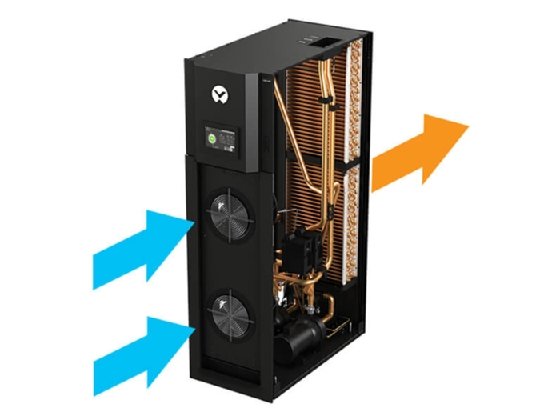
Key Highlights
- Market Expansion: Rapid growth driven by AI, high-performance computing, and miniaturization demands.
- Solution Diversity: Extensive categories ranging from in-chip techniques to system-level cooling solutions.
- Innovative Approaches: Advanced methods such as direct-to-chip liquid cooling, immersion cooling, and embedded thermal management systems.
Current Market Situation
The semiconductor industry is at a turning point where chip-level heat dissipation is no longer an ancillary consideration but a core design requirement. The global thermal management market is witnessing explosive growth due to increased chip power densities, driven by the rising demands in high-performance computing (HPC), artificial intelligence (AI), data centers, and electric vehicles (EVs). As chips become smaller and more densely packed, their thermal design power (TDP) is ballooning, sometimes surpassing 1000W for high-end processors and GPUs.
This surge in thermal demands is fueling investments in advanced cooling technologies, with projections indicating robust growth for both traditional and innovative cooling methodologies. The trend toward liquid cooling solutions, in particular, is unprecedented—many experts point to the eventual full-scale adoption of these methods in the next few years. As chip manufacturers continue to refine technologies oriented toward energy efficiency and sustainability, the market deeply values efficient thermal management, which directly influences chip performance, reliability, and lifespan.
Categories of Heat Dissipation Solutions
1. In-Chip Solutions
In-chip solutions focus on managing heat within the chip itself. This approach aims to control thermal issues at the source, reducing the need for external cooling systems and ensuring that heat is managed before it affects chip performance. Common in-chip technologies include microchannel heat dissipation, thermal vias, and embedded structures.
Microchannel Heat Dissipation
This technique integrates a network of tiny channels directly within the chip's substrate or package, allowing a coolant to circulate close to the heat-generating components. The principles of microchannel cooling rely on creating a significantly increased surface area for heat exchange, thereby reducing the distance between the heat source and the cooling medium. Due to the markedly improved surface area-to-volume ratio, these channels can achieve very high heat flux removal even in highly compact chip designs.
The design optimization of the channels—such as their dimensions, layout, and materials—is central to maximizing thermal efficiency. Revised channel geometry and the utilization of high thermal conductivity materials are research areas that are continuously evolving. While this method has proven effective, it poses manufacturing challenges and susceptibility to clogging, necessitating robust quality control and specialized fabrication techniques.
Thermal Vias and Through-Silicon Vias (TSVs)
Thermal vias, including through-silicon vias, provide paths within the semiconductor chip through which heat can be rapidly conducted away from hotspots. TSVs are integrated during the chip manufacturing process and are especially valuable in three-dimensional (3D) stacked chip designs. They utilize vertical integration to dramatically shorten the distance that heat must travel, thus improving overall thermal performance.
These vias are commonly used in conjunction with microchannel systems to further diffuse heat and limit thermal resistance. The efficacy of these structures lies in their ability to maintain performance consistency despite escalating chip densities.
Embedded Heat Dissipation Structures
Embedded solutions integrate small-scale cooling elements directly into the chip package. Examples include the incorporation of heat spreaders, phase change materials (PCMs), and even thermoelectric elements at the chip level. By addressing thermal challenges right inside the chip architecture, these methods reduce the reliance on conventional external cooling devices.
Embedded heat dissipation is a highly promising field, especially as semiconductor devices push toward ever-smaller form factors without compromising on performance. The integration of these structures requires tight collaboration between chip designers and material scientists to ensure compatibility and reliability.
2. Chip-Package Solutions
Chip-package solutions bridge the gap between the chip and its external cooling mechanisms. This category deals with the thermal interface between the semiconductor die and the heat sink or heat spreader. Solutions within this tier are designed to optimize thermal contact and minimize the interface thermal resistance.
Thermal Interface Materials (TIMs)
TIMs are critical materials that are used to fill microscopic gaps between the chip and the heat sink, ensuring effective thermal coupling. These materials can be greases, gels, or phase-change compounds, essentially serving as a bridge to enable efficient heat transfer. Advanced TIMs leverage nanomaterials such as graphene and graphite to further improve thermal conductivity.
The selection of a proper TIM is dependent on the specific chip-package design and operational temperature range, as each material offers varying degrees of thermal resistance reduction and durability.
Flip-Chip Bonding
Flip-chip bonding is an advanced packaging method that physically connects the chip to the substrate with its active area facing downward. This approach minimizes the distance between the heat source and the heat spreader, dramatically reducing thermal losses at the interface. Flip-chip packaging is especially beneficial in high-density applications such as mobile devices and advanced computing systems, where space and efficiency are paramount.
By facilitating a more direct thermal path, flip-chip bonding enhances overall cooling performance, and it is often integrated with advanced cooling techniques like direct-to-chip liquid cooling.
3. System-Level Solutions
System-level solutions manage heat at the board or system scale—they are particularly necessary when chip-level and package-level measures alone are insufficient to address high-power applications. These solutions extend beyond the chip itself, encompassing the entire electronic system.
Air Cooling
Air cooling remains a long-standing, cost-effective method for dissipating heat. It utilizes fans, heat sinks, and often heat pipes or vapor chambers to spread and convect heat away from the chip and surrounding components. While air cooling is easy to implement and maintain, it is reaching its physical limits as chip power densities grow. This method is still ideal for many consumer applications, but its effectiveness diminishes in high-density server environments or overclocked chips where thermal loads are extreme.
Liquid Cooling Solutions
Liquid cooling has emerged as one of the most promising methods for managing the intense thermal loads of modern semiconductor devices. Among the various liquid cooling strategies, two prominent approaches have emerged: direct-to-chip (D2C) cooling and immersion cooling.
Direct-to-Chip Cooling: This method involves directly mounting cold plates or heat sinks to the chip, where a liquid coolant—typically water or a specialized refrigerant—is circulated to absorb heat. The coolant then transports the heat to a heat exchanger for dissipation. Direct-to-chip cooling is highly favored in environments that demand high performance, such as data centers and AI accelerators. The solution is available in single-phase designs, where the coolant remains in liquid form, and innovative two-phase designs that exploit the refrigerant's phase change for improved thermal efficiency.
Immersion Cooling: Immersion cooling takes a more radical approach by submerging the entire server or chip assembly in a dielectric fluid. This fluid, which does not conduct electricity, directly contacts all critical components, absorbing heat through natural convection and conduction. The heated fluid is then circulated through an external heat exchanger. This method offers excellent performance for ultra-dense computing environments, making it suitable for hyperscale data centers.
Advanced Cooling Technologies
Beyond traditional air and liquid cooling techniques, a range of advanced cooling methods are emerging to meet the thermal challenges of next-generation chips. These include:
| Cooling Technology | Description | Key Advantages |
|---|---|---|
| Microchannel Cooling | Integrates tiny cooling channels into the chip structure | High surface area; Direct hotspot management |
| Thermoelectric Cooling | Uses the Peltier effect to transfer heat between two junctions | Precise temperature control; Spot cooling capability |
| Electrocaloric Cooling | Applies electric fields to electrocaloric materials to induce temperature changes | No moving parts; Potential for high efficiency |
| Jet Cooling | Directs high-velocity fluid jets onto hot surfaces | Excellent for high-flux hotspots; Rapid heat dispersion |
| Immersion Cooling | Submerges components in dielectric fluid | Handles high-power densities; Lowers energy consumption |
Advanced Materials and Novel Solutions
Innovative materials are playing an increasingly important role in enhancing chip-level heat dissipation. Graphite, graphene films, and other high thermal conductivity materials are being used to create interfaces and substrates that better manage and disperse heat. These materials can enhance performance in both traditional and advanced cooling configurations. Additionally, gravity-driven cooling systems explore positioning condensers for optimal fluid flow without relying on mechanical pumps, which further reduces energy consumption.
The integration of multi-disciplinary techniques—combining aspects of microchannel design, advanced TIMs, and direct liquid cooling—provides a synergistic approach to overcoming thermal challenges. When aligned with operational and regulatory sustainability goals, these technological innovations are setting new industry standards.
Technical Links and Solutions Under Each Category
In-Chip Solutions Technical Details
Microchannel Heat Dissipation: Involves designing and fabricating microchannels in the chip substrate. Engineers focus on channel dimensions, coolant properties, and material selection to maximize thermal conductivity. Key technical solutions involve adopting advanced lithography and etching techniques to ensure uniform channel dimensions and minimize flow resistance.
Thermal Vias and TSVs: Used to create vertical paths for heat conduction directly out of the chip. The implementation of these vias reduces the thermal gradient and is particularly effective in 3D chip architectures. The design process often involves computational fluid dynamics (CFD) simulations to optimize the dimensions and placement of the vias.
Embedded Heat Dissipation Structures: Techniques like integrating phase change materials or thermoelectric elements within the chip contribute to targeted cooling. Here, research is focused on materials that change state at specific temperatures and return to their original state quickly to allow for cyclic operation. These embedded systems also pair well with external cooling approaches to enhance overall performance.
Chip-Package Solutions Technical Details
Thermal Interface Materials (TIMs): Advanced TIMs use nanomaterials to fill micro-gaps between the chip and the heat spreader. The aim is to reduce thermal resistance and maintain consistent contact even under thermal cycling. Ongoing developments focus on increasing the longevity and conductivity of these materials.
Flip-Chip Bonding: By mounting the chip with its active side facing the substrate, flip-chip bonding dramatically minimizes the number of thermal interfaces. This method not only improves the electrical connection yields but also provides a more direct thermal path for heat dissipation. Extensive testing and simulation are performed to ensure that mechanical stresses do not undermine the thermal benefits.
System-Level Solutions Technical Details
Air Cooling: Utilizing design innovations in fan dynamics and heat sink geometries, air cooling remains effective in many scenarios. Engineers optimize the airflow paths and utilize computational models to predict thermal zones, ensuring that the cooling system addresses hotspots effectively.
Liquid Cooling – Direct-to-Chip: Consists of cold plates attached directly to the chip surface, where a liquid coolant rapidly absorbs heat. The design involves selecting suitable coolants, devising piping networks for efficient coolant distribution, and using both single-phase and two-phase systems. Two-phase systems employ the fluid’s phase change to absorb additional heat, markedly increasing the thermal efficiency.
Immersion Cooling: This technique immerses the server or chip assembly in a dielectric fluid which has high boiling heat transfer coefficients. The design of immersion systems addresses fluid circulation, dielectric properties, and heat exchanger efficiency. Such systems are extensively used in hyperscale data center environments where space and energy consumption are critical metrics.
Conclusion
Chip-level heat dissipation is a multifaceted and rapidly evolving area of semiconductor technology. As chips continue to produce higher outputs in ever-smaller form factors, the importance of managing heat quickly becomes essential not only for improving performance but also for ensuring long-term reliability. In-chip solutions like microchannel cooling, thermal vias, and embedded heat dissipation technology provide innovative ways to manage heat right at its source, while chip-package solutions such as TIMs and flip-chip bonding optimize the interface between the chip and external cooling mechanisms. System-level strategies—whether traditional air cooling or sophisticated liquid cooling (both direct-to-chip and immersion)—further complement these efforts by handling thermal loads at a broader scale.
The technological advancements in this field are fueled by a combination of improved materials, innovative structural designs, and the rigorous demands of modern computing environments, including HPC, AI, and data centers. Together, these developments ensure that chip-level heat dissipation continues to evolve in response to the challenges imposed by higher power densities and tighter design constraints. Overall, the collaborative integration of in-chip, chip-package, and system-level solutions represents a robust strategy to sustain the growth and reliability of next-generation semiconductor devices.
References
- AI-Driven Cooling Technologies for High-Performance Data Centers - SSRN
- Chip Sales Soar in 2025 - VentureBeat
-
Comprehensive Review on Chip-Scale Thermal - ScienceDirect
- Data Center Cooling Trends 2025 - Data Center Knowledge
- Direct-to-Chip Liquid Cooling Market Analysis - Global Market Insights
- Global Thermal Management Chip Market - M Research Intellect
- NVIDIA Blackwell Chip Air Cooling Overview - SZYUNZE
- Thermal Management for Data Centers 2025-2035 - IDTechEx
- Data Center Liquid Cooling Market Forecast - GlobeNewswire
- Synergistic Heat Transfer & Electrocaloric Cooling - Nature
Recommended Further Queries
Last updated February 25, 2025