
Unveiling the Depths of Grace: How Christ's Atonement Empowers Your Worship
Discover how Jesus' once-for-all sacrifice and ongoing intercession grant you continuous access to God, not through your own righteousness, but through His perfect purity.
Key Insights into Christ's Atoning Work
- Eternal Redemption Secured: Christ's sacrifice was a singular, perfect event ("ephapax") that achieved everlasting ("aiōnian") redemption ("lytrōsin") from sin, fundamentally differing from the repetitive Old Covenant rituals.
- Conscience Purified for Worship: The blood of Jesus cleanses our conscience from "dead works," enabling a genuine and confident approach to worship the living God, not by making us instantly flawless, but by providing a pure standing.
- Eligibility Through Christ's Purity: Belief in Christ grants eligibility to leverage His perfect purity for worship and relationship with God, while His ongoing intercession (Hebrews 7:25) addresses our continued human imperfections and future sins.
The Foundation: Understanding Sin and the Need for Atonement
Humanity's inherent nature, marked by sin, creates a separation from a holy God. The book of Hebrews masterfully explains how God, in His infinite mercy and wisdom, provided a way to bridge this chasm. Before Christ, the Old Covenant offered a system of animal sacrifices. While significant, these were temporary and symbolic, unable to truly perfect the conscience of the worshiper or provide lasting redemption. This sets the stage for understanding the profound and permanent solution offered through Jesus Christ.
The Supreme Sacrifice: Christ's Work in Hebrews 9:12-14
The core of your query revolves around Hebrews 9:12-14, which describes a pivotal shift in how atonement is achieved. This passage highlights that Christ, as the ultimate High Priest, entered the heavenly sanctuary not with the blood of animals, but "through His own blood, having obtained eternal redemption."
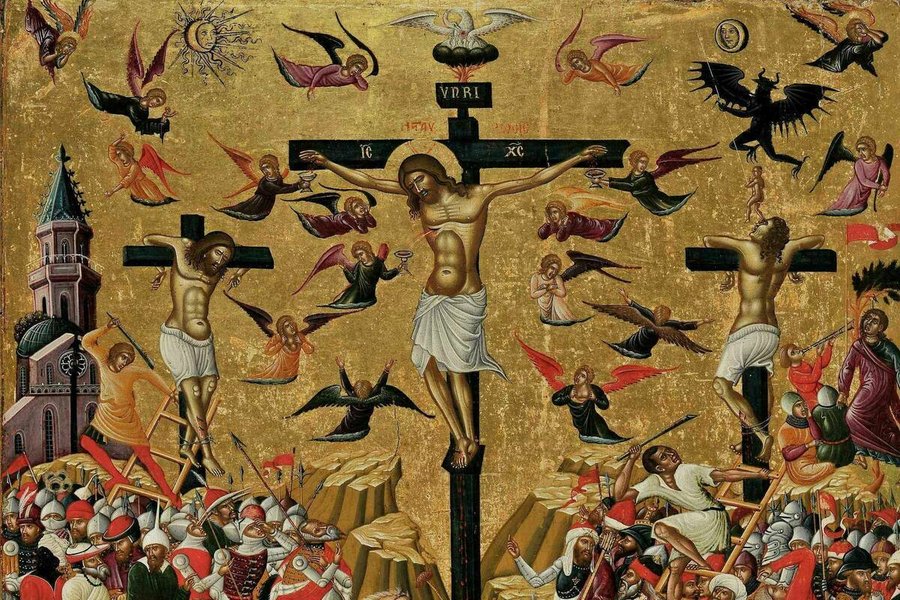
Artistic representation of Christ's sacrifice, central to the concept of atonement. "The Crucifixion" by Andreas Pavias.
Deciphering Key Theological Terms
To fully grasp the magnitude of Christ's work, understanding specific Greek terms used in Hebrews is crucial:
Ephapax (ἐφάπαξ): Once for All
This term emphasizes the unique, unrepeatable, and all-sufficient nature of Christ's sacrifice. Unlike the Old Testament priests who had to offer sacrifices repeatedly, Jesus' offering of Himself was a singular event that accomplished its purpose definitively and for all time.
Lytrōsin (λύτρωσιν): Redemption
Lytrōsin refers to a ransoming, a buying back, or a deliverance from bondage. In this context, it signifies the liberation from sin's debt and its consequences. Christ's blood paid the price to free humanity from the spiritual slavery imposed by sin.
Aiōnian (αἰώνιον): Eternal, Perpetual
This adjective modifies "redemption," indicating that the effects of Christ's sacrifice are not temporary but everlasting. It secures a permanent solution to the problem of sin, offering enduring forgiveness and reconciliation with God.
The Unsurpassed Nature of Christ's Offering
The sacrifices under the Old Covenant, involving the blood of goats and calves, could only provide temporary, external, and ceremonial cleansing. They served as a shadow, pointing towards the ultimate reality fulfilled in Christ. Hebrews 9:13-14 contrasts this: "For if the blood of goats and bulls, and the sprinkling of defiled persons with the ashes of a heifer, sanctify for the purification of the flesh, how much more will the blood of Christ, who through the eternal Spirit offered himself without blemish to God, purify our conscience from dead works to serve the living God?"
Christ's sacrifice was superior because it was:
- Voluntary and Perfect: He offered Himself "without blemish."
- Spirit-Empowered: Accomplished "through the eternal Spirit."
- Internally Transformative: It purifies the "conscience," not just the flesh.
The Power of a Purified Conscience
From "Dead Works" to Serving the Living God
The phrase "dead works" refers to actions, rituals, or attempts at righteousness that are performed apart from genuine faith and the life-giving power of God. These might include efforts to earn salvation through legalistic observance or actions that, while appearing religious, lack spiritual vitality and stem from a conscience burdened by guilt. Christ's blood cleanses the conscience from the guilt and condemnation associated with these dead works. This internal purification is essential because it removes the spiritual barrier that sin creates, allowing believers to approach God with sincerity and confidence, and to "serve the living God" in a way that is vibrant and meaningful.
Eligibility Through Grace: Leveraging Christ's Purity
This brings us to a crucial aspect of your presentation: the understanding that at the moment of faith, a believer is not instantly made inherently righteous or sinless in their human nature. Instead, they are declared righteous (justified) in God's sight based on Christ's work and are granted *eligibility* to access and rely on Jesus' perfect purity as the basis for their relationship with God.
Justification: A Legal Standing, Not Instant Perfection
Justification is a forensic, or legal, declaration by God. When a person believes in Christ, God imputes Christ's righteousness to them and forgives their sins. This means they are viewed as righteous in His courtroom, not because they have become flawless, but because Christ's perfect record is credited to their account. This legal standing removes the condemnation of sin and grants peace with God.
The Privilege of Accessing Divine Purity
Because believers still inhabit fallible human bodies and contend with sin ("for all have sinned and fall short of the glory of God," Romans 3:23), their ability to approach a holy God is not based on their own fluctuating performance. Rather, it is a continuous reliance on the unwavering purity and righteousness of Jesus. This is what it means to "leverage Jesus' purity": our access to God, our ability to worship, and our acceptance before Him are constantly mediated through Christ. His perfection covers our imperfections.
Visualizing Key Attributes of Christ's Atonement
The following chart illustrates a comparative analysis of the perceived effectiveness and nature of Old Covenant sacrifices versus Christ's New Covenant sacrifice across several key theological attributes. The scoring reflects the qualitative superiority of Christ's atonement as described in Hebrews. A higher score (out of 10) indicates greater completeness or effectiveness in that attribute. This is an interpretive representation to highlight theological distinctions rather than a quantitative measurement.
This chart underscores how Christ's sacrifice provides a complete and lasting solution ('Efficacy for Sin', 'Duration of Effect', 'Nature of Redemption'), offers deeper internal purification ('Scope of Cleansing', 'Impact on Conscience'), and establishes a new, direct way to God ('Basis of Access to God').
The Ongoing Ministry: Christ's Intercession in Hebrews 7:25
Hebrews 7:25 complements this understanding by revealing Christ's continuous priestly ministry: "Consequently, he is able to save to the uttermost those who draw near to God through him, since he always lives to make intercession for them."
Sustaining the Believer's Relationship with God
Christ's "once for all" sacrifice dealt with the penalty of sin definitively. However, believers continue to struggle with sin in their daily lives. Christ's ongoing intercession as our High Priest in heaven means He continually represents us before the Father, applying the benefits of His sacrifice to our ongoing needs. His perfect purity and righteousness stand in our favor, ensuring that our fellowship with God is not severed by our daily failings.
A Crucial Distinction: Intercession, Not Automatic Removal of Future Sins
Your insight is correct: this is different from the idea that all future sins are simply "removed" or pre-forgiven in a way that negates personal responsibility or the need for repentance. Rather, Christ's intercession provides a constant means of access and restoration. When believers sin, their standing with God, secured by the "ephapax" sacrifice, is not lost. Instead, they can approach God through Christ, confess their sins (1 John 1:9), and be assured of forgiveness and cleansing because of Christ's advocacy on their behalf. His purity continually bridges the gap that our ongoing sins would otherwise create, maintaining our eligibility for worship and fellowship.
The Old Covenant vs. The New Covenant Sacrifice: A Comparison
To further illuminate the significance of Christ's atoning work, the table below contrasts key aspects of the Old Covenant sacrificial system with the sacrifice of Jesus Christ under the New Covenant.
| Feature | Old Covenant Sacrifices | Christ's Sacrifice (New Covenant) |
|---|---|---|
| Nature of Offering | Blood of animals (goats, bulls, lambs) | His own perfect, sinless blood |
| Frequency | Repeated (daily, yearly, for specific sins) | Once for all (ephapax) |
| Efficacy | Temporary, external, ceremonial cleansing; could not perfect the conscience | Eternal, internal purification of the conscience |
| Redemption Achieved | Symbolic atonement, covering sin temporarily | Actual, eternal redemption (lytrōsin aiōnian) from all sin |
| Place of Offering | Earthly tabernacle and temple | The true, heavenly sanctuary |
| Priestly Mediator | Human priests from the Levitical order (mortal, sinful) | Jesus Christ, the eternal High Priest (perfect, sinless) |
| Effect on "Dead Works" | Could not fully cleanse the conscience from them | Cleanses the conscience from dead works to serve the living God |
| Access to God | Limited, indirect, mediated by priests and rituals | Direct, bold access for all believers through Christ |
| Basis of Believer's Standing | Ongoing ritual compliance | Faith in Christ's finished work and imputed righteousness |
This comparison clearly shows the radical superiority and finality of Christ's sacrifice, which forms the bedrock of the New Covenant and the believer's relationship with God.
Mapping the Journey to God Through Christ
The following mind map visually outlines the theological concepts discussed, illustrating the progression from the problem of sin to the believer's sustained relationship with God through Christ's comprehensive atoning work.
This mind map traces the path from recognizing our separation from God due to sin, through the limitations of the Old Covenant, to the complete and eternal solution found in Jesus Christ. It highlights His definitive sacrifice, the resulting purification of conscience, the believer's new status of eligibility through His purity, and the crucial role of His ongoing intercession in maintaining a vibrant relationship with God.
This video, "Hebrews 9:23-10:4, 11-14, 19-25 | Christ's Once-for-All Sacrifice," provides a deeper dive into the scriptural context of Hebrews 9, exploring the finality and sufficiency of Christ's sacrifice, which is central to understanding His atoning work and its implications for believers.
Practical Implications for the Believer's Life
Understanding these truths has profound implications for how a believer lives and worships:
Confidence in Approaching God:
Knowing that access to God is based on Christ's perfect, unchanging purity, rather than personal performance, frees believers from fear and insecurity. They can approach God boldly (Hebrews 4:16), even amidst struggles with sin, assured of acceptance through Christ.
Authentic Worship:
A cleansed conscience allows for worship that is genuine and heartfelt, unhindered by guilt or the pretense of self-righteousness. Worship becomes a joyful response to God's grace.
Understanding Grace and Sanctification:
This framework guards against legalism (trying to earn God's favor through works) and license (sinning freely because of grace). It acknowledges the ongoing process of sanctification (being made more like Christ) as a work of the Holy Spirit, empowered by the secure foundation of Christ's atonement and intercession.
Perseverance in Faith:
The assurance of Christ's continual intercession provides strength and hope to persevere, knowing that He is advocating for us and that His grace is sufficient for our weaknesses.
In essence, the believer's life is lived in a dynamic relationship with God, made possible by the finished work of Christ on the cross and sustained by His ongoing priestly ministry in heaven. It's a life characterized by gratitude, dependence, and an ever-deepening appreciation for the multifaceted grace of God.
Frequently Asked Questions (FAQ)
If Christ's sacrifice is "once for all," why is His ongoing intercession necessary?
The "once for all" (ephapax) sacrifice of Christ dealt definitively with the penalty and guilt of sin, securing eternal redemption. It means no further sacrifice for sin is needed. However, believers still live in a fallen world and continue to sin. Christ's ongoing intercession (Hebrews 7:25) as our High Priest is necessary to continually apply the benefits of His sacrifice to our lives. He advocates for us before the Father, ensuring that our ongoing failings do not sever our relationship with God. His intercession maintains our access and applies His cleansing in our daily walk, essentially bridging the gap created by our present sins based on His past, perfect sacrifice.
What are "dead works" as mentioned in Hebrews 9:14?
"Dead works" refer to actions that are spiritually lifeless and ineffective in achieving righteousness or pleasing God. These can include:
- Attempts to earn salvation through rituals or moral efforts apart from faith in Christ.
- Religious activities performed out of mere habit or obligation, without a heart connection to God.
- Actions that, while perhaps good in themselves, are done with wrong motives or from a conscience burdened by unconfessed sin.
Does "leveraging Christ's purity" mean I can sin freely without consequence?
Absolutely not. The concept of leveraging Christ's purity is about recognizing our dependence on His righteousness for access to God, not a license for sin (Romans 6:1-2). True faith that apprehends God's grace leads to a transformed life and a desire to please Him. While Christ's intercession covers our unintentional sins and failings when we repent, willful and unrepentant sin grieves the Holy Spirit, damages our fellowship with God, and can bring divine discipline. The security found in Christ's purity should lead to gratitude and a pursuit of holiness, not an abuse of grace.
How does this understanding of atonement affect my daily worship?
It transforms daily worship from a duty based on performance to a confident and joyful communion with God. You can approach God:
- With Boldness: Knowing your access is secured by Christ, not your own perfection.
- With Honesty: Free to confess sins and weaknesses without fear of condemnation, trusting in His cleansing.
- With Gratitude: Recognizing the immense gift of His sacrifice and ongoing intercession.
- With Sincerity: Worshiping from a heart cleansed and made alive by His Spirit, rather than through empty rituals.
What is the difference between justification and sanctification in this context?
Justification is a one-time legal act of God at the moment of faith, where He declares a sinner righteous based on Christ's finished work. It changes our legal standing before God, granting forgiveness and peace. This is when we become "eligible to leverage Christ's purity."
Sanctification is the ongoing, lifelong process whereby the Holy Spirit works in a believer's life to make them progressively more like Christ in character and conduct. It's about internal transformation and growth in holiness. While justification is instantaneous and complete, sanctification is a journey. Our eligibility to approach God (justification) remains constant through Christ, even as we experience the ups and downs of the sanctification process.
Recommended Further Exploration
To deepen your understanding of these profound truths, consider exploring these related queries:
- Explore the role of the High Priest in the Old Testament and how Christ fulfills it.
- Investigate the concept of 'sanctification' and how it relates to a believer's ongoing spiritual growth.
- Understand the differences between various atonement theories in Christian theology.
- Discover practical ways to cultivate a worshipful life based on the purification of conscience through Christ.
References
Last updated May 14, 2025