
Understanding Chromatography
A detailed exploration of the principles and applications behind the separation technique
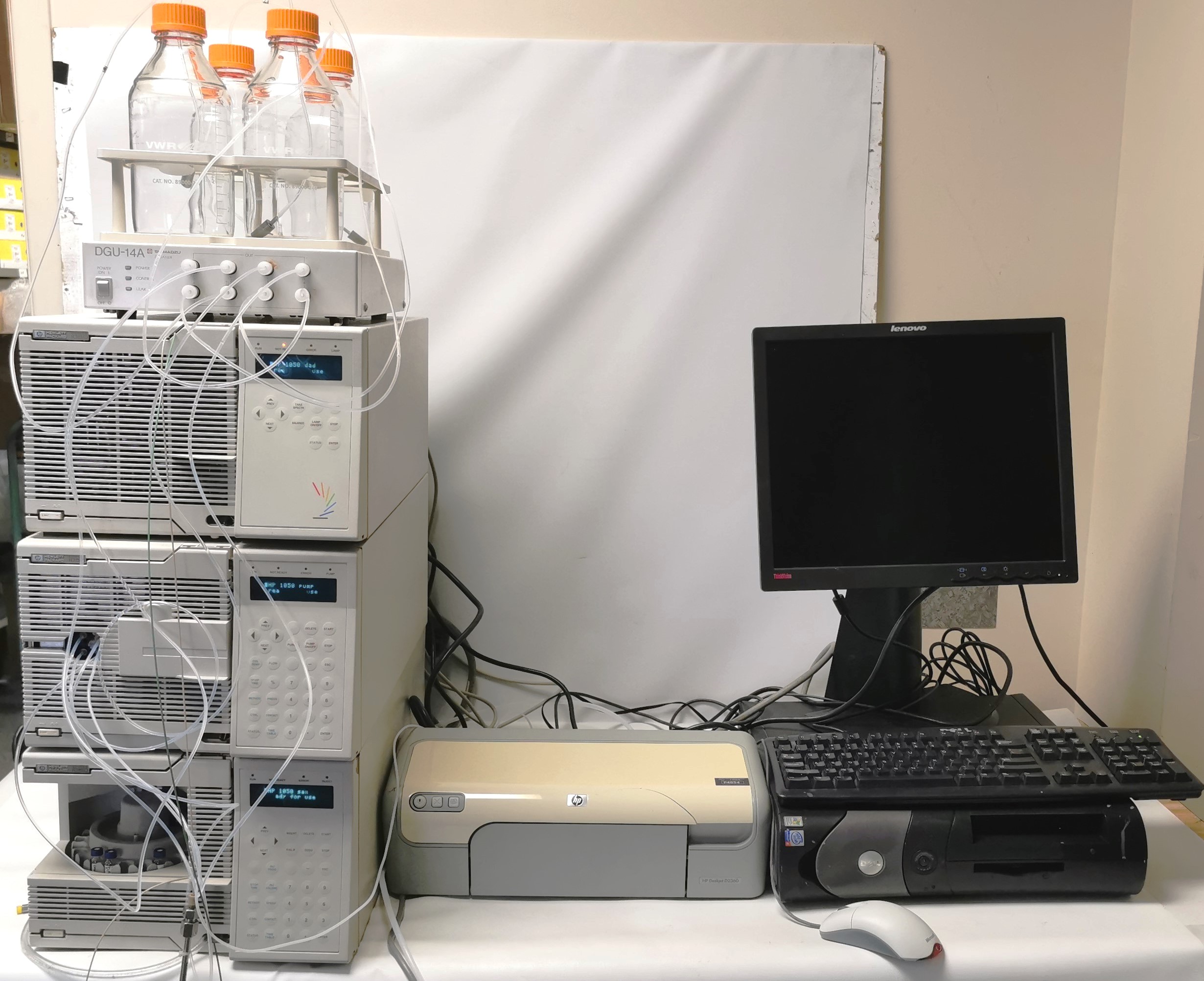
Highlights
- Separation Fundamentals: Chromatography separates mixture components using their distinct interactions with stationary and mobile phases.
- Key Components: The stationary phase and the mobile phase work together to divide components based on differences in size, polarity, charge, and solubility.
- Diverse Applications: This technique is essential in fields ranging from pharmaceuticals and environmental testing to forensic analysis and biotechnology.
Introduction to Chromatography
Chromatography is an analytical method employed to separate, identify, and purify the individual components of a complex mixture. It harnesses the natural differences in the chemical and physical properties of molecules—such as size, polarity, charge, and solubility—to achieve effective separation. The method relies on the distribution of these molecules between two distinct phases: the stationary phase and the mobile phase.
Core Principles of Chromatography
1. The Stationary Phase
The stationary phase can be either a solid or a liquid that is immobilized on a solid support. It acts as the substrate onto which the components of the mixture temporarily bind. The nature of the stationary phase is chosen based on the type of interaction required to influence the differential migration of the components. For example, in many chromatography applications, a polar stationary phase is essential when separating components that vary in their polarity.
2. The Mobile Phase
In contrast to the stationary phase, the mobile phase is a fluid, either a liquid or a gas, that flows over or through the stationary phase. The mobile phase acts as the carrier; it transports the dissolved or vaporized mixture through the stationary phase. As the sample moves along with the mobile phase, the various components interact with the stationary phase to differing degrees, leading to separation.
3. Differential Affinity and Separation Mechanism
The foundation of chromatography is the differential affinity of the sample’s components towards the stationary and mobile phases. The process is based on two factors:
- Retention: Components with a higher affinity for the stationary phase tend to remain bound for a longer period, moving slowly through the system.
- Migration: Components with a preference for remaining in the mobile phase elute faster, traveling more quickly through the system.
This interplay of retention and migration results in the spatial separation of the components as they traverse through or over the stationary phase. The varying speeds at which components move result in distinct zones or bands that represent individual compounds in the mixture.
Techniques and Varieties of Chromatography
Gas Chromatography (GC)
Gas chromatography is predominantly used for analyzing compounds that are volatile. In GC, an inert gas such as helium or nitrogen constitutes the mobile phase. The sample is vaporized before introduction into the chromatographic column containing a liquid or polymeric stationary phase on a solid support. As the gas mobile phase carries the vaporized analytes through the column, differences in their volatility and interaction with the stationary phase cause separation. GC is particularly popular in forensic analysis and quality control because of its sensitivity.
Liquid Chromatography (LC)
Liquid chromatography employs a liquid mobile phase and is favored when the analytes are non-volatile or thermally unstable. High-Performance Liquid Chromatography (HPLC) is a refined form of LC where high pressure is applied to push the mobile phase through a tightly packed column of stationary phase material. This setup improves resolution, making HPLC a highly effective tool in pharmaceutical analysis, clinical diagnostics, and chemical research.
Thin-Layer Chromatography (TLC)
Thin-layer chromatography is a simple and rapid method used for analyzing a small sample size. In TLC, the stationary phase is a thin layer of material, typically silica gel or alumina, coated on a plate. The mobile phase advances across the plate by capillary action, separating the mixture’s constituents. TLC is often used in preliminary analyses and in qualitative assessments where rapid results are necessary.
Other Variants
Beyond the common techniques mentioned above, additional methods such as paper chromatography and ion-exchange chromatography further expand the chromatographic toolkit. Each variant leverages specific interactions, such as ionic interactions in ion-exchange chromatography, to meet specific analytical needs across various scientific domains.
Detailed Mechanism of Chromatography
Step-by-Step Process
The separation mechanism in chromatography can be understood as a series of steps:
a. Sample Introduction
The process begins by dissolving or vaporizing the mixture to be separated. This solution or vapor is then introduced into the chromatographic system. The method of introduction depends on the type of chromatography used; it may involve an injection into a column or spotting onto a plate.
b. Interaction with the Stationary Phase
Once the sample is introduced, the individual components begin interacting with the stationary phase. The chemical and physical characteristics of these components dictate how tightly they interact with the stationary phase. For instance, more polar substances will have a greater affinity for a polar stationary phase, leading to longer retention times.
c. Movement with the Mobile Phase
Simultaneously, the mobile phase moves the sample through or over the stationary phase. However, because the interactions with the stationary phase are not uniform for all components, the rate of migration differs for each component. This difference leads to the separation of the components into distinct bands.
d. Detection and Analysis
As the separated components exit the chromatographic system, they are detected using various techniques. Detection methods include UV-Vis spectrophotometry, fluorescence, refractive index measurements, and mass spectrometry. Each method provides insights into the identity and quantity of the analytes. In preparative chromatography, the separated components may also be collected for further purification or use in other experiments.
Comparative Overview Table
| Type of Chromatography | Mobile Phase | Stationary Phase | Common Applications |
|---|---|---|---|
| Gas Chromatography (GC) | Inert Gas (Helium, Nitrogen) | Liquid or Polymer on Solid Support | Forensic analysis, Environmental monitoring, Quality control |
| Liquid Chromatography (LC) | Liquid | Solid particles, often in a packed column | Pharmaceuticals, Clinical diagnostics, Chemical research |
| High-Performance Liquid Chromatography (HPLC) | Liquid (at high pressure) | Specialized stationary phases (packed columns) | Drug analysis, Purification of compounds, Quantitative analysis |
| Thin-Layer Chromatography (TLC) | Liquid (capillary action) | Thin layer (silica gel or alumina on a plate) | Preliminary qualitative analysis, Rapid monitoring |
Applications of Chromatography in Various Fields
Analytical Applications
Scholars and professionals in numerous scientific disciplines rely on chromatography for accurate analysis. In analytical chemistry, chromatography is indispensable for identifying unknown compounds and quantifying their concentrations, even when these are present in trace amounts. For instance, environmental scientists use chromatographic techniques to monitor water or air samples for pollutants, ensuring compliance with safety standards.
Preparative Applications
Chromatography also plays a crucial role in the purification of samples. In drug development and research, preparative chromatography is used to isolate active compounds from plant extracts or synthetic mixtures. This purification step ensures that the final compounds are sufficiently pure for further characterization, structural analysis, and subsequent use in experiments or formulation into medications.
Forensic Science
The ability of chromatography to resolve complex mixtures makes it an invaluable tool in forensic investigations. Analysts systematically separate and identify biological and chemical evidence from crime scenes, contributing objective and reliable data to legal proceedings.
Biotechnology and Clinical Research
In clinical research, chromatography is used to measure biomarkers and monitor therapeutic drug levels. Its precision aids in the diagnosis of diseases and the assessment of drug efficacy and metabolism in the human body. Understanding the interactions between drugs and biological systems often relies on chromatographic analysis.
Interpretation Through Mathematical Representation
While chromatography is primarily a physical separation technique, its quantitative aspects can also be addressed through mathematical equations. For example, the partition coefficient \( \left( K \right) \) using MathJax can be expressed as:
\( \displaystyle K = \frac{\text{\( \text{Concentration in stationary phase} \)}}{\text{\( \text{Concentration in mobile phase} \)}} \)
This coefficient is critical for understanding the relative movements of sample components. A higher \( K \) value indicates stronger retention on the stationary phase, leading to slower migration.
Detection Techniques in Chromatography
Detection in chromatography is achieved through several sophisticated methods designed to improve both qualitative and quantitative analysis. Some of these methods include:
UV-Visible Spectrophotometry
By measuring the absorbance of components as they elute from the chromatographic column, UV-Vis spectrophotometry can identify compounds based on their light absorption spectra.
Fluorescence Detection
Some compounds are naturally fluorescent or can be tagged with a fluorescent marker. Fluorescence detection allows for high sensitivity, enabling the detection of very low concentrations.
Mass Spectrometry (MS)
Often coupled with chromatography, mass spectrometry provides molecular-level data about the separated compounds. MS not only confirms the identity but also determines the structure and molecular weight of the substances.
Real-World Examples and Case Studies
The theoretical aspects of chromatography are well-illustrated in real-world applications. For instance, in the pharmaceutical industry, HPLC is routinely applied to ascertain the purity of new drug formulations. During environmental monitoring, gas chromatography quantifies volatile organic compounds in air samples, thereby ensuring that institutional controls are maintained. Paper chromatography, on the other hand, finds utility in educational laboratories, where it provides tangible insight into the separation process using simple materials.
Summary Table of Key Points
| Aspect | Description |
|---|---|
| Process | Distribution of mixture components between a stationary and mobile phase, leading to separation based on differential affinities. |
| Stationary Phase | Fixed phase, often a solid or a liquid on a solid support, responsible for interacting with the sample components. |
| Mobile Phase | Fluid phase (liquid or gas) that transports the sample through the stationary phase. |
| Detection | Methods such as UV-Vis, fluorescence, and mass spectrometry are used to identify and quantify the separated compounds. |
| Applications | Utilized in pharmaceuticals, environmental monitoring, forensic science, and biotechnology. |
References
- What Is Chromatography? - Thermo Fisher Scientific
- Chromatography Explained - Explain That Stuff
-
How Does Chromatography Work? - Bioanalysis Zone
- Chromatography - Britannica
- Chromatography Overview - Research Dive
Recommended Queries for Deeper Exploration
Last updated March 19, 2025