
The Impact of Chronic Stress on Norepinephrine Secretion and Executive Functions
Exploring the intricate relationship between stress, neurotransmitters, and cognitive health
Key Takeaways
- Chronic stress leads to excessive norepinephrine (NE) release, disrupting brain chemistry.
- Elevated NE levels cause structural and functional impairments in the prefrontal cortex (PFC).
- These changes result in significant deficits in executive functions, affecting daily life and mental health.
1. Chronic Stress and Norepinephrine Secretion
1.1. Hyperactivation of the Noradrenergic System
Chronic stress triggers a sustained activation of the body's stress response systems, notably the hypothalamic-pituitary-adrenal (HPA) axis and the locus coeruleus-norepinephrine (LC-NE) system. The locus coeruleus, a primary source of norepinephrine in the brain, becomes hyperactive under prolonged stress conditions, leading to an overproduction and release of norepinephrine.
1.2. Dysregulation of Norepinephrine Release
Under normal circumstances, norepinephrine plays a crucial role in enhancing alertness, attention, and response actions. However, chronic stress causes a dysregulation of NE release, resulting in consistently elevated levels of this neurotransmitter. This persistent overactivation can lead to maladaptive changes in brain function and structure.
1.3. Alterations in Norepinephrine Transporters
Chronic stress not only increases the release of NE but also affects its reuptake by altering the distribution and function of norepinephrine transporters (NET) in the brain. An upregulation of NET enhances the synthesis and release of NE, further contributing to its elevated presence in critical brain regions like the PFC.
2. Impact on the Prefrontal Cortex (PFC)
2.1. Structural Changes in the PFC
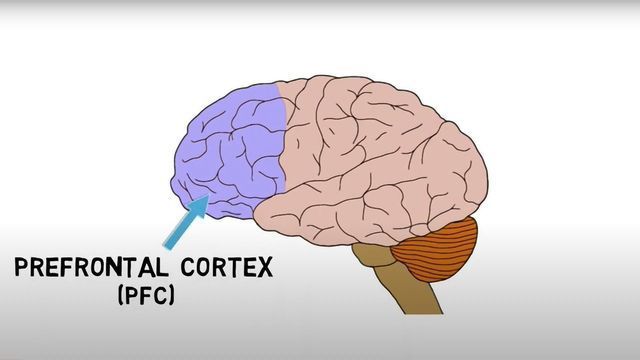
The prefrontal cortex is integral to executive functions, including decision-making, planning, and impulse control. Chronic stress-induced elevated NE levels trigger intracellular signaling pathways, particularly through the activation of α1-adrenergic receptors. This overactivation leads to several structural changes:
- Dendritic Atrophy: Reduction in dendritic branching weakens neuronal connections within the PFC.
- Spine Loss: Decrease in dendritic spines impairs synaptic plasticity and communication between neurons.
- Weakened Neural Connectivity: Overall connectivity within the PFC and between the PFC and other brain regions diminishes, disrupting integrated cognitive processing.
- Reduced Neuronal Firing Rates: Excessive NE levels suppress the firing of PFC neurons, hindering sustained cognitive activity.
2.2. Functional Impairments in the PFC
Functionally, the PFC becomes compromised due to excessive NE. While moderate NE levels facilitate optimal cognitive performance by activating high-affinity α2A adrenoceptors, chronic stress-induced overactivation shifts receptor engagement towards low-affinity α1 and β1 adrenoceptors. This shift results in the following impairments:
- Decreased Working Memory: The ability to hold and manipulate information is significantly reduced.
- Attention Deficits: Sustained attention and the ability to concentrate become challenging.
- Poor Decision-Making: Impaired judgment and increased reliance on habitual responses override thoughtful decision processes.
- Cognitive Flexibility: The capacity to switch between tasks or adapt to new information diminishes.
2.3. Shift to Subcortical Control
As the PFC's regulatory control weakens, behavioral and emotional responses become more influenced by subcortical structures like the amygdala and striatum. This shift leads to heightened emotional reactivity and a propensity towards more automatic, less regulated behaviors, further undermining executive function and emotional stability.
3. Consequences for Executive Functions
3.1. Impaired Cognitive Processes
Executive functions, governed by the PFC, are essential for goal-directed behavior and cognitive control. Chronic stress disrupts these functions through both structural and neurochemical changes:
- Working Memory Deterioration: The capacity to retain and process information over short periods declines, affecting tasks that require simultaneous holding and manipulation of information.
- Attention Deficits: Difficulty in maintaining focus on tasks or rapidly shifting attention between stimuli hampers productivity and learning.
- Impaired Response Inhibition: The ability to suppress inappropriate or non-beneficial responses weakens, leading to impulsive behaviors.
- Reduced Cognitive Flexibility: Adaptability in thinking and problem-solving is compromised, making it harder to adjust to new challenges or changes.
- Compromised Decision-Making: Logical reasoning and evaluation of options are impaired, resulting in suboptimal choices and increased susceptibility to biases.
3.2. Emotional Dysregulation
With the PFC's diminished capacity to regulate emotions, individuals under chronic stress experience heightened emotional responses. This includes increased susceptibility to anxiety, irritability, and mood swings, as the amygdala-driven emotional centers take precedence over controlled PFC activity.
3.3. Long-Term Mental Health Implications
The sustained impairments in executive functions and emotional regulation contribute to the development of stress-related psychiatric disorders such as depression, anxiety disorders, and post-traumatic stress disorder (PTSD). These conditions are characterized by persistent cognitive deficits and emotional instability, further exacerbating the challenges individuals face in managing stress.
4. Molecular Mechanisms Underpinning Stress-Induced Changes
4.1. Adrenergic Receptor Dynamics
Norepinephrine exerts its effects through various adrenergic receptors, each playing distinct roles in modulating PFC function:
- α2A-Adrenoceptors: High-affinity receptors that, when activated by moderate NE levels, enhance PFC attention and working memory.
- α1-Adrenoceptors: Low-affinity receptors that become activated under excessive NE levels, leading to impaired neuronal firing and cognitive deficits.
- β1-Adrenoceptors: Another low-affinity receptor type that, when overactivated, contributes to the suppression of PFC activity.
4.2. Calcium-cAMP Signaling Pathways
Chronic stress-induced NE overactivation of α1-adrenoceptors initiates intracellular calcium-cyclic AMP (cAMP) signaling cascades. This prolonged signaling disrupts normal neuronal function, leading to dendritic atrophy, spine loss, and reduced synaptic plasticity within the PFC. These molecular alterations weaken synaptic connections and diminish the brain's capacity for adaptive learning and memory.
4.3. HPA Axis Dysregulation
The HPA axis, responsible for cortisol release in response to stress, interacts closely with the noradrenergic system. Chronic stress leads to HPA axis dysregulation, resulting in elevated cortisol levels that further exacerbate NE-induced impairments in the PFC. This bidirectional interaction creates a feedback loop that perpetuates the cycle of stress and cognitive dysfunction.
5. Strategies for Mitigating Chronic Stress Effects
5.1. Pharmacological Interventions
Targeted pharmacological treatments can help restore balance in the noradrenergic system and support PFC function:
- α2A-Adrenoceptor Agonists: Medications like guanfacine stimulate α2A receptors, enhancing PFC function and counteracting the negative effects of excessive NE.
- α1-Adrenoceptor Blockers: Drugs such as prazosin inhibit α1 receptors, reducing NE-induced impairments in the PFC.
- Beta-Blockers: By blocking β1 receptors, these medications can mitigate the suppressive effects of NE on PFC activity.
5.2. Behavioral and Psychological Interventions
Non-pharmacological strategies are essential for managing chronic stress and preserving cognitive health:
-
Mindfulness and Meditation: These practices reduce stress levels, lower NE secretion, and enhance PFC functionality.
-
Cognitive-Behavioral Therapy (CBT): CBT helps individuals develop coping strategies to manage stress, thereby reducing its impact on the noradrenergic system.
-
Regular Physical Activity: Exercise has been shown to decrease stress hormone levels and promote neuroplasticity in the PFC.
-
Social Support: Strong social networks provide emotional support, mitigating the effects of stress and enhancing resilience.
6. Long-Term Implications and Future Directions
6.1. Preventing Cognitive Decline
Understanding the mechanisms by which chronic stress affects NE secretion and PFC function is crucial for developing preventive strategies against cognitive decline and mental health disorders. Early intervention can help maintain executive functioning and emotional regulation throughout an individual's lifespan.
6.2. Enhancing Resilience
Building resilience through lifestyle modifications, stress management techniques, and supportive environments can buffer against the adverse effects of chronic stress. Resilient individuals are better equipped to manage NE levels and preserve PFC integrity under stress.
6.3. Future Research Directions
Ongoing research aims to further elucidate the molecular pathways involved in stress-induced NE dysregulation and PFC impairment. Advancements in neuroimaging and molecular biology will enhance our understanding of these processes, leading to more effective interventions and treatments for stress-related cognitive dysfunction.
Conclusion
Chronic stress profoundly impacts the brain's noradrenergic system, leading to excessive norepinephrine release that disrupts the structure and function of the prefrontal cortex. These changes result in significant impairments in executive functions, including working memory, attention, decision-making, and emotional regulation. The interplay between molecular mechanisms and structural alterations under chronic stress conditions sets the stage for cognitive decline and increased vulnerability to mental health disorders. Addressing these challenges through pharmacological and behavioral interventions is essential for maintaining cognitive health and resilience in the face of chronic stress.
References
Last updated January 23, 2025