
Understanding Class Disparity Through Song Lyrics
Exploring Societal Stratification in "CMND/CTRL" and "FS"
Class disparity refers to the unequal distribution of resources, opportunities, and social standing among different groups in a society. It's a fundamental concept in sociology, highlighting the hierarchical structure of societies based on socioeconomic factors. This disparity can manifest in various forms, including differences in income, wealth, education, healthcare access, and political influence. Understanding class disparity is crucial for analyzing societal structures and the challenges faced by individuals from different socioeconomic backgrounds.
Key Insights
- Class disparity is the uneven distribution of resources and opportunities based on socioeconomic status.
- Deftones' "CMND/CTRL" may subtly touch upon power dynamics that can be interpreted through a lens of class interaction, though its primary focus appears to be a relationship dynamic.
- Analyzing lyrics for themes of class disparity requires careful consideration of textual evidence and potential contextual interpretations.
Defining Class Disparity
Social class is a grouping of people within a society who share similar socioeconomic status. This status is often determined by factors such as income, wealth, occupation, education, and social background. Class disparity, therefore, represents the significant differences that exist between these classes, leading to unequal access to valued resources, rewards, and positions within society. These inequalities can perpetuate cycles of poverty and privilege, affecting individuals' life chances and overall well-being.
Historically, the concept of social class gained prominence with the societal changes brought about by the industrial and political revolutions of the late 18th century. Feudal distinctions of rank began to decline, and new social groups, defined by economic terms like the ownership of capital or dependence on wages, emerged. Sociologists like Karl Marx emphasized the concept of class conflict, highlighting the struggle between different classes for control over the means of production.
Class disparity is not merely about differences in income; it encompasses a broader range of inequalities. This includes disparities in educational attainment, access to quality healthcare, housing, and even exposure to environmental hazards. These factors collectively contribute to differing life outcomes for individuals depending on their social class.
Analyzing "CMND/CTRL" by Deftones
Deftones' song "CMND/CTRL" presents a dynamic that can be interpreted in various ways. While primarily exploring a relationship between two individuals, the lyrics hint at a power imbalance that could be viewed through a socioeconomic lens. The song's title itself, using abbreviations for "Command" and "Control," suggests a relationship where one party exerts dominance over the other. This power dynamic, while potentially personal, can also be a reflection of broader societal structures, including those influenced by class.
The lyrics, "The third track on the album is an introduction to the relationship the protagonist and the priestess have. The male is CMND, the female is CTRL. They argue...," from a song meaning analysis, indicate a clear distinction between the two figures in the song. If we consider "CMND" as representing a position of authority or privilege, and "CTRL" as representing a position of being managed or controlled, this could be metaphorically linked to class structures where one class holds more power and influence over another.
While the song's core theme revolves around a personal relationship, the language used to describe the interaction – command and control – can resonate with the power dynamics often present in societies with significant class disparities. Those in higher social classes often possess more agency and control over their lives and the lives of others, while those in lower classes may experience a greater sense of being controlled by external forces, including economic ones.
However, it is important to note that a direct and explicit depiction of economic class disparity is not the central focus of "CMND/CTRL." The interpretation of the power dynamic as reflective of class structures is one possible reading among others. The song's primary strength lies in its exploration of interpersonal relationships and control within that context.
Examining "FS" Lyrics
Analyzing lyrics to a song titled "FS" presents a challenge due to the ambiguity of the title itself. "FS" can be an abbreviation for various phrases depending on the context, such as "For Sure," "For Sale," or even potentially referencing specific artists or song titles like those found when searching for "FS lyrics" which reveal a variety of songs and artists using these initials. Without a specific song or artist identified, a definitive analysis of how "FS" demonstrates class disparity is difficult. The provided search results for "FS lyrics" show a diverse range of songs with these initials, including hip-hop tracks and even a children's song about the letter F. Some results mention lyrical content that could potentially touch upon socioeconomic themes, such as "Black is a force to be reckoned with" or references to wealth and selling items, but these are fragmented and lack a clear narrative directly addressing class disparity.
To effectively analyze how a song titled "FS" demonstrates class disparity, specific lyrics from a particular song with that title would be necessary. For instance, if a song titled "FS" contained lines about the struggles of poverty, the inequality of opportunity, or the differences in living conditions between social classes, then a clear argument could be made. Textual evidence such as descriptions of inadequate housing, lack of access to education or healthcare, or the frustrations of being unable to improve one's socioeconomic status would directly support a theme of class disparity. Without such specific lyrical content, any analysis remains speculative and based on the potential meanings of the abbreviation "FS" in a socioeconomic context.
Let's consider a hypothetical scenario where "FS" stands for "Financial Struggle." In this case, the lyrics might describe the difficulties of making ends meet, the constant worry about bills, or the feeling of being trapped in a cycle of poverty. Lines like "Another week gone, still can't pay the rent" or "Every door is closed when you ain't got a cent" would serve as textual evidence. The analysis would then delve into how these lines portray the lived experience of those in lower socioeconomic classes, highlighting the systemic barriers and lack of opportunities that contribute to their financial struggles. The context of the song, perhaps being from an artist known for social commentary, would further strengthen this analysis.
Given the lack of a specific song and lyrics for "FS," a concrete analysis of its demonstration of class disparity is not feasible at this time. The meaning and relevance to class disparity are entirely dependent on the actual lyrical content of the intended song.
Comparing and Contrasting "CMND/CTRL" and "FS"
Comparing "CMND/CTRL" and a hypothetical song titled "FS" (assuming it addresses class disparity) reveals both potential similarities and distinct differences in their approach to themes that could relate to socioeconomic inequality. One similarity lies in the potential for both songs to explore power dynamics. In "CMND/CTRL," the power dynamic is explicitly within a personal relationship, but as discussed, it can be interpreted as a microcosm of broader power structures, including those influenced by class. In a hypothetical "FS" song about financial struggle, the lyrics would likely highlight the powerlessness felt by individuals facing economic hardship, contrasting it with the power and privilege of those in higher classes who control resources and opportunities. Both songs, therefore, could touch upon the concept of control and lack thereof, viewed through different lenses.
A key difference lies in the directness of addressing socioeconomic themes. "CMND/CTRL" primarily focuses on an interpersonal dynamic, with any connection to class disparity being largely interpretive and not explicitly stated in the provided song meaning. The language of command and control is used to describe the relationship itself. In contrast, a hypothetical "FS" song about financial struggle would likely be much more explicit in its depiction of socioeconomic conditions and the impact of class on individuals' lives. The lyrics would directly address issues of poverty, inequality, and the challenges of upward mobility, providing a more direct commentary on class disparity. For example, while "CMND/CTRL" might use phrases like "You command, I control," a song about financial struggle might use phrases like "Living on the breadline" or "Doors are closed to the poor," offering a more literal portrayal of class-based challenges.
Therefore, while both songs could be analyzed for elements related to power and control that resonate with aspects of class disparity, a hypothetical "FS" song explicitly about financial struggle would likely offer a more direct and detailed examination of the theme compared to the more allegorical or relationship-focused approach of "CMND/CTRL." The context and specific lyrical content are paramount in determining the extent to which each song demonstrates class disparity.
Understanding the Nuances of Lyric Analysis
Analyzing song lyrics for complex themes like class disparity requires more than just a superficial reading. It involves delving into the potential meanings of words and phrases, considering the context of the song's creation and the artist's background, and exploring possible interpretations of metaphors and symbolism. An AI-powered lyrics interpreter or analysis tool can assist in identifying potential themes and literary devices, but human analysis is crucial for a nuanced understanding.
For instance, a single word or phrase, when viewed in isolation, might not seem significant, but within the broader context of the lyrics and the song's overall message, it can reveal deeper layers of meaning related to social or economic issues. Additionally, the tone and style of the music itself can contribute to the listener's understanding and interpretation of the lyrics.
The ambiguity of song lyrics is often intentional, allowing for multiple interpretations and personal connections. When analyzing for a specific theme like class disparity, it's important to support interpretations with strong textual evidence from the lyrics and, when possible, external information about the song's context or the artist's intentions. This rigorous approach ensures that the analysis is well-supported and insightful.
Visualizing Class Disparity
The abstract concept of class disparity can often be better understood through visual representations. Images that depict stark contrasts in living conditions, housing, or infrastructure between different areas within a city can powerfully illustrate the physical manifestation of socioeconomic inequality. These visuals serve as a potent reminder of the real-world impact of class disparities.
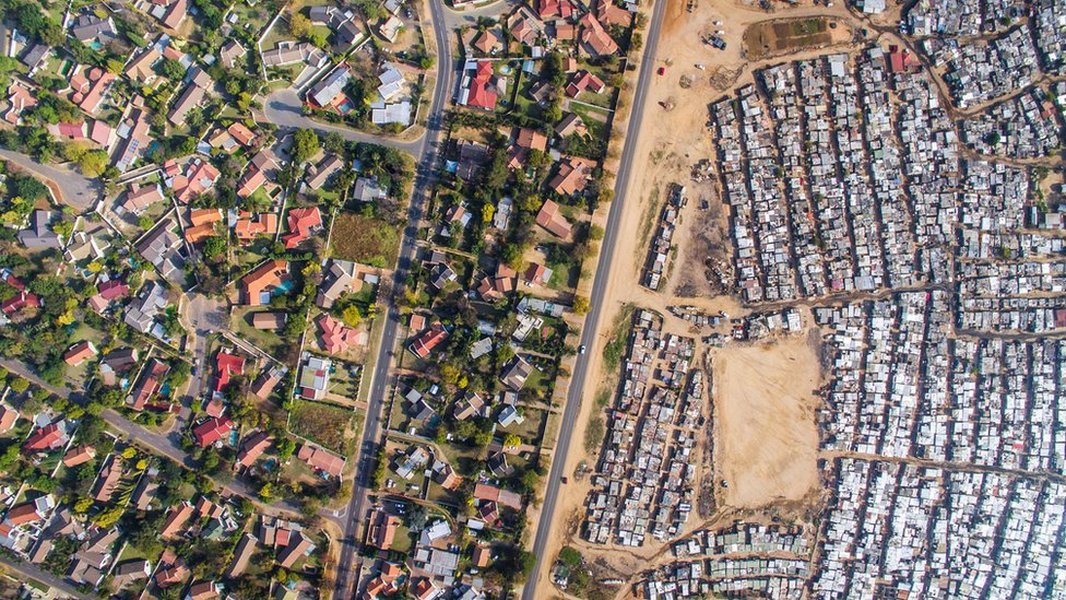
A visual representation highlighting the contrast between different socioeconomic areas.
Such images can complement lyrical analysis by providing a visual context for the themes explored in the music. For example, if a song describes overcrowded living conditions or neglected neighborhoods, an image showing such a scene juxtaposed with an affluent area can enhance the emotional and intellectual impact of the lyrics.
Further Perspectives on Class Inequality
Class inequality is a multifaceted issue with various contributing factors and consequences. Sociologists and economists study its impact on different aspects of society, including education, healthcare, employment, and social mobility. Policies and initiatives aimed at reducing class disparities often focus on providing equal access to opportunities, addressing systemic biases, and promoting a more equitable distribution of resources.
Understanding the historical and ongoing factors that contribute to class inequality is essential for developing effective strategies to address it. This includes examining the impact of government policies, economic structures, and social norms on the distribution of wealth and opportunity.
This video from Crash Course Sociology provides an overview of social class and poverty in the United States, offering broader context to the concept of class disparity.
The video above provides a helpful overview of social class and poverty in the US, offering valuable context to the discussion of class disparity. It highlights how socioeconomic status influences various aspects of life and contributes to unequal outcomes for individuals.
FAQ
What is the difference between class disparity and social inequality?
Class disparity is a specific form of social inequality that focuses on the unequal distribution of resources, opportunities, and social standing based on socioeconomic status. Social inequality is a broader term that encompasses all forms of unequal distribution of valued resources, including those based on race, gender, age, and other factors.
How can song lyrics be used to understand social issues?
Song lyrics can serve as valuable cultural artifacts that reflect societal values, experiences, and challenges. By analyzing the themes, narratives, and language used in lyrics, we can gain insights into social issues such as class disparity, inequality, identity, and more. Lyrics can capture the emotions and perspectives of individuals affected by these issues, offering a unique and often powerful commentary.
Are AI tools reliable for analyzing song lyrics?
AI tools can be helpful in analyzing song lyrics by identifying patterns, themes, and literary devices. However, they should be used as supplementary tools alongside human analysis. Human interpretation is crucial for understanding the nuances, context, and potential multiple meanings within lyrics, especially when exploring complex social themes.
Recommended Queries
- Impacts of socioeconomic status on education
- Historical context of class systems
- Analyzing social commentary in music
- Policies to reduce income inequality
References
Last updated May 19, 2025