
Exploring the Dimensions of Classical Bookshelves
Unveiling the Typical Widths and Considerations for Timeless Book Storage
Classical bookshelves, often envisioned as stately pieces in libraries or studies, hold a certain charm and gravitas. While the term "classical" might evoke images of specific historical periods or architectural styles, the fundamental dimensions of a bookshelf are primarily driven by the practical need to store books effectively. Understanding the average width of a classical bookshelf involves looking at common historical practices, functional requirements, and modern interpretations.
Key Takeaways on Classical Bookshelf Widths
- Varied Widths: While a single "average" width is difficult to pinpoint definitively for all classical bookshelves, common widths often fall within the range of 24 to 48 inches.
- Functional Design: The width is largely influenced by the need to support the weight of books and prevent shelves from sagging, with wider shelves typically requiring stronger materials or central supports.
- Aesthetic Considerations: The perceived "classical" style can incorporate various widths to fit different room sizes and design preferences, from narrower, taller units to wider, lower ones.
The Concept of a "Classical" Bookshelf
Before delving into specific dimensions, it's helpful to consider what constitutes a "classical" bookshelf. This often brings to mind furniture from periods like the Georgian, Victorian, or Edwardian eras, characterized by robust construction, often in rich woods, and sometimes featuring ornate details, moldings, or glass doors. These pieces were designed to be functional while also contributing to the aesthetic of a well-appointed room, often a library, study, or drawing-room.
The design principles of these periods emphasized proportion, balance, and durability. Therefore, the dimensions, including the width, were carefully considered not just for capacity but also for visual harmony within the space.
The image below provides an example of a bookshelf with classical design elements:
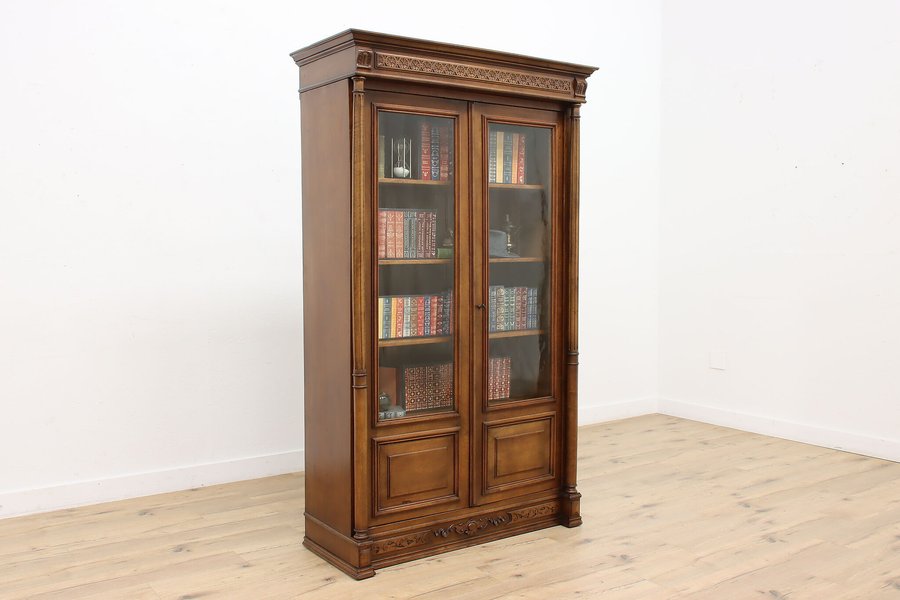
A French Classical Antique Walnut Office or Library Bookcase.
Analyzing Typical Bookshelf Widths
While historical records might show a wide array of custom-built bookshelves, looking at common and commercially available options provides insight into what might be considered "average" or typical for a classical style bookshelf today or historically in more standardized forms. Several sources suggest common widths for bookshelves:
Standard Width Ranges
Many sources indicate that standard bookshelf widths often fall between 24 inches and 48 inches. Within this range, more specific averages are frequently cited:
-
Some sources suggest a standard width of around 31 to 32 inches.
-
Other common widths include 24 inches, 36 inches, and 48 inches.
-
Widths can also vary depending on the number of shelves; for example, a two-shelf unit might be around 31 inches wide, while a three-shelf unit could range from 30 to 36 inches.
These ranges suggest that while there isn't one single universal width, widths in the 30 to 40-inch range are quite common and can be considered typical for many styles, including those with classical influences.
Factors Influencing Bookshelf Width
Several factors contribute to the determination of an appropriate bookshelf width, especially in the context of classical design:
Structural Integrity and Sagging
The primary structural concern for any bookshelf is preventing shelves from sagging under the weight of books. Wider shelves require more robust materials or additional support to maintain their integrity over time. In classical designs, solid wood construction was prevalent, which offers good strength but still has limits on unsupported spans. Therefore, widths were often kept within a range that allowed for reasonable shelf lengths without excessive thickness or the need for central dividers in every bay.
Accommodating Book Sizes
While book sizes have varied throughout history, classical bookshelves were designed to house the prevalent book formats of their time. Standard book dimensions play a role in determining how many books can comfortably fit on a shelf and, consequently, the overall width of the unit. While the depth and height of shelves are more directly impacted by book dimensions, the width dictates the linear feet of storage and how books are arranged side-by-side.
Room Proportion and Scale
Classical furniture design heavily emphasized proportion and scale relative to the room it occupied. A very wide bookshelf might overwhelm a smaller room, while a series of narrower units might look disjointed in a grand library. The width of a classical bookshelf was often chosen to harmonize with the wall space, ceiling height, and other furniture in the room.
Aesthetic Balance and Design
Beyond pure functionality, the width contributes significantly to the aesthetic balance of a classical bookshelf. The ratio of width to height, the number and arrangement of vertical divisions, and the presence of architectural elements like pilasters or columns all influence the perceived "classicism" of the piece. A symmetrical design with balanced proportions was a hallmark of many classical styles.
Comparing Standard and Classical Bookshelf Dimensions
It's useful to compare the typical dimensions of modern standard bookshelves with what is understood of classical designs. While modern manufacturing may prioritize efficiency and modularity, the fundamental requirements for storing books remain similar.
| Dimension | Typical Standard Bookshelf | Typical Classical Bookshelf (Approximate) |
|---|---|---|
| Width | 24 - 48 inches (commonly 31-32 inches) | Varies widely, often within 24 - 48 inches, with a focus on proportional balance |
| Depth | 10 - 12 inches (can be shallower or deeper) | Typically 10 - 12 inches, suitable for most book sizes |
| Height | Varies greatly (e.g., 36, 48, 72, 84 inches) | Varies greatly, often designed to fit ceiling height or architectural features |
| Shelf Spacing (Height) | 9 - 12 inches | Often 9 - 12 inches, sometimes with adjustable shelves to accommodate larger books |
As the table illustrates, the typical depth and shelf spacing are quite consistent between standard and classical bookshelves because they are primarily dictated by book dimensions. The main variations, particularly in historical classical pieces, lie in the overall height and width, which were often customized or built-in to suit specific architectural spaces.
Visualizing Classical Bookshelf Design
Visual examples further illustrate the variety in widths of bookshelves that could be considered classical in style. These images showcase how width is just one element among many that contribute to the overall appearance and functionality of the piece.
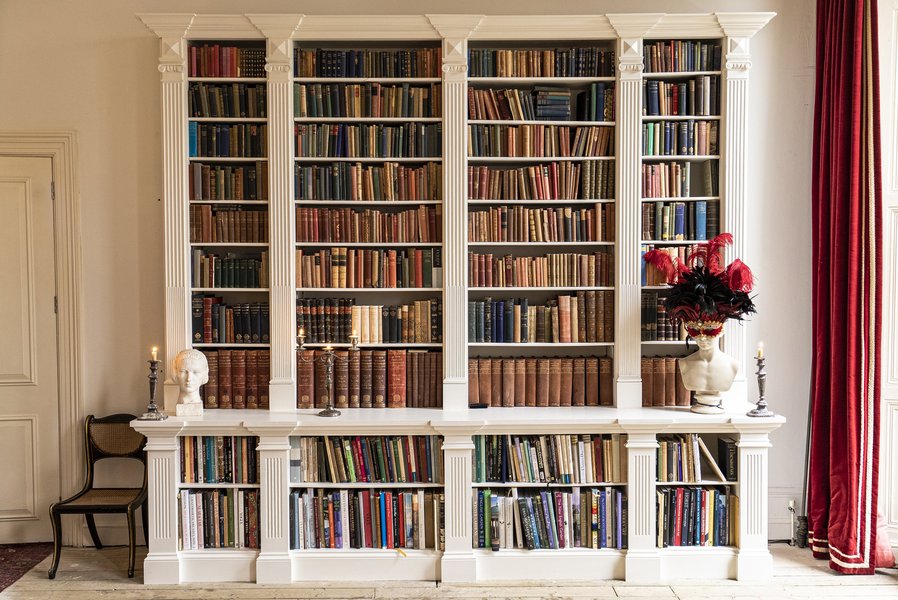
A Neo-classical Bookshelf design.
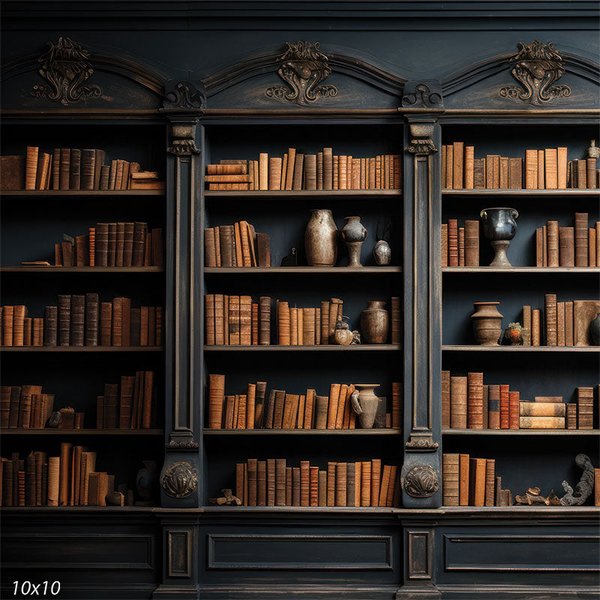
A backdrop featuring classical library bookshelves.
These images demonstrate that "classical" style can encompass different widths, often within a broader context of a room or library setting. The emphasis is on the overall composition, materials, and detailing, in addition to the functional dimensions.
Customization and Modern Interpretations
While historical examples provide a basis for understanding classical bookshelf dimensions, modern furniture makers and custom woodworkers often draw inspiration from these styles while adapting them to contemporary needs and spaces. This can lead to a wider variety of available widths, including modular systems that can be combined to create larger units.
When considering a "classical" bookshelf for a modern setting, the "average width" becomes less about historical adherence and more about finding a piece that fits the intended space and complements the existing decor while evoking the desired aesthetic.
The video below discusses factors to consider when selecting bookshelf dimensions, which are relevant for both standard and classical styles, emphasizing the importance of considering the books and items to be stored.
This video discusses book sizes, a crucial factor in determining appropriate bookshelf dimensions.
The video highlights that book dimensions directly influence the required depth and shelf height, which in turn inform decisions about the overall width needed to accommodate a collection.
Conclusion
In summary, there isn't a single, rigidly defined "average width" for a classical bookshelf that applies universally across all historical periods and designs. However, based on typical furniture dimensions and the practicalities of book storage, common widths often fall within the 24 to 48-inch range, with many standard units being around 31 to 32 inches wide. The width of a classical bookshelf was, and is, determined by a combination of factors including structural considerations, the size of books to be stored, the proportions of the room, and the desired aesthetic balance.
When seeking a bookshelf with a classical feel, focusing on quality materials, design details, and proportions that harmonize with your space is often more important than adhering to a precise historical "average" width.
Frequently Asked Questions (FAQ)
What is the most common depth for a classical bookshelf?
The most common depth for bookshelves, including those with a classical style, is typically between 10 and 12 inches (26-31 cm). This depth is sufficient to accommodate most standard-sized books.
How high are the shelves typically spaced in a classical bookshelf?
Standard shelf spacing in a typical bookshelf, including classical designs, usually ranges from 9 to 12 inches. This allows for the storage of most common book heights, with some designs offering adjustable shelves for flexibility.
Can classical bookshelves be wider than 48 inches?
Yes, classical bookshelves, particularly custom-built or library-style units, can certainly be wider than 48 inches. These might be composed of multiple wider sections or be part of extensive built-in shelving systems designed to fill an entire wall or room. However, for a single, freestanding unit, widths above 48 inches are less common due to structural considerations (shelf sagging) unless significant support is incorporated.
Are there specific architectural styles associated with "classical" bookshelves that dictate width?
While not strictly dictating a precise width, different classical architectural styles (like Palladian, Georgian, or Victorian) influenced the overall scale, proportion, and detailing of furniture, including bookshelves. These styles often favored symmetry and balance, which would impact the perceived appropriate width of a piece within a given architectural context.
References
Last updated April 22, 2025