

Key Insights into Climate Change Impacts
- Escalating Global Warming: Global average temperatures are on a relentless upward trajectory, with 2024 as the hottest year on record and 2025 projected to be among the warmest. This warming trend is intensifying heatwaves, droughts, and extreme weather events worldwide.
- Interconnected Environmental Crises: The warming climate is causing rapid ice melt, leading to significant sea-level rise and threatening coastal communities. Simultaneously, oceans are warming and acidifying, harming marine life and disrupting delicate ecosystems, while permafrost thaw releases potent greenhouse gases, creating dangerous feedback loops.
- Profound Societal and Economic Strain: Climate change is a major contributor to humanitarian emergencies, impacting human health through heat-related illnesses and respiratory problems. It also jeopardizes food and water security, displaces populations, and inflicts substantial economic losses through infrastructure damage and disruptions to key industries.
Climate change represents one of the most pressing challenges of our time, driven primarily by escalating greenhouse gas concentrations. Its impacts are not confined to a single aspect of the planet but manifest as a complex web of interconnected environmental, social, and economic consequences that are already profoundly reshaping life on Earth. The severity and acceleration of these impacts underscore an urgent need for global action to mitigate emissions and adapt to unavoidable changes.
The Relentless March of Warming Temperatures
Global average temperatures continue to climb, with recent years setting new records. 2024 was recorded as the hottest year, and 2025 is on track to be one of the warmest ever. This persistent warming trend is pushing global average temperatures dangerously close to, and potentially exceeding, the 1.5°C threshold above pre-industrial levels, a critical benchmark for avoiding the most catastrophic impacts of climate change.
Increased Frequency and Intensity of Heatwaves
A direct consequence of rising temperatures is the escalating frequency, intensity, and duration of heatwaves. These extreme heat events pose significant threats to human health, particularly for vulnerable populations such as the elderly, infants, and outdoor workers. The physiological stress caused by prolonged exposure to high temperatures can lead to various heat-related illnesses, including heat cramps, heat exhaustion, hyperthermia, and potentially fatal heatstroke. Beyond direct health impacts, prolonged heat can reduce productivity and strain healthcare systems.
Escalating Extreme Weather Events
Climate change is a major amplifier of extreme weather events, making them more frequent, severe, and destructive. This includes a broad spectrum of phenomena:
- Droughts: Many regions are experiencing more prolonged and intense droughts, leading to severe water scarcity, reduced agricultural productivity, and heightened risks of food insecurity. This often disproportionately affects developing regions.
- Floods: Conversely, shifts in precipitation patterns are leading to more intense rainfall events and widespread flooding in other areas. Flooding not only causes extensive damage to infrastructure and property but also facilitates the spread of waterborne diseases and displaces communities.
- Storms and Hurricanes: Tropical storms and hurricanes are becoming more powerful and destructive, exacerbated by warmer ocean waters that provide more energy. These intensified storms result in greater property damage, loss of life, and humanitarian emergencies.
- Wildfires: The combination of increased heat, prolonged droughts, and insect outbreaks creates ideal conditions for wildfires. Regions like Canada, the western United States, Australia, and the Mediterranean are experiencing more frequent and severe fire seasons, leading to significant ecological damage, air quality degradation, and human displacement.
These events together contribute to substantial economic losses, damage critical infrastructure, and disrupt supply chains, imposing significant costs on households, businesses, and governments.
Unraveling Ecosystems: Melting Ice and Ocean Changes
The Earth's cryosphere and oceans are undergoing rapid transformations due to climate change, with profound implications for global ecosystems and sea levels.
Accelerated Ice Loss and Sea-Level Rise
The Greenland and West Antarctic ice sheets are experiencing rapid ice loss, with melt rates quadrupling since the 1990s. This contributes significantly to global sea-level rise, a phenomenon that threatens coastal communities worldwide. Rising sea levels increase the risk of coastal flooding, erode coastlines, and can lead to the permanent inundation of low-lying areas. Beyond the major ice sheets, mountain glaciers globally are also shrinking at an alarming rate, impacting regional water resources and contributing to sea-level rise.
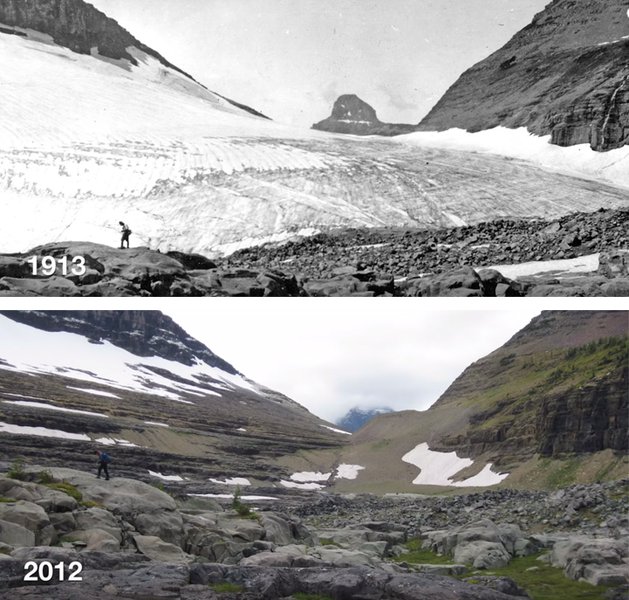
Dramatic changes in glacial ice formations over time, illustrating the profound impact of rising global temperatures.
Warming, Acidifying Oceans, and Permafrost Thaw
The world's oceans are absorbing a significant portion of the excess heat and carbon dioxide from the atmosphere. This leads to two critical problems:
- Ocean Warming: Warmer ocean temperatures are causing more intense and frequent marine heatwaves, which contribute to widespread coral bleaching events. Coral reefs, vital biodiversity hotspots, are particularly vulnerable to these thermal stresses. Warmer waters also impact marine species' distribution, reproductive cycles, and food availability, leading to disruptions throughout the marine food web.
- Ocean Acidification: As oceans absorb more CO2, their pH decreases, making them more acidic. This acidification poses a severe threat to marine organisms that build shells and skeletons, such as corals, oysters, and mussels, hindering their ability to grow and survive.
- Permafrost Thaw: In polar and high-altitude regions, rising temperatures are causing permafrost to thaw. This process releases vast quantities of trapped greenhouse gases, including methane and carbon dioxide, into the atmosphere, creating a dangerous positive feedback loop that further accelerates global warming. Permafrost thaw also destabilizes infrastructure and changes local ecosystems.
Humanitarian and Socio-Economic Repercussions
The impacts of climate change extend deeply into human health, societal stability, and global economies, creating complex and far-reaching challenges.
Worsening Health Outcomes
Climate change is a significant public health threat. Beyond the direct impacts of heat-related illnesses from extreme temperatures, other health concerns are escalating:
- Respiratory Issues: Increased wildfires lead to higher levels of particulate matter and pollutants in the air, exacerbating respiratory diseases like asthma and chronic obstructive pulmonary disease (COPD).
- Vector-Borne Diseases: Changes in temperature and precipitation patterns can expand the geographical ranges of disease vectors, such as mosquitoes and ticks, leading to an increased incidence of vector-borne illnesses like malaria, dengue fever, and Lyme disease.
- Mental Health: Climate-related disasters, including floods, droughts, and wildfires, can cause significant psychological distress, leading to increased rates of anxiety, depression, and post-traumatic stress disorder (PTSD) in affected communities.
- Food and Waterborne Diseases: Contamination of water sources due to flooding and disruptions to sanitation systems can increase the risk of waterborne diseases.
These health burdens disproportionately affect vulnerable populations, including those in low-income countries and indigenous communities.
Threats to Food and Water Security
Agricultural systems are highly sensitive to climate variability. Changes in rainfall patterns, increased heat stress, and more frequent extreme weather events reduce crop yields and livestock productivity. Fisheries are also impacted by ocean warming and acidification. This leads to concerns about global food security, increased food prices, and potential shortages. Similarly, water scarcity, exacerbated by prolonged droughts and changes in snowpack, threatens access to clean drinking water and water for irrigation, impacting both human consumption and agricultural production.
Economic Disruption and Social Inequality
The economic costs of climate change are immense and growing. Damages from extreme weather events necessitate extensive repair and rebuilding efforts, increasing household costs and straining government budgets. Industries heavily reliant on natural resources, such as agriculture, fisheries, and tourism, face significant disruptions and economic losses. Real estate values in coastal and flood-prone areas are increasingly at risk. Supply chains are also vulnerable to climate-induced disruptions, leading to higher prices and reduced availability of goods.
Climate change also intensifies social inequalities. Vulnerable communities, often with fewer resources, are disproportionately affected by climate impacts, experiencing higher rates of displacement, health risks, and loss of livelihoods. This can lead to increased social and political instability.
The Mechanism of Change: Carbon Emissions and Feedback Loops
The fundamental driver of observed climate change is the accumulation of greenhouse gases in the atmosphere, primarily from human activities. In 2025, global carbon emissions from fossil fuels have continued to rise, reaching record highs, signaling a lack of the urgently needed decline to meet international climate targets.
Exhausted Carbon Budget and Amplifying Feedbacks
The remaining "carbon budget" – the amount of CO2 that can still be emitted while having a reasonable chance of limiting global warming to 1.5°C – is virtually exhausted. This makes it increasingly challenging to achieve the goals set forth in agreements like the Paris Agreement. Furthermore, climate change is creating dangerous feedback loops:
- Reduced Carbon Sink Efficiency: Natural carbon sinks, such as forests and oceans, are becoming less effective at absorbing atmospheric CO2 due to ecosystem degradation and saturation.
- Permafrost Thaw: As mentioned, thawing permafrost releases stored methane and CO2, adding to atmospheric greenhouse gas concentrations.
- Arctic Amplification: The Arctic is warming at a rate faster than the global average. The melting of highly reflective ice and snow exposes darker land and ocean surfaces, which absorb more solar radiation, leading to further warming in a self-reinforcing cycle.
These feedback loops can accelerate warming beyond what current models project, making future climate changes potentially more severe and abrupt.
This mindmap visually organizes the multifaceted impacts of climate change, demonstrating how various environmental shifts like global warming and extreme weather events cascade into broader consequences for human health, ecosystems, and socio-economic systems. It highlights the interconnectedness of these challenges.
A Snapshot of Climate Change Effects
To further illustrate the breadth and depth of climate change impacts, the following table summarizes key areas and their associated consequences.
| Impact Area | Specific Effects | Relevance |
|---|---|---|
| Global Temperatures | Record-breaking warmth, increased frequency and intensity of heatwaves. | Direct threat to human health, agricultural productivity, and energy demands. |
| Extreme Weather | More severe droughts, intense floods, powerful storms, and widespread wildfires. | Damage to infrastructure, displacement of populations, food and water insecurity, economic losses. |
| Cryosphere | Accelerated melting of glaciers, ice sheets, and Arctic sea ice; permafrost thaw. | Significant sea-level rise, disruption of ecosystems, release of greenhouse gases. |
| Oceans | Ocean warming, marine heatwaves, coral bleaching, ocean acidification. | Loss of marine biodiversity, disruption of fisheries, threats to coastal protection. |
| Ecosystems & Biodiversity | Species range shifts, habitat loss, increased extinction risk, ecosystem disruption. | Loss of ecosystem services, reduced resilience to environmental changes, ecological imbalances. |
| Human Health | Heat-related illnesses, respiratory issues, expansion of vector-borne diseases, mental health impacts. | Increased mortality and morbidity, strain on healthcare systems, reduced quality of life. |
| Food & Water Security | Reduced crop yields, water scarcity, impacts on fisheries. | Malnutrition, famine, conflict over resources, economic instability. |
| Economy & Society | Infrastructure damage, supply chain disruptions, increased insurance costs, displacement, social inequality. | Billions in economic losses, humanitarian crises, political instability. |
Educational Perspectives: Understanding Climate Change
To gain a deeper understanding of climate change and its far-reaching consequences, watching educational videos can be highly beneficial. The following video offers an insightful overview of how climate change affects us and nature, and what actions we can take.
The video "How Climate Change Affects Us and Nature, and What We Can Do..." provides an accessible explanation of the mechanisms and impacts of climate change, from hotter temperatures in our neighborhoods to melting ice at the poles. It covers both the environmental degradation and the societal implications, encouraging viewers to consider individual and collective actions. This resource is particularly relevant for those seeking a foundational understanding of the interconnectedness of climate impacts and potential solutions.
Frequently Asked Questions About Climate Change Impacts
What are the most immediate impacts of rising global temperatures?
How does climate change affect food security?
Are some populations more vulnerable to climate change than others?
What are "climate feedback loops"?
What is the significance of the 1.5°C global warming limit?
Conclusion: A Call to Action
The evidence is unequivocal: climate change is already profoundly impacting our planet and its inhabitants. From escalating temperatures and extreme weather events to the destabilization of ecosystems and mounting humanitarian crises, the cascade of consequences is far-reaching. The scientific community's stark warnings about record emissions and an exhausted carbon budget underscore the urgent necessity for comprehensive and unified global responses. Addressing this challenge requires a dual approach: aggressive mitigation to reduce greenhouse gas emissions and robust adaptation strategies to build resilience against the changes already in motion. The future of our planet and the well-being of future generations depend on immediate and decisive action.
Recommended Further Exploration
- What are the global impacts of accelerated sea level rise?
- How do climate change impacts translate into economic consequences worldwide?
- What are the primary public health crises directly linked to climate change?
- What are the most effective global strategies for climate change adaptation and mitigation?