
Cloudflare vs Vercel: A Deep Dive into Web Deployment Platforms
Comparing Features, Performance, and Pricing for Modern Web Development
Cloudflare and Vercel are two prominent platforms in the modern web development landscape, each offering distinct strengths for deploying and hosting web applications. While both aim to provide fast, reliable, and scalable solutions, they approach this goal with different philosophies and feature sets. Understanding these differences is crucial for choosing the platform that best aligns with your project's specific needs, whether you prioritize developer experience, raw performance, cost-effectiveness, or a broad range of infrastructure services.
Key Takeaways
- Cost-Effectiveness: Cloudflare Pages is generally considered more cost-effective, particularly due to not charging for bandwidth, which can be a significant factor for high-traffic sites.
- Developer Experience: Vercel is widely praised for its superior developer experience, especially for projects built with React and Next.js, offering seamless integration and automatic deployments.
- Network Size and Performance: Cloudflare boasts a significantly larger global network of data centers, which contributes to its strength in performance and security at scale, while Vercel focuses on optimizing end-user performance through its own edge network and integrations.
Core Offerings and Philosophies
At their core, Cloudflare and Vercel serve similar needs but with different emphases. Cloudflare, known for its robust network infrastructure and security services, extends its offerings to frontend developers through Cloudflare Pages and Cloudflare Workers. Vercel, on the other hand, originated with a strong focus on frontend development, particularly with the Next.js framework (which they created), and has expanded its platform to include serverless functions and data storage solutions.
Cloudflare's Broad Infrastructure and Edge Computing
Cloudflare's strength lies in its extensive global network and a wide array of services beyond just hosting. Its network of over 300 data centers allows for content to be served to users from the nearest location, significantly reducing latency. Cloudflare Workers provides a powerful serverless execution environment at the edge, supporting multiple languages and offering granular control over code execution. Cloudflare Pages is their platform specifically for deploying static sites and frontend applications, leveraging the power of their edge network.
Cloudflare's focus on security is also a major differentiator, offering built-in DDoS protection, Web Application Firewalls (WAF), and SSL certificates, creating what some perceive as a "digital fortress" for web assets.
Below is an image illustrating Cloudflare's edge network and how it connects users to resources.
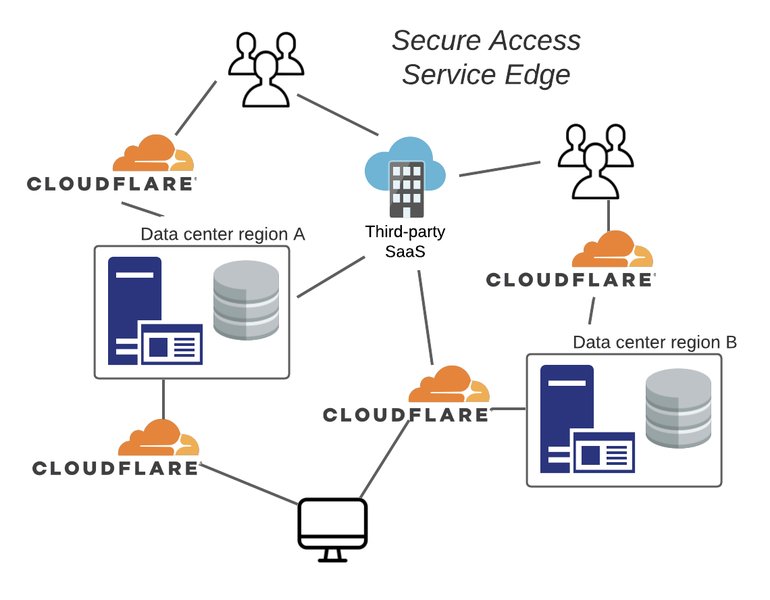
Diagram illustrating the global reach of the Cloudflare edge network.
Vercel's Developer-Centric Platform
Vercel is highly regarded for its developer experience, particularly for teams using React and Next.js. Its platform is designed for seamless integration with Git repositories, offering automatic deployments upon code pushes. Vercel provides a streamlined workflow for frontend development, with features like instant static deployments, serverless functions (Edge Functions), and integrated data storage solutions (KV, Postgres, Blob). Their focus is on enabling frontend teams to build and deploy performant web applications quickly and efficiently.
Vercel's Edge Functions allow developers to run server-side code closer to users, similar to Cloudflare Workers, contributing to reduced latency. While Vercel has its own edge network, Cloudflare's network is significantly larger in terms of the number of data centers.
Here is an image related to Vercel's serverless storage interface.
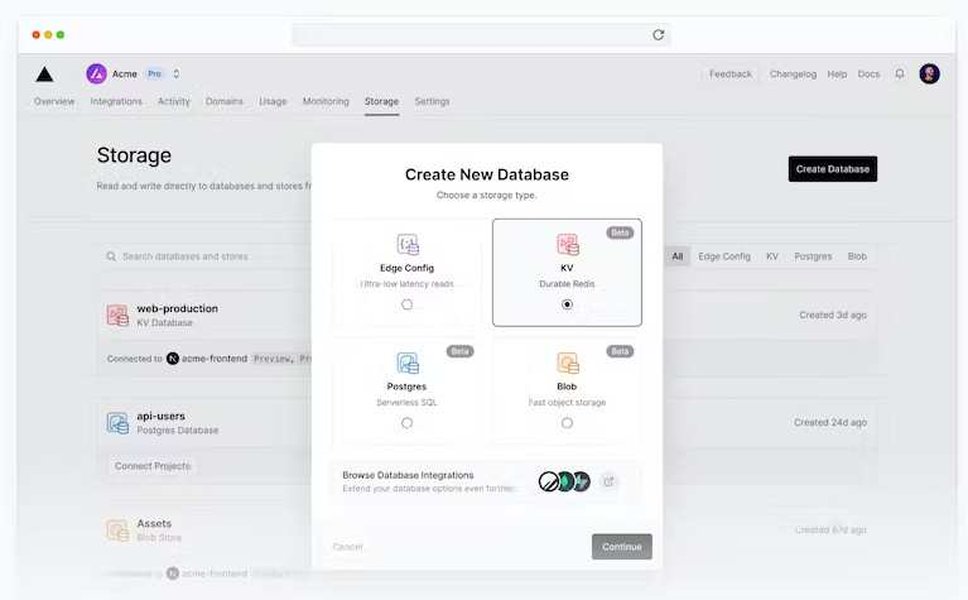
Screenshot of the Vercel serverless storage interface.
Feature Comparison
Comparing the features offered by Cloudflare and Vercel reveals where each platform excels.
Deployment and Build Process
Vercel's Optimized Build for Frontend Frameworks
Vercel is specifically optimized for modern frontend frameworks, offering fast build times and seamless integration with frameworks like Next.js. Its automated deployment pipeline simplifies the process of getting code from a Git repository to production.
Cloudflare Pages' Flexibility
Cloudflare Pages also offers automatic deployments from Git and supports a variety of static site generators and frontend frameworks. While its build times may not always be as consistently fast as Vercel's, it provides a flexible platform for deploying static assets.
Serverless Functions and Edge Computing
Cloudflare Workers' Robust Edge Platform
Cloudflare Workers is a mature and powerful edge computing platform that supports multiple languages (JavaScript, WASM, Rust, C, C++). It offers fine-grained control and a generous free tier, making it cost-effective for running logic at the edge.
Vercel Edge Functions and Integrations
Vercel's Edge Functions are designed to integrate closely with its frontend platform and the Next.js framework. They are well-suited for tasks like API routes and middleware. Vercel also offers integrations with various data sources and serverless databases.
Below is a video discussing Edge Functions from Netlify, Cloudflare Workers, and Vercel.
A comparison of Edge Functions across different platforms, including Cloudflare Workers and Vercel.
Data Storage Solutions
Both platforms offer serverless data storage options, though they approach it differently. Cloudflare offers Cloudflare D1 (serverless database) and Workers KV (key-value store). Vercel provides integrations with partners for services like Vercel KV (Redis-compatible), Vercel Postgres, and Vercel Blob.
Security and Performance at Scale
Cloudflare is renowned for its comprehensive security features and large global network, making it a strong choice for applications requiring high levels of protection and performance at scale. Vercel also has a global edge network and focuses on optimizing end-user performance, but Cloudflare's network size provides an advantage in terms of global reach and redundancy.
However, using Cloudflare as a reverse proxy in front of Vercel is generally not recommended by Vercel, as it can limit Vercel's visibility for security measures, introduce latency, and create cache management issues.
Pricing Considerations
Pricing is often a significant factor in choosing a platform, and there are notable differences between Cloudflare and Vercel.
Cloudflare Pages and Workers generally offer generous free tiers and are often considered more cost-effective, particularly because Cloudflare does not charge for bandwidth. This can lead to substantial cost savings for applications with high traffic.
Vercel also offers a free Hobby plan with certain limitations on bandwidth and function executions. Paid plans offer increased limits and additional features like team collaboration. However, Vercel's serverless function costs can potentially escalate quickly with high traffic or unexpected usage spikes, as highlighted by instances of users receiving large bills.
Here's a simplified comparison of some key pricing aspects:
| Feature | Cloudflare Pages/Workers | Vercel |
|---|---|---|
| Bandwidth Cost | Generally included (no charge) | Capped on Free Tier, charged on Paid Tiers |
| Serverless Functions Free Tier | Generous limits | Limited executions and compute time |
| Data Storage Pricing | Based on data stored and operations (D1, KV) | Based on partner services (KV, Postgres, Blob) |
Use Cases and Suitability
The choice between Cloudflare and Vercel often depends on the specific requirements and characteristics of your project.
When Cloudflare Might Be a Better Fit
Cloudflare is an excellent choice for projects that require:
- High levels of security and DDoS protection.
- Extensive global reach and performance optimization through a large CDN.
- Cost-effective hosting, especially for high-bandwidth applications.
- Flexibility in running serverless code at the edge using various languages.
- A broad suite of network infrastructure services beyond just hosting.
It's also a strong contender for static sites and applications where Server-Side Rendering (SSR) is not a primary requirement (although Cloudflare is working on improving SSR support). Cloudflare's generous free tier and bandwidth policy make it appealing for projects with unpredictable or high traffic.
When Vercel Might Be a Better Fit
Vercel is often preferred for projects that prioritize:
-
A superior developer experience, particularly for React and Next.js applications.
-
Seamless Git integration and automated deployment workflows.
-
Optimized performance for frontend frameworks and static sites.
-
Integrated serverless functions (Edge Functions) that work well with frontend applications.
-
A platform created and optimized for the Next.js framework.
Vercel is a strong choice for teams focused on rapid iteration and development with a Next.js-centric stack. While it can be more expensive for high-traffic sites compared to Cloudflare, its developer experience and performance optimizations for frontend applications are key selling points.
Considering a Mixed Approach
It's also possible to adopt a mixed approach, leveraging the strengths of both platforms. For example, you might host your main application on Vercel for its developer experience with Next.js and use Cloudflare for specific services like image optimization, advanced caching, or additional security layers, although using Cloudflare as a full reverse proxy in front of Vercel has potential drawbacks.
Developer Experience and Community
Developer experience is a subjective but important factor. Vercel is widely praised in the developer community for its ease of use, intuitive dashboard, and seamless integration with popular frontend workflows, particularly around Next.js. Many developers find the process of deploying and managing applications on Vercel to be straightforward and efficient.
Cloudflare Pages also provides a good developer experience with Git integration and automated deployments. Cloudflare Workers has a strong community and extensive documentation for building edge functions.
Both platforms have active communities, but Vercel's community is particularly strong among Next.js developers due to its close relationship with the framework.
Future Trends
Both Cloudflare and Vercel are continuously evolving, adding new features and improving their platforms. Cloudflare is investing in expanding its data storage offerings and enhancing its support for various application architectures. Vercel is also expanding its backend capabilities with its serverless storage solutions and continues to optimize its platform for frontend performance.
As serverless computing and edge deployments become more prevalent, both platforms are well-positioned to support future web development trends.
Frequently Asked Questions
Is Cloudflare cheaper than Vercel?
In many cases, Cloudflare Pages is considered more cost-effective than Vercel, especially for high-traffic websites, primarily because Cloudflare does not charge for bandwidth.
Is Vercel good for all types of web applications?
Vercel is particularly well-suited for frontend applications and static sites, especially those built with React and Next.js. While it supports serverless functions, it might not be the best fit for complex backend applications that require extensive server-side logic or specific database requirements not offered by their integrated solutions.
Can I use Cloudflare and Vercel together?
While technically possible to use Cloudflare as a reverse proxy in front of Vercel, Vercel generally advises against it due to potential issues with traffic visibility, latency, and cache management. A mixed approach, where you use specific Cloudflare services alongside Vercel hosting, might be feasible depending on your needs.
Which platform is better for performance?
Both platforms focus on performance. Cloudflare leverages its massive global network for fast content delivery and edge computing. Vercel optimizes for frontend performance and provides Edge Functions. The "better" platform for performance can depend on the specific application and its architecture.
Does Cloudflare Pages support Server-Side Rendering (SSR)?
While Cloudflare Pages primarily focuses on static sites, they are actively working on improving support for SSR. Vercel has strong native support for SSR, particularly with Next.js.
References
Last updated May 4, 2025